2026 Volkswagen Tiguan Hybrid: What Buyers Need to Know
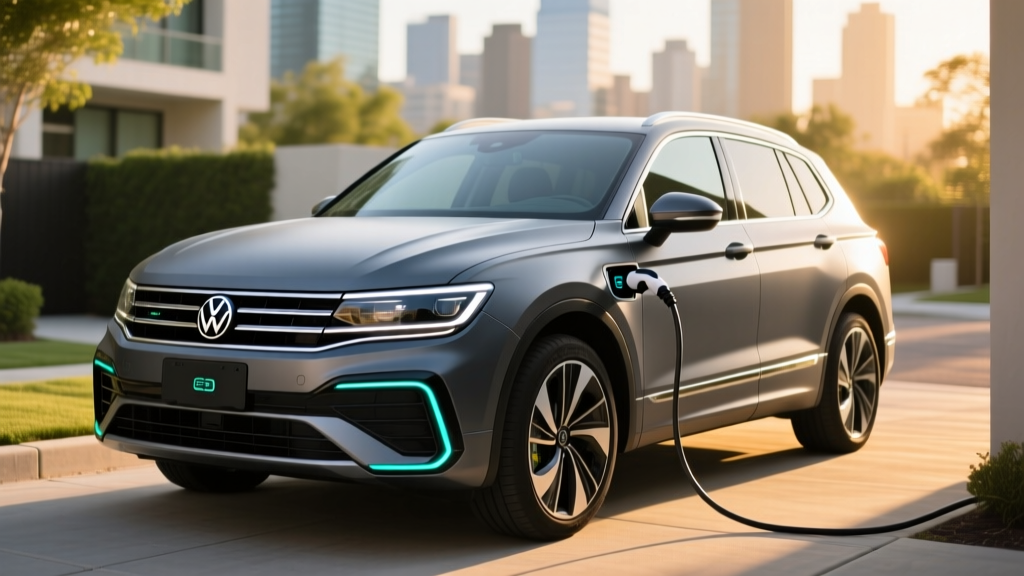
Volkswagen has re-entered the electrified compact SUV segment with the redesigned 2026 Tiguan, offering both a conventional hybrid (HEV) and a plug-in hybrid (PHEV) variant for the first time in the U.S. market. For shoppers searching for a tiguan hybrid, the distinction between these two powertrains matters enormously — one requires no lifestyle change, the other demands access to charging but rewards with daily electric-only driving.
This guide breaks down the exact EPA figures, battery specs, real-world efficiency expectations, and ownership economics you need before stepping into a VW dealership.
HEV vs PHEV: Which Tiguan Hybrid Are You Looking At?
Volkswagen offers two distinct electrified Tiguan models for 2026. Confusing them is the most common buyer mistake, so let's separate them clearly:
| Attribute | Tiguan HEV (Conventional Hybrid) | Tiguan eHybrid (Plug-In Hybrid) |
|---|---|---|
| Needs to plug in? | No — charges via regenerative braking and engine | Yes — plug in to unlock electric-only range |
| Battery capacity | ~1.5 kWh (small buffer) | 19.7 kWh usable (lithium-ion) |
| Electric-only driving | Minimal — low-speed assist only | EPA-estimated 37 miles |
| Primary benefit | Better MPG with zero behavior change | Gas-free daily commuting + gas backup for road trips |
| DC fast charging | N/A | No — AC charging only (Level 2 max) |
If you lack access to home or workplace charging, the conventional HEV is the practical choice. If you can plug in nightly and your commute falls under 37 miles round-trip, the eHybrid PHEV lets you drive most days without burning a drop of gasoline.
Fuel Economy and Electric-Only Range
EPA figures anchor any hybrid purchase decision. Here is how the 2026 Tiguan hybrid lineup breaks down by the numbers:
| Model | City MPG | Highway MPG | Combined MPG | Combined MPGe (PHEV) | EV Range (mi) | Total Range (mi) |
|---|---|---|---|---|---|---|
| Tiguan HEV (FWD) | 38 | 34 | 36 | — | — | ~490 |
| Tiguan eHybrid (PHEV) | 31 (hybrid mode) | 30 (hybrid mode) | 30 (hybrid mode) | 88 MPGe | 37 | ~460 |
Real-world note: Conventional hybrids like the Tiguan HEV typically exceed their EPA city estimate in stop-and-go driving, where regenerative braking works hardest. Owners of comparable VW Group hybrids report 39–42 MPG in urban conditions. Highway driving at 75+ mph will drop efficiency to roughly 30–32 MPG for both variants. The eHybrid's 37 miles of electric range holds up well in mild weather (55–75°F), but expect a 15–20% reduction in freezing temperatures — bringing realistic cold-weather EV range to roughly 29–31 miles. (Source: fueleconomy.gov)
Powertrain and Performance Specs
| Specification | Tiguan HEV | Tiguan eHybrid (PHEV) |
|---|---|---|
| Engine | 1.5L turbocharged I-4 | 1.5L turbocharged I-4 |
| Electric motor | Integrated starter-generator (~20 kW) | Permanent-magnet synchronous motor (~85 kW) |
| Combined output | ~197 hp / 221 lb-ft | ~245 hp / 295 lb-ft |
| Transmission | 6-speed DSG automatic | 6-speed DSG automatic |
| 0–60 mph | ~7.8 sec | ~7.0 sec |
| Drivetrain | FWD (AWD optional) | FWD |
| Towing capacity | 1,500 lbs | 1,500 lbs |
The eHybrid's additional electric torque gives it noticeably stronger off-the-line acceleration and seamless highway merging. Both variants use VW's DSG dual-clutch transmission, which prioritizes efficiency over the smoothness of a traditional torque-converter automatic — expect brief low-speed shift hesitation in parking-lot driving.
Battery, Charging, and Warranty
PHEV buyers want specifics on the battery pack: how big it is, how long it takes to charge, and what happens when it degrades.
Tiguan eHybrid Battery: 19.7 kWh usable capacity (22.0 kWh gross), lithium-ion NMC chemistry. Volkswagen provides an 8-year / 100,000-mile hybrid battery warranty covering defects and capacity loss below 70% of original capacity. The conventional HEV's smaller battery carries the same warranty terms.
Charging times for the eHybrid PHEV:
- Level 1 (120V household outlet): ~7.5 hours from 0–100% using the included cordset
- Level 2 (240V, 7.2 kW onboard charger): ~2 hours 45 minutes from 0–100%
- DC fast charging: Not available. The eHybrid uses an AC-only charge port.
The lack of DC fast charging is typical for PHEVs in this class — the 19.7 kWh pack is small enough that a Level 2 charger fills it quickly. If your workplace or home has a 240V outlet or dedicated Level 2 station, you can easily top off during the day.
As for battery longevity: modern VW Group PHEV batteries are liquid-cooled and thermally managed, which significantly slows degradation. Based on data from earlier VW PHEV models (Golf GTE, Passat GTE in Europe), owners report 5–8% capacity loss over 5 years and 60,000+ miles. A full battery replacement, should it ever be needed out of warranty, is estimated at $4,500–$6,500 at current parts pricing — though most PHEV batteries outlast the vehicle itself. (Source: vw.com)
Pricing and Tax Credit Eligibility
| Trim | Powertrain | MSRP (2026) |
|---|---|---|
| Tiguan SE Hybrid | HEV | $36,495 |
| Tiguan SEL Hybrid | HEV | $39,995 |
| Tiguan SE eHybrid | PHEV | $40,995 |
| Tiguan SEL eHybrid | PHEV | $44,495 |
Federal tax credit status: The Tiguan eHybrid PHEV is a candidate for the §30D Clean Vehicle Credit, which can provide up to $7,500. However, eligibility depends on several conditions that change regularly:
- MSRP cap: SUVs must be at or below $80,000 — both Tiguan trims qualify
- Buyer income cap: AGI must not exceed $150,000 (single) or $300,000 (joint)
- Battery sourcing: Critical minerals and battery components must meet phased-in domestic/free-trade-partner sourcing thresholds — verify current-year compliance at purchase
- Point-of-sale transfer: Eligible buyers can apply the credit as an immediate dealer discount rather than waiting for tax filing
The conventional Tiguan HEV does not qualify for the federal §30D credit (it applies only to plug-in vehicles with ≥7 kWh of battery capacity). However, some states and utilities offer rebates for conventional hybrids — check your local programs. (Source: irs.gov)
Always confirm eligibility with your tax professional and the dealer at point of sale, as sourcing requirements tighten annually under current law.
Real-World Ownership: What EPA Numbers Don't Tell You
EPA estimates provide a useful baseline, but real-world Tiguan hybrid efficiency depends heavily on your driving patterns:
City-dominant commuters (HEV): The conventional hybrid shines here. Regenerative braking recaptures energy at every stoplight, and the engine shuts off frequently. Expect 38–42 MPG — potentially beating the EPA city figure.
Highway-dominant commuters (both): Hybrids lose their advantage at sustained 70–80 mph speeds. Aerodynamic drag dominates, and the engine runs continuously. Expect 30–33 MPG for the HEV and roughly 28–31 MPG for the eHybrid in hybrid mode once the battery is depleted.
Short-trip PHEV drivers: If your daily driving stays under 37 miles and you charge nightly, your effective fuel economy is essentially infinite MPG on weekdays. Gasoline consumption drops to weekend road trips only. Some PHEV owners report using fewer than 10 tanks of gas per year.
Cold-weather impact: Below freezing, both variants lose efficiency. The HEV may drop to 32–34 MPG combined. The eHybrid's electric range shrinks to approximately 29–31 miles due to cabin heating demands and reduced battery performance. A heat pump is included on the eHybrid to mitigate this.
Reliability and Long-Term Outlook
Volkswagen's hybrid systems are built on proven components. The 1.5L turbocharged EA211 Evo2 engine is widely used across the VW Group with a solid reliability record. The DSG transmission, historically a weak point for VW, has been substantially improved in its latest generation with smoother low-speed behavior and better durability.
For the hybrid battery specifically:
- VW's 8-year/100,000-mile warranty exceeds the federal minimum (8 years/80,000 miles for emissions-related components) and matches the industry standard set by Toyota and Hyundai
- The warranty covers capacity retention below 70% — meaning VW will repair or replace the battery if it degrades beyond 30% loss
- Liquid cooling keeps the battery in its optimal temperature window, extending cycle life
Independent reliability surveys (Consumer Reports, J.D. Power) have rated recent VW models as average to slightly above average. The hybrid powertrain adds complexity compared to a gas-only Tiguan, but fewer moving parts than a traditional ICE drivetrain (no alternator, no starter motor, reduced brake wear from regen).
Pros
- HEV delivers strong city MPG with zero plug-in hassle
- PHEV's 37-mile EV range covers most daily commutes gas-free
- 8-year/100,000-mile battery warranty
- Competitive cargo space — battery packaging doesn't compromise the trunk significantly
- PHEV eligible for up to $7,500 federal credit (verify sourcing)
- Strong combined torque for confident highway merging
Cons
- No DC fast charging on the PHEV
- AWD not available on the eHybrid PHEV
- DSG transmission can feel jerky at low parking-lot speeds
- HEV does not qualify for federal tax credit
- Highway MPG unremarkable — advantage is city-focused
- PHEV price premium of ~$4,500 over equivalent HEV trim
Who Should Choose the Tiguan Hybrid — and Who Shouldn't?
Choose the Tiguan HEV if:
- You don't have reliable access to a plug (apartment, street parking, no garage)
- You want better fuel economy without changing any habits
- Your driving is mostly city and suburban stop-and-go
- You want the lowest purchase price in the Tiguan hybrid lineup
Choose the Tiguan eHybrid PHEV if:
- You can charge at home or work (even a standard 120V outlet works overnight)
- Your daily commute is under 37 miles round-trip
- You want to minimize gasoline use but need gas-engine flexibility for road trips
- You qualify for the §30D federal credit, which narrows the price gap with the HEV
Consider a full EV instead if:
- Your daily driving exceeds 37 miles but stays under 250 miles (a BEV like the VW ID.4 covers this easily)
- You want zero engine maintenance — no oil changes, no spark plugs, no transmission fluid
- You have home Level 2 charging and rarely take trips beyond 200+ miles
Stick with a gas-only vehicle if:
- You drive predominantly highway miles at high speeds (the hybrid MPG advantage is minimal)
- You tow frequently beyond 1,500 lbs
- Your budget is tightly constrained and the hybrid premium doesn't pay back in fuel savings within your ownership timeline
Frequently Asked Questions
How many MPG does the 2026 Tiguan Hybrid get?
The conventional Tiguan HEV achieves an EPA-estimated 38 city / 34 highway / 36 combined MPG. The Tiguan eHybrid PHEV rates 31/30/30 MPG in hybrid mode (after the battery is depleted) and 88 MPGe when factoring in electric-only driving. Real-world city driving often exceeds the EPA city estimate in the HEV.
How far can the Tiguan eHybrid go on electric only?
The EPA estimates 37 miles of electric-only range. In mild weather with moderate speeds, owners can achieve close to this figure. In freezing temperatures or at highway speeds, expect roughly 29–31 miles before the gasoline engine engages.
Does the Tiguan Hybrid qualify for a tax credit?
The eHybrid PHEV may qualify for up to $7,500 under the federal §30D Clean Vehicle Credit, subject to buyer income limits, battery sourcing requirements, and the $80,000 MSRP cap (both trims are under). The conventional HEV does not qualify for the federal credit. State and utility rebates may apply to both — check local programs. Always verify with a tax professional.
Is the Tiguan Hybrid reliable, and what does battery replacement cost?
VW's hybrid components are built on proven architecture, and the battery is covered by an 8-year/100,000-mile warranty (70% capacity retention threshold). Based on comparable VW Group hybrids, 5–8% degradation over 5 years is typical. Out-of-warranty battery replacement is estimated at $4,500–$6,500, though most hybrid batteries outlast the vehicle.
Can the Tiguan eHybrid DC fast charge?
No. The eHybrid supports AC charging only — Level 1 (120V) at roughly 7.5 hours for a full charge, or Level 2 (240V, 7.2 kW) at approximately 2 hours 45 minutes. This is standard for PHEVs in this class; the smaller battery doesn't require DC fast charging.
How does the Tiguan Hybrid compare to the Toyota RAV4 Hybrid?
The RAV4 Hybrid (EPA 41/38/39 combined) holds a fuel-economy edge over the Tiguan HEV (36 combined) and offers AWD across all trims. The Tiguan counters with a more premium interior, available PHEV powertrain (RAV4 Prime has limited availability and higher pricing), and a strong federal tax credit opportunity on the eHybrid. Your choice depends on whether MPG or interior quality and PHEV availability matter more.