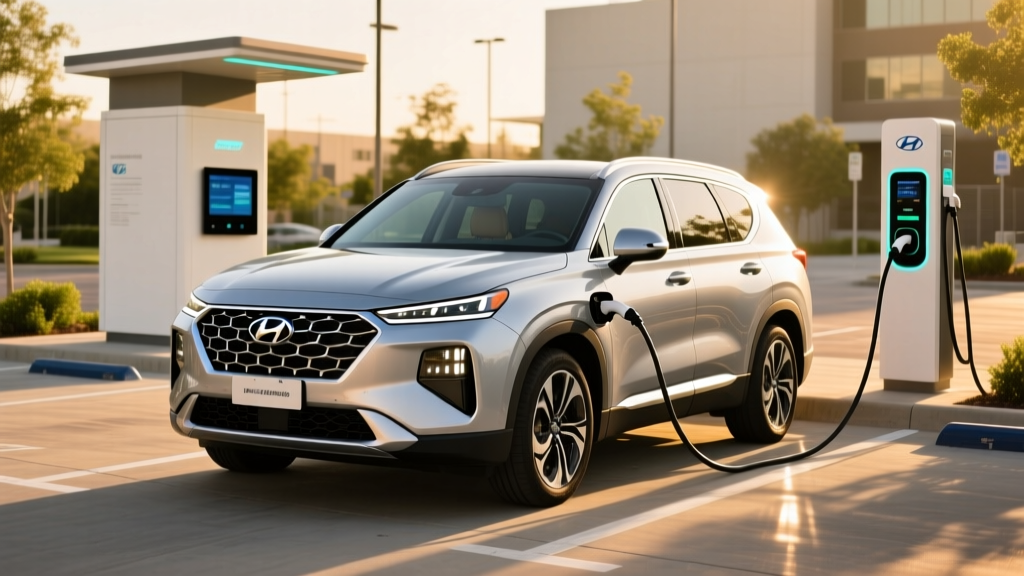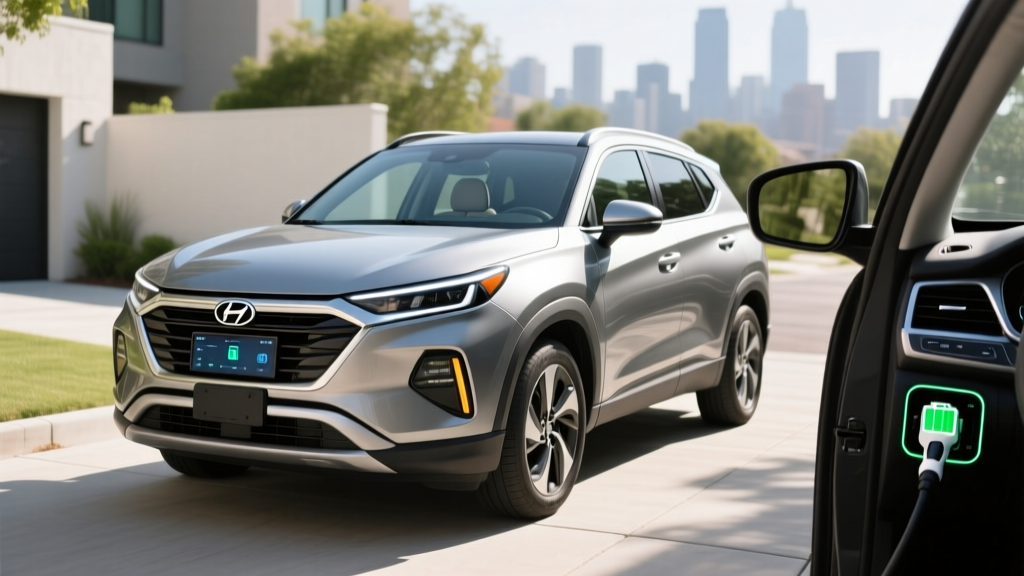
The 2026 Hyundai Tucson Hybrid SEL Convenience occupies a specific niche: buyers who want meaningful fuel savings without plugging in, but still want the premium tech and comfort features that base trims skip. At roughly $34,700 before destination, this mid-level trim adds a panoramic sunroof, leather-trimmed seats, a 10.25-inch digital cluster, and Hyundai's full SmartSense safety suite on top of the hybrid powertrain's strong EPA ratings. But does the real-world fuel economy match the sticker, and how does this HEV stack up against the Tucson PHEV or a full EV?
This guide breaks down every number that matters — MPG by driving condition, powertrain specs, battery warranty, total cost of ownership, and tax-credit eligibility — so you can decide whether the SEL Convenience is the right trim, or whether stepping up to the plug-in or going full electric makes more financial sense.
2026 Tucson Hybrid Powertrain: Specs and How It Works
The Tucson Hybrid uses Hyundai's Smartstream 1.6-liter turbocharged inline-4 paired with a 47.7 kW (64 HP) electric motor integrated into a 6-speed automatic transmission. Combined system output is 231 horsepower and 271 lb-ft of torque, routed through HTRAC all-wheel drive as standard on every hybrid trim.
| Specification | Value |
|---|---|
| Engine | 1.6L turbocharged inline-4 |
| Engine Output | 178 HP / 195 lb-ft |
| Electric Motor | 47.7 kW (64 HP) permanent-magnet synchronous |
| Combined System Output | 231 HP / 271 lb-ft |
| Transmission | 6-speed automatic (no CVT) |
| Drivetrain | HTRAC AWD (standard) |
| Traction Battery | 1.49 kWh lithium-ion (nominal) |
| 0–60 mph | ~7.1 seconds (est.) |
| Towing Capacity | 2,000 lbs (braked) |
Unlike a plug-in hybrid, the Tucson HEV's 1.49 kWh battery is small by design. It captures energy from regenerative braking and the engine to provide short electric-only bursts at low speeds and to assist during acceleration. You never plug it in — the gasoline engine and regen handle all charging. This keeps weight down and avoids the packaging compromises of a larger PHEV battery.
Fuel Economy: EPA Ratings vs. Real-World MPG
According to EPA data on fueleconomy.gov, the 2026 Tucson Hybrid (AWD, all trims including the SEL Convenience) carries the following ratings:
| Condition | EPA MPG |
|---|---|
| City | 38 MPG |
| Highway | 38 MPG |
| Combined | 38 MPG |
The flat city/highway number is typical of modern turbo-hybrids: the electric motor fills in torque at low RPM where the turbo hasn't spooled, keeping the engine in its efficiency band. The 6-speed automatic (rather than a CVT) also avoids the drone and rubber-band feel that plague some competitors.
What to Expect in Real Driving
Hybrids almost always beat their EPA city rating in stop-and-go traffic because regen braking recovers energy that a gas car wastes as heat. In mixed suburban driving with frequent stops, owners consistently report 39–42 MPG. Highway-only driving at 75+ mph, however, typically drops to 33–36 MPG because the electric motor contributes less at sustained high speed and aerodynamic drag dominates.
Cold weather (below 30°F) reduces fuel economy by roughly 10–15% due to longer engine warm-up cycles and cabin heating load. Expect 32–35 MPG combined in northern winters. A heat pump is not standard on the HEV (it's reserved for the PHEV and EV variants), so the engine must run to provide cabin warmth.
HEV vs. PHEV vs. Full EV: Which Tucson Fits You?
Hyundai offers the Tucson in three powertrains. Here's how they compare on the metrics that matter:
| Metric | Tucson Hybrid (HEV) | Tucson Plug-In Hybrid (PHEV) | Ioniq 5 (Full EV) |
|---|---|---|---|
| Plug-in Required? | No | Yes (Level 1 or 2) | Yes (Level 2 / DC fast) |
| EPA Combined MPG / MPGe | 38 MPG | 80 MPGe (elec) / 35 MPG (gas) | 114 MPGe combined |
| Electric-Only Range | ~1 mi at low speed | 33 miles (EPA) | 303 miles (EPA, SEL AWD) |
| Battery Capacity | 1.49 kWh | 13.8 kWh usable | 84 kWh usable |
| Combined HP | 231 HP | 261 HP | 320 HP (AWD) |
| Base MSRP (2026) | ~$34,700 (SEL Conv.) | ~$39,900 (SEL) | ~$42,600 (SEL) |
| Federal Tax Credit (§30D) | Not eligible | Up to $7,500* | Up to $7,500* |
*Tax credit eligibility depends on buyer income, vehicle MSRP caps, battery sourcing, and point-of-sale transfer rules. See the tax credit section below for details.
Decision Framework
Choose the Tucson Hybrid (HEV) if: You lack home charging access, drive 30+ miles daily with mixed city/highway, want lower upfront cost, and don't want to think about plugging in.
Choose the Tucson PHEV if: You can install a Level 2 charger at home, your daily commute is under 30 miles round-trip (covering most driving on electricity), and you still want gas flexibility for road trips.
Choose the Ioniq 5 (EV) if: You have reliable home charging, drive under 250 miles daily, want the lowest per-mile fuel cost, and want maximum tax-credit benefit.
SEL Convenience Trim: What You Get for ~$34,700
The SEL Convenience sits above the Blue and SEL trims but below the Limited. For the 2026 model year, it adds several features that justify the step-up from the standard SEL:
- Panoramic curved display (12.3" cluster + 12.3" infotainment)
- Leather-trimmed seats with heated front and rear
- Power liftgate with smart hands-free open
- Bose premium audio (8 speakers)
- Wireless phone charging pad
- Highway Driving Assist (HDA) with navigation-based smart cruise
- Hyundai SmartSense suite: forward collision-avoidance, blind-spot monitor, rear cross-traffic, lane-keeping, driver attention warning
- Panoramic sunroof
- Dual-zone automatic climate control with rear vents
The powertrain is identical across all hybrid trims — Blue, SEL, SEL Convenience, and Limited all share the 231 HP system and 38 MPG EPA rating. You're paying for comfort, tech, and convenience, not extra performance or efficiency.
Pricing Context
The 2026 Tucson Hybrid SEL Convenience carries an MSRP of approximately $34,695 plus a $1,395 destination charge, bringing the total to around $36,090. This positions it between the Toyota RAV4 Hybrid XLE Premium (~$37,500) and the Honda CR-V Hybrid Sport-L (~$36,700).
Hyundai's hybrid trims do not qualify for the federal §30D new clean vehicle tax credit, which is reserved for plug-in vehicles (PHEVs and BEVs) meeting battery-sourcing and critical-mineral requirements. However, some states offer rebates or reduced registration fees for hybrids — check your state's energy office for current programs.
Battery Warranty, Reliability, and Replacement Costs
Hybrid battery longevity is the top concern for buyers switching from a conventional gas car. Hyundai addresses this with one of the strongest warranties in the industry:
Hyundai Hybrid Battery Warranty
- Hybrid Battery: 10 years / 100,000 miles (whichever comes first)
- Hybrid System Components (motor, inverter, controller): 10 years / 100,000 miles
- Powertrain Warranty (engine, transmission): 10 years / 100,000 miles
- New Vehicle Limited Warranty: 5 years / 60,000 miles
The battery warranty covers capacity loss below 70% of original capacity, plus any cell or module failure. It is fully transferable to subsequent owners for the 10-year/100,000-mile period on 2026 models.
Real-World Battery Longevity
The Tucson Hybrid's 1.49 kWh battery operates in a narrow state-of-charge window (roughly 40–80% SoC) managed by the battery management system. This shallow cycling dramatically extends cell life compared to a full EV battery that cycles 0–100%. Data from Hyundai's earlier hybrid systems (Sonata Hybrid, Ioniq Hybrid) shows less than 10% capacity degradation after 150,000+ miles in typical use.
If replacement is needed out of warranty, a refurbished hybrid battery pack for the Tucson runs approximately $2,000–$3,500 installed at a dealership, or $1,200–$2,000 through independent hybrid specialists. This is a fraction of full EV battery replacement costs and reflects the small pack size.
Overall Reliability
The Tucson Hybrid has performed well in IIHS crash testing, earning top marks in moderate overlap and side impact evaluations. Hyundai's hybrid system has proven durable across multiple model years, with fewer reported issues than early PHEV variants. The conventional 6-speed automatic (rather than a CVT) also reduces long-term maintenance concerns associated with belt-driven transmissions.
Ownership Costs: 5-Year Total Cost Estimate
Here's how the Tucson Hybrid SEL Convenience stacks up on running costs over a typical 5-year / 75,000-mile ownership period, compared to the gas-only Tucson AWD (2.5L turbo, 281 HP, 24 MPG combined EPA):
| Cost Category | Tucson Hybrid (38 MPG) | Tucson Gas AWD (24 MPG) |
|---|---|---|
| Fuel Cost ($3.50/gal avg.) | $6,908 | $10,938 |
| Fuel Savings (Hybrid) | +$4,030 saved over 5 years | |
| Estimated Maintenance | ~$3,200 | ~$3,600 |
| Insurance (avg. annual) | ~$1,650/yr | ~$1,550/yr |
| Purchase Price (MSRP + dest.) | ~$36,090 | ~$35,090 |
The hybrid commands roughly $1,000 more at purchase but recovers that in fuel savings within the first 18–24 months of average driving. Over five years, the net savings are approximately $2,500–$3,000 after accounting for slightly higher insurance premiums (hybrids can cost 5–8% more to insure due to battery repair considerations in collision claims).
Who Should Buy the 2026 Tucson Hybrid SEL Convenience?
Pros
- 38 MPG combined with no plug-in requirement
- 231 HP provides confident highway merging
- 10-year/100,000-mile hybrid battery warranty
- Rich feature set: Bose audio, leather, panoramic roof, HDA
- AWD standard — no FWD-only compromise
- 6-speed automatic avoids CVT drone
- Strong IIHS safety ratings
Cons
- No federal tax credit (HEVs excluded from §30D)
- Highway MPG drops to ~33–36 at 75+ mph
- 1.49 kWh battery means minimal electric-only driving
- No heat pump (cabin heat requires engine running)
- Cargo space slightly reduced vs. gas Tucson (~0.7 cu ft loss to hybrid battery)
- Insurance premiums modestly higher than gas equivalent
Frequently Asked Questions
How many MPG does the 2026 Tucson Hybrid SEL Convenience get?
The EPA rates it at 38 MPG city, 38 MPG highway, and 38 MPG combined. In real-world mixed suburban driving, expect 39–42 MPG. Highway-only driving at 75+ mph typically yields 33–36 MPG. Cold weather reduces combined economy to roughly 32–35 MPG.
Does the Tucson Hybrid need to be plugged in?
No. The Tucson Hybrid is a conventional HEV — the battery charges entirely through regenerative braking and the gasoline engine. You fuel it like any other gas car. If you want plug-in capability with electric-only range, look at the Tucson PHEV, which offers 33 miles of electric-only driving.
How far can the Tucson Hybrid drive on electric power alone?
Effectively less than 1 mile at very low speeds (under 25 mph). The 1.49 kWh battery is designed for torque assist and regen capture, not sustained electric driving. The electric motor engages frequently in stop-and-go traffic to reduce engine load, but the gasoline engine is always available.
Does the 2026 Tucson Hybrid qualify for a federal tax credit?
No. The federal §30D New Clean Vehicle Credit applies only to plug-in electric vehicles (PHEVs and BEVs) that meet battery-sourcing, critical-mineral, MSRP, and buyer-income requirements. Conventional hybrids like the Tucson HEV do not qualify. Check your state energy office for any state-level hybrid incentives, which vary by jurisdiction.
Is the Tucson Hybrid reliable, and what does battery replacement cost?
Hyundai's hybrid system has demonstrated strong reliability across multiple model years. The hybrid battery is covered by a 10-year/100,000-mile warranty (covering capacity loss below 70% and cell failures). Out-of-warranty replacement costs approximately $2,000–$3,500 at a dealer, or $1,200–$2,000 at an independent hybrid specialist — far less than EV battery replacement.
How does the SEL Convenience compare to the Limited trim?
The Limited adds a head-up display, ventilated front seats, a surround-view monitor, remote smart parking assist, and a digital key. The powertrain and MPG are identical. If you don't need those premium features, the SEL Convenience offers the better value, saving roughly $3,000–$4,000 depending on model-year pricing.
Is the Tucson Hybrid better than the RAV4 Hybrid?
Both are strong choices. The Tucson Hybrid offers 231 HP vs. the RAV4 Hybrid's 219 HP, a more modern interior with the panoramic curved display, and Hyundai's 10-year powertrain warranty vs. Toyota's 8-year/100,000-mile hybrid warranty. The RAV4 Hybrid rates slightly higher on the highway (41 MPG vs. 38 MPG for the Tucson) and has a marginally larger cargo area. Test-drive both — the decision usually comes down to interior preference and dealer experience.