Quick Verdict: The 2026 Hyundai Tucson Hybrid SEL Convenience
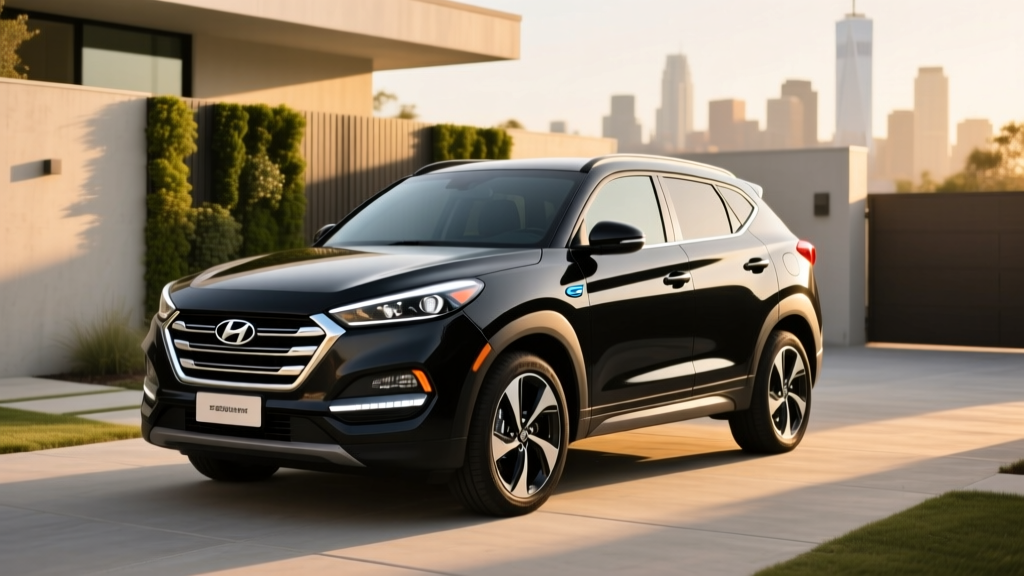
The 2026 Hyundai Tucson Hybrid SEL Convenience occupies a pragmatic middle ground in the compact SUV segment. It pairs a turbocharged 1.6-liter engine with an electric motor for 261 combined horsepower, delivers an EPA-estimated 38 MPG combined, and requires zero lifestyle change — no plug, no charging routine, no range anxiety. The SEL Convenience trim adds the features most buyers actually want (leather seats, panoramic sunroof, highway driving assist) without climbing into Limited territory.
If you need a compact crossover that sips fuel in city traffic, provides confident highway merging power, and starts around $36,250 before destination, this is a strong candidate. But it's not a plug-in hybrid — it can't drive on electric-only power, and it doesn't qualify for the federal §30D EV tax credit. Here's exactly what you're getting.
HEV vs. PHEV: Which Tucson Hybrid Is This?
Hyundai sells two electrified Tucsons, and confusing them is the most common buyer mistake. The 2026 Hyundai Tucson Hybrid SEL Convenience is a conventional hybrid (HEV). It charges its own small battery through regenerative braking and the gasoline engine. You never plug it in. You just fill up with gas and drive.
HEV vs. PHEV: What's the Difference?
| Feature | Tucson Hybrid (HEV) | Tucson Plug-In Hybrid (PHEV) |
|---|---|---|
| Plug-in charging? | No — self-charging | Yes — plug in at home/public |
| Electric-only range | None (EV assists only) | ~33 miles EPA |
| Battery size | ~1.49 kWh | 13.8 kWh |
| Combined HP | 261 hp | 261 hp |
| EPA MPG (gas) | 38 combined | 35 combined (gas only) |
| Federal tax credit | Not eligible | Up to $7,500 (§30D)* |
| Starting MSRP | ~$36,250 | ~$40,500 |
*PHEV tax credit eligibility depends on battery sourcing, buyer income, and MSRP caps under current IRS §30D rules. Consult IRS.gov or a tax professional.
This guide focuses on the HEV — the Tucson Hybrid SEL Convenience. If you want electric-only commuting and have access to a plug, the PHEV is worth the premium, but that's a different vehicle with different economics.
Fuel Economy: EPA Numbers and Real-World MPG
The EPA rates the 2026 Hyundai Tucson Hybrid at 38 MPG combined, with a city/highway split of 38 city / 38 highway. This flat split is characteristic of Hyundai's hybrid system, which uses the electric motor to smooth out stop-and-go inefficiency while the turbo engine handles sustained loads.
| Metric | EPA Estimate | Real-World Expectation |
|---|---|---|
| City MPG | 38 | 37–41 (hybrids often beat EPA in city) |
| Highway MPG | 38 | 34–37 (aerodynamic drag at 75+ mph) |
| Combined MPG | 38 | 35–39 |
| Fuel tank capacity | 13.7 gallons | ~490–520 miles per tank |
Real-world note: Conventional hybrids like the Tucson HEV frequently exceed their EPA city rating because regenerative braking recaptures energy the EPA test cycle doesn't fully capture. On the highway, expect a slight shortfall — at 75–80 mph, the turbocharged 1.6L works harder and aerodynamic drag increases. In cold weather (below 30°F), expect a 5–10% MPG reduction as the engine runs more frequently for cabin heat and the battery operates less efficiently.
For comparison, the gas-only 2026 Tucson with the 2.5L non-turbo engine returns about 28 MPG combined. That's a 10 MPG advantage for the hybrid — roughly $400–$600 in annual fuel savings for a driver covering 15,000 miles per year at $3.40/gallon, based on fueleconomy.gov data.
Powertrain: 261 HP With Turbo-Hybrid Torque
The Tucson Hybrid uses a 1.6-liter turbocharged inline-4 paired with a 47.7 kW (64 hp) electric motor, routed through a 6-speed automatic transmission to standard HTRAC all-wheel drive. Combined system output is 261 horsepower and 271 lb-ft of torque.
| Spec | 2026 Tucson Hybrid |
|---|---|
| Engine | 1.6L turbocharged I-4 |
| Engine output | 178 hp / 195 lb-ft |
| Electric motor | 47.7 kW (64 hp) / 195 lb-ft |
| Combined system output | 261 hp / 271 lb-ft |
| Transmission | 6-speed automatic |
| Drivetrain | HTRAC AWD (standard) |
| 0–60 mph (est.) | ~7.1 seconds |
| Towing capacity | 2,000 lbs |
The electric motor's instant torque fills in the low-end gap that turbo lag typically creates. Off the line, the Tucson Hybrid feels more responsive than its 0–60 time suggests. The 6-speed automatic is a deliberate choice over a CVT — it delivers more natural shift feel and avoids the rubber-band drone common in Toyota and Honda hybrid systems. The tradeoff is marginally lower efficiency at steady-state cruising, but Hyundai has tuned it well.
HTRAC AWD is standard on every Tucson Hybrid trim. This isn't an on-demand system that only engages after slip — it can proactively distribute torque, which matters in rain and light snow. If you live in a region with real winters, this is a meaningful advantage over FWD-only hybrid competitors.
SEL Convenience Trim: What You Get for the Money
The SEL Convenience sits in the upper-middle of the Tucson Hybrid lineup, above the base SEL and below the Limited. For the 2026 model year, it starts at approximately $36,250 (plus ~$1,395 destination), bringing the out-the-door base to around $37,645 before taxes and fees.
Key SEL Convenience features include:
- Leather-trimmed seats (heated front, ventilated front available in package)
- Panoramic sunroof with power shade
- Highway Driving Assist (HDA) — adaptive cruise + lane centering on divided highways
- 10.25-inch digital instrument cluster + 10.25-inch touchscreen with navigation
- Wireless Apple CarPlay and Android Auto
- Hands-free smart liftgate
- LED headlights with auto high beams
- Proximity key with push-button start on all four doors
What you don't get at this trim: the Limited's 360-degree camera, head-up display, Highway Driving Assist 2 (with lane-change assist), or Bose premium audio. Those push the price past $41,000.
Federal Tax Credit: Does the Tucson Hybrid Qualify?
No. The conventional Tucson Hybrid (HEV) does not qualify for the federal §30D Clean Vehicle Credit. That credit is reserved for plug-in electric vehicles (BEVs and PHEVs) meeting specific battery sourcing, MSRP, and buyer income requirements.
The Tucson Plug-In Hybrid may qualify for up to $7,500 depending on battery component and critical mineral sourcing under current IRS §30D rules. However, PHEV credit eligibility has narrowed significantly since 2023 — always verify current-year rules and consult a tax professional before counting on the credit in your purchase budget.
Some states offer separate hybrid or clean-fuel rebates. Check your state's energy or environmental agency for current programs.
Hybrid Battery Warranty and Long-Term Reliability
This is the question every hybrid buyer asks: what happens when the battery dies?
Hyundai Hybrid Battery Warranty
Hybrid battery: 10 years / 100,000 miles (whichever comes first)
Hybrid system components: 10 years / 100,000 miles (inverter, motor, controller)
Powertrain: 10 years / 100,000 miles
Limited vehicle warranty: 5 years / 60,000 miles
Hyundai's hybrid battery warranty is among the longest in the segment, matched by Kia and exceeding Toyota's 10-year/150,000-mile hybrid battery warranty in duration but not mileage. Warranty terms apply to original owners; verify transferability for used purchases.
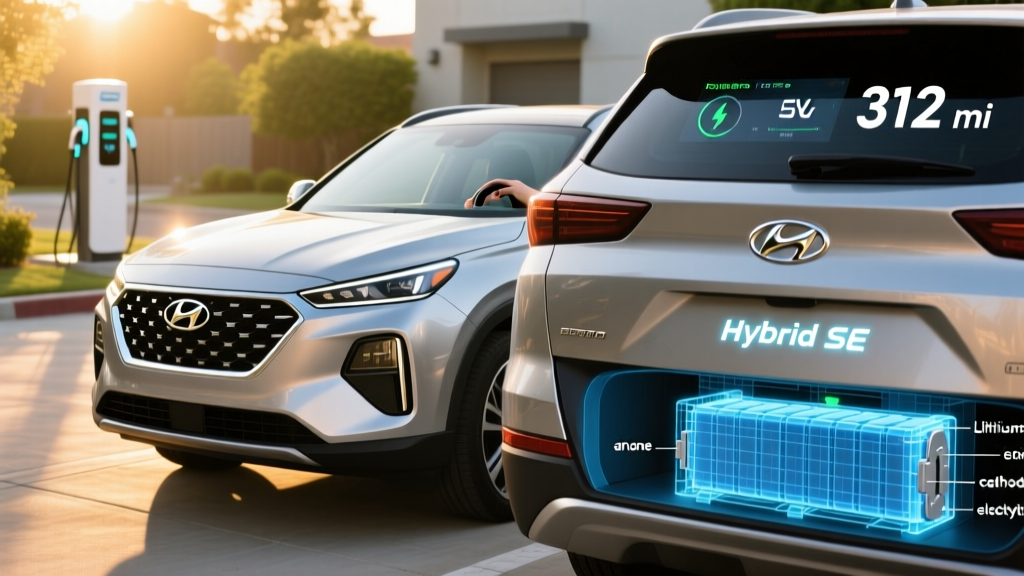
The Tucson Hybrid's lithium-ion polymer battery is approximately 1.49 kWh — small compared to a PHEV or BEV, and it operates in a narrow state-of-charge window (roughly 40–60% SoC). This shallow cycling is deliberate: it dramatically reduces degradation. Real-world data from Hyundai-Kia's hybrid platform (shared with the Kia Sportage Hybrid and Hyundai Santa Fe Hybrid) shows minimal capacity loss over 100,000+ miles in fleet and owner reports.
If replacement is needed out of warranty: Hyundai hybrid battery replacement typically costs $2,500–$4,500 depending on labor rates and whether you go dealer or independent. This is significantly less than a BEV battery replacement ($8,000–$20,000+) because the pack is small and accessible. Many hybrid batteries last the life of the vehicle — replacement is the exception, not the expectation.
Hyundai has built a solid reliability record with its turbo-hybrid powertrain since its 2022 introduction. IIHS testing (when available for the 2026 model year) and NHTSA ratings are worth checking before purchase for the latest crash-test data.
Who Should Buy This — and Who Should Look Elsewhere
Choose the Tucson Hybrid SEL Convenience If:
- You want better fuel economy without changing your driving or fueling habits
- You drive 12,000–18,000 miles/year and want to reduce gas spend by $400–$700 annually vs. the gas Tucson
- You need AWD for snow/rain but don't want the weight and cost penalty of a truck-based SUV
- You lack access to home or workplace charging (apartment, street parking, no garage outlet)
- You want 261 hp and 2,000-lb towing in an efficient package
- You plan to keep the vehicle 7–10+ years (the hybrid battery warranty covers you)
Look Elsewhere If:
- You have a short commute (<15 miles) and home charging — a PHEV (Tucson PHEV, Toyota RAV4 Prime) lets you drive on electricity daily
- You want zero tailpipe emissions — consider a full BEV like the Hyundai Ioniq 5 or Tesla Model Y
- You need more than 2,000 lbs of towing — the gas Tucson 2.5T or a larger SUV is better
- You want the maximum federal tax credit — only BEVs and qualifying PHEVs are eligible under §30D
- You drive mostly highway miles at 80+ mph — the hybrid advantage shrinks at sustained high speeds
Hybrid vs. PHEV vs. Full EV: A Quick Decision Framework
| Scenario | Best Fit | Why |
|---|---|---|
| No home charging, mixed driving | HEV (this Tucson) | No plug needed, 38 MPG everywhere |
| Home charging, <30 mi commute | PHEV (Tucson PHEV) | 33 mi EV range covers daily; gas for road trips |
| Home charging, <250 mi daily | Full BEV (Ioniq 5) | Lowest cost per mile, $7,500 credit eligible, no gas |
| Frequent 400+ mi road trips | HEV or gas | No charging stops; 500+ mi range per tank |
Frequently Asked Questions
How many MPG does the 2026 Hyundai Tucson Hybrid get?
The EPA rates it at 38 MPG city, 38 highway, and 38 combined. In real-world driving, expect 37–41 MPG in city conditions (regenerative braking helps) and 34–37 MPG on the highway at 75+ mph. Cold weather may reduce figures by 5–10%.
Does the Tucson Hybrid need to be plugged in?
No. The Tucson Hybrid (HEV) is a self-charging conventional hybrid. It recovers energy through regenerative braking and the gasoline engine. You simply fill it with regular unleaded gasoline — no plug, no charging cable, no home charger required.
How far can the Tucson Hybrid drive on electric power alone?
The conventional Tucson Hybrid cannot drive on electric-only power. Its 1.49 kWh battery assists the gas engine during acceleration and enables brief low-speed EV creep in traffic, but it does not provide a measurable electric-only range. For that capability, you need the Tucson Plug-In Hybrid (33 miles EPA electric range) or a full EV.
Is the Tucson Hybrid reliable, and what does battery replacement cost?
Hyundai's turbo-hybrid system has proven reliable since its 2022 debut. The hybrid battery is covered by a 10-year/100,000-mile warranty. Out-of-warranty replacement runs approximately $2,500–$4,500 — far less than a BEV battery. Most hybrid batteries last the life of the vehicle with normal use.
Does the 2026 Tucson Hybrid qualify for any federal tax credit?
No. The conventional hybrid (HEV) does not qualify for the federal §30D Clean Vehicle Credit. That credit applies only to qualifying plug-in vehicles (BEVs and PHEVs) meeting battery sourcing, MSRP, and income requirements per IRS guidelines. Some states may offer separate hybrid incentives — check your state energy office.
How does the Tucson Hybrid compare to the Toyota RAV4 Hybrid?
The RAV4 Hybrid returns 41 MPG combined (3 MPG better) but produces only 219 hp versus the Tucson's 261 hp. The Tucson has a more modern interior, standard AWD with proactive torque distribution, and a longer powertrain warranty (10yr/100k vs. Toyota's 5yr/60k powertrain). The RAV4 Hybrid has a longer track record and typically higher resale value. Both are excellent — your choice depends on whether you prioritize fuel economy (RAV4) or power and tech (Tucson).
What's the towing capacity of the Tucson Hybrid?
The 2026 Tucson Hybrid is rated to tow up to 2,000 pounds when properly equipped. This covers a small utility trailer, a pair of jet skis, or a lightweight camping trailer. For heavier loads, you'll need a larger SUV or truck.