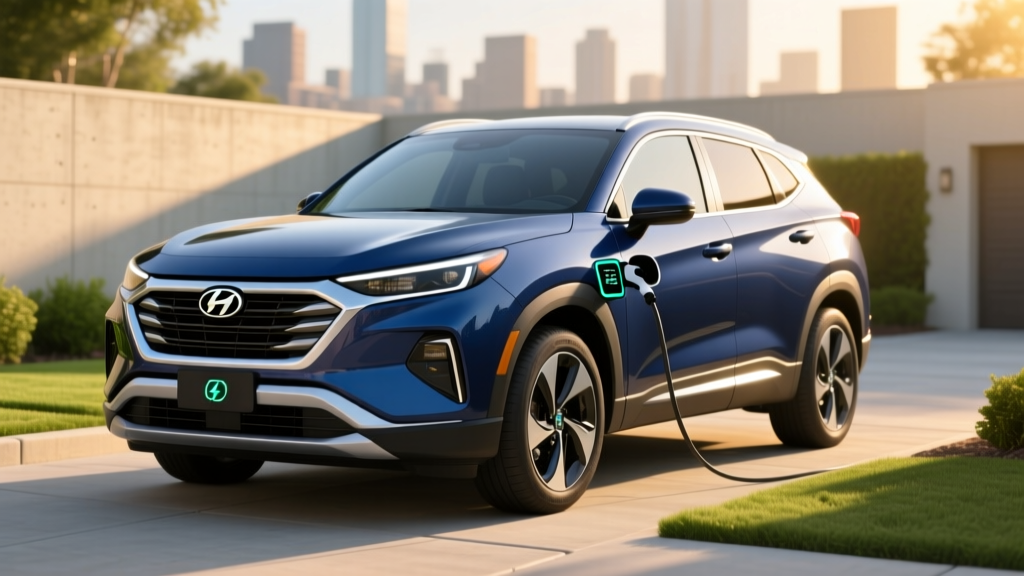
The Hyundai Tucson has been one of the best-selling compact SUVs in America for years, and its electrified variants have become the go-to choice for buyers who want better fuel economy without committing to a full battery-electric vehicle. For 2026, the Tucson Hybrid (HEV) and Tucson Plug-in Hybrid (PHEV) return with updated powertrain tuning, revised pricing, and continued eligibility for certain federal incentives on the PHEV variant. If you are weighing the 2026 Tucson Hybrid against its plug-in sibling — or against a conventional gas Tucson — this guide breaks down every number that matters.
HEV vs PHEV: Which 2026 Tucson Hybrid Are We Talking About?
Hyundai sells the Tucson in three powertrain flavors: a conventional 2.5L gas model, a self-charging hybrid (HEV), and a plug-in hybrid (PHEV). The distinction between the HEV and PHEV is critical because it changes how you fuel the vehicle, how far you can drive on electricity, and whether you qualify for a federal tax credit.
| Feature | Tucson Hybrid (HEV) | Tucson Plug-in Hybrid (PHEV) |
|---|---|---|
| Needs to plug in? | No — regenerative braking charges the battery | Yes — plug in for maximum electric range |
| Battery size | 1.49 kWh (small buffer) | 13.8 kWh usable |
| Electric-only driving | Brief low-speed assist only | EPA-est. 33 miles |
| Charging hardware | None required | Level 1 (120V) or Level 2 (240V) |
| DC fast charging | N/A | Not supported |
| Federal tax credit | Not eligible | Eligible (up to $7,500, subject to §30D rules) |
The conventional hybrid charges its small battery through regenerative braking and engine operation — you never plug it in. The PHEV has a substantially larger battery that you charge via a wall outlet or Level 2 home charger, giving you a meaningful electric-only commute before the gas engine kicks in. If you can charge at home and your daily driving is under 30 miles, the PHEV effectively functions as an EV for most weekdays.
2026 Tucson Hybrid MPG and Efficiency
The 2026 Tucson Hybrid (HEV) pairs a 1.6-liter turbocharged four-cylinder engine with a 47.7 kW electric motor, delivering a combined system output of 231 horsepower and 258 lb-ft of torque. Power is routed through a 6-speed automatic transmission to standard HTRAC all-wheel drive.
| Trim | City MPG | Highway MPG | Combined MPG |
|---|---|---|---|
| Blue (base hybrid) | 38 | 38 | 38 |
| SEL Convenience / Limited | 37 | 36 | 37 |
| PHEV (all trims, gas mode) | 35 | 35 | 35 |
| PHEV (electric + gas combined) | MPGe: 80 | 33 mi electric-only | |
Data sourced from fueleconomy.gov. The Blue trim's 38 MPG combined is the headline number, and it represents a meaningful improvement over the gas-only Tucson, which returns approximately 28 MPG combined.
Real-World MPG: What to Actually Expect
Hybrids typically exceed their EPA city ratings in stop-and-go driving because regenerative braking recovers energy that a gas car wastes as heat. In real-world urban commuting, Tucson Hybrid owners regularly report 39-42 MPG in warm weather. Highway driving at 70+ MPH tends to drop efficiency to 33-35 MPG because the electric motor contributes less at sustained high speeds and the vehicle relies more on the gasoline engine.
In cold weather (below 30°F), expect a 5-10% reduction in fuel economy due to longer engine warm-up cycles, increased cabin heating demand, and reduced battery efficiency. That means a Blue trim that stickers at 38 combined may deliver 34-36 MPG in winter conditions. This is a modest penalty compared to full EVs, which can lose 20-30% of range in the same temperatures.
2026 Tucson PHEV: Electric-Only Range and Charging
The Tucson Plug-in Hybrid carries a 13.8 kWh lithium-ion polymer battery pack that powers a 72 kW electric motor integrated into the transmission. The combined system output is 268 horsepower — noticeably more than the standard hybrid — thanks to the larger motor and the same 1.6L turbo engine.
The EPA estimates the PHEV's electric-only range at 33 miles. In real-world testing, expect 28-32 miles in mixed driving at moderate temperatures. Highway-speed electric-only driving at 65+ MPH will reduce that to roughly 24-27 miles. In cold weather with the heater running, plan for 20-25 miles of electric range before the engine engages.
| Specification | Tucson Hybrid (HEV) | Tucson Plug-in Hybrid (PHEV) |
|---|---|---|
| Engine | 1.6L Turbo I4 + 47.7 kW motor | 1.6L Turbo I4 + 72 kW motor |
| Combined HP | 231 hp | 268 hp |
| Combined Torque | 258 lb-ft | 277 lb-ft |
| Transmission | 6-speed automatic | 6-speed automatic |
| Drivetrain | AWD (HTRAC) | AWD (HTRAC) |
| Battery (usable) | 1.49 kWh | 13.8 kWh |
| Electric-only range | N/A | 33 mi (EPA est.) |
| Total range (gas + electric) | ~460 mi | ~430 mi |
| Level 1 charge time (120V) | N/A | ~11 hours (full) |
| Level 2 charge time (240V) | N/A | ~2 hours (full) |
| DC fast charge | N/A | Not supported |
| 0-60 MPH (est.) | 7.1 sec | 6.3 sec |
Charging the PHEV is straightforward. On a standard 120V household outlet (Level 1), a full charge takes approximately 11 hours — fine for overnight replenishment if you drive less than 30 miles daily. A 240V Level 2 home charger cuts that to roughly 2 hours, which means you can top off during the workday if you have access to a workplace charger. The Tucson PHEV does not support DC fast charging, which is typical for compact PHEVs — the battery is small enough that Level 2 is adequate.
Pricing, Trims, and Tax Credit Eligibility
The 2026 Tucson Hybrid starts at an MSRP of approximately $34,460 for the Blue trim (including destination), with the SEL Convenience around $37,210 and the Limited topping the range near $41,160. The PHEV commands a premium, starting at roughly $40,440 for the SEL Convenience and climbing to about $45,190 for the Limited.
Federal Tax Credit: PHEV Only
The Tucson PHEV is eligible for the federal §30D clean vehicle credit, which can provide up to $7,500. However, eligibility is not automatic. Under current IRS rules, the following conditions must be met:
- MSRP cap: The vehicle's MSRP must not exceed $80,000 for SUVs — the Tucson PHEV clears this easily.
- Buyer income cap: Modified adjusted gross income must not exceed $150,000 (single), $225,000 (head of household), or $300,000 (joint).
- Battery sourcing: The credit splits into two halves — $3,750 for critical minerals and $3,750 for battery components. Sourcing requirements tighten annually, and the exact amount depends on the model year's supply chain compliance.
- Point-of-sale transfer: As of 2024, buyers can transfer the credit to the dealer at purchase, reducing the upfront cost rather than waiting to claim it on a tax return.
The conventional Tucson Hybrid (HEV) does not qualify for the §30D federal tax credit. It is not a plug-in vehicle and does not meet the battery-capacity threshold. Some states and utilities offer rebates for conventional hybrids, but these vary widely by jurisdiction — check your state energy office or local utility for current programs.
Battery Warranty and Longevity
Hyundai covers the Tucson Hybrid and PHEV battery packs with a 10-year / 100,000-mile warranty (in states that follow federal emissions warranty guidelines; some states extend this further under CARB rules). This warranty covers defects and capacity loss below a specified threshold — typically around 70% of original capacity. Hyundai's hybrid batteries have demonstrated strong longevity in owner surveys, with many first-generation Tucson Hybrid owners reporting minimal degradation beyond 100,000 miles.
If a replacement is needed out of warranty, a Tucson Hybrid battery pack typically costs between $2,500 and $4,000 for the part, plus labor. The PHEV's larger battery will cost more — expect $5,000 to $8,000 for a full pack replacement. However, hybrid battery failures before 150,000 miles remain uncommon based on long-term owner data.
Driving Impressions and Practical Ownership
The Tucson Hybrid drives like a refined compact SUV with a slight efficiency advantage you feel at every fuel stop. The electric motor fills in the torque gap that small turbocharged engines typically have at low RPMs, so acceleration from stops feels immediate and confident. The 6-speed automatic avoids the rubber-band sensation that CVTs in some competing hybrids produce.
The PHEV's extra 37 horsepower is noticeable. In electric-only mode, the Tucson PHEV is quiet and smooth — ideal for neighborhood driving and school runs where you want zero engine noise and zero tailpipe emissions. When the battery depletes, the transition to hybrid mode is seamless, and you drive it exactly like the standard hybrid from that point.
Cargo space is slightly reduced in the PHEV due to the larger battery pack under the rear seat. The HEV offers approximately 38.7 cubic feet behind the second row; the PHEV trims that to roughly 37.2 cubic feet. Both offer a flat load floor and 60/40 split folding seats.
Hybrid vs PHEV vs Full EV: Which Tucson Should You Choose?
The decision between the three Tucson powertrains depends on your daily driving pattern, charging access, and budget.
Choose the Tucson Hybrid (HEV) if:
- You cannot charge at home (no garage, apartment living, no outlet access)
- You want better MPG with zero behavioral change — just drive it like a gas car
- You take frequent long road trips and don't want to think about charging
- Your budget is tighter and the PHEV premium doesn't pencil out
Choose the Tucson PHEV if:
- You can install a Level 2 charger at home or have reliable workplace charging
- Your daily commute is under 30 miles round-trip (you'll rarely use gas)
- You qualify for the federal tax credit, which offsets the price premium
- You want the option of electric-only driving but need gas flexibility for road trips
Consider a full EV instead if:
- You can charge at home and your daily driving is under 250 miles
- You want to eliminate oil changes, spark plugs, and transmission fluid entirely
- You're eligible for the full $7,500 credit on a BEV like the Ioniq 5 or EV6
- You want the lowest per-mile fuel cost (electricity at $0.13/kWh costs roughly $0.04/mile vs. $0.12/mile for gas at 38 MPG and $3.50/gallon)
Reliability and Long-Term Ownership Costs
Hyundai's hybrid system has matured over multiple generations. The 1.6L turbo hybrid powertrain in the Tucson is shared with the Kia Sportage Hybrid and has accumulated millions of real-world miles across Hyundai-Kia's global fleet. Common maintenance items are minimal: oil changes every 7,500-10,000 miles, cabin air filter replacement, brake fluid checks, and tire rotations. Regenerative braking significantly reduces brake pad wear — many hybrid owners report original brake pads lasting 80,000+ miles.
The Tucson's standard warranty package includes a 5-year / 60,000-mile bumper-to-bumper warranty and the 10-year / 100,000-mile powertrain and hybrid battery warranty. This is one of the strongest coverage packages in the compact SUV segment.
Insurance costs for the Tucson Hybrid and PHEV are generally comparable to the gas model, with the PHEV carrying a slight premium (typically 5-8% higher) due to the higher replacement cost of the larger battery pack. Always get a quote before purchasing, as rates vary significantly by insurer and region.
Frequently Asked Questions
How many MPG does the 2026 Tucson Hybrid get?
The 2026 Tucson Hybrid Blue trim achieves an EPA-estimated 38 MPG city, 38 highway, and 38 combined. Higher trims (SEL Convenience, Limited) are rated at 37 combined. In real-world city driving, many owners report 39-42 MPG. Highway driving at sustained speeds above 70 MPH typically yields 33-35 MPG.
How far can the Tucson PHEV go on electric only?
The EPA rates the 2026 Tucson PHEV at 33 miles of electric-only range. In practice, expect 28-32 miles in mixed driving at moderate temperatures, and 20-25 miles in cold weather or at sustained highway speeds. Once the battery is depleted, the vehicle operates as a conventional hybrid with an EPA rating of 35 MPG combined.
Does the Tucson Hybrid qualify for a federal tax credit?
The conventional Tucson Hybrid (HEV) does not qualify for the federal §30D clean vehicle tax credit. The Tucson Plug-in Hybrid (PHEV) is eligible for up to $7,500, subject to buyer income limits ($150K single / $300K joint), MSRP caps ($80K for SUVs), and battery component/critical mineral sourcing requirements. Check the current eligibility at IRS.gov before purchasing, as sourcing rules tighten annually.
Is the Tucson Hybrid reliable? What does a battery replacement cost?
The Tucson Hybrid has demonstrated strong reliability across model years. Hyundai's hybrid battery is covered by a 10-year / 100,000-mile warranty. Out-of-warranty replacement costs range from approximately $2,500-$4,000 for the HEV battery and $5,000-$8,000 for the PHEV battery. Premature battery failures are uncommon based on long-term owner data and Hyundai-Kia's hybrid system track record.
Do I need to plug in the Tucson Hybrid?
No. The conventional Tucson Hybrid (HEV) charges its small battery through regenerative braking and the gasoline engine — it never needs to be plugged in. Only the Tucson Plug-in Hybrid (PHEV) requires plugging in to access its 33-mile electric-only range. If you don't plug in the PHEV, it still functions as a hybrid, but you lose the efficiency benefit of the larger battery.
How long does it take to charge the Tucson PHEV?
On a standard 120V household outlet (Level 1), a full charge takes approximately 11 hours. On a 240V Level 2 charger, a full charge takes about 2 hours. The Tucson PHEV does not support DC fast charging. Most owners charge overnight on Level 1 or Level 2 and start each morning with a full battery.
Hybrid vs PHEV vs EV — which fits my lifestyle?
If you can't charge at home, choose the HEV. If you can charge at home and commute under 30 miles daily, the PHEV gives you EV-like weekday driving with gas flexibility for road trips. If you can charge at home, drive under 250 miles daily, and want the lowest operating cost and maintenance burden, consider a full EV like the Hyundai Ioniq 5 instead.
Specifications and pricing based on Hyundai's 2026 model-year data as published. Federal tax credit eligibility subject to change — verify current rules at IRS.gov. Real-world MPG and range figures based on owner reports and independent testing; your results will vary based on driving style, temperature, terrain, and vehicle load.