Quick Verdict: The 2026 Tucson Hybrid Limited at a Glance
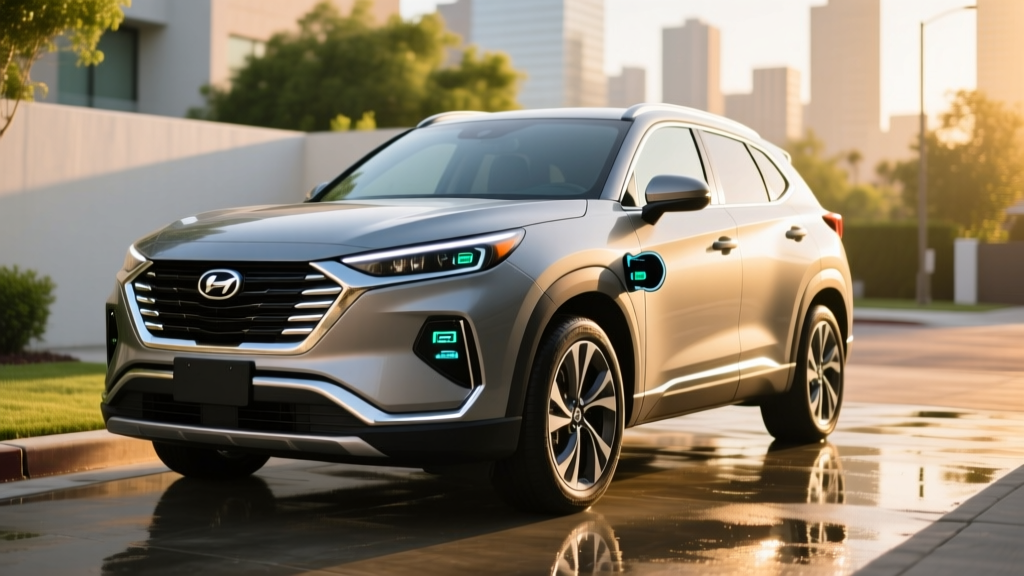
The 2026 Hyundai Tucson Hybrid Limited occupies a specific niche: buyers who want the fuel-sipping efficiency of electrification without ever plugging in. This is a conventional hybrid (HEV), not a plug-in hybrid (PHEV). It generates all its electricity from regenerative braking and its gasoline engine — no charging cable required. For 2026, the Tucson Hybrid carries over the proven 1.6-liter turbocharged hybrid powertrain that debuted with the current generation, refined with updated infotainment and driver-assistance features.
The Limited trim sits at the top of the Tucson Hybrid lineup, bundling premium features like leather seating, a panoramic sunroof, a 10.25-inch digital instrument cluster, and Hyundai's full suite of Highway Driving Assist features. But the core question for hybrid shoppers is always efficiency, reliability, and total cost. Let's break down every number that matters.
2026 Tucson Hybrid Limited: Key Specifications
| Specification | 2026 Tucson Hybrid Limited |
|---|---|
| Powertrain | 1.6L Turbo GDI 4-cyl + electric motor |
| Combined Horsepower | 231 HP |
| Combined Torque | 271 lb-ft |
| Transmission | 6-speed automatic |
| Drivetrain | HTRAC AWD (standard on all Hybrid trims) |
| EPA MPG (City / Hwy / Combined) | 37 / 36 / 37 MPG |
| Fuel Tank Capacity | 14.0 gallons |
| Estimated Total Range | ~518 miles |
| 0–60 mph | ~7.1 seconds (est.) |
| Cargo Volume (behind 2nd row) | 38.7 cu ft |
| Cargo Volume (seats folded) | 80.3 cu ft |
| Towing Capacity | 2,000 lbs |
| Base MSRP (Limited trim) | $39,900 (est.) |
| Hybrid Battery Warranty | 10 years / 100,000 miles |
Fuel Economy: EPA Ratings vs. Real-World MPG
According to fueleconomy.gov, the Hyundai Tucson Hybrid AWD is rated at 37 MPG city, 36 MPG highway, and 37 MPG combined. These figures apply across all Hybrid trims, including the Limited, since they share the identical powertrain and AWD system.
This is a critical distinction from conventional gas vehicles, which get worse mileage in the city. The Tucson Hybrid's electric motor handles low-speed acceleration, reducing engine load where gas cars waste the most fuel. Cold weather will knock 2–4 MPG off these figures due to increased engine warm-up time and reduced battery efficiency — expect 33–35 MPG combined in winter for northern-climate owners.
Powertrain Deep Dive: 231 HP with Turbo-Hybrid Efficiency
The Tucson Hybrid pairs a 1.6-liter turbocharged GDI four-cylinder engine producing 180 HP and 195 lb-ft of torque with a 47.7 kW (64 HP) electric motor integrated into the transmission housing. Combined system output is 231 HP and 271 lb-ft of torque, routed through a conventional 6-speed automatic transmission — not a CVT, which many hybrid buyers find rubbery and unrefined.
The HTRAC all-wheel-drive system is standard on every Tucson Hybrid trim. Unlike mechanical AWD systems, the Tucson Hybrid uses an electronically controlled coupling to send torque rearward when slip is detected. This is adequate for rain, light snow, and gravel, but it's not designed for serious off-road use. The hybrid battery — a 1.49 kWh lithium-ion pack — is mounted under the rear seats, preserving cargo space and keeping the center of gravity low.
Acceleration is brisk for a compact hybrid SUV. The turbo engine and electric motor together deliver strong low-end torque, and the 0–60 mph time of approximately 7.1 seconds is competitive with non-hybrid turbocharged rivals. The electric motor fills in the torque gap while the turbo spools up, eliminating the lag common in small turbo engines.
HEV vs. PHEV vs. EV: Which Tucson Is Right for You?
Hyundai offers the Tucson in three electrified flavors. Here's how they compare and who each one serves:
| Factor | Tucson Hybrid (HEV) | Tucson Plug-In Hybrid (PHEV) | Full EV (e.g., Ioniq 5) |
|---|---|---|---|
| Needs to plug in? | No | Yes (recommended) | Yes (required) |
| EPA Combined MPG / MPGe | 37 MPG | 35 MPG (gas) / 80 MPGe (electric) | 114 MPGe |
| Electric-Only Range | N/A | ~33 miles | 260–310 miles |
| Total Range | ~518 miles | ~440 miles (gas + electric) | 260–310 miles |
| Battery Size | 1.49 kWh | 13.8 kWh | 58–77.4 kWh |
| Home Charging Needed? | No | Recommended (Level 2, ~2 hrs) | Yes (Level 2, 5–8 hrs) |
| Federal Tax Credit (§30D) | Not eligible | Up to $7,500 (eligibility varies) | Up to $7,500 (eligibility varies) |
| Approx. Starting MSRP | ~$34,000 (SEL) | ~$40,000 (SEL) | ~$42,000 (Ioniq 5) |
Choose the Tucson Plug-In Hybrid (PHEV) if: You can install a Level 2 charger at home, your daily commute is under 30 miles round-trip (covering most days on electric alone), you want the option of electric-only driving while retaining a gas engine for road trips, and you may qualify for the §30D federal tax credit.
Choose a full EV if: You have reliable home charging, you want the lowest per-mile fuel cost, you want zero tailpipe emissions, and you're comfortable with a 250–310 mile range and DC fast charging for road trips.
Pricing, Trims, and Tax Credit Eligibility
The 2026 Tucson Hybrid is offered in three trims. Estimated MSRP pricing (destination included):
- Blue: ~$34,000 — the efficiency-oriented base trim (note: some model years offer a Blue trim with slightly higher MPG due to lighter weight and lower-resistance tires)
- SEL Convenience: ~$36,500 — adds features like a power liftgate, heated front seats, and proximity key
- Limited: ~$39,900 — fully loaded with leather, panoramic sunroof, premium audio, Highway Driving Assist, and a 360-degree camera
Federal tax credit: The Tucson Hybrid (HEV) does not qualify for the IRS §30D Clean Vehicle Credit. That credit is reserved for plug-in electric vehicles (BEVs and PHEVs) meeting battery-sourcing and critical-mineral requirements. The Tucson Plug-In Hybrid may qualify for up to $7,500, but eligibility depends on your adjusted gross income, the vehicle's MSRP (SUV cap: $80,000), and battery-component sourcing rules that change annually. Always verify current-year eligibility at IRS.gov and consult a tax professional before relying on the credit in your purchase decision.
State incentives: Some states offer rebates or HOV-lane access for hybrids, but these vary widely and change frequently. Check your state's energy office or DMV for current programs.
Battery Longevity, Warranty, and Replacement Cost
Hybrid batteries in the Tucson use a relatively small 1.49 kWh pack that is never fully charged or fully depleted — the battery management system maintains a state-of-charge buffer (roughly 40–80% SoC) at all times. This shallow-cycling strategy dramatically extends cell life. Real-world data from earlier Hyundai and Kia hybrid models shows that most 1.5–2.0 kWh hybrid batteries retain >90% capacity after 150,000 miles.
Out-of-warranty replacement cost: If the hybrid battery fails after the 10-year/100,000-mile warranty expires, replacement costs typically range from $2,500 to $4,500 including parts and labor. This is significantly less than a full EV battery replacement ($10,000–$20,000+) because the pack is small. Refurbished and aftermarket hybrid batteries are increasingly available for $1,500–$2,500, further reducing long-term risk.
The 1.6L turbo engine and 6-speed automatic transmission are conventional, well-understood components covered by Hyundai's 5-year/60,000-mile powertrain warranty. The electric motor, being a simple device with no moving contacts, rarely fails and is covered under the hybrid-system warranty.
Reliability and Ownership Costs
The Tucson Hybrid's powertrain has been in production since the 2022 model year, giving Hyundai several years of field data. IIHS has awarded the Tucson strong crash-test ratings, and the hybrid variant shares the same structural safety cell. NHTSA ratings have been similarly positive, with 5-star overall scores for recent model years.
Maintenance costs for the Tucson Hybrid are slightly lower than the gas-only Tucson. Regenerative braking reduces wear on the friction brake pads — many hybrid owners report original brake pads lasting 80,000–100,000 miles. There's no timing belt to replace (the 1.6T uses a timing chain), and the hybrid system adds no routine maintenance items. Oil changes follow the standard 7,500-mile interval.
Insurance premiums for the Tucson Hybrid Limited are typically 5–10% higher than the gas-only equivalent, reflecting the higher MSRP and the cost of hybrid-system repairs in a collision. However, the fuel savings offset this quickly. At 37 MPG combined vs. 28 MPG for the gas Tucson AWD, a driver covering 15,000 miles per year at $3.50/gallon saves approximately $530 annually on fuel — roughly $2,650 over five years.
Pros and Cons: 2026 Tucson Hybrid Limited
- 37 MPG combined — strong for an AWD compact SUV
- 231 HP provides confident acceleration
- 6-speed automatic avoids CVT drone
- Standard HTRAC AWD on all trims
- 10-year/100,000-mile hybrid battery warranty
- No plugging in — zero behavioral change from a gas car
- Limited trim is well-equipped for the price
- No federal tax credit (HEV, not PHEV)
- Highway MPG drops to ~33–35 at sustained 75+ mph
- 1.49 kWh battery means minimal electric-only assist at low speeds
- 2,000-lb towing capacity trails some rivals
- Limited trim approaches $40K — close to PHEV territory
- No spare tire (tire-inflator kit only)
Frequently Asked Questions
How many MPG does the 2026 Tucson Hybrid Limited get?
The EPA rates the Tucson Hybrid AWD at 37 MPG city, 36 MPG highway, and 37 MPG combined. In real-world driving, expect 35–39 MPG combined, with city driving often exceeding the EPA estimate and sustained highway driving falling slightly below. Cold weather typically reduces efficiency by 2–4 MPG.
Does the Tucson Hybrid need to be plugged in?
No. The Tucson Hybrid is a conventional hybrid (HEV). It charges its small battery entirely through regenerative braking and the gasoline engine. You simply fill it with gas like any other car. If you want plug-in capability, look at the Tucson Plug-In Hybrid (PHEV), which offers ~33 miles of electric-only range.
Is the 2026 Tucson Hybrid reliable?
The Tucson Hybrid uses a powertrain that has been in production since 2022, and Hyundai backs the hybrid battery with a 10-year/100,000-mile warranty — one of the best in the industry. The 1.6L turbo engine and 6-speed automatic are conventional components with well-established service networks. Hybrid-specific components (electric motor, inverter) have proven highly reliable across the Hyundai/Kia lineup.
What does it cost to replace the Tucson Hybrid battery?
Out-of-warranty replacement typically costs $2,500–$4,500 including parts and labor. However, the battery is warranted for 10 years/100,000 miles, and real-world data from similar Hyundai/Kia hybrid packs shows most retain over 90% capacity well past 150,000 miles. Refurbished replacements are available for $1,500–$2,500 if needed post-warranty.
Does the 2026 Tucson Hybrid qualify for a tax credit?
No. The conventional Tucson Hybrid (HEV) does not qualify for the federal §30D Clean Vehicle Credit, which is reserved for plug-in vehicles. The Tucson Plug-In Hybrid may qualify for up to $7,500 depending on your income, the vehicle's MSRP, and battery-sourcing rules. Check IRS.gov for current-year eligibility details.
How does the Tucson Hybrid compare to the Toyota RAV4 Hybrid?
The RAV4 Hybrid is rated at 39–41 MPG combined (depending on trim) — slightly higher than the Tucson Hybrid's 37 MPG. However, the Tucson offers more horsepower (231 vs. 219 HP), a more refined 6-speed automatic vs. the RAV4's CVT, and Hyundai's 10-year warranty vs. Toyota's 10-year/150,000-mile hybrid battery coverage. Both are strong choices; the RAV4 edges out on fuel economy, while the Tucson leads in powertrain refinement and tech features.