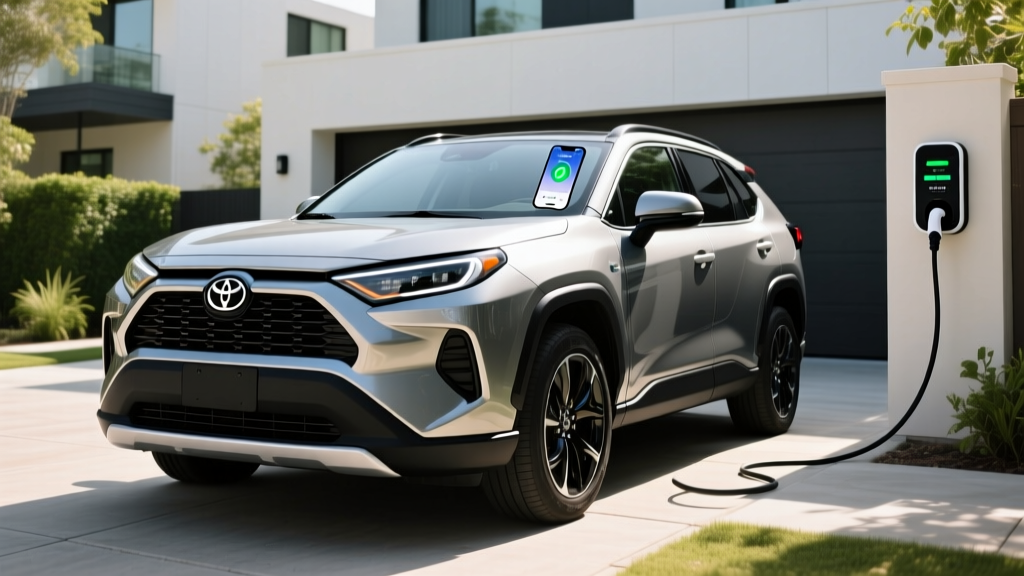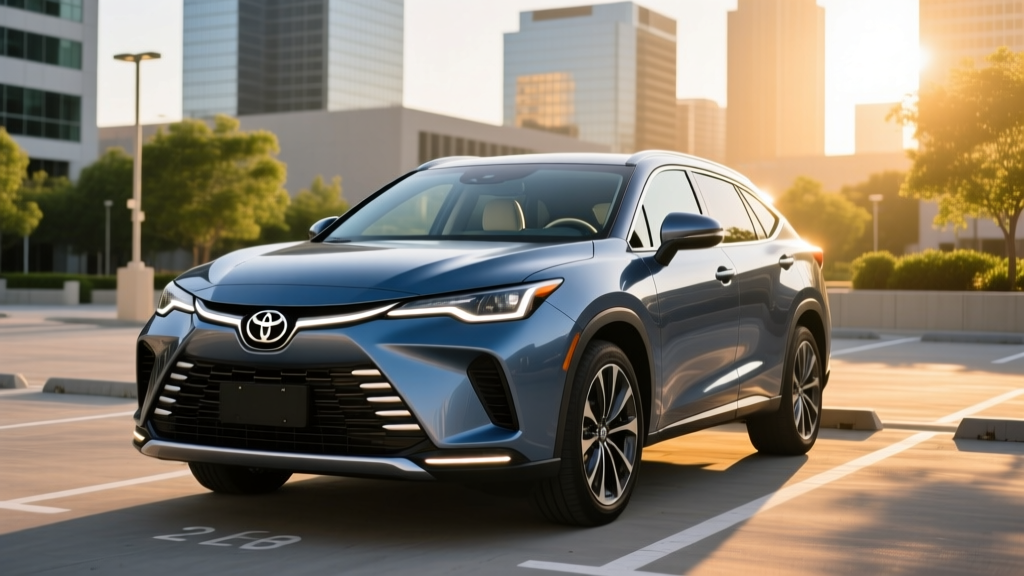
The Toyota Venza occupies a specific niche in the midsize SUV segment: a hybrid-only nameplate that prioritizes fuel efficiency and standard all-wheel drive over maximum cargo volume or third-row seating. For 2026, the Venza continues as a conventional hybrid electric vehicle (HEV) — meaning it requires no plug, no charging routine, and no range-anxiety calculus. You fuel it like any other car, and the hybrid system handles the rest.
But with Toyota's own RAV4 Hybrid and RAV4 Prime (a plug-in hybrid) drawing massive sales, and full EVs like the Hyundai Ioniq 5 and Tesla Model Y pulling buyers toward electrification, where does the Venza fit? This review breaks down the 2026 Toyota Venza hybrid's real-world efficiency, powertrain details, ownership costs, and battery longevity so you can decide whether it earns a spot in your driveway.
HEV vs PHEV: What the Venza Actually Is
Before examining specs, it's worth clarifying a common point of confusion. The 2026 Toyota Venza is a conventional hybrid (HEV), not a plug-in hybrid (PHEV). Here's the practical difference:
| Feature | Conventional Hybrid (HEV) — Venza | Plug-in Hybrid (PHEV) — e.g., RAV4 Prime |
|---|---|---|
| Plug-in charging | No — refuels at gas station only | Yes — plugs in for electric-only miles |
| Electric-only range | Less than 1 mile at low speed | Typically 25–42 miles |
| Battery size | ~1.6 kWh (small, self-charging) | ~18.1 kWh (larger, grid-chargeable) |
| Federal tax credit (§30D) | Not eligible | May qualify, subject to IRS sourcing rules |
| Best for | Drivers without home charging access | Drivers with home charging and short commutes |
The Venza's hybrid system recovers energy through regenerative braking and the gasoline engine to keep its small battery charged. You never need to think about plugging in. If you want electric-only commuting, you'd need to look at a PHEV like the RAV4 Prime or a full battery-electric vehicle (BEV).
Fuel Economy: EPA Ratings and Real-World MPG
The 2026 Venza hybrid carries over Toyota's proven 2.5-liter four-cylinder hybrid powertrain with electronic on-demand AWD. The EPA fuel economy ratings are consistent across all trims (LE, XLE, Limited, Nightshade):
| Driving Cycle | EPA Rating |
|---|---|
| City | 40 MPG |
| Highway | 37 MPG |
| Combined | 39 MPG |
Source: fueleconomy.gov
Real-World MPG: What Owners Actually See
Toyota's hybrid system tends to perform close to — or even slightly above — EPA estimates in city driving, where regenerative braking and electric-motor assist do the most work. On predominantly urban routes with stop-and-go traffic, expect 40–43 MPG in moderate temperatures.
Highway driving tells a different story. At sustained 70–80 mph speeds, the gasoline engine carries most of the load, and aerodynamic drag reduces efficiency. Expect 34–37 MPG on highway-heavy trips. In cold weather (below 30°F), the engine runs more frequently to maintain cabin heat and battery temperature, dropping combined efficiency to roughly 33–36 MPG.
Powertrain Specs: Horsepower, Drivetrain, and Acceleration
| Specification | 2026 Toyota Venza Hybrid |
|---|---|
| Engine | 2.5L 4-cylinder DOHC 16-valve |
| Hybrid system | Toyota Hybrid System (THS II) with 3 electric motors |
| Net combined horsepower | 219 HP |
| Front motor output | 88 kW (118 HP) |
| Rear motor output (AWD) | 40 kW (54 HP) |
| Drivetrain | Electronic On-Demand AWD (standard) |
| Transmission | Electronically controlled CVT (eCVT) |
| 0–60 mph (est.) | ~7.6 seconds |
| Towing capacity | Not rated for towing |
The Venza uses three electric motors: two on the front axle (one for propulsion, one primarily as a generator) and one dedicated motor on the rear axle for AWD traction. The rear motor engages automatically when the system detects slip or during hard acceleration, but the Venza defaults to front-wheel drive under normal cruising conditions to maximize efficiency.
Acceleration is adequate for merging and passing but not sporty. The 219 combined horsepower moves the Venza's ~4,100-pound curb weight competently, though the eCVT's drone under hard throttle is a reminder that this powertrain prioritizes efficiency over engagement.
Pricing, Trims, and Tax Credit Eligibility
The 2026 Venza is available in four trims, all with the same hybrid AWD powertrain:
| Trim | MSRP (est.) | Key Additions |
|---|---|---|
| LE | $36,465 | 8" touchscreen, Toyota Safety Sense 3.0, wireless CarPlay/Android Auto |
| XLE | $39,865 | SofTex seats, power liftgate, 12.3" display, heated front seats |
| Nightshade | $40,965 | Black exterior accents, black wheels, unique interior trim |
| Limited | $44,565 | Panoramic roof, JBL audio, ventilated seats, digital rearview mirror |
Does the Venza Qualify for a Federal Tax Credit?
No. The 2026 Toyota Venza hybrid does not qualify for the federal §30D Clean Vehicle Credit. Under current IRS rules, the §30D credit applies only to plug-in electric vehicles (BEVs and PHEVs) with sufficient battery capacity and compliant critical-mineral/battery-component sourcing. Conventional hybrids like the Venza are excluded entirely.
Some states offer their own incentives for hybrid vehicles, though these are less common than EV incentives. Check your state's department of revenue or energy office for current programs.
Hybrid Battery Warranty, Reliability, and Replacement Cost
Toyota provides one of the strongest hybrid battery warranties in the industry, and this is a major reason the brand dominates hybrid sales:
| Coverage Item | Toyota Warranty |
|---|---|
| Hybrid battery | 10 years / 150,000 miles (whichever comes first) |
| Hybrid system components (inverter, motors, control module) | 8 years / 100,000 miles |
| Basic vehicle warranty | 3 years / 36,000 miles |
| Powertrain warranty | 5 years / 60,000 miles |
How Long Do Toyota Hybrid Batteries Actually Last?
Real-world data from Toyota's hybrid fleet (over 20 million units sold globally since 1997) shows that the vast majority of hybrid batteries outlast their warranty periods. The Venza's nickel-metal hydride (NiMH) traction battery is smaller and less stressed than a full EV battery — it operates within a narrow state-of-charge window (roughly 40–80%), which dramatically reduces degradation.
Based on data from Prius and RAV4 Hybrid fleets, expect the Venza's hybrid battery to last 150,000–200,000+ miles before capacity loss becomes noticeable. Many first-generation Prius batteries exceeded 200,000 miles without replacement.
Battery Replacement Cost
If replacement is needed out of warranty, a new OEM Toyota hybrid battery for the Venza costs approximately $2,500–$4,000 installed at a dealership. Refurbished or aftermarket options can reduce this to $1,500–$2,500. This is a fraction of full EV battery replacement costs, which can exceed $10,000–$20,000.
Reliability ratings for Toyota's hybrid system are consistently among the highest in the industry. IIHS has historically rated the Venza well in crash testing, and Toyota Safety Sense 3.0 (standard on all trims) includes pre-collision braking, lane-tracing assist, adaptive cruise control, and automatic high beams.
Venza vs RAV4 Hybrid vs Full EV: Which Fits You?
The Venza competes most directly with its Toyota stablemate, the RAV4 Hybrid, and indirectly with compact/midsize EVs. Here's how the decision breaks down:
| Choose the Venza Hybrid If… | Choose the RAV4 Hybrid If… | Choose a Full EV If… |
|---|---|---|
| You want a quieter, more car-like ride | You need more cargo space (37.6 vs 28.8 cu ft) | You have reliable home Level 2 charging |
| Standard AWD is a priority in snow/rain regions | You want a PHEV option (RAV4 Prime, 42 mi electric) | Your daily commute is under 250 miles round-trip |
| You value upscale interior materials over utility | You need towing capability (up to 1,750 lbs vs none) | You want the lowest per-mile fuel cost (~$0.04/mi vs ~$0.10/mi) |
| You don't have access to plug-in charging | You prefer a more rugged aesthetic | You want to qualify for the $7,500 federal tax credit |
The Venza's main trade-off against the RAV4 Hybrid is utility. The RAV4 offers roughly 9 cubic feet more cargo space, a towing rating, and the available Prime plug-in variant. The Venza counters with a quieter cabin, more premium interior finishes, and slightly better highway fuel economy due to its lower, sleeker profile.
Against full EVs, the Venza wins on upfront cost, refueling convenience (gas stations are everywhere), and zero charging-infrastructure dependency. It loses on per-mile operating cost, emissions, and eligibility for federal incentives.
Pros
- 39 MPG combined EPA with standard AWD — no plug required
- 10-year/150,000-mile hybrid battery warranty
- Quiet, comfortable ride quality for the class
- Toyota Safety Sense 3.0 standard on all trims
- Proven, low-risk hybrid powertrain with 20+ years of fleet data
Cons
- No federal tax credit eligibility
- Less cargo space than RAV4 Hybrid (28.8 cu ft behind rear seats)
- Not rated for towing
- eCVT drone under hard acceleration
- Limited trim-level powertrain customization (one engine, one output)
Ownership Costs: 5-Year Fuel and Maintenance Estimate
| Cost Category | Venza Hybrid (est.) | Gas-Only Midsize SUV (est.) |
|---|---|---|
| Fuel (75,000 miles, $3.50/gal avg) | $6,730 | $10,500 |
| Maintenance (oil, filters, brakes) | $2,200 | $3,000 |
| Insurance (avg) | $7,800 | $7,200 |
| Total (5 yr / 75k mi) | ~$16,730 | ~$20,700 |
The Venza's hybrid system reduces brake wear significantly — regenerative braking handles most deceleration, so brake pads often last 80,000+ miles. Oil changes follow Toyota's standard 10,000-mile interval. The fuel savings versus a comparable gas-only SUV (approximately 25 MPG combined) add up to roughly $3,770 over five years at current fuel prices, partially offsetting the Venza's higher MSRP.
Frequently Asked Questions
How many MPG does the 2026 Toyota Venza hybrid get?
The EPA rates the 2026 Venza hybrid at 40 MPG city, 37 MPG highway, and 39 MPG combined. Real-world results typically match or slightly exceed city estimates (40–43 MPG) and fall slightly below highway estimates (34–37 MPG), depending on speed, temperature, and terrain.
Does the Venza hybrid need to be plugged in?
No. The Venza is a conventional hybrid (HEV), not a plug-in hybrid. It charges its own small battery through regenerative braking and the gasoline engine. You refuel only at gas stations.
Is the Venza hybrid reliable, and what does battery replacement cost?
Toyota's hybrid system has an extensive reliability track record spanning over two decades and 20 million+ vehicles. The hybrid battery is warrantied for 10 years/150,000 miles. Out-of-warranty replacement costs approximately $2,500–$4,000 at a dealership — far less than a full EV battery.
Does the 2026 Venza qualify for any tax credit?
The Venza hybrid does not qualify for the federal §30D Clean Vehicle Credit, which is reserved for plug-in vehicles (BEVs and PHEVs). Some states may offer hybrid-specific incentives — check your state's energy or revenue department for current programs.
How does the Venza compare to the RAV4 Hybrid?
Both use the same 219 HP hybrid AWD powertrain with similar MPG. The RAV4 Hybrid offers more cargo room (37.6 cu ft vs 28.8), a towing rating, and an available PHEV variant (RAV4 Prime). The Venza provides a quieter cabin, more premium interior materials, and a sleeker design. Choose based on utility vs refinement priorities.
Should I buy the Venza hybrid or a full EV?
Choose the Venza if you lack reliable home charging, frequently drive long distances in areas with sparse charging infrastructure, or want a lower upfront purchase price. Choose a full EV if you have Level 2 home charging, want the lowest per-mile operating cost, and wish to access the $7,500 federal tax credit (subject to income, MSRP, and battery-sourcing rules).
Specifications and pricing reflect manufacturer data and EPA estimates available at time of publication. Federal and state incentive rules are subject to change — verify current eligibility at irs.gov before purchasing. Real-world fuel economy varies based on driving conditions, temperature, and vehicle load.