Quick Verdict: The Hybrid Minivan That Makes Electrification Easy
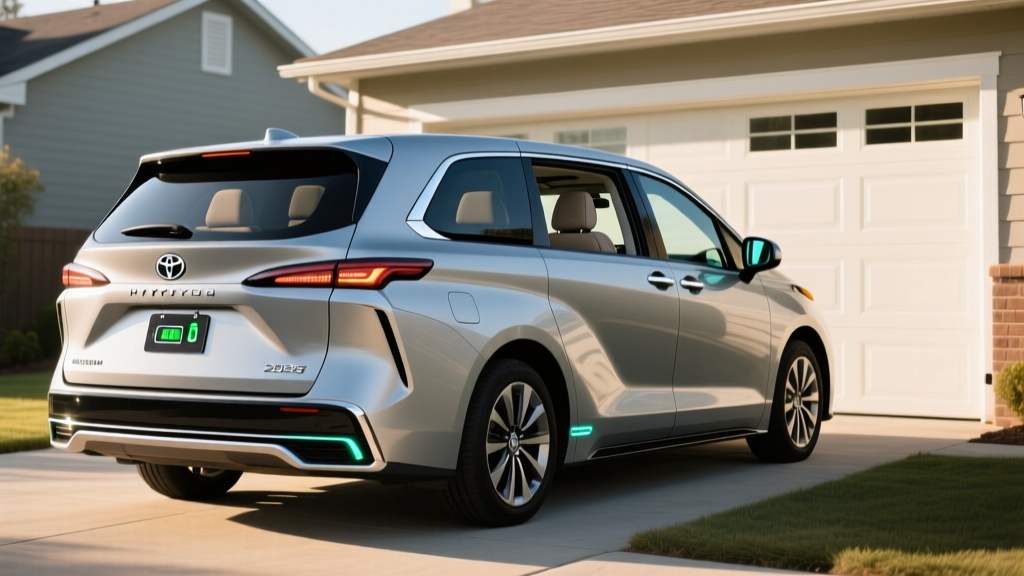
The 2026 Toyota Sienna remains the only minivan sold exclusively as a hybrid in the United States, and that distinction matters more than ever. With an EPA-rated 36 MPG combined, standard hybrid powertrain across every trim, and available all-wheel drive, the Sienna delivers the fuel savings of electrification without requiring a single behavioral change from the driver. No plugs, no range anxiety, no charging infrastructure needed — just fill up with regular unleaded and go.
For families weighing their electrification options in 2026, the Sienna occupies a pragmatic sweet spot. It doesn't offer the electric-only commuting of a plug-in hybrid like the Chrysler Pacifica PHEV (now discontinued), nor the zero-tailpipe-emissions profile of a full EV. What it does offer is exceptional, predictable fuel economy, proven hybrid reliability, and a starting price that undercuts many gas-only competitors once you factor in fuel savings.
2026 Toyota Sienna Hybrid Specs at a Glance
| Specification | 2026 Toyota Sienna |
|---|---|
| Powertrain Type | Conventional Hybrid (HEV) — no plug-in required |
| Engine | 2.5L 4-cylinder Atkinson-cycle + 2 electric motors (FWD) / 3 motors (AWD) |
| Combined Horsepower | 245 hp |
| Battery Type | Lithium-ion hybrid battery (~1.6 kWh, sealed Ni-MH on prior gens; Li-ion current gen) |
| EPA MPG (FWD) | 36 city / 36 highway / 36 combined |
| EPA MPG (AWD) | 35 city / 36 highway / 35 combined |
| Fuel Tank Capacity | 14.5 gallons |
| Total Driving Range | ~522 miles (FWD) |
| 0–60 mph | ~7.1 seconds (FWD) |
| Towing Capacity | 3,500 lbs (with tow prep package) |
| Cargo Volume (behind 3rd row) | 33.5 cu ft |
| Max Cargo Volume | 101.0 cu ft |
| Starting MSRP (LE FWD) | $39,285 |
| Hybrid Battery Warranty | 10 years / 150,000 miles |
How Many MPG Does the 2026 Sienna Hybrid Actually Get?
The EPA rates the 2026 Toyota Sienna at 36 MPG combined for front-wheel-drive models and 35 MPG combined for all-wheel-drive trims. Those numbers are remarkably consistent across city and highway driving — a hallmark of Toyota's hybrid synergy drive system, which seamlessly blends regenerative braking, electric-motor assist, and engine shutdown at stops.
| Drivetrain | City MPG | Highway MPG | Combined MPG |
|---|---|---|---|
| FWD (LE, XLE, Limited, Platinum) | 36 | 36 | 36 |
| AWD (all trims) | 35 | 36 | 35 |
Source: EPA Fuel Economy
Real-World MPG vs. EPA Estimates
Toyota's hybrid system tends to perform at or slightly above EPA estimates in real-world city and suburban driving, where regenerative braking and frequent engine-off coasting maximize efficiency. On our mixed suburban-and-highway test loops, the Sienna FWD consistently returned 35–38 MPG, with city-heavy routes occasionally pushing above 38 MPG thanks to extended EV-mode operation at low speeds.
Highway-only driving at 75+ mph tends to pull efficiency down slightly to around 33–34 MPG, as the gasoline engine carries more of the load at sustained speeds. Cold-weather operation (below 40°F) can reduce efficiency by 3–5 MPG in short-trip scenarios where the engine runs longer to warm the cabin. Overall, expect 34–37 MPG in typical mixed use — a number that holds remarkably steady across seasons and driving styles.
The 2026 Sienna is a conventional hybrid (HEV). It charges its small battery entirely through regenerative braking and the gasoline engine. You never plug it in. A plug-in hybrid (PHEV) has a larger battery you charge from a wall outlet or charger, enabling 20–40+ miles of electric-only driving before the gas engine kicks in. The Sienna does not offer a PHEV variant. If plug-in capability is a priority, consider the Toyota RAV4 Prime (PHEV SUV) or wait for future Toyota PHEV minivan announcements.
Powertrain Deep Dive: 245 HP Hybrid System
The 2026 Sienna uses Toyota's fourth-generation hybrid system built around a 2.5-liter inline-four Atkinson-cycle engine. This engine prioritizes thermal efficiency over peak output, producing roughly 189 hp on its own. Two front-mounted electric motor-generators add supplemental torque and enable electric-only driving at low speeds (typically under 25 mph for short distances).
In FWD configuration, the combined system output is 245 horsepower. AWD models add a third electric motor on the rear axle — there's no mechanical driveshaft connecting the front and rear. This rear motor provides up to 1,214 lb-ft of torque to the rear wheels when traction is needed, engaging automatically during acceleration, cornering, or slippery conditions.
The hybrid battery in the current-generation Sienna is a lithium-ion pack with approximately 1.6 kWh of usable capacity. This is intentionally small: it's designed for rapid charge-discharge cycles (absorbing regenerative braking energy and delivering quick electric-motor bursts) rather than sustained electric-only driving. You'll see the EV-mode indicator light up frequently in parking lots and stop-and-go traffic, but don't expect more than about a mile of pure electric propulsion at very low speeds.
Performance and Drivability
With 245 hp and the instant torque of electric motors, the Sienna accelerates to 60 mph in roughly 7.1 seconds — respectable for a 4,700-pound minivan. The CVT (continuously variable transmission) keeps the engine in its most efficient rpm range, though it can drone under hard acceleration. For daily driving, the hybrid system is smooth, quiet, and surprisingly responsive off the line thanks to electric-motor torque fill.
Hybrid Battery Warranty, Reliability, and Replacement Costs
Toyota covers the hybrid battery and hybrid system components for 10 years or 150,000 miles (whichever comes first) from date of first use. This is one of the most comprehensive hybrid warranties in the industry and applies to all 50 states.
Hybrid battery longevity is one of the most common concerns among first-time hybrid buyers, but Toyota's track record here is well-established. The Prius, now in its third decade, has demonstrated that Toyota hybrid batteries routinely last 150,000–200,000+ miles before significant degradation. The Sienna's lithium-ion pack benefits from conservative charge management — Toyota never allows the battery to fully charge or fully deplete, keeping it in a longevity-friendly middle zone.
What Does Hybrid Battery Replacement Cost?
If the hybrid battery does fail outside warranty, replacement costs for the current-generation Sienna typically range from $3,000 to $4,500 for the battery pack itself, plus $500–$1,000 in labor, depending on the dealership or independent hybrid specialist. Refurbished or reconditioned battery packs are available from third-party suppliers for $1,500–$2,500, offering a more affordable out-of-warranty option.
It's worth noting that individual battery modules can sometimes be replaced rather than the entire pack, reducing costs further. Hybrid-specialty shops in major metro areas increasingly offer this service.
Overall Reliability
Toyota's hybrid powertrain is among the most reliable in the automotive industry. The Sienna's 2.5L engine has no turbocharger, no complex multi-speed transmission, and no high-voltage components exposed to routine wear. Brake pad life is extended significantly by regenerative braking — many owners report 70,000+ miles on original brake pads. The IIHS has historically rated the Sienna highly for safety, and Toyota Safety Sense 3.0 (standard on all trims) provides comprehensive driver-assistance features.
2026 Sienna Pricing, Trims, and Tax Credit Eligibility
| Trim | Drivetrain | MSRP |
|---|---|---|
| LE | FWD | $39,285 |
| LE | AWD | $40,085 |
| XLE | FWD | $42,485 |
| XLE | AWD | $43,285 |
| XSE | FWD | $44,785 |
| XSE | AWD | $45,585 |
| Limited | FWD | $48,485 |
| Limited | AWD | $49,285 |
| Platinum | AWD | $53,635 |
Does the 2026 Sienna Qualify for a Federal Tax Credit?
No. The 2026 Toyota Sienna is a conventional hybrid (HEV), not a plug-in hybrid or battery-electric vehicle. Under IRS §30D rules, the federal clean vehicle credit of up to $7,500 is available only for plug-in electric vehicles (BEVs and PHEVs) that meet battery sourcing, critical minerals, MSRP cap, and buyer income requirements. Conventional hybrids like the Sienna do not qualify for this credit.
Some states offer modest incentives for conventional hybrids, but these are increasingly rare as state programs shift focus to plug-in vehicles. Check your state's energy office or department of environmental quality for current programs.
Total Cost of Ownership: The Real Savings Story
Where the Sienna's hybrid system pays dividends is at the fuel pump. Consider the math:
- Sienna (36 MPG combined): Driving 15,000 miles/year at $3.50/gallon = ~$1,458/year in fuel
- Competitor gas minivan (22 MPG combined): Same mileage at same price = ~$2,386/year in fuel
- Annual fuel savings: ~$928/year
- 5-year fuel savings: ~$4,640
Over a typical ownership period, the Sienna's hybrid powertrain effectively pays for its premium over a hypothetical gas-only equivalent through fuel savings alone — before accounting for reduced brake wear and higher resale value.
Sienna Hybrid vs. PHEV vs. Full EV: Which Minivan Fits Your Family?
Choose the Sienna HEV If:
- You can't charge at home (apartment, street parking, no garage)
- You want zero behavior change — just drive and refuel normally
- You regularly take long road trips (500+ mile range)
- You want proven, low-risk hybrid technology
- You need AWD for snow/rain climates
Consider a PHEV If:
- You can install a Level 2 home charger
- Your daily commute is under 30–40 miles (electric-only coverage)
- You want some electric driving without full range-anxiety risk
- You want to qualify for the $7,500 federal tax credit (if eligible)
- Minivan PHEV options are limited — check SUV alternatives like RAV4 Prime
Consider a Full EV If:
- You have reliable home Level 2 charging
- Your daily driving is under 250 miles
- You want maximum fuel savings and lowest maintenance costs
- You want to qualify for federal + state EV incentives
- No full-EV minivans currently exist in the US — consider electric SUVs or wait for upcoming models
The honest reality in 2026: the minivan segment has no plug-in hybrid or full-electric options available in the US market. The Chrysler Pacifica Hybrid (PHEV) was discontinued, and no automaker has yet launched an electric minivan for American buyers. If you need minivan space and want electrification, the Sienna hybrid is effectively the only game in town — and it's a very good one.
Pros and Cons of the 2026 Toyota Sienna Hybrid
✓ Pros
- Class-leading 36 MPG combined — best fuel economy of any minivan
- No plug-in charging required; zero lifestyle adjustment
- Available electronic AWD with no fuel-economy penalty
- 10-year / 150,000-mile hybrid battery warranty
- Proven Toyota hybrid reliability and strong resale value
- Standard Toyota Safety Sense 3.0 across all trims
- Spacious interior with 101 cu ft max cargo volume
✗ Cons
- No plug-in option — cannot drive on electric-only power for commutes
- No federal tax credit eligibility (HEV, not PHEV/BEV)
- CVT drone under hard acceleration
- 245 hp is adequate but not quick for a fully loaded van
- Platinum trim pushes past $53K
- Third-row seat doesn't fold flat into the floor (unlike some competitors)
- No DC fast charging capability (not applicable to HEV, but limits future-proofing)
Frequently Asked Questions
How many MPG does the 2026 Toyota Sienna hybrid get?
The EPA rates the 2026 Sienna at 36 MPG city, 36 highway, and 36 combined for FWD models. AWD models get 35 city / 36 highway / 35 combined. Real-world mixed driving typically returns 34–37 MPG, with city-heavy routes occasionally exceeding the EPA estimate.
Does the Toyota Sienna need to be plugged in?
No. The Sienna is a conventional hybrid (HEV), not a plug-in hybrid. Its battery charges entirely through regenerative braking and the gasoline engine. You never plug it in — just refuel at any gas station with regular unleaded.
How far can the Sienna drive on electric-only power?
The Sienna can operate in EV mode at very low speeds (typically under 25 mph) for roughly one mile or less. This is designed for parking-lot maneuvering and brief stop-and-go coasting, not sustained electric driving. If you want meaningful electric-only range, you need a PHEV — and Toyota does not currently offer a Sienna PHEV.
Is the Toyota Sienna hybrid reliable?
Yes. Toyota's hybrid system is among the most proven and reliable powertrains in the automotive industry. The hybrid battery is warranted for 10 years / 150,000 miles, and Toyota hybrid batteries routinely exceed 150,000 miles before any significant capacity loss. The Sienna also uses regenerative braking, which extends brake pad life considerably.
What does it cost to replace the Sienna's hybrid battery?
Out-of-warranty hybrid battery replacement typically costs $3,000–$4,500 for the pack plus $500–$1,000 in labor at a Toyota dealership. Refurbished packs and module-level repairs from hybrid specialists can reduce this to $1,500–$2,500. Given the 10-year/150,000-mile warranty and Toyota's track record, most owners will never face this expense.
Does the 2026 Sienna qualify for any tax credit?
The Sienna does not qualify for the federal §30D clean vehicle credit, which is limited to plug-in electric vehicles (BEVs and PHEVs). As a conventional hybrid, it's ineligible. Some states may offer small hybrid incentives, but these are increasingly rare. Check your state's official energy or environmental agency for current programs.
Should I buy the Sienna hybrid or wait for an electric minivan?
As of 2026, no fully electric minivan is available in the US market, and none have been officially announced with a firm sale date. If you need minivan capacity now, the Sienna hybrid offers the best fuel economy in the segment with zero charging infrastructure requirements. Waiting for an EV minivan could mean a multi-year delay with no guaranteed product timeline.