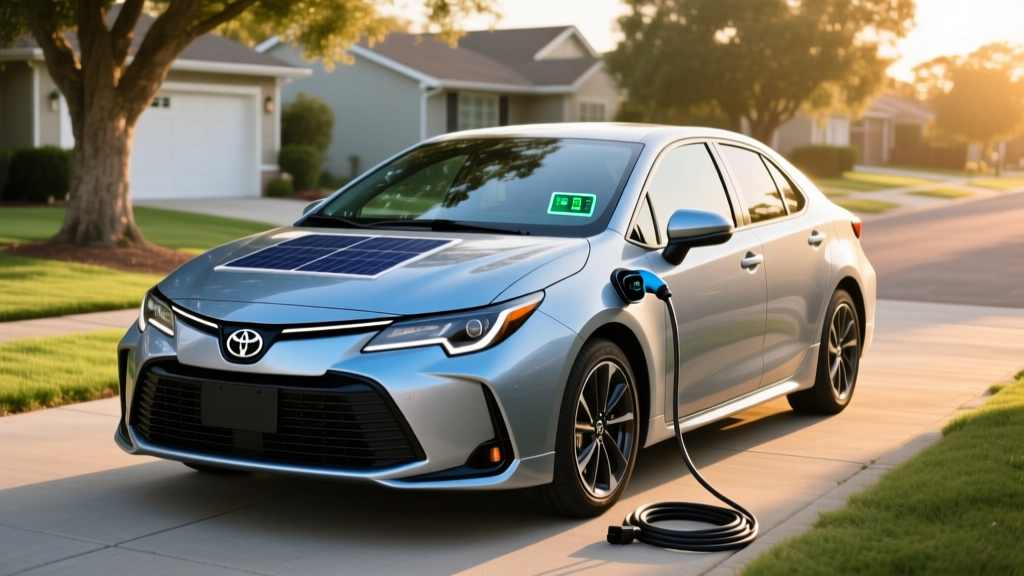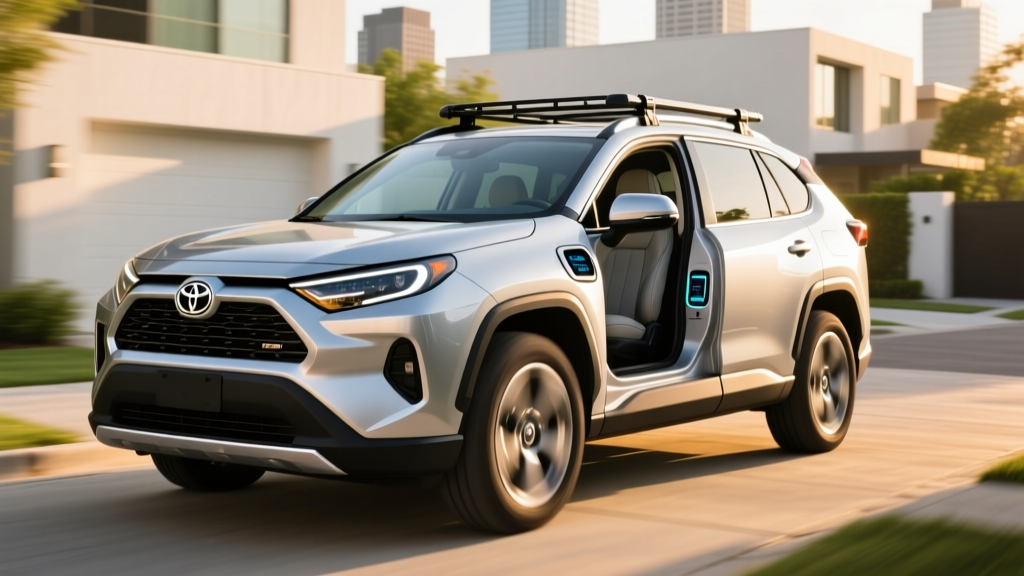
If you want all-weather traction, genuine electric-only commuting, and the flexibility to road-trip without route-planning anxiety, the 2026 Toyota RAV4 Prime remains the benchmark plug in hybrid AWD SUV. Now in its refreshed sixth-generation RAV4 cycle, the Prime pairs a 2.5-liter four-cylinder with a pair of electric motors and a larger battery than its predecessor — yielding 42 miles of EPA-rated electric range and a combined 302 horsepower. This review covers exact specs, real-world efficiency, charging logistics, tax-credit eligibility, and whether this PHEV fits your driveway better than a full EV or conventional hybrid.
What Is the RAV4 Prime, and How Does It Differ From the Regular RAV4 Hybrid?
HEV vs. PHEV: The Critical Distinction
The standard RAV4 Hybrid is a conventional hybrid (HEV). It uses a small battery (roughly 1.6 kWh) that recharges solely through regenerative braking and the gasoline engine. You never plug it in. It delivers strong fuel economy — around 39 MPG combined — but cannot drive on electricity alone beyond low-speed, short-distance creep.
The RAV4 Prime is a plug-in hybrid (PHEV). It carries a much larger 18.1 kWh lithium-ion traction battery that you charge from a wall outlet or Level 2 station. That battery enables 42 miles of pure electric driving before the gas engine seamlessly engages, turning the vehicle into a conventional hybrid for the remainder of your trip.
Both versions offer electronic on-demand AWD — a rear-mounted electric motor that engages the rear wheels when slip is detected or under hard acceleration. Neither uses a mechanical driveshaft to the rear axle. The Prime's AWD system is more potent because its rear motor produces more power, contributing to the 302 hp combined output versus the standard hybrid's 219 hp.
2026 RAV4 Prime AWD: Full Specifications
| Attribute | Value |
|---|---|
| Powertrain | 2.5L 4-cyl + 2 electric motors (F/R) |
| Combined Horsepower | 302 hp |
| Battery (usable) | 18.1 kWh lithium-ion |
| EPA Electric-Only Range | 42 miles |
| EPA Total Range (electric + gas) | ~440 miles |
| EPA MPGe (electric mode) | 94 MPGe |
| EPA MPG (hybrid mode, combined) | 38 MPG |
| EPA MPG (city / highway) | 40 city / 36 highway |
| 0–60 mph | 5.7 seconds |
| Level 1 Charging (120V) | ~12 hours (0–100%) |
| Level 2 Charging (240V, 32A) | ~2.5 hours (0–100%) |
| DC Fast Charging | Not available |
| AWD System | Electronic on-demand (rear electric motor) |
| Cargo Volume (rear seats up) | 33.4 cu ft |
| Towing Capacity | 1,500 lbs |
| Base MSRP (SE trim) | $46,450 |
| XSE trim MSRP | $49,950 |
| Battery Warranty | 10 years / 150,000 miles |
| Powertrain Warranty | 5 years / 60,000 miles |
Electric Range, Charging, and Daily Usability
The RAV4 Prime's 42-mile EPA electric range is the headline figure, but real-world results depend heavily on conditions. In mild weather (55–75°F) with city and suburban driving, owners routinely report 44–48 miles before the engine fires up. Highway driving at 70+ mph reduces that to roughly 32–35 miles. In freezing winter temperatures (below 30°F), expect 28–33 miles due to cabin heating demands and reduced battery efficiency.
Charging is straightforward but requires a Level 2 setup to be practical. The onboard charger accepts up to 6.6 kW on Level 2, meaning a full charge from empty takes approximately 2.5 hours on a 240-volt, 32-amp circuit. On a standard 120-volt household outlet (Level 1), a full charge takes roughly 12 hours — workable if you plug in every evening and drive fewer than 40 miles daily, but slow for topping up mid-day.
Notably, the RAV4 Prime does not support DC fast charging. There is no CCS or NACS port for highway quick-charging. For a PHEV with an 18.1 kWh battery, this is standard — most PHEVs skip DC capability because the small battery doesn't justify the cost and weight of fast-charge hardware. You will charge exclusively at home, at work, or at public Level 2 destinations.
Battery Longevity and Replacement Cost
Toyota covers the RAV4 Prime's hybrid battery for 10 years or 150,000 miles (whichever comes first), with a capacity retention threshold of 60%. If the battery degrades below that level within the warranty period, Toyota replaces it at no cost. Out of warranty, a replacement battery pack currently costs between $4,000 and $6,500 including labor at a dealership. Real-world data from earlier-generation RAV4 Primes (2021–2023) shows minimal degradation — most owners report 90%+ state of health after 60,000 miles. Toyota's hybrid synergy drive system is among the most proven in the industry, with millions of units on the road.
Fuel Economy: EPA Numbers vs. Real-World MPG
| Mode | City | Highway | Combined |
|---|---|---|---|
| Electric-only (MPGe) | 98 MPGe | 90 MPGe | 94 MPGe |
| Hybrid (gasoline, MPG) | 40 MPG | 36 MPG | 38 MPG |
Once the battery is depleted, the RAV4 Prime operates as a conventional hybrid, returning 38 MPG combined. In real-world driving, hybrid-mode efficiency is remarkably close to the EPA sticker — city driving with frequent regenerative braking often yields 41–43 MPG, while sustained highway cruising at 75 mph drops to 33–35 MPG. This is typical for PHEVs: the electric motors dominate in stop-and-go traffic, while the 2.5-liter Atkinson-cycle engine is less efficient at high, steady speeds.
Compared to the standard RAV4 Hybrid AWD (39 MPG combined), the Prime sacrifices 1 MPG in hybrid mode — a negligible trade-off for the 42 miles of electric range and 83 additional horsepower. If your daily commute is under 40 miles round-trip and you charge nightly, you may go months between fill-ups.
Pricing, Trims, and Federal Tax Credit Eligibility
The 2026 RAV4 Prime starts at $46,450 for the SE trim, including destination charge. The XSE trim, which adds a panoramic sunroof, 360-degree camera, and upgraded infotainment, starts at $49,950. Fully loaded with packages, an XSE can approach $55,000.
Federal tax credit eligibility for PHEVs falls under IRS §30D rules. The RAV4 Prime qualifies for up to $7,500 in federal tax credits, but eligibility depends on several conditions:
- MSRP cap: The vehicle's MSRP must not exceed $80,000 for SUVs (all RAV4 Prime trims qualify).
- Buyer income cap: Modified adjusted gross income must be ≤$150,000 (single), ≤$225,000 (head of household), or ≤$300,000 (joint filers).
- Battery sourcing: A percentage of critical minerals and battery components must be sourced from the U.S. or free-trade-agreement countries. Toyota has restructured its supply chain for 2026 to maintain eligibility, but the exact credit amount ($3,750 or $7,500) depends on whether both the minerals and component thresholds are met for your vehicle's build date.
- Point-of-sale transfer: As of 2024, buyers can transfer the credit to the dealer at purchase, reducing the purchase price upfront rather than waiting to claim it on a tax return.
Because sourcing rules tighten annually, verify eligibility with your dealer and consult a tax professional before purchase. State incentives vary widely — states like California, Colorado, and New York offer additional rebates of $1,000–$4,000 for PHEVs.
Performance, AWD Capability, and Driving Impressions
The RAV4 Prime's 302 combined horsepower makes it the quickest RAV4 in the lineup, hitting 60 mph in 5.7 seconds — genuinely quick for a compact SUV and faster than many turbocharged gas competitors. The AWD system uses an independent 54-hp rear electric motor that activates instantaneously, providing confident launches on wet pavement and adequate traction in moderate snow.
This is not a hardcore off-roader. Ground clearance is 8.0 inches, and the electronic AWD system is designed for on-road all-weather security, not rock crawling. In EV mode, the RAV4 Prime is rear-motor biased at low speeds, giving it a surprisingly smooth, quiet character around town. Transition from electric to hybrid mode is nearly imperceptible — the engine starts quietly and the CVT keeps revs reasonable under normal acceleration.
Ride quality leans slightly firm due to the added battery weight (~4,700 lbs curb weight, roughly 500 lbs more than the standard hybrid), but body control is composed. Steering is accurate if light, and the regenerative braking offers two levels of aggressiveness selectable via the shift lever (D and B modes).
Pros
- 42 miles electric range covers most commutes gas-free
- 302 hp and 5.7-second 0–60 make it genuinely quick
- 38 MPG hybrid mode when battery is depleted
- Proven Toyota reliability; 10-year/150,000-mile battery warranty
- Eligible for up to $7,500 federal tax credit (subject to sourcing rules)
- Strong resale value and low depreciation
Cons
- No DC fast charging capability
- Premium pricing: starts at $46,450 before incentives
- Cargo space slightly reduced vs. gas RAV4 (33.4 vs. 37.5 cu ft)
- 1,500-lb towing limit (lower than some gas competitors)
- Dealer markups common due to high demand
- Level 1 charging too slow for daily use without Level 2 install
Who Should Buy the RAV4 Prime AWD — and Who Shouldn't?
Choose the RAV4 Prime PHEV AWD if:
- Your daily round-trip commute is under 40 miles and you can charge at home nightly.
- You need AWD for snow, rain, or light trail use but don't want a full EV's range limitations in cold climates.
- You take regular road trips and don't want to plan around charging infrastructure.
- You want to reduce fuel consumption dramatically without going fully electric.
Choose a Full EV (e.g., Tesla Model Y, Hyundai Ioniq 5) if:
- You have reliable home Level 2 charging and your daily driving is under 250 miles.
- You want zero tailpipe emissions and minimal maintenance (no oil changes, no gas engine).
- You drive in an area with robust public DC fast-charging networks.
Choose the Standard RAV4 Hybrid (HEV) if:
- You cannot install a Level 2 charger at home (apartment, no garage, electrical panel limitations).
- You want the lowest purchase price and don't need electric-only driving.
- Your daily mileage is high and unpredictable, making PHEV battery depletion frequent.
Reliability and Long-Term Ownership
Toyota's hybrid powertrains are among the most reliable in the automotive industry. The RAV4 Prime uses the same proven 2.5-liter Dynamic Force engine and hybrid transaxle architecture found in millions of Toyota hybrids worldwide. IIHS testing has awarded the RAV4 family top safety ratings, and Consumer Reports consistently ranks Toyota among the most reliable brands for hybrid and PHEV vehicles.
The high-voltage battery is sealed, liquid-cooled, and managed by a sophisticated thermal system that prevents the extreme charge states most damaging to lithium-ion cells (the system maintains a buffer, never allowing true 0% or 100% at the cell level). Out-of-warranty replacement costs of $4,000–$6,500 are significant but comparable to a transmission replacement on a conventional vehicle — and far less likely to be needed within the first 150,000 miles based on historical Toyota hybrid data.
Insurance costs run 10–15% higher than the standard RAV4 Hybrid due to the higher replacement value and repair complexity of the PHEV powertrain. Shop quotes before purchasing.
Frequently Asked Questions
How many MPG does the RAV4 Prime plug-in hybrid AWD get?
The EPA rates the 2026 RAV4 Prime AWD at 38 MPG combined (40 city / 36 highway) once the battery is depleted and it operates in hybrid mode. In electric-only mode, it achieves 94 MPGe combined. Real-world city driving in hybrid mode often exceeds 40 MPG thanks to regenerative braking, while highway cruising at 75 mph returns 33–35 MPG.
How far can the RAV4 Prime go on electric only?
The EPA rates the RAV4 Prime at 42 miles of electric-only range. In mild weather with city driving, expect 44–48 miles. Highway driving reduces that to 32–35 miles, and freezing winter conditions can drop it to 28–33 miles. Total combined range (electric + gas) is approximately 440 miles.
Does the RAV4 Prime qualify for a tax credit?
Yes, the RAV4 Prime is eligible for up to $7,500 under the federal §30D clean vehicle credit, subject to buyer income limits ($150K single / $300K joint), the $80,000 MSRP cap for SUVs (all trims qualify), and battery critical-mineral and component sourcing requirements. The credit can be transferred to the dealer at point of sale. Verify current-year eligibility at IRS.gov and with a tax professional, as sourcing thresholds tighten annually.
Is the RAV4 Prime reliable, and what does battery replacement cost?
Toyota's hybrid systems have an exceptional reliability track record spanning two decades. The RAV4 Prime's battery is warranted for 10 years / 150,000 miles with a 60% capacity retention threshold. Out-of-warranty replacement costs $4,000–$6,500 including labor. Historical data from Toyota hybrids shows most batteries retain 90%+ capacity well past 100,000 miles.
Does the RAV4 Prime need to be plugged in?
You don't have to plug it in — the gas engine and regenerative braking will keep the battery charged, and it will function as a conventional hybrid returning 38 MPG. However, you'll miss the entire benefit of 42 miles of electric range. To get the most value, install a Level 2 (240V) home charger and plug in nightly. A full Level 2 charge takes about 2.5 hours.
How does the RAV4 Prime compare to a full EV?
A full EV like the Tesla Model Y or Hyundai Ioniq 5 offers 270–320 miles of range, zero tailpipe emissions, and lower maintenance (no engine, no oil changes). But EVs require reliable home or workplace charging, careful route planning for road trips in cold weather or charging-desert regions, and acceptance of higher upfront cost. The RAV4 Prime eliminates range anxiety entirely while still providing gas-free commuting for most daily driving. If your lifestyle supports home charging and your trips are predictable, a full EV saves more long-term. If you need maximum flexibility, the PHEV is the safer choice.