Quick Verdict: The 2026 Toyota RAV4 PHEV SE at a Glance
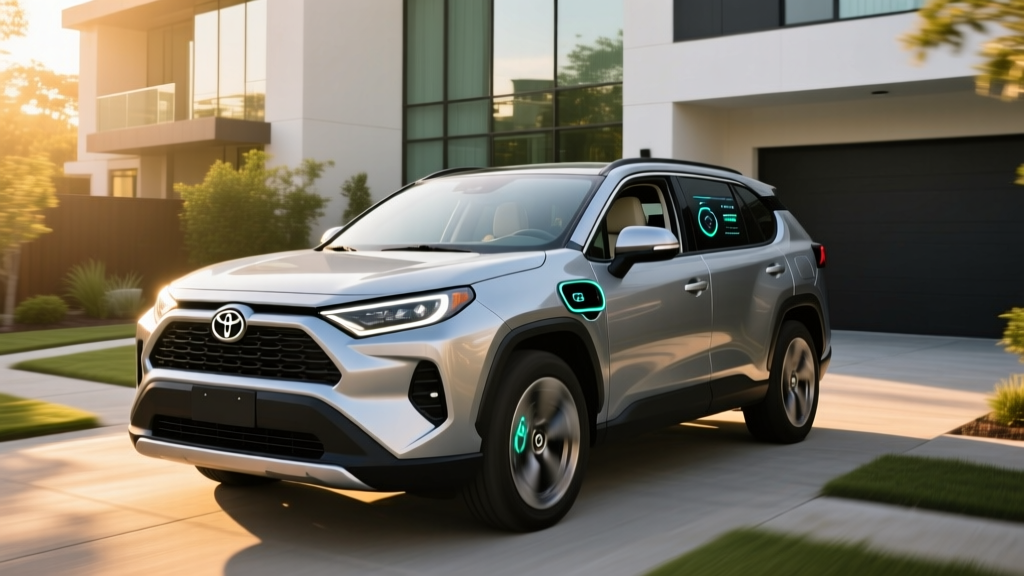
The 2026 Toyota RAV4 PHEV SE occupies a rare sweet spot in the compact SUV segment: a plug-in hybrid that genuinely functions as a daily electric commuter car while retaining the gas-engine safety net for road trips. With an EPA-estimated 42 miles of electric-only range, 302 combined horsepower, and standard all-wheel drive, the SE trim serves as the value-oriented entry point into Toyota's most powerful RAV4 variant. If your round-trip commute falls under 40 miles and you have access to home or workplace charging, this PHEV can operate as an EV five days a week — then burn regular 87-octane gasoline at 38 MPG combined on a weekend highway drive. It is not a full EV, and it is not a conventional hybrid. It is a bridge technology executed with Toyota's characteristic engineering conservatism.
| Spec | Value |
|---|---|
| EPA Electric-Only Range | 42 miles |
| EPA Combined MPGe (EV mode) | 94 MPGe |
| EPA Combined MPG (hybrid mode) | 38 MPG |
| Total Combined Range | ~520 miles |
| Battery Capacity (usable) | 14.9 kWh (lithium-ion, NMC chemistry) |
| Combined System Horsepower | 302 hp |
| 0–60 mph | 5.7 seconds |
| Drivetrain | Electronic AWD (eAWD) |
| Level 2 Charge Time (0–100%) | ~2.5 hours at 6.6 kW |
| DC Fast Charging | Not available |
| Base MSRP (SE trim) | $44,665 (incl. destination) |
| Battery Warranty | 10 years / 150,000 miles |
HEV vs PHEV: Understanding What the RAV4 PHEV SE Actually Is
Toyota sells the RAV4 in three powertrain flavors for 2026, and confusing them is the most common buyer mistake. Here is the distinction:
| Feature | RAV4 Gas | RAV4 Hybrid (HEV) | RAV4 PHEV (Prime) |
|---|---|---|---|
| Plug-in charging? | No | No | Yes |
| Electric-only driving | None | Very short, low speed | 42 miles at full speed |
| Battery size | ~1 kWh (12V + start) | ~1.6 kWh | 14.9 kWh usable |
| Combined HP | 203 hp | 219 hp | 302 hp |
| EPA Combined MPG | ~28 MPG | ~40 MPG | 38 MPG (hybrid) / 94 MPGe (EV) |
| Base MSRP range | ~$30,000 | ~$34,000 | ~$44,665 |
The conventional RAV4 Hybrid (HEV) never plugs in. It recovers energy through regenerative braking and uses a small battery to assist the gas engine, achieving strong MPG without any change to your fueling routine. The RAV4 PHEV (sold as the RAV4 Prime in some model years) adds a much larger battery and more powerful electric motors. You plug it in to unlock the 42-mile electric range. If you never plug it in, it still operates as a hybrid — but you are carrying 300+ pounds of battery capacity you are not utilizing, and your fuel economy drops slightly below the conventional HEV due to that weight penalty.
The SE trim sits at the base of the PHEV lineup. It forgoes some premium features found on the XSE and XSE Premium trims (such as the panoramic moonroof and JBL audio) but retains the full powertrain, the 6.6 kW onboard charger, and the eAWD system.
Fuel Economy: EPA Numbers and Real-World MPG
| Mode | City | Highway | Combined |
|---|---|---|---|
| Hybrid (charge-sustaining) | 40 MPG | 36 MPG | 38 MPG |
| Electric (MPGe) | — | — | 94 MPGe |
The 38 MPG combined figure in hybrid mode is competitive for an AWD compact SUV, though the conventional RAV4 Hybrid edges it out at roughly 40 MPG combined. The PHEV's slight highway deficit comes from the added mass of the 14.9 kWh battery pack — roughly 330 lbs more than the HEV.
Real-world expectations: In mixed suburban and highway driving at 65–75 mph with the battery depleted, expect 35–37 MPG in warm weather and 32–34 MPG once temperatures drop below freezing. The hybrid system's city advantage holds up well — regenerative braking recovers energy in stop-and-go traffic, and many owners report exceeding the 40 MPG city EPA figure in moderate climates. On the electric side, the 42-mile EPA range assumes moderate temperatures and mixed driving. In summer heat with A/C running, expect 36–39 miles. In winter cold (below 30°F), the battery's usable capacity shrinks and cabin heating draws significant energy, reducing electric range to roughly 28–33 miles. According to fueleconomy.gov, the RAV4 PHEV's combined MPGe of 94 translates to roughly 36 kWh per 100 miles in electric mode.
Electric-Only Range and Charging: What to Expect Daily
The 42-mile EPA electric range is the headline number, but how you charge matters as much as how far you drive.
Battery and charging specs:
- Usable battery capacity: 14.9 kWh (NMC lithium-ion chemistry)
- Onboard charger: 6.6 kW (Level 2, 240V)
- Level 2 charge time (0–100%): approximately 2.5 hours
- Level 1 charge time (120V household outlet): approximately 10 hours
- DC fast charging: not supported — no CCS or CHAdeMO port
The lack of DC fast charging is the RAV4 PHEV's most significant limitation relative to full EVs. You cannot pull into an Electrify America or Tesla Supercharger station and add range in 20 minutes. Every charge happens at Level 1 or Level 2 speeds. For most PHEV owners who charge overnight at home or at a workplace Level 2 station, this is perfectly adequate — the battery is small enough that a full replenishment takes just 2.5 hours on a 240V circuit. But if you were hoping to use public DC fast chargers on road trips to extend electric driving, that option does not exist here.
kW vs kWh reminder: The battery stores 14.9 kWh (kilowatt-hours) of energy — that is the fuel tank equivalent. The onboard charger accepts up to 6.6 kW (kilowatts) of power — that is the rate at which energy flows in. Think of kW as the hose diameter and kWh as the bucket size.
Total combined range: With a full charge and a full 14.5-gallon fuel tank, the RAV4 PHEV SE delivers approximately 520 miles of total range (42 electric + ~478 on gasoline in hybrid mode). This eliminates range anxiety entirely for road trips — you refuel at any gas station in three minutes.
Battery Warranty & Longevity
Toyota covers the RAV4 PHEV's hybrid battery with a 10-year / 150,000-mile warranty (whichever comes first) in all 50 states, covering defects and capacity loss below a defined threshold. The hybrid powertrain components (inverter, transaxle, ECU) carry an 8-year / 100,000-mile warranty. Toyota's hybrid battery track record is among the strongest in the industry — first-generation Prius batteries routinely exceed 200,000 miles. A full PHEV battery replacement, should it be needed out of warranty, currently runs approximately $4,000–$6,500 including labor at a Toyota dealer, though individual module replacement can reduce cost significantly.
Powertrain and Performance: 302 HP in a Compact SUV
The RAV4 PHEV pairs a 2.5-liter Atkinson-cycle four-cylinder gasoline engine with two electric motors — one on the front axle (134 kW) and one on the rear axle (40 kW). Combined system output is 302 horsepower, making this the quickest RAV4 Toyota sells.
The 0–60 mph time of 5.7 seconds is genuinely quick for the segment, and the electric motors deliver instant torque from a standstill, so the perceived acceleration in daily driving feels even punchier than the number suggests. The eAWD system uses the rear motor to provide all-wheel drive without a mechanical driveshaft — it engages automatically when slippage is detected and during hard acceleration. It is not a serious off-road system, but it handles rain, snow, and light gravel competently.
Driving modes include EV (electric-only, up to 42 miles), HV (hybrid, blending gas and electric), and Auto EV/HV (the car decides). There is also a CHG (charge) mode that uses the gas engine to recharge the battery while driving — useful if you want to save electric range for a zero-emission zone later in your trip, though this sacrifices fuel economy while active.
Pricing, Trims, and Federal Tax Credit Eligibility
The 2026 RAV4 PHEV SE starts at an MSRP of $44,665 including destination charges. The XSE trim starts around $47,000, and the fully loaded XSE Premium approaches $52,000. These prices place the PHEV at a significant premium over the conventional RAV4 Hybrid (which starts around $34,000) — roughly $10,000 more for the larger battery, more powerful motors, and plug-in capability.
Federal tax credit (§30D) eligibility: This is where the RAV4 PHEV faces a challenge under current IRS rules. To qualify for the up-to-$7,500 new clean vehicle credit, a plug-in hybrid must meet several requirements:
- Battery capacity: ≥7 kWh — the RAV4 PHEV's 14.9 kWh qualifies ✓
- MSRP cap: SUVs must be under $80,000 — all RAV4 PHEV trims qualify ✓
- Buyer income cap: AGI ≤ $150,000 (single) / $300,000 (joint) ✓ (buyer-dependent)
- Final assembly: Must be in North America — the RAV4 is assembled in Japan and Canada depending on VIN; check your specific vehicle ✗/✓
- Critical minerals & battery component sourcing: Must meet phased-in percentages per IRA rules — Toyota has faced challenges meeting these thresholds for Japan-sourced battery cells ✗/✓
- Point-of-sale transfer: Eligible buyers can transfer the credit to the dealer for an immediate price reduction, if the credit applies
Bottom line on tax credits: As of the 2026 model year, the RAV4 PHEV's eligibility for the full $7,500 federal credit is uncertain and VIN-dependent. Battery component and critical-mineral sourcing requirements have tightened, and many Toyota-built PHEVs have not consistently qualified. Before purchasing, verify the specific VIN's eligibility on the fueleconomy.gov tax credit lookup tool and consult a tax professional. Do not assume the credit applies — confirm it in writing.
Some states offer additional PHEV rebates or HOV lane access (California, Colorado, and others), but these vary by jurisdiction and change frequently. Check your state's energy office or DMV for current programs.
Who Should Choose the RAV4 PHEV SE vs a Full EV or Conventional Hybrid?
Pros
- 42-mile EV range covers most commutes gas-free
- 302 hp makes it the quickest RAV4 in the lineup
- No range anxiety — 520+ total miles, refuel anywhere
- Standard eAWD for all-weather confidence
- 10-year/150,000-mile hybrid battery warranty
- 2.5-hour Level 2 charge is convenient overnight
Cons
- No DC fast charging capability
- ~$10,000 premium over the conventional RAV4 Hybrid
- Federal tax credit eligibility is uncertain
- Electric range drops to ~28–33 mi in freezing weather
- Hybrid-mode MPG slightly lower than the lighter HEV
- Smaller cargo area than gas RAV4 due to battery placement
Decision Framework
Choose the RAV4 PHEV SE if: Your daily commute is under 40 miles round-trip, you can charge at home (Level 2 preferred) or at work, you take road trips beyond EV charging infrastructure, and you want one vehicle that does both electric commuting and long-distance gas driving without compromise.
Choose the conventional RAV4 Hybrid (HEV) if: You cannot charge at home, your budget is tighter, your commute is longer than 40 miles, or you simply want excellent MPG without plugging in. The HEV delivers 40 MPG combined for ~$10,000 less.
Choose a full EV (e.g., Tesla Model Y, Hyundai Ioniq 5) if: You want zero tailpipe emissions, have reliable home charging, your trips rarely exceed 250 miles (or you are comfortable with DC fast-charging stops), and you want lower per-mile fuel costs and reduced maintenance.
Reliability and Ownership Costs
Toyota's hybrid powertrain reliability is well-documented. The RAV4 Hybrid and PHEV share the A25A-FXS engine and eCVT transaxle architecture that has proven durable across millions of Toyota hybrid vehicles worldwide. There is no traditional automatic transmission to fail — the eCVT uses planetary gearsets with no clutch packs or bands. Brake wear is significantly reduced thanks to regenerative braking; many hybrid owners report original brake pads lasting 80,000+ miles.
The RAV4 PHEV's 14.9 kWh battery is larger than the HEV's, meaning more cell cycles over the vehicle's life. However, Toyota's battery management system maintains a conservative state-of-charge window (never charging to true 100% or discharging to true 0%), which reduces degradation. Based on Prius Prime data, owners can expect 8–12% capacity loss over 10 years under normal use, which would reduce the 42-mile EV range to approximately 37–39 miles — still highly functional.
Insurance premiums for the PHEV tend to run 5–10% higher than the conventional hybrid due to the higher replacement cost and repair complexity of the larger battery system. Get quotes before purchasing.
Frequently Asked Questions
How many MPG does the 2026 RAV4 PHEV SE get?
In hybrid mode (battery depleted), the EPA rates it at 40 city / 36 highway / 38 combined MPG. In electric mode, it achieves 94 MPGe combined. Real-world hybrid MPG typically ranges from 33–37 combined depending on temperature, terrain, and driving style.
How far can the RAV4 PHEV go on electric only?
The EPA estimates 42 miles of electric-only range. In warm weather with moderate driving, expect 36–40 miles. In freezing temperatures, expect 28–33 miles. Highway-speed electric driving at 70+ mph also reduces range versus the EPA's mixed-cycle test.
Does the RAV4 PHEV qualify for the $7,500 federal tax credit?
Eligibility under IRS §30D is VIN-dependent for the 2026 model year. The vehicle meets the battery capacity and MSRP requirements, but critical-mineral and battery-component sourcing rules may disqualify some or all units. Always verify via the fueleconomy.gov credit lookup and consult a tax professional before relying on the credit.
Can the RAV4 PHEV use DC fast chargers?
No. The RAV4 PHEV does not have a DC fast-charge port (no CCS or CHAdeMO connector). It charges exclusively via Level 1 (120V, ~10 hours) or Level 2 (240V, ~2.5 hours at 6.6 kW). This is typical for PHEVs — the battery is small enough that Level 2 charging is sufficient overnight.
Is the hybrid battery reliable, and what does replacement cost?
Toyota's hybrid batteries have an excellent longevity record, with many exceeding 200,000 miles. The PHEV battery is covered by a 10-year / 150,000-mile warranty. Out-of-warranty replacement costs approximately $4,000–$6,500 at a dealer, though partial module replacement can reduce that figure. Expect roughly 8–12% capacity loss over a decade.
What is the difference between the RAV4 PHEV SE and XSE trims?
The SE is the base PHEV trim. The XSE adds sport-tuned suspension, SofTex-trimmed seats, a larger infotainment display, and available premium packages. Both trims share the identical 302 hp powertrain, 14.9 kWh battery, 6.6 kW onboard charger, and 42-mile electric range.
Hybrid vs PHEV vs EV — which is right for me?
A conventional hybrid (HEV) is best if you cannot charge at home and want maximum MPG with zero behavior change. A PHEV like the RAV4 PHEV SE is ideal if you can charge at home and want electric commuting without giving up gas-engine range for road trips. A full EV (BEV) is best if you want the lowest operating costs, zero tailpipe emissions, and are comfortable planning charging stops on longer trips. The PHEV is the most flexible option but carries the highest upfront cost.