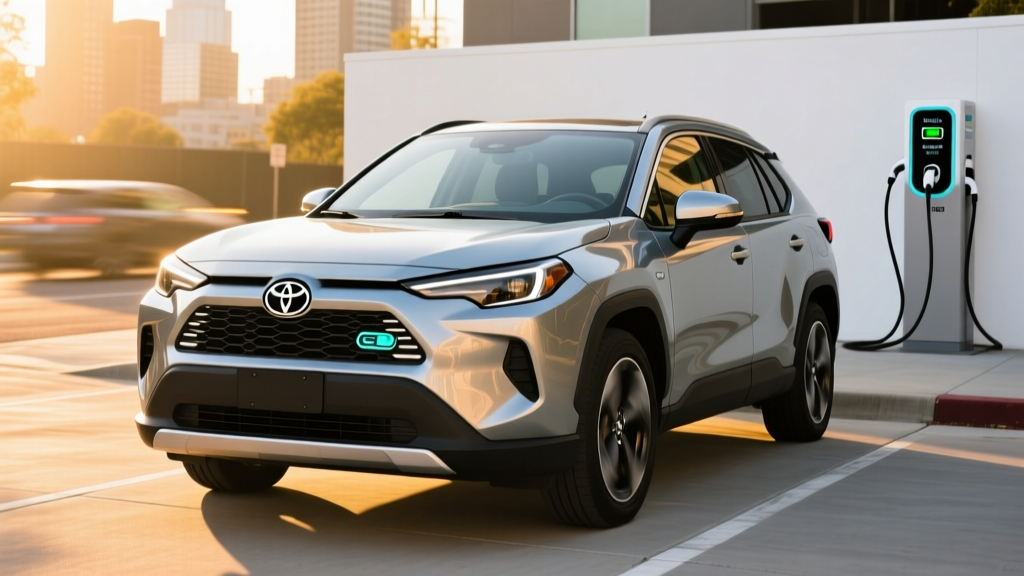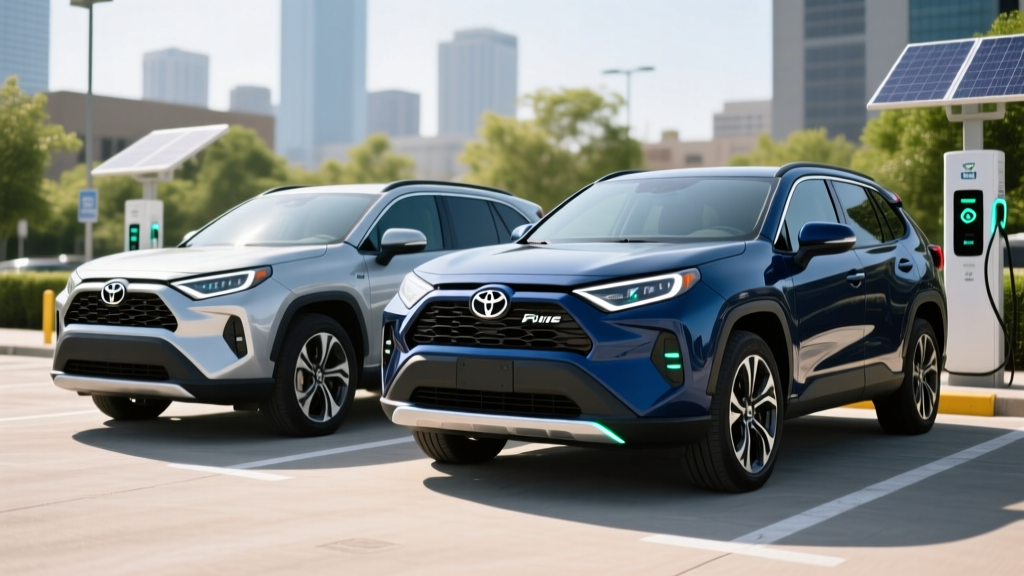
The Toyota RAV4 remains America's best-selling non-truck, and a huge share of those buyers opt for electrification. For 2026, Toyota continues to offer the RAV4 in two electrified flavors: the conventional RAV4 Hybrid (HEV) and the plug-in RAV4 Prime (PHEV). Both pair a 2.5-liter four-cylinder with electric motors, but the driving experience, fuel costs, and tax-credit eligibility differ dramatically between them.
If you've been searching for a hybrid Toyota SUV, the RAV4 lineup is the logical starting point. This guide breaks down every number that matters — EPA MPG, electric-only range, battery chemistry, warranty coverage, real-world efficiency, and total cost — so you can decide which version fits your garage and your budget.
RAV4 Hybrid (HEV) vs RAV4 Prime (PHEV): What's the Difference?
Conventional Hybrid (RAV4 Hybrid)
The RAV4 Hybrid is a self-charging hybrid. It recovers energy through regenerative braking and the gasoline engine — you never plug it in. A small 1.6 kWh nickel-metal hydride (NiMH) battery buffers energy for short electric assists, but the engine is always the primary mover. Think of it as a gas SUV that's simply more efficient.
Plug-In Hybrid (RAV4 Prime)
The RAV4 Prime adds a much larger 18.1 kWh lithium-ion battery and a more powerful electric drive system. You plug it into a wall outlet or Level 2 charger to fill that battery, giving you a meaningful electric-only driving range before the gas engine ever starts. Once the battery depletes, it reverts to conventional hybrid operation.
| Specification | RAV4 Hybrid (HEV) | RAV4 Prime (PHEV) |
|---|---|---|
| Powertrain | 2.5L I4 + 2 electric motors (AWD) | 2.5L I4 + 2 electric motors (AWD) |
| Combined Horsepower | 219 hp | 302 hp |
| Battery Capacity | 1.6 kWh (NiMH) | 18.1 kWh (Li-ion) |
| EPA Electric-Only Range | N/A | 42 miles |
| EPA Combined MPG (hybrid mode) | 39 MPG | 38 MPG (after battery depleted) |
| MPGe (electric + gas combined) | N/A | 94 MPGe |
| Total Range (gas + electric) | ~580 miles | ~600 miles |
| 0–60 mph | 7.4 seconds | 5.7 seconds |
| Level 1 Charge Time (120V) | N/A | ~12 hours |
| Level 2 Charge Time (240V) | N/A | ~2.5 hours (6.6 kW onboard) |
| DC Fast Charging | N/A | Not available |
| Starting MSRP | $33,575 | $44,900 |
Fuel Economy: Real-World MPG vs EPA Estimates
The EPA rates the 2026 RAV4 Hybrid at 41 city / 38 highway / 39 combined MPG (source: fueleconomy.gov). Hybrids typically outperform their EPA city ratings in stop-and-go traffic because regenerative braking recaptures energy that a gas car wastes as heat. In real-world city driving, many owners report 42–44 MPG. Highway driving is less favorable — expect 35–37 MPG at 75 mph, where aerodynamic drag dominates and the electric motor contributes less.
| Metric | RAV4 Hybrid (HEV) | RAV4 Prime (PHEV, hybrid mode) |
|---|---|---|
| City MPG | 41 | 40 |
| Highway MPG | 38 | 36 |
| Combined MPG | 39 | 38 |
| Combined MPGe (electric) | N/A | 94 MPGe |
| Real-World City (owner avg) | 42–44 MPG | 41–43 MPG |
| Real-World Highway (75 mph) | 35–37 MPG | 34–36 MPG |
MPGe explained: MPGe (miles per gallon equivalent) converts electricity consumption into a gasoline-equivalent number. The Prime's 94 MPGe applies only while driving on battery power. Once the battery depletes, you're back to the 38 MPG combined hybrid figure.
For the Prime, the real efficiency story depends on your commute. If your daily round trip is under 42 miles and you charge nightly, you may burn gasoline only on weekend road trips. If you never plug in, you're carrying 400+ pounds of battery dead weight and getting slightly worse MPG than the lighter HEV.
Electric-Only Range and Charging (RAV4 Prime)
The RAV4 Prime's EPA-rated electric-only range is 42 miles. In mild weather at city speeds, some drivers squeeze out 45–48 miles. Cold weather (below 35°F) and highway speeds (70+ mph) compress that to roughly 32–36 miles, as the battery loses capacity and cabin heating draws significant power.
Charging the Prime's 18.1 kWh battery is straightforward but slow compared to a full EV:
- Level 1 (120V household outlet): ~12 hours from empty. Plug in at night, wake up full. This works for most Prime owners.
- Level 2 (240V, 32A): ~2.5 hours using the onboard 6.6 kW charger. A home Level 2 station or workplace charger tops you off during a lunch break.
- DC Fast Charging: Not supported. The Prime uses a J1772 connector only — no CCS or NACS compatibility.
The lack of DC fast charging is a deliberate trade-off. The 18.1 kWh battery is small enough that Toyota prioritized cabin and cargo space over fast-charge hardware. For a PHEV designed around home and workplace charging, this is a reasonable choice — but it means road-trip charging isn't practical.
Performance and Powertrain
Both RAV4 variants use Toyota's e-AWD system with a 2.5-liter Dynamic Force four-cylinder engine paired with electric motors on both axles. The difference is in output.
The RAV4 Hybrid produces 219 combined horsepower, delivering a 7.4-second 0–60 mph time. Acceleration is adequate for merging and passing, though the CVT-style powertrain drones under hard throttle. The electric motor's instant torque makes it feel peppier than the number suggests around town.
The RAV4 Prime bumps combined output to 302 horsepower thanks to its more powerful front electric motor (134 kW vs 88 kW on the HEV). The result is a 5.7-second 0–60 — quicker than a Volkswagen GTI. On battery power alone, the Prime is genuinely quick and nearly silent, making it the most refined daily driver in the RAV4 lineup.
Pricing, Trims, and Tax Credit Eligibility
Here's where the math gets interesting — and where many buyers make mistakes.
The 2026 RAV4 Hybrid starts at $33,575 (LE AWD) and tops out around $41,000 for the Woodland Edition. It does not qualify for the federal §30D new EV tax credit because conventional hybrids are not plug-in vehicles. Some states offer modest hybrid rebates (check your state energy office), but there's no federal incentive.
The 2026 RAV4 Prime starts at $44,900 (SE) and reaches ~$50,000 for the XSE with Premium Package. As a plug-in hybrid with 42 miles of electric range, it may qualify for the federal §30D Clean Vehicle Credit of up to $7,500 — but eligibility hinges on several requirements (source: IRS.gov):
- MSRP cap: The vehicle's MSRP must not exceed $80,000 for SUVs (the Prime clears this easily).
- Buyer income cap: Modified AGI must not exceed $150,000 (single), $225,000 (head of household), or $300,000 (joint).
- Battery sourcing: Critical minerals and battery components must meet phased-in domestic/FRTA-country sourcing thresholds that tighten annually through 2032.
- Point-of-sale transfer: You can transfer the credit to the dealer for an immediate price reduction, or claim it on your tax return.
- VIN verification: The dealer must report the sale and VIN through the IRS Energy Credits Online portal.
Critical note: Battery sourcing rules have disqualified several PHEVs in prior model years. Before committing, ask the dealer for the vehicle's official IRS eligibility status via the DOE's fueleconomy.gov tax credit lookup. A tax professional can confirm whether your income and filing status qualify.
Battery Warranty and Replacement Cost
Toyota covers the hybrid battery in both the RAV4 Hybrid and RAV4 Prime for 10 years or 150,000 miles (whichever comes first) in all 50 states, following California's CARB-emissions warranty standard. The broader hybrid system (inverter, control module, motors) carries the same coverage.
Out-of-warranty replacement costs, based on current dealer pricing:
- RAV4 Hybrid (1.6 kWh NiMH): $2,500–$3,500 (parts + labor)
- RAV4 Prime (18.1 kWh Li-ion): $6,000–$8,500 (parts + labor)
In practice, Toyota hybrid batteries have demonstrated exceptional longevity. Taxi-fleet data and owner surveys regularly show NiMH packs lasting 200,000+ miles with minimal degradation. The Prime's larger lithium-ion pack has a shorter track record but benefits from a conservative state-of-charge buffer (Toyota never lets you use the full 18.1 kWh — usable capacity is ~14.5 kWh), which reduces cycle stress.
Reliability: What the Data Shows
Toyota's hybrid powertrain is among the most proven in the automotive industry. The RAV4 Hybrid uses the same THS (Toyota Hybrid System) architecture that's been refined since the 2001 Prius. The e-CVT planetary gearset has no clutches, belts, or traditional transmission components to wear out.
Consumer Reports and J.D. Power consistently rank the RAV4 Hybrid above average for predicted reliability. The most common complaints center on infotainment glitches and wind noise — not powertrain issues. The Prime's added electrical complexity (larger battery, onboard charger, charge port) introduces more potential failure points, but Toyota's 10-year/150,000-mile hybrid battery warranty provides a substantial safety net.
One often-overlooked reliability advantage: regenerative braking significantly reduces wear on the friction brake pads and rotors. Many RAV4 Hybrid owners report original brake pads lasting 80,000–100,000 miles.
Hybrid vs PHEV vs Full EV: Which RAV4 Fits You?
Choose the RAV4 Hybrid (HEV) if:
- You can't charge at home (apartment, street parking, no garage).
- You want maximum simplicity — no plugs, no charging apps, no behavior change.
- Your budget is under $40,000.
- You drive mostly city and suburban miles where the 41 MPG city rating shines.
Choose the RAV4 Prime (PHEV) if:
- You have reliable home or workplace Level 1/Level 2 charging.
- Your daily commute is under 42 miles round-trip (you'll rarely burn gas).
- You want EV-like daily driving without range anxiety on road trips.
- You qualify for the §30D tax credit, which can bring the effective price close to the Hybrid's top trims.
- You value the 302 hp performance upgrade.
Choose a Full EV (e.g., Tesla Model Y, Hyundai Ioniq 5) if:
- You want zero gasoline purchases and zero oil changes — ever.
- You have home Level 2 charging and access to DC fast-charging corridors for road trips.
- You drive more than 250 miles between charges regularly and can plan around charging stops.
Pros
- Class-leading fuel economy (39–41 MPG combined)
- Standard e-AWD on every trim
- 10-year/150,000-mile hybrid battery warranty
- Prime offers 42 miles EV-only + 302 hp
- Strong resale value and Toyota reliability record
- Prime may qualify for up to $7,500 federal credit
Cons
- No DC fast charging on Prime
- Prime is expensive ($44,900+ before credit)
- HEV gets no federal tax credit
- CVT drone under hard acceleration
- Infotainment still lags competitors in responsiveness
- Prime charge time is slow (12 hrs on Level 1)
Frequently Asked Questions
How many MPG does the Toyota RAV4 Hybrid get?
The 2026 RAV4 Hybrid is EPA-rated at 41 city / 38 highway / 39 combined MPG. Real-world city driving often yields 42–44 MPG thanks to aggressive regenerative braking. Highway driving at 75 mph typically returns 35–37 MPG.
How far can the RAV4 Prime go on electric only?
The EPA rates the RAV4 Prime at 42 miles of electric-only range. Expect 45–48 miles in mild city conditions and 32–36 miles in cold weather or at highway speeds. Once depleted, the gas engine kicks in and you get 38 MPG combined as a conventional hybrid.
Does the RAV4 Hybrid or Prime qualify for a tax credit?
The conventional RAV4 Hybrid does not qualify for any federal tax credit — it's not a plug-in vehicle. The RAV4 Prime may qualify for up to $7,500 under the IRS §30D Clean Vehicle Credit, subject to buyer income limits (up to $300,000 joint AGI), MSRP caps (under $80,000 for SUVs), and battery sourcing requirements that change annually. Confirm eligibility with your dealer and a tax professional before purchasing.
Is the RAV4 Hybrid reliable, and what does a battery replacement cost?
Toyota's hybrid system is one of the most proven in the industry, with two decades of real-world data supporting its longevity. The hybrid battery is warrantied for 10 years/150,000 miles. Out-of-warranty replacement runs $2,500–$3,500 for the Hybrid's NiMH pack and $6,000–$8,500 for the Prime's lithium-ion pack. Most owners never need a replacement within typical ownership periods.
Do I need to plug in the RAV4 Hybrid?
No. The RAV4 Hybrid (HEV) charges its small battery entirely through regenerative braking and the gasoline engine. You fuel it like any other gas car. Only the RAV4 Prime (PHEV) benefits from plugging in.
Can the RAV4 Prime DC fast charge?
No. The RAV4 Prime supports Level 1 (120V) and Level 2 (240V) AC charging only, via a J1772 connector. The 6.6 kW onboard charger fills the 18.1 kWh battery in about 2.5 hours on Level 2. DC fast charging is not available — the battery is small enough that Toyota omitted the hardware to preserve cargo space and keep weight down.