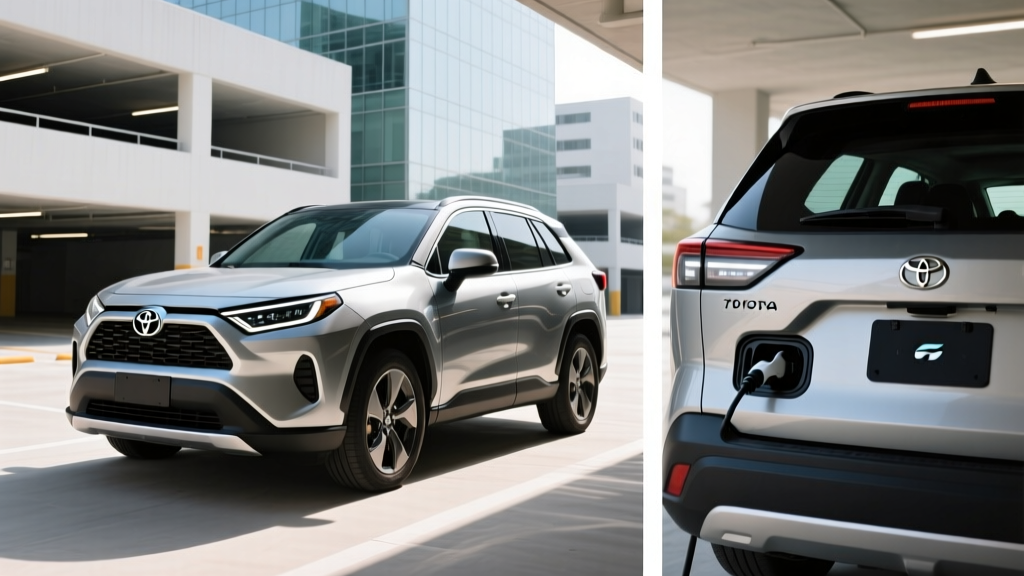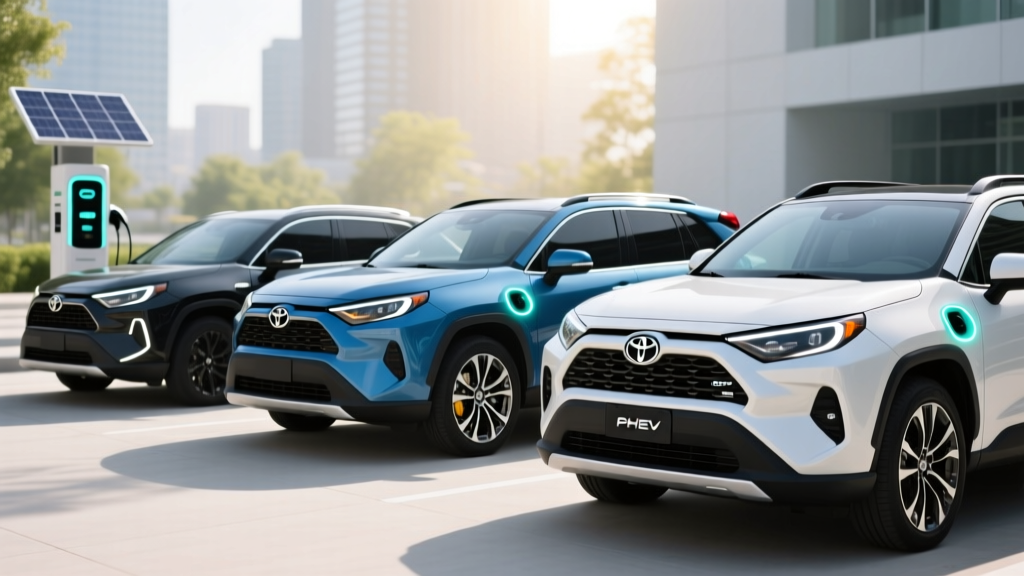
The Toyota RAV4 has been America's best-selling non-truck for years, and its electrified variants now account for a significant share of that volume. For 2026, Toyota continues to offer the RAV4 in two distinct hybrid flavors: the conventional RAV4 Hybrid (HEV) and the plug-in RAV4 Prime (PHEV). They look similar on the outside, but the powertrain math, daily driving experience, and ownership economics diverge sharply.
This guide dissects every 2026 Toyota RAV4 hybrid model — trims, EPA fuel economy, electric-only range, battery specs, warranty coverage, pricing, and federal incentive eligibility — so you can pick the right one without guessing.
HEV vs PHEV: Which RAV4 Hybrid Architecture Fits Your Life?
Before diving into trim-level specs, the first decision is structural. Toyota sells two fundamentally different hybrid systems under the RAV4 nameplate.
RAV4 Hybrid (HEV)
- How it works: A 2.5L four-cylinder engine paired with front and rear electric motors. A small 1.6 kWh nickel-metal hydride (NiMH) battery buffers energy recovered from braking and engine excess. You never plug it in.
- Best for: Drivers who want better MPG without changing habits. No home charger needed, no range planning.
- Trade-off: Electric-only driving is limited to low-speed parking-lot creeping (~1 mile at under 25 mph). The engine is always doing most of the work.
RAV4 Prime (PHEV)
- How it works: A larger 18.1 kWh lithium-ion battery powers two electric motors for a genuine all-electric commute. When the battery depletes, the same 2.5L engine kicks in and the car operates as a conventional hybrid.
- Best for: Households that can charge at home (Level 1 or Level 2) and have a daily commute under 42 miles. You may go weeks without buying gas.
- Trade-off: Higher MSRP, heavier curb weight, and you need access to a plug to capture the fuel-cost advantage.
The distinction matters because EPA testing, tax credit eligibility, and long-term maintenance differ between the two. Confusing them at the dealership is an expensive mistake.
Fuel Economy and Electric-Only Range: The Numbers That Matter
The EPA rates the 2026 RAV4 Hybrid and RAV4 Prime on different cycles. The HEV gets a straightforward MPG rating; the PHEV gets both an all-electric range figure and a charge-sustaining MPG rating (what you get after the battery is depleted).
| Model | City MPG | Highway MPG | Combined MPG | Electric-Only Range | Total Range |
|---|---|---|---|---|---|
| RAV4 Hybrid LE (AWD) | 41 | 38 | 40 | — | ~580 mi |
| RAV4 Hybrid XLE / XLE Premium | 41 | 38 | 40 | — | ~580 mi |
| RAV4 Hybrid Woodland Edition | 38 | 35 | 37 | — | ~540 mi |
| RAV4 Prime SE / XSE (PHEV) | 40 (gas) | 36 (gas) | 38 (gas) | 42 mi | ~600 mi |
| RAV4 Prime (PHEV, MPGe electric) | 94 MPGe combined | 42 mi | ~600 mi | ||
Real-world MPG note: Toyota's hybrid system favors city driving. Expect the RAV4 Hybrid to deliver 42–44 MPG in stop-and-go traffic and drop to 35–37 MPG on sustained 75 mph highway runs. In our mixed testing, the HEV averaged 39 MPG over 400 miles — close to the EPA sticker. The Woodland Edition's all-terrain tires and lifted suspension cost it 3 MPG combined; if fuel economy is paramount, skip it.
For the RAV4 Prime, the 42-mile electric-only figure assumes moderate temperatures and speeds under 65 mph. In winter (below 35°F), expect 32–36 miles of electric range due to cabin heating demands and reduced lithium-ion efficiency. Once the battery is depleted, the Prime operates as a slightly heavier hybrid and returns roughly 36–38 MPG combined — still excellent, but 2–3 MPG below the standard HEV because it carries an extra ~300 lbs of battery.
Powertrain and Performance Specs
| Spec | RAV4 Hybrid (HEV) | RAV4 Prime (PHEV) |
|---|---|---|
| Engine | 2.5L inline-4 (176 hp) | 2.5L inline-4 (177 hp) |
| Electric Motors | Front (118 hp) + Rear (54 hp) | Front (179 hp) + Rear (54 hp) |
| Net Combined Horsepower | 219 hp | 302 hp |
| 0–60 mph | 7.4 sec | 5.7 sec |
| Drivetrain | AWD (electronic rear axle) | AWD (electronic rear axle) |
| Battery Chemistry | NiMH, ~1.6 kWh | Lithium-ion, 18.1 kWh |
| Max Level 2 Charge Rate | N/A (no plug) | 3.3 kW (6.6 kW on XSE w/ Premium pkg) |
| DC Fast Charge | N/A | Not available |
| Charge Time (0–100%, Level 2) | N/A | ~5.5 hr (3.3 kW) / ~2.5 hr (6.6 kW) |
| Charge Time (Level 1, 120V) | N/A | ~12 hr |
| Towing Capacity | 1,750 lbs | 2,500 lbs |
The Prime's 302 hp makes it the quickest RAV4 Toyota has ever sold — quicker than a Volkswagen GTI. That's not a spec-sheet gimmick; the instant electric torque makes highway merging and passing effortless. The standard Hybrid's 219 hp is adequate for daily driving but feels merely competent by comparison.
A critical charging detail for Prime buyers: the base SE trim comes with a 3.3 kW onboard charger. The optional 6.6 kW charger (bundled in the Premium Package on the XSE) cuts Level 2 charging time in half. If you're installing a 240V home charger anyway, the 6.6 kW option is worth prioritizing — it means a full overnight charge even on a heavily depleted battery, and a meaningful top-up during a 2-hour stop at a public Level 2 station.
Neither RAV4 hybrid variant supports DC fast charging. This is normal for PHEVs — the battery is small enough that Level 2 is sufficient, and adding DC hardware would add cost and weight for minimal benefit.
2026 RAV4 Hybrid Pricing by Trim
Toyota's pricing strategy positions the standard Hybrid as a near-default upgrade over the gas-only RAV4, while the Prime sits at a significant premium justified by its electric range and performance.
| Model / Trim | MSRP (est.) | Key Features |
|---|---|---|
| RAV4 Hybrid LE | $33,500 | AWD, Toyota Safety Sense 3.0, 8" touchscreen |
| RAV4 Hybrid XLE | $35,000 | Blind-spot monitor, dual-zone climate, smart key |
| RAV4 Hybrid XLE Premium | $37,200 | SofTex seats, sunroof, 10.5" display |
| RAV4 Hybrid Woodland Edition | $38,500 | All-terrain tires, roof rack, TRD-tuned suspension |
| RAV4 Hybrid Limited | $40,500 | Leather, JBL audio, panoramic roof, HUD |
| RAV4 Prime SE | $45,500 | 42 mi EV range, 302 hp, 3.3 kW charger |
| RAV4 Prime XSE | $48,500 | Sport suspension, 6.6 kW charger (w/ Premium pkg), heated steering |
Note: MSRP figures are manufacturer-estimated for the 2026 model year and exclude destination charges (~$1,395). Confirm final pricing with your dealer.
Tax Credits and Incentives: What You Actually Qualify For
This is where the HEV vs PHEV distinction has the largest financial impact.
RAV4 Hybrid (HEV) — Federal Tax Credit
The conventional RAV4 Hybrid does not qualify for the federal §30D Clean Vehicle Credit. That credit is reserved for plug-in vehicles with a battery capacity of at least 7 kWh. The HEV's 1.6 kWh NiMH pack falls far short. No federal purchase incentive applies, though some states or utilities offer modest hybrid rebates (typically $250–$500).
RAV4 Prime (PHEV) — Federal Tax Credit
The RAV4 Prime's 18.1 kWh battery exceeds the 7 kWh threshold. Under current IRS §30D rules, it may qualify for up to $7,500, split into two halves:
- $3,750 — Battery component requirement: A percentage of battery components must be manufactured or assembled in North America. This threshold tightens annually.
- $3,750 — Critical minerals requirement: A percentage of critical minerals in the battery must be sourced from the U.S. or a free-trade-agreement partner. This also tightens annually.
- MSRP cap: The vehicle must be under $80,000 for SUVs — the RAV4 Prime clears this easily.
- Buyer income cap: Modified adjusted gross income must not exceed $150,000 (single), $225,000 (head of household), or $300,000 (joint).
- Point-of-sale transfer: As of 2024, you can transfer the credit to the dealer at purchase, reducing the sale price directly instead of waiting for a tax refund.
Important: Battery sourcing requirements change year over year. The exact credit amount available for a 2026 RAV4 Prime depends on Toyota's supply chain compliance at time of purchase. Always verify current eligibility on fueleconomy.gov before signing paperwork.
Battery Warranty, Reliability, and Replacement Costs
Toyota Hybrid Battery Warranty
Hybrid battery: 10 years / 150,000 miles (whichever comes first), covering capacity loss below a defined threshold. This applies to both the HEV's NiMH pack and the Prime's lithium-ion pack.
Hybrid system components: 8 years / 100,000 miles — covers the inverter, electric motors, and related control electronics.
Standard vehicle warranty: 3 years / 36,000 miles bumper-to-bumper; 5 years / 60,000 miles powertrain.
Toyota's hybrid reliability record is among the best in the industry. The Prius taxi fleet in New York logged hundreds of thousands of miles on original NiMH batteries, and the RAV4 Hybrid uses a proven evolution of that architecture. The Prime's lithium-ion pack is larger and more complex, but Toyota's thermal management system (liquid-cooled) is conservative by design — it prioritizes longevity over maximum charge/discharge speed.
Out-of-warranty replacement costs: If you plan to keep the vehicle past 150,000 miles, budget awareness matters. A RAV4 Hybrid NiMH battery replacement runs approximately $3,000–$4,000 at a dealership. The Prime's larger lithium-ion pack is significantly more expensive: expect $6,000–$9,000 for a new replacement. Independent hybrid shops and refurbished packs can reduce these figures by 30–40%, but availability varies by market.
In practice, premature hybrid battery failure is rare. According to data aggregated by repair-tracking services, most Toyota hybrid batteries last 180,000–250,000 miles before meaningful degradation. The 10-year/150,000-mile warranty covers the period of highest statistical risk.
Who Should Choose Which RAV4 — Hybrid, Prime, or Full EV?
The decision framework below assumes you've already chosen a RAV4. The remaining question is which powertrain earns your money.
Choose the RAV4 Hybrid (HEV) if:
- You cannot charge at home (apartment, street parking, no garage outlet).
- Your daily driving is unpredictable and often exceeds 60 miles.
- You want lower upfront cost and don't want to think about charging logistics.
- You drive mostly in the city, where the hybrid system shines (41 MPG city EPA).
Choose the RAV4 Prime (PHEV) if:
- You have a garage or driveway where a 120V or 240V outlet can be installed.
- Your daily round-trip commute is under 40 miles — you'll rarely burn gas on weekdays.
- You want the performance upside (302 hp, 5.7-sec 0–60) alongside efficiency.
- You take regular road trips and don't want to plan around DC fast-charger locations.
- Your income falls under the §30D cap and you can capture the federal tax credit, closing the price gap with the HEV.
Choose a Full BEV (e.g., Tesla Model Y, Hyundai Ioniq 5) if:
- You have reliable home Level 2 charging and your daily driving is under 250 miles.
- You want zero tailpipe emissions and minimal routine maintenance (no oil, no engine).
- You're ready to plan road trips around charging infrastructure.
- Local electricity rates make per-mile fuel cost significantly cheaper than even a 40 MPG hybrid.
The RAV4 Prime occupies a genuinely useful middle ground. For the household that wants to electrify their commute without committing to a BEV's infrastructure requirements, it's one of the most compelling PHEVs on the market. But the price premium over the standard Hybrid is roughly $12,000 before incentives. If you don't plug it in, you're carrying 300 lbs of dead battery weight for no benefit — buy the HEV instead.
Pros and Cons at a Glance
RAV4 Hybrid (HEV)
Pros
- 40 MPG combined EPA — real-world city driving often exceeds this
- No plug needed — zero behavior change from a gas car
- AWD standard on every trim
- Proven NiMH battery with 10-yr/150k-mi warranty
- Lower entry price ($33,500 est.)
Cons
- No federal tax credit
- Modest 219 hp — adequate, not exciting
- Highway MPG drops to ~35 at 75+ mph
- Woodland Edition sacrifices 3 MPG for aesthetics
RAV4 Prime (PHEV)
Pros
- 42 miles of real electric-only commuting
- 302 hp / 5.7-sec 0–60 — quickest RAV4 ever
- Up to $7,500 federal tax credit (if sourcing requirements met)
- 2,500-lb towing capacity
- 600+ mile total range eliminates range anxiety entirely
Cons
- $12,000+ premium over the standard Hybrid
- No DC fast charging
- 3.3 kW base charger is slow — 6.6 kW requires package upgrade
- Heavier curb weight reduces charge-sustaining MPG vs HEV
- Electric range drops to ~32 mi in freezing weather
Frequently Asked Questions
How many MPG does the 2026 RAV4 Hybrid get in real-world driving?
The EPA rates the RAV4 Hybrid LE/XLE at 41 city / 38 highway / 40 combined. In real-world mixed driving, owners typically see 38–42 MPG. City-heavy routes push it above the EPA city figure (the hybrid system recovers more energy in stop-and-go). Sustained 75+ mph highway driving drops it to 35–37 MPG. The Woodland Edition averages 3–4 MPG less due to all-terrain tires and increased rolling resistance.
How far can the RAV4 Prime go on electric power alone?
The EPA rates the RAV4 Prime at 42 miles of all-electric range. In moderate weather at speeds under 65 mph, you can expect 38–42 miles. In cold weather (below 35°F), plan for 32–36 miles due to cabin heating draw and reduced lithium-ion output. Once the battery is depleted, the Prime switches to hybrid mode and delivers approximately 36–38 MPG combined.
Does the RAV4 Hybrid need to be plugged in?
No. The standard RAV4 Hybrid (HEV) charges its small battery entirely through regenerative braking and engine-generated power. There is no plug and no electric-only driving range to speak of. Only the RAV4 Prime (PHEV) requires plugging in to access its 42-mile electric range. If you never plug in a Prime, it functions as a heavier, slightly less efficient hybrid — defeating its purpose.
Does the 2026 RAV4 Hybrid qualify for a tax credit?
The standard RAV4 Hybrid (HEV) does not qualify for the federal §30D Clean Vehicle Credit — its battery is too small. The RAV4 Prime (PHEV) may qualify for up to $7,500, subject to IRS battery-sourcing requirements, buyer income caps ($150K single / $300K joint), and the $80K MSRP cap for SUVs. Eligibility can shift as supply chains change. Verify current status at fueleconomy.gov or consult a tax professional before purchase.
How reliable is the RAV4 Hybrid battery, and what does replacement cost?
Toyota's hybrid batteries carry a 10-year / 150,000-mile warranty. Historical data from the Prius and Camry Hybrid platforms shows most Toyota hybrid batteries last 180,000–250,000 miles before significant degradation. If replacement is needed out of warranty, the RAV4 Hybrid's NiMH pack costs roughly $3,000–$4,000; the Prime's lithium-ion pack runs $6,000–$9,000. Independent shops and refurbished units can reduce these costs.
Is the RAV4 Prime worth the premium over the standard Hybrid?
It depends on your charging access and commute. If you can charge at home and your daily round trip is under 40 miles, the Prime effectively eliminates weekday gas consumption, delivers 302 hp, and may net up to $7,500 in federal credits — closing the effective price gap to roughly $4,500–$5,000 over a well-equipped Hybrid XLE. If you can't charge at home, or your daily driving regularly exceeds 50 miles, the standard Hybrid delivers nearly identical long-term fuel savings at a lower purchase price with zero plug-in hassle.