Quick Verdict: The Benchmark Compact Hybrid SUV
The 2026 Toyota RAV4 Hybrid remains the compact SUV to beat for buyers who want electrified efficiency without plugging in. With an EPA-estimated 39 MPG combined, standard all-wheel drive, and a starting MSRP around $33,500, it delivers genuine fuel savings in a practical, proven package. For those who can charge at home, the RAV4 Prime plug-in hybrid variant pushes that equation further with 42 miles of electric-only range — but at a significant price premium.
This guide covers both the conventional RAV4 Hybrid (HEV) and the RAV4 Prime (PHEV), with exact specs, real-world MPG observations, battery warranty details, and a clear decision framework so you know which version — if either — fits your driving life.
HEV vs PHEV: Understanding the Two RAV4 Hybrids
Toyota sells two electrified RAV4 variants, and the distinction matters for your wallet and daily routine.
| Feature | RAV4 Hybrid (HEV) | RAV4 Prime (PHEV) |
|---|---|---|
| Plug-in required? | No — self-charging via regenerative braking and engine | Yes — plug in to access electric-only driving |
| EPA Combined MPG | 39 MPG | 94 MPGe (electric+gas) / 38 MPG (gas-only) |
| Electric-only range | N/A (brief EV mode at low speeds) | 42 miles |
| Battery capacity | ~1.6 kWh (small, buffers regen energy) | 18.1 kWh usable |
| Combined horsepower | 219 hp | 302 hp |
| 0–60 mph | ~7.5 seconds | ~5.7 seconds |
| Starting MSRP (2026) | ~$33,500 | ~$44,500 |
| Federal tax credit (§30D) | Not eligible | Eligible — up to $7,500 (rules apply) |
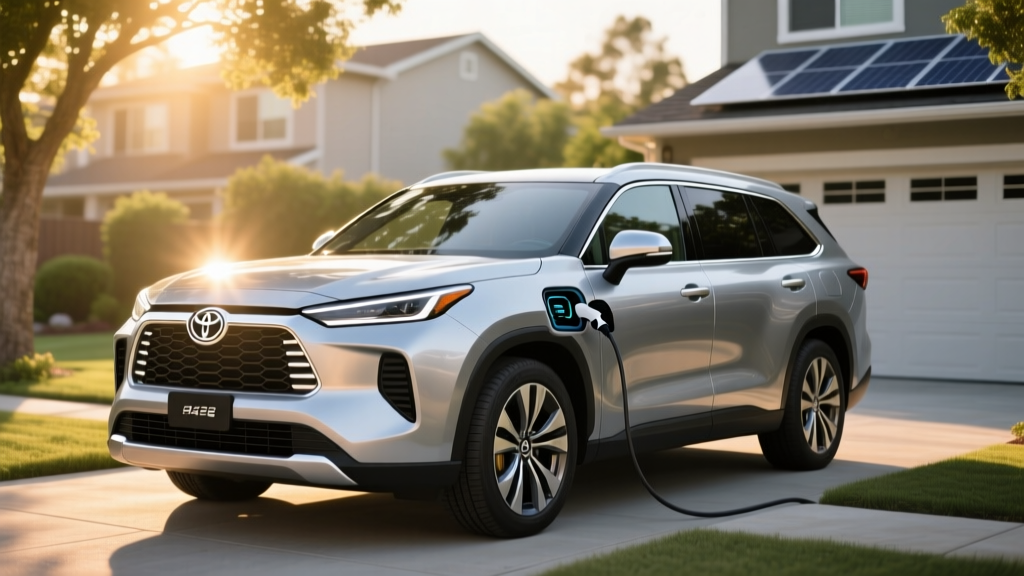
The conventional RAV4 Hybrid never needs a charger. It captures energy during braking and deceleration to recharge its small battery, then uses that energy to assist the gasoline engine or drive short distances at low speed. The RAV4 Prime, by contrast, has a much larger battery you charge from a wall outlet or public station, giving it genuine zero-emission commuting range before the gas engine ever starts.
Fuel Economy: EPA Numbers and Real-World MPG
Toyota's hybrid synergy drive system is optimized for city driving, where regenerative braking and electric-motor assist shine. Here is the full EPA breakdown per fueleconomy.gov:
| Model | City MPG | Highway MPG | Combined MPG |
|---|---|---|---|
| RAV4 Hybrid AWD | 41 | 38 | 39 |
| RAV4 Prime (gas-only after EV range) | 40 | 36 | 38 |
| RAV4 Prime (MPGe, EV+gas combined) | 94 MPGe | ||
Real-world observations: The RAV4 Hybrid's 41 MPG city estimate is one of the few EPA stickers that owners routinely match or exceed. In stop-and-go traffic, the hybrid system recovers braking energy constantly, and the engine shuts off at stops. On pure highway cruises at 75+ mph, expect closer to 34–36 MPG — aerodynamic drag reduces the hybrid advantage at speed. In mixed suburban driving, 38–42 MPG is typical based on owner-reported data.
For the RAV4 Prime, the 42-mile electric-only range is best achieved in moderate temperatures (60–75°F) at speeds under 55 mph. Cold weather (below 30°F) can reduce EV range by 20–30%, and sustained highway driving in EV mode will deplete the battery faster. Once the battery is exhausted, the Prime operates as a conventional hybrid at roughly 38 MPG combined — still excellent for a 302-hp AWD SUV.
Powertrain Specs: What's Under the Hood
| Specification | RAV4 Hybrid | RAV4 Prime |
|---|---|---|
| Engine | 2.5L 4-cylinder Atkinson cycle | 2.5L 4-cylinder Atkinson cycle |
| Front electric motor | 118 hp / 149 lb-ft | 174 hp / 199 lb-ft |
| Rear electric motor (AWD) | 54 hp / 89 lb-ft | 54 hp / 89 lb-ft |
| Net combined output | 219 hp | 302 hp |
| Transmission | eCVT (planetary gearset) | eCVT (planetary gearset) |
| Drivetrain | Electronic AWD (standard) | Electronic AWD (standard) |
| Towing capacity | 1,750 lbs | 2,500 lbs |
| Cargo volume (behind rear seats) | 37.6 cu ft | 33.5 cu ft (battery intrusion) |
The eCVT in both models is not a belt-driven continuously variable transmission like those in some competitors. Toyota uses a planetary gearset that seamlessly blends engine and motor power with no belts, no pulleys, and no slippage — a key factor in the system's long-term reliability.
RAV4 Prime: Charging, Battery, and Electric Range
If you're considering the PHEV variant, charging logistics define the ownership experience.
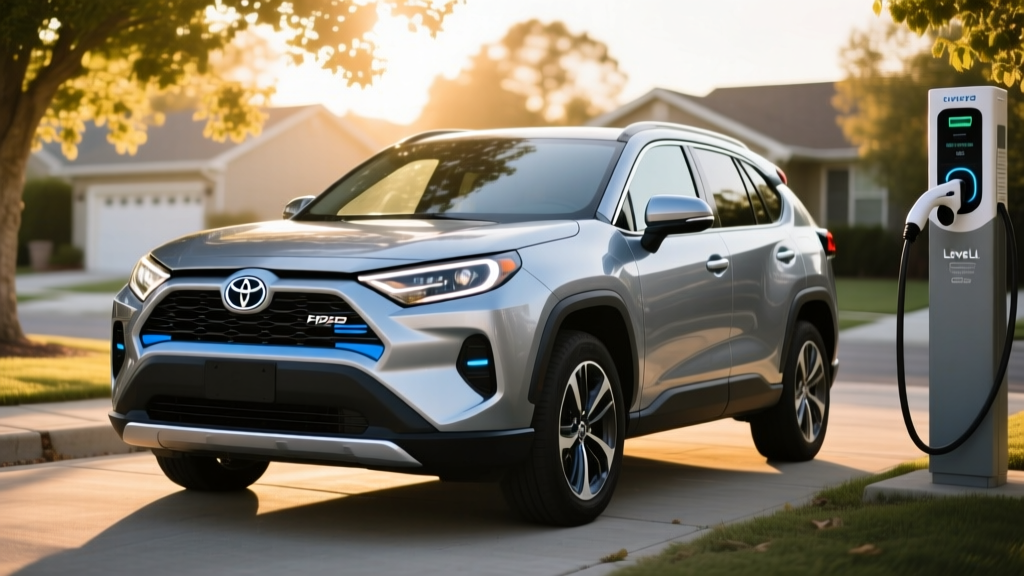
Level 1 (120V household outlet): ~12 hours for a full charge using the included cord. Fine for overnight top-ups if your daily drive is under 42 miles.
Level 2 (240V home or public station): ~2.5 hours at 6.6 kW (Prime's onboard charger max). This is the practical daily charging method for most Prime owners.
DC fast charging: The RAV4 Prime does NOT support DC fast charging. It is limited to AC Level 2 at 6.6 kW maximum.
The 18.1 kWh (usable) lithium-ion battery pack sits beneath the rear cargo floor, which is why the Prime sacrifices about 4 cubic feet of cargo space compared to the standard Hybrid. On a full charge, the EPA-estimated 42 miles of EV range covers the average American's one-way commute with room to spare — the FHWA reports the average daily vehicle trip is roughly 35 miles round-trip.
Pricing, Trims, and Tax Credit Eligibility
Here's where the math gets interesting — and where the RAV4 Prime's federal tax credit can reshape the value equation.
RAV4 Hybrid (HEV) trims and approximate 2026 MSRP:
- LE: ~$33,500
- XLE: ~$35,500
- XLE Premium: ~$37,500
- Woodland Edition: ~$38,500
- Limited: ~$40,500
RAV4 Prime (PHEV) trims and approximate 2026 MSRP:
- SE: ~$44,500
- XSE: ~$48,500
§30D Federal Tax Credit for the RAV4 Prime (up to $7,500):
- MSRP cap: SUVs must have an MSRP at or below $80,000 — both Prime trims qualify.
- Buyer income cap: Modified AGI must not exceed $150,000 (single) / $300,000 (joint filers).
- Battery sourcing: Critical minerals and battery component requirements phase in annually. Check current-year rules at IRS.gov §30D guidance before purchasing, as sourcing rules can change eligibility mid-year.
- Point-of-sale transfer: As of 2024+, you can transfer the credit to the dealer for an upfront price reduction at purchase rather than claiming it on your tax return.
The math that matters: A RAV4 Prime XSE at ~$48,500 minus a potential $7,500 credit brings the effective price to ~$41,000 — remarkably close to a well-equipped RAV4 Hybrid Limited at ~$40,500. If you can charge at home, the Prime becomes the stronger value play, not just the performance play. However, the RAV4 Hybrid (HEV) does not qualify for the §30D credit — conventional hybrids are ineligible.
Battery Warranty, Reliability, and Replacement Costs
Hybrid battery longevity is the number-one concern for first-time hybrid buyers. Here's what Toyota backs and what the data shows.
Hybrid Battery Warranty: 10 years / 150,000 miles (whichever comes first) on the hybrid battery pack for both the RAV4 Hybrid and RAV4 Prime. This applies in all 50 states.
Hybrid System Components: The inverter, converter, and associated hybrid control modules are also covered under the 10-year/150,000-mile hybrid system warranty.
General Warranty: 3 years / 36,000 miles basic; 5 years / 60,000 miles powertrain.
Real-world reliability: Toyota's hybrid system is among the most proven in the industry, with over two decades of deployment since the original Prius. Independent fleet data and owner surveys consistently place Toyota hybrids at the top for long-term reliability. The eCVT planetary gearset has no wear-prone belts or clutches, and the Atkinson-cycle engine operates under lower thermal stress than a conventional Otto-cycle engine.
Battery replacement cost: If you do need a replacement outside warranty — statistically uncommon before 150,000+ miles — a new OEM hybrid battery for the RAV4 Hybrid runs approximately $3,000–$4,000 installed. The RAV4 Prime's larger pack is more expensive, roughly $6,000–$8,000 installed. Refurbished and third-party options can reduce these figures by 30–50%. Many original Toyota hybrid batteries from the early 2000s are still in service past 200,000 miles.
Who Should Choose the RAV4 Hybrid, the Prime, or a Full EV?
Choose the RAV4 Hybrid (HEV) if:
- You cannot charge at home (apartment, street parking, no garage).
- You want lower upfront cost and don't want to think about charging.
- Your annual mileage is moderate (8,000–12,000 miles) and fuel savings alone justify the hybrid premium over a gas RAV4.
- You frequently take long road trips and want maximum cargo space.
Choose the RAV4 Prime (PHEV) if:
- You have reliable Level 2 charging at home and a commute under 42 miles round-trip.
- You qualify for the §30D tax credit, effectively closing the price gap with the HEV.
- You want the 302-hp performance advantage and 2,500-lb towing capacity.
- You want to drive on electricity daily but need gas-engine flexibility for road trips.
Choose a full EV (like the Toyota bZ4X, Hyundai Ioniq 5, or Tesla Model Y) if:
- You have home charging and rarely drive more than 250 miles in a single day.
- You want zero tailpipe emissions and the lowest per-mile fuel cost.
- You want to eliminate oil changes, spark plugs, and exhaust-system maintenance entirely.
- DC fast charging infrastructure along your common routes is adequate.
Pros and Cons at a Glance
RAV4 Hybrid (HEV) — Pros
- 41 MPG city — excellent for stop-and-go commuters
- No charging required — works with any lifestyle
- Standard AWD across all trims
- Strong resale value and proven reliability
- Competitive starting price at ~$33,500
RAV4 Hybrid (HEV) — Cons
- Not eligible for federal §30D tax credit
- Highway MPG drops to ~34–36 at sustained 75+ mph
- 219 hp is adequate but not quick for merging with heavy loads
- 1,750-lb towing capacity is modest for the segment
RAV4 Prime (PHEV) — Pros
- 42 miles electric-only covers most daily commutes
- 302 hp makes it the quickest RAV4 ever sold
- Eligible for up to $7,500 federal tax credit
- 94 MPGe when regularly charged — lowest operating cost
- 2,500-lb towing capacity
RAV4 Prime (PHEV) — Cons
- ~$11,000 price premium over the base Hybrid
- No DC fast charging — limited to 6.6 kW Level 2
- Reduced cargo space (33.5 cu ft vs 37.6)
- EV range drops to ~30 miles in cold weather
- Limited trim selection (SE and XSE only)
Frequently Asked Questions
How many MPG does the 2026 RAV4 Hybrid get?
The EPA rates the RAV4 Hybrid AWD at 41 city / 38 highway / 39 combined MPG. In real-world city and suburban driving, many owners report 38–42 MPG. Highway-only driving at higher speeds typically yields 34–36 MPG.
How far can the RAV4 Prime go on electric only?
The EPA estimates 42 miles of electric-only range on a full charge. Real-world range varies: expect 38–42 miles in moderate temperatures at moderate speeds, and 28–35 miles in freezing weather or at sustained highway speeds. The total combined range (EV + gas) exceeds 600 miles.
Does the RAV4 Hybrid qualify for a tax credit?
The conventional RAV4 Hybrid (HEV) does not qualify for the federal §30D clean vehicle credit — it is not a plug-in vehicle. The RAV4 Prime (PHEV) does qualify, with a potential credit of up to $7,500, subject to buyer income limits, MSRP caps, and battery-sourcing requirements. Consult IRS.gov or a tax professional for your specific eligibility.
Is the RAV4 Hybrid reliable long-term?
Toyota's hybrid system has over 25 years of real-world deployment and consistently ranks at the top of long-term reliability surveys. The hybrid battery is warrantied for 10 years / 150,000 miles. Many first-generation Toyota hybrid batteries have exceeded 200,000 miles without replacement. The eCVT planetary gearset has no belts or friction clutches to wear out.
How much does a RAV4 Hybrid battery replacement cost?
Outside of warranty, a new OEM hybrid battery for the RAV4 Hybrid costs approximately $3,000–$4,000 installed. The RAV4 Prime's larger pack runs $6,000–$8,000. Refurbished options are available at a discount. However, battery failure before 150,000 miles is statistically rare based on fleet data.
Do I need to plug in the RAV4 Hybrid?
No. The conventional RAV4 Hybrid (HEV) charges its own small battery through regenerative braking and the gasoline engine. You never plug it in. Only the RAV4 Prime (PHEV) requires plugging in to access its 42-mile electric-only range — if you don't plug in the Prime, it simply operates as a conventional hybrid.