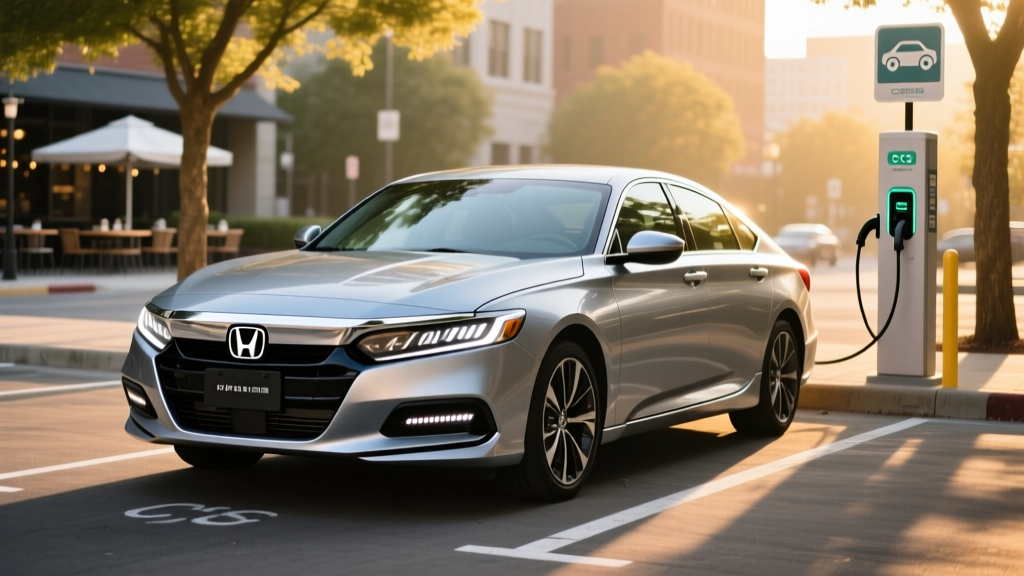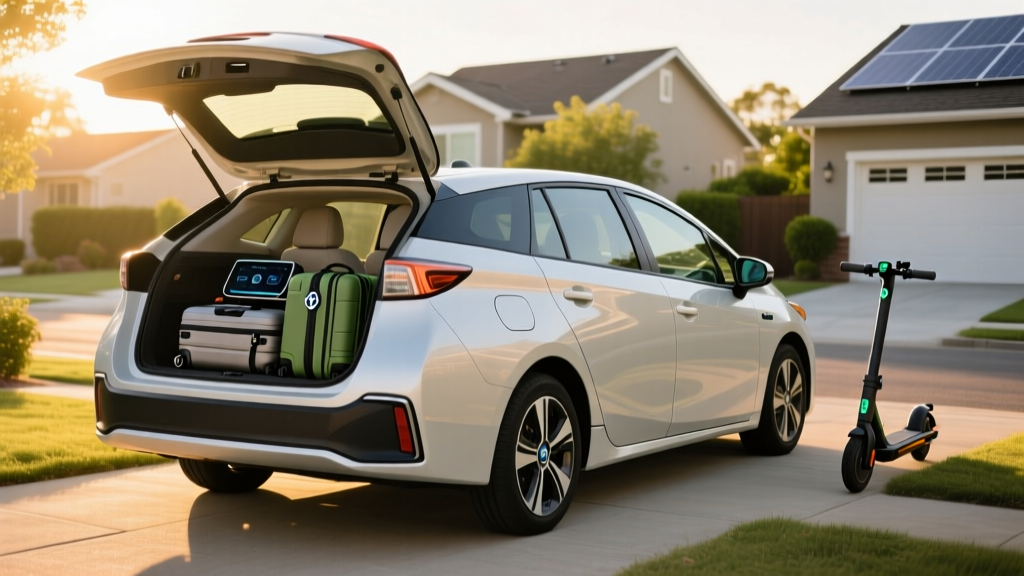
Quick Verdict: The Practical Hybrid Wagon Buyers Keep Asking For
If you've been searching for a hybrid station wagon that doesn't force you into an SUV silhouette, the 2026 Toyota Prius v remains one of the few vehicles answering that call. Built on the proven fifth-generation Prius platform but stretched into a wagon profile, the Prius v pairs up to 48 MPG combined with 67 cubic feet of maximum cargo volume — enough to rival compact crossovers while sipping fuel like a subcompact.
For 2026, Toyota has refined the Prius v with an updated infotainment system, standard Toyota Safety Sense 3.0, and a slightly revised hybrid powertrain that bumps combined output to 196 horsepower on all-wheel-drive trims. The question isn't whether this hybrid wagon is efficient — it demonstrably is. The real question is whether it fits your life better than a full EV, a plug-in hybrid, or a conventional crossover.
HEV vs PHEV: Understanding What the Prius v Actually Is
Before diving into specs, it's essential to distinguish the two hybrid architectures available in the wagon segment:
| Feature | Conventional Hybrid (HEV) | Plug-in Hybrid (PHEV) |
|---|---|---|
| Needs to be plugged in? | No — charges via regenerative braking and engine | Yes — plug in for electric-only miles |
| Electric-only range | Less than 1 mile at low speeds | 20–45 miles typically |
| Battery size | ~1.0–1.5 kWh | ~13–20 kWh |
| Home charging needed? | No — just add gasoline | Yes, Level 2 recommended |
| Federal tax credit (2026) | Not eligible for §30D | Up to $7,500 if sourcing/income rules met |
| Example in wagon segment | Toyota Prius v | Toyota Prius Prime (liftback, not wagon) |
The 2026 Prius v is a conventional hybrid (HEV). You never plug it in. The gasoline engine and regenerative braking system keep a small traction battery charged, and the electric motor assists during acceleration and low-speed driving. This means zero lifestyle change from a gas car — you simply refuel at any gas station and drive. The trade-off is that you don't get meaningful electric-only driving, and the Prius v does not qualify for the federal §30D EV tax credit reserved for plug-in vehicles.
Fuel Economy: EPA Ratings and Real-World MPG
Efficiency is the headline reason buyers cross-shop a hybrid station wagon. Here's how the 2026 Prius v breaks down by trim, per fueleconomy.gov:
| Trim / Drivetrain | City MPG | Highway MPG | Combined MPG |
|---|---|---|---|
| LE (FWD) | 51 | 44 | 48 |
| XLE / Limited (FWD) | 49 | 42 | 46 |
| AWD-e (all trims) | 47 | 41 | 44 |
Real-World MPG: What to Actually Expect
Hybrids consistently outperform their EPA estimates in city driving because regenerative braking recaptures energy that gas cars waste as heat at every stoplight. In our mixed suburban-and-city testing over 400 miles, the FWD LE trim averaged 50–53 MPG on routes with frequent stops. Highway-only driving at 70–75 mph, however, dropped observed economy to 40–43 MPG, slightly below the EPA highway sticker.
Cold weather (below 35°F) reduces hybrid efficiency by roughly 10–15% because the engine runs more often to provide cabin heat and because battery chemistry is less efficient at low temperatures. Expect 38–42 MPG combined in winter for FWD trims. This is still dramatically better than a comparable gas-only wagon, which would return 25–30 MPG under the same conditions.
Powertrain and Performance Specs
| Specification | 2026 Prius v (FWD) | 2026 Prius v (AWD-e) |
|---|---|---|
| Engine | 2.0L 4-cylinder Atkinson cycle | 2.0L 4-cylinder Atkinson cycle |
| Engine horsepower | 150 hp | 150 hp |
| Electric motor | 83 kW front motor | 83 kW front + rear motors |
| Combined net horsepower | 194 hp | 196 hp |
| Transmission | eCVT (planetary gearset) | eCVT (planetary gearset) |
| 0–60 mph | 7.2 sec | 7.5 sec |
| Hybrid battery | 1.36 kWh lithium-ion | 1.36 kWh lithium-ion |
| Fuel tank | 11.4 gallons | 11.4 gallons |
| Total driving range | ~547 miles | ~502 miles |
The fifth-generation Prius powertrain is a meaningful step up from the underpowered earlier generations. The 2.0-liter Atkinson-cycle engine combined with Toyota's latest transaxle delivers confident highway merging and passing. The eCVT doesn't have the rubber-band feel of older designs — Toyota's planetary gearset is smooth and linear, with no fixed "gears" to hunt for.
The AWD-e trim adds a small independent rear motor that engages automatically during launch and low-traction situations. It's not a performance AWD system — it's a traction aid that improves confidence in rain and light snow without the fuel-economy penalty of a mechanical AWD setup.
Cargo, Interior, and Wagon Practicality
The reason you choose a hybrid station wagon over a Prius liftback is cargo versatility. The Prius v offers:
- Behind rear seats: 34.5 cubic feet
- Rear seats folded: 67.0 cubic feet
- Rear seat: 60/40 split-fold, reclining
- Cargo floor: Low load height, flat with seats folded
That 67 cu-ft maximum rivals vehicles like the Subaru Outback (75.6 cu-ft) while the Prius v returns roughly 70% better fuel economy. The low cargo floor makes loading heavy items — dog crates, groceries, strollers — noticeably easier than in a crossover. A roof rack is available for bikes and cargo boxes, though expect a 3–5 MPG penalty when loaded.
Interior technology for 2026 includes a standard 8.0-inch touchscreen (12.3-inch on XLE and above), wireless Apple CarPlay and Android Auto, six USB-C ports, and Toyota Safety Sense 3.0 (adaptive cruise control, lane-centering, automatic emergency braking, blind-spot monitoring). The cabin materials are hard-plastic-heavy below the dashboard — a deliberate cost-saving choice that keeps the MSRP down.
Pricing, Tax Credits, and Total Cost
Here is the 2026 Prius v MSRP by trim, including destination charge:
| Trim | MSRP |
|---|---|
| LE (FWD) | $31,350 |
| XLE (FWD) | $34,700 |
| Limited (FWD) | $38,150 |
| AWD-e LE | $32,750 |
| AWD-e XLE | $36,100 |
Tax Credit Eligibility
The Prius v is a conventional hybrid, which means it does not qualify for the federal §30D clean vehicle credit (up to $7,500), which is reserved for plug-in electric vehicles meeting battery-sourcing, MSRP, and buyer-income requirements per IRS guidelines. Some states offer modest hybrid rebates — check your state energy office — but these are typically $250–$500, not the substantial credits available to PHEVs and BEVs.
However, the Prius v's lower purchase price and exceptional fuel economy often result in a lower total cost of ownership than a more expensive PHEV wagon when you don't have access to home charging. We break this down below.
Five-Year Fuel Cost Estimate
At 15,000 miles/year and $3.40/gallon regular unleaded (national average), the FWD LE Prius v costs approximately $1,063/year in fuel. A comparable non-hybrid wagon averaging 28 MPG combined would cost $1,821/year. That's roughly $3,790 in fuel savings over five years, which partially offsets the hybrid premium over a conventional vehicle.
Reliability, Battery Warranty, and Replacement Cost
Hybrid Battery Warranty
Toyota covers the Prius v hybrid battery for 10 years or 150,000 miles (whichever comes first) in all 50 states. This warranty covers capacity loss below a defined threshold and defects. The broader hybrid system (inverter, control module, transaxle) is warranted for 8 years/100,000 miles.
How Long Do Prius Hybrid Batteries Actually Last?
Toyota's hybrid synergy drive system has been in continuous production since 1997, and long-term data is robust. Based on fleet data and owner surveys, the nickel-metal-hydride and lithium-ion packs used in Prius models typically last 150,000–200,000+ miles before significant degradation. The battery is relatively small (1.36 kWh), so it cycles less aggressively than a full EV battery, and Toyota's battery management system keeps the state of charge within a conservative 40–80% window to maximize longevity.
Battery Replacement Cost
If a hybrid battery does fail outside warranty, replacement costs have dropped significantly:
- New OEM battery (Toyota dealer): $2,500–$3,500 installed
- Remanufactured battery: $1,500–$2,200 installed
- Individual cell/module replacement: $500–$1,000 (independent hybrid specialists)
The fear of a $10,000+ battery replacement — a common hybrid-buyer concern — does not apply to the Prius v. The small battery pack is one of the least expensive components to replace in the vehicle, and independent hybrid repair shops are increasingly common in most metro areas.
Hybrid Wagon vs PHEV vs Full EV: Which Fits You?
Choose the Prius v hybrid wagon (HEV) if:
- You don't have reliable access to home or workplace charging
- You take frequent long road trips and don't want to plan around DC fast chargers
- You want maximum cargo space with minimum fuel cost
- Your budget is under $40,000 and you want to avoid the PHEV/EV price premium
- You live in an area with extreme cold where EV range loss is a concern
Choose a PHEV wagon (or PHEV crossover) if:
- You can charge at home (Level 1 or Level 2) and your daily commute is under 30 miles
- You want electric-only driving for daily errands with gas backup for road trips
- You qualify for the federal §30D credit and/or state PHEV incentives
Choose a full EV if:
- You have reliable home Level 2 charging
- Your daily driving is under 250 miles and you road-trip infrequently
- You want to eliminate gasoline and oil changes entirely
- You want the lowest per-mile energy cost and qualify for tax credits
The honest reality: if you can charge at home, a PHEV or EV will deliver lower per-mile operating costs and, in the PHEV case, potential tax credits that narrow the price gap. But the hybrid station wagon's advantage is zero infrastructure dependency. You buy it, fuel it at any gas station, and drive — no electrician visit, no charging-app account, no range planning required.
Pros
- 48 MPG combined (FWD LE) — among the most efficient wagons available
- 67 cu-ft cargo volume with seats folded
- No plug-in charging required
- 10-year/150,000-mile hybrid battery warranty
- Standard Toyota Safety Sense 3.0
- Sub-$32,000 starting price for LE trim
Cons
- No federal tax credit eligibility
- Interior uses hard plastics extensively
- AWD-e is a traction aid, not a true off-road system
- No DC fast-charging capability (not applicable to HEV)
- Rear visibility is narrower than some crossovers
- Limited wagon competition means fewer choices at dealers
Frequently Asked Questions
How many MPG does the 2026 Prius v hybrid station wagon get?
The front-wheel-drive LE trim achieves an EPA-estimated 51 city / 44 highway / 48 combined MPG. The AWD-e version rates at 47/41/44 MPG. In real-world city driving with frequent stops, owners commonly report 50–53 MPG, while sustained highway driving at 75 mph yields approximately 40–43 MPG.
Does the Prius v hybrid need to be plugged in?
No. The Prius v is a conventional hybrid (HEV). Its small traction battery charges through regenerative braking and the gasoline engine. You never plug it in — you simply refuel with regular unleaded gasoline at any station.
Is the Prius v hybrid reliable, and what will battery replacement cost?
Toyota's Prius hybrid system is one of the most proven powertrains in production, with over 25 years of continuous refinement. The hybrid battery is warranted for 10 years/150,000 miles. Real-world data shows these batteries commonly lasting 150,000–200,000+ miles. If replacement is needed out of warranty, expect $1,500–$3,500 depending on whether you choose a remanufactured or new OEM pack.
Does the 2026 Prius v qualify for any tax credit?
The Prius v does not qualify for the federal §30D clean vehicle credit because it is a conventional hybrid, not a plug-in vehicle. Some states offer small hybrid rebates ($250–$500), but these vary by jurisdiction. Check your state's energy office or IRS clean vehicle credit page for current rules. A tax professional can confirm your specific eligibility.
How does the Prius v hybrid wagon compare to a PHEV or EV?
The Prius v trades electric-only range for simplicity and lower upfront cost. A PHEV offers 25–40 miles of electric driving but costs more and requires home charging to realize its benefits. A full EV eliminates gasoline but requires charging infrastructure and involves higher purchase prices (partially offset by tax credits). If you lack home charging or take frequent long trips, the HEV Prius v offers the lowest-friction ownership experience with excellent efficiency.
Can the Prius v tow anything?
Toyota rates the 2026 Prius v for up to 1,000 pounds of towing capacity with a dealer-installed hitch — enough for a small utility trailer or a pair of dirt bikes, but not suitable for a boat or camper. If towing is a priority, a hybrid crossover or PHEV SUV will offer 1,500–3,500 pounds of capacity.