Quick Verdict: The Prius Prime SE Earns Its Spot
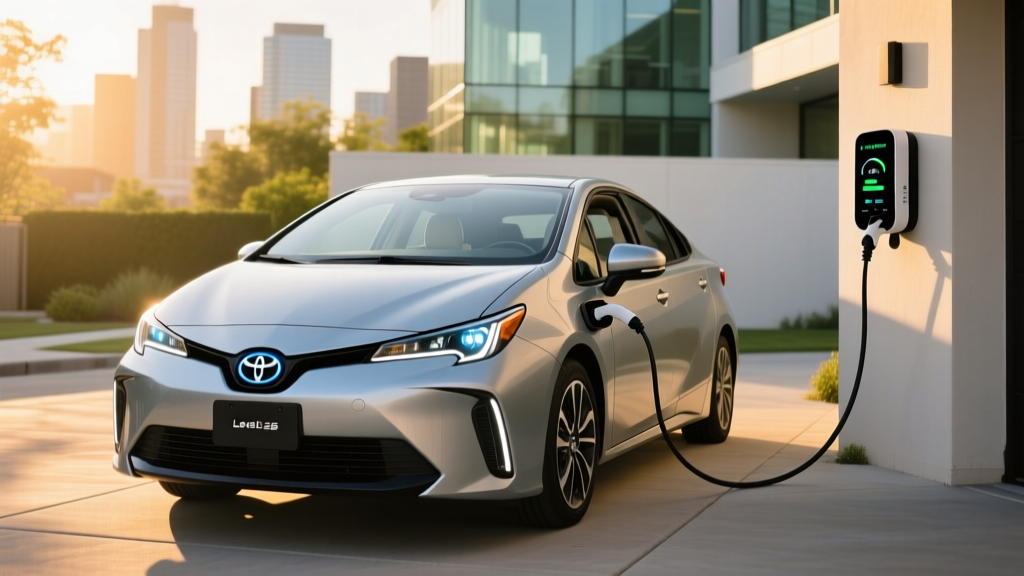
The 2026 Toyota Prius Plug-In Hybrid SE (marketed as the Prius Prime in the U.S.) occupies a narrow but increasingly crowded lane: a compact hatchback that can commute on electricity alone yet cross the country on gasoline without a second thought. For 2026, Toyota carries forward the fifth-generation platform introduced for 2023, keeping the SE as the value-oriented entry trim with the longest electric-only range in the lineup. At an MSRP starting around $33,445 (including destination), the Prius Prime SE undercuts most PHEV rivals while delivering 44 miles of EPA-rated electric-only range and 52 MPG combined once the battery depletes.
The trade-off is familiar: the SE trim skips the 150 kW DC fast-charging hardware available on XSE and XSE Premium trims, and its cloth interior and smaller 8-inch touchscreen reflect its price-first positioning. But if your priority is maximizing electric commuting distance per dollar while retaining Toyota's hybrid reliability reputation, the 2026 Prius Plug-In Hybrid SE makes a compelling, data-backed case.
Core Specs at a Glance
| Specification | 2026 Prius Prime SE |
|---|---|
| EPA Electric-Only Range | 44 miles |
| EPA Combined MPG (hybrid mode) | 52 MPG |
| EPA City / Highway MPG | 53 city / 51 highway |
| MPGe (electric + gas combined) | 127 MPGe |
| Total Combined Range | ~470 miles |
| Battery Capacity (gross / usable) | 13.6 kWh / ~10.9 kWh |
| Battery Chemistry | Lithium-ion (NMC) |
| Combined System Horsepower | 220 hp |
| Engine | 2.0L 4-cyl (150 hp) + 2 motors |
| 0–60 mph | 6.6 seconds |
| Level 2 Charging (240V) | ~4 hours (3.3 kW onboard charger) |
| DC Fast Charging | Not available on SE trim |
| Drivetrain | FWD (eCVT) |
| Base MSRP (incl. destination) | $33,445 |
| Federal Tax Credit (§30D) | Up to $3,750 (see eligibility below) |
| Hybrid Battery Warranty | 10 years / 150,000 miles |
Electric-Only Range: 44 Miles EPA, and What That Means in Practice
The SE trim's 44-mile EPA electric-only rating is the highest in the 2026 Prius Prime lineup. The XSE and XSE Premium trims drop to 40 miles due to heavier wheels, a panoramic roof option, and additional equipment. That four-mile gap matters for commuters whose one-way trip falls right at the boundary.
EPA rates the Prius Prime SE at 44 miles on battery alone. In mixed suburban driving at moderate temperatures (60–80°F), expect 40–46 miles — Toyota's hybrid system is efficient enough that careful drivers can match or slightly beat the sticker. On sustained highway runs at 70+ mph, plan for 34–38 miles. In freezing weather (below 32°F) with cabin heat active, electric-only range can drop to 28–34 miles because the system must engage the gasoline engine for waste heat unless you precondition while plugged in.
The 13.6 kWh gross battery pack (approximately 10.9 kWh usable, with the rest reserved as a buffer to protect long-term health) uses lithium-ion NMC chemistry. Toyota's thermal management is passive air-cooled rather than liquid-cooled — a design choice that keeps weight and cost down but means extreme heat or cold has a more pronounced effect on range than in liquid-managed packs like those in the RAV4 Prime.
Fuel Economy: EPA Numbers and Real-World MPG
| Driving Mode | EPA Rating | Real-World Expectation |
|---|---|---|
| City (hybrid mode, battery depleted) | 53 MPG | 54–58 MPG (regenerative braking excels in stop-and-go) |
| Highway (hybrid mode, battery depleted) | 51 MPG | 46–50 MPG (aerodynamic drag and engine load at 70+ mph) |
| Combined (hybrid mode) | 52 MPG | 49–54 MPG depending on driving mix |
| Electric-only (MPGe) | 127 MPGe | Varies with driving style and temperature |
Toyota's fifth-generation hybrid system pairs a 2.0-liter Atkinson-cycle four-cylinder engine producing 150 horsepower with two motor-generators through an electronic continuously variable transmission (eCVT). Combined system output is 220 horsepower — a dramatic leap from the 121 hp of the pre-2023 Prius Prime, and it shows in the 6.6-second 0–60 time that makes highway merging genuinely confident.
One nuance worth noting: EPA fuel economy data from fueleconomy.gov shows the Prius Prime actually exceeds its city MPG rating in real-world stop-and-go driving more consistently than most hybrids. The reason is simple physics — regenerative braking recaptures energy during deceleration, and the larger 2.0L engine can shut off more frequently at low speeds because the electric motors handle initial acceleration. Highway driving is where real-world numbers dip below the sticker, as with any vehicle.
Charging the Prius Prime SE: Level 1, Level 2, and the DC Fast-Charging Gap
The SE trim includes a 3.3 kW onboard charger, which is the critical number for home charging. Here's what that translates to in practice:
| Charging Level | Power | Time (0–100%) | Miles of EV Range Added per Hour |
|---|---|---|---|
| Level 1 (120V household outlet) | ~1.0 kW | ~12 hours | ~4 miles |
| Level 2 (240V, 16A circuit) | 3.3 kW (onboard limit) | ~4 hours | ~11 miles |
| DC Fast Charging | N/A — not available on SE | N/A | N/A |
This is where the SE trim's value positioning becomes a genuine limitation. The XSE and XSE Premium trims offer an optional 150 kW DC fast-charging capability (CCS connector), which can replenish the battery from 10–80% in approximately 30 minutes at a compatible public charger. The SE lacks this hardware entirely — no DC inlet, no option to add it. If your commute exceeds 44 miles round-trip and you want to charge at a public DC station during the day, the SE is not the right trim.
For overnight home charging, the 3.3 kW Level 2 rate is adequate. A full charge in roughly four hours means you can plug in when you get home at 6 PM and be fully topped up by 10 PM. If you're installing a dedicated 240V circuit, expect the home charging installation to cost $500–$1,500 depending on panel proximity and local permit requirements — though many Prius Prime owners successfully charge on a standard 120V outlet if their daily EV-only driving stays under 20 miles.
HEV vs. PHEV vs. Full EV: Which Powertrain Fits You?
e.g., Prius LE — 57 MPG combined
- No plug — refuels at gas stations only
- Small ~1 kWh battery, regen-only charging
- Lower upfront cost (~$28,000)
- Best for: drivers without home charging access
e.g., Prius Prime SE — 44 mi EV + 52 MPG
- Plug in at home for daily EV commuting
- 13.6 kWh battery, gas engine for longer trips
- Mid-range price (~$33,445)
- Best for: home chargers with sub-40-mile commutes
e.g., Tesla Model 3 — 341 mi EPA range
- No gasoline — electricity only
- 60–82 kWh battery, DC fast charging
- Higher upfront cost, lower fuel cost
- Best for: reliable home charging, longer daily drives
The Prius Prime SE makes the most sense for a specific buyer profile: you have access to Level 1 or Level 2 charging at home (or at work), your daily round-trip commute is under 40 miles, and you want the option to drive 400+ miles on a weekend road trip without planning charging stops. If you cannot charge at home, the conventional Prius HEV delivers nearly identical hybrid-mode efficiency for roughly $5,000 less. If you have reliable home charging and your daily drive exceeds 50 miles, a full BEV like the Chevrolet Equus EV or Hyundai Ioniq 6 will deliver lower per-mile fuel costs over time.
Pricing, Trims, and Federal Tax Credit Eligibility
The 2026 Prius Prime SE starts at $33,445 including Toyota's $1,095 destination charge. The Prime lineup stacks as follows:
- SE: $33,445 — 44 mi EV range, 16-inch alloy wheels, 8-inch touchscreen, cloth seats, 3.3 kW charger
- XSE: $36,695 — 40 mi EV range, 19-inch wheels, synthetic leather, 12.3-inch screen, optional DC fast charging
- XSE Premium: $39,945 — 40 mi EV range, panoramic roof, heated/ventilated front seats, JBL audio, optional DC fast charging
- The Prius Prime qualifies for up to $3,750 under IRS §30D — not the full $7,500 — because its battery sourcing does not fully meet the critical-minerals threshold for the additional $3,750 half.
- MSRP cap: The Prius Prime (a sedan/hatchback) must be under $55,000 MSRP. All trims qualify.
- Buyer income cap: Modified AGI must not exceed $150,000 (single), $225,000 (head of household), or $300,000 (joint). Check your prior-year or current-year AGI, whichever is lower.
- Point-of-sale transfer: As of 2024, you can transfer the credit to the dealer at purchase, reducing your out-of-pocket cost immediately — you do not need to wait until tax filing.
- Assembly requirement: The Prius Prime is assembled in Japan, which under current rules does not disqualify it from the credit as the North American final-assembly requirement was modified. Verify current eligibility at fueleconomy.gov before purchase.
Tax credit rules change frequently. Consult a tax professional and verify eligibility on the IRS website before purchasing. State incentives (e.g., California's CVRP, Colorado's innovative motor vehicle credit) may stack on top.
Reliability, Battery Warranty, and Long-Term Ownership Costs
Toyota covers the Prius Prime's high-voltage hybrid battery for 10 years or 150,000 miles (whichever comes first) in all 50 states — an upgrade from the earlier 8-year/100,000-mile coverage that applied in non-CARB states. This warranty guarantees the battery will retain sufficient capacity to function as a hybrid; if it drops below a defined threshold, Toyota replaces it at no cost. The conventional hybrid components (inverter, motor-generators, eCVT) are also covered under this hybrid-system warranty.
Prius hybrid battery longevity is one of the best-documented data points in the EV/PHEV space. Fleet data and owner surveys consistently show that Toyota's hybrid battery packs routinely last 150,000–200,000+ miles before significant degradation, and the NMC chemistry in the Prime's larger pack benefits from a conservative buffer strategy (roughly 20% of gross capacity is locked out at the top and bottom of the charge window to reduce cycle stress).
If you do eventually need an out-of-warranty replacement, a refurbished Prius Prime hybrid battery currently runs $3,000–$4,500 including labor at an independent hybrid specialist, or roughly $5,500–$7,000 at a Toyota dealer for a new OEM pack. For context, that's significantly less than a full BEV battery replacement, and the likelihood of needing one within the first 10–12 years of ownership is low based on historical Toyota data.
Toyota's overall brand reliability continues to rank at or near the top in Consumer Reports annual surveys, and the Prius nameplate specifically has one of the lowest cost-per-mile maintenance records of any vehicle sold in the U.S. — no oil changes for the electric-only portion of your driving, regenerative braking extends pad life to 80,000+ miles, and the eCVT has no traditional transmission fluid to change.
Pros and Cons: The Honest Scorecard
- 44-mile EV range covers most daily commutes entirely on electricity
- 52 MPG combined in hybrid mode is best-in-class for a PHEV
- 220 hp makes it genuinely quick — 6.6s to 60 mph
- 10-year / 150,000-mile hybrid battery warranty nationwide
- ~$33K starting price is the most affordable PHEV in its class
- Proven Toyota reliability and low maintenance costs
- Qualifies for up to $3,750 federal tax credit (income/AGI permitting)
- No DC fast charging on SE trim — Level 2 only at 3.3 kW
- 8-inch touchscreen on SE feels dated vs. the 12.3-inch on XSE
- Rear cargo space (20.3 cu ft) is tight vs. RAV4 Prime or crossover PHEVs
- FWD only — no AWD option (available on the conventional Prius but not the Prime)
- Rear seat headroom compromised by sloping roofline
- Only $3,750 of the $7,500 federal credit — battery sourcing limits the full amount
- Assembled in Japan — verify current §30D assembly eligibility before purchase
Frequently Asked Questions
How many MPG does the 2026 Prius Plug-In Hybrid SE get?
The EPA rates it at 53 city / 51 highway / 52 combined MPG once the battery is depleted. In real-world driving, city MPG often exceeds the sticker (54–58 MPG) thanks to regenerative braking, while sustained highway driving at 75+ mph may return 46–50 MPG. In electric-only mode, it achieves 127 MPGe.
How far can the Prius Prime SE go on electric only?
The EPA rates it at 44 miles on battery power alone. Real-world results range from about 28 miles in freezing weather with heat on, up to 46 miles in mild suburban driving. Once the battery depletes, the gasoline engine engages seamlessly and the car operates as a conventional hybrid with a total combined range of approximately 470 miles.
Does the 2026 Prius Prime qualify for a federal tax credit?
Yes — it qualifies for up to $3,750 under the IRS §30D New Clean Vehicle Credit, subject to buyer income limits ($150K single / $300K joint modified AGI) and the vehicle's MSRP being under $55,000. It does not qualify for the full $7,500 because its battery critical-mineral sourcing does not meet the additional threshold. The credit can be transferred to the dealer at point of sale. Always verify current eligibility at fueleconomy.gov and consult a tax professional.
Is the Prius Prime reliable, and what does battery replacement cost?
Toyota's hybrid systems have one of the strongest long-term reliability records in the industry, and the Prius Prime's battery is warranted for 10 years / 150,000 miles. Historical data shows these packs routinely lasting 150,000–200,000+ miles. An out-of-warranty replacement runs roughly $3,000–$4,500 at an independent specialist or $5,500–$7,000 at a dealer. The eCVT transmission and motor-generators have no scheduled maintenance intervals.
Should I buy the Prius Prime SE, a full EV, or the conventional Prius?
Choose the Prius Prime SE if you have home charging access, your daily commute is under 40 miles round-trip, and you want road-trip flexibility without charging planning. Choose a full EV (like the Tesla Model 3 or Hyundai Ioniq 6) if your daily drive exceeds 50 miles and you want the lowest per-mile fuel cost with no gasoline dependency. Choose the conventional Prius HEV (~$28,000, 57 MPG) if you cannot charge at home — the $5,000 savings over the Prime SE is better spent elsewhere if you'll never plug in.
Can the Prius Prime SE DC fast charge?
No. The SE trim is limited to Level 1 (120V) and Level 2 (240V at 3.3 kW) charging. DC fast charging is available only on the XSE and XSE Premium trims as an option. If public DC charging during the workday is important to your routine, you'll need to step up to a higher trim.