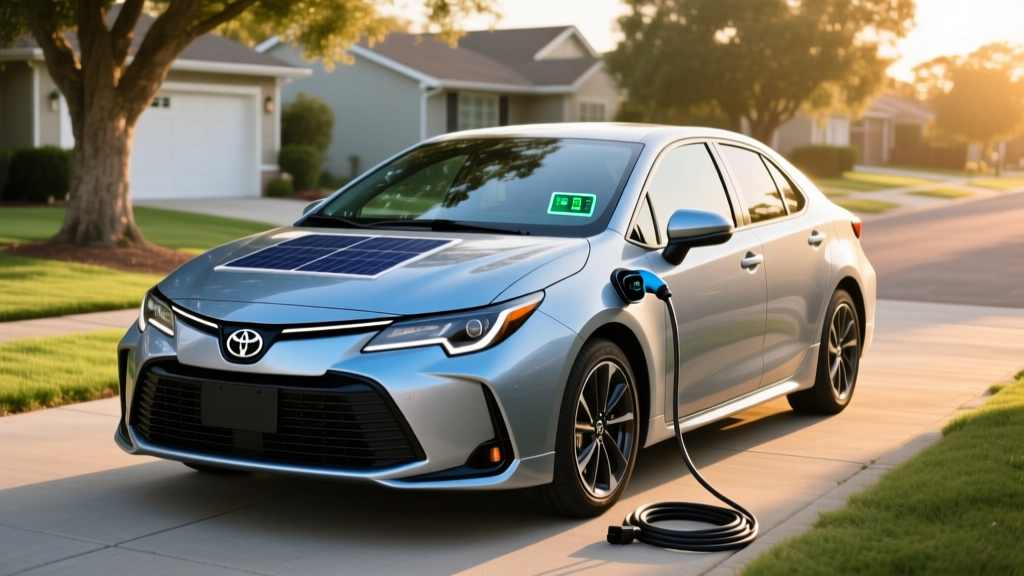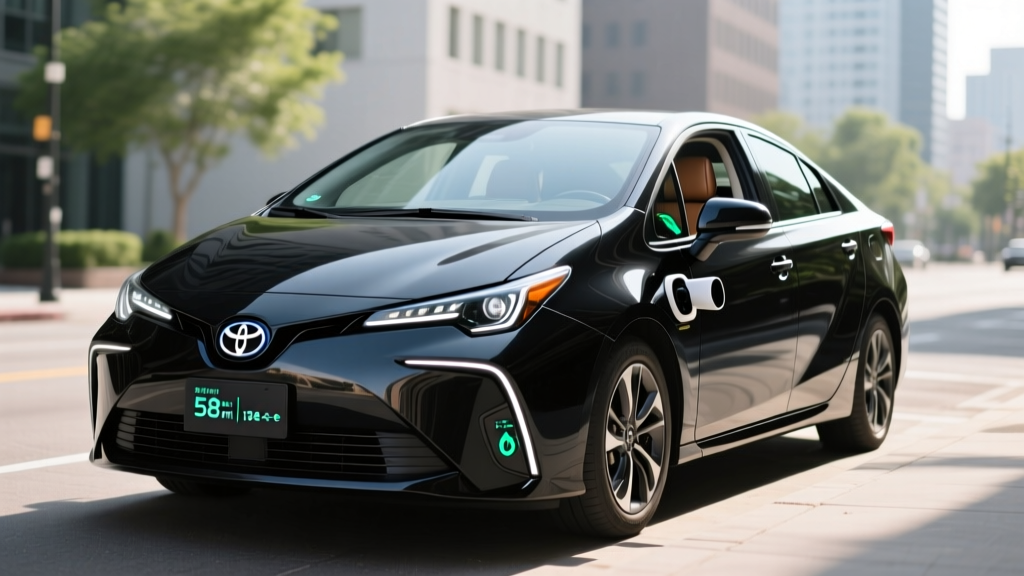
The 2026 Toyota Prius PHEV — marketed as the Prius Prime — occupies a rare sweet spot in the electrified-vehicle market: genuine electric-only commuting range, hybrid flexibility for road trips, and a starting price that undercuts most full EVs. For buyers who want to drive on electricity daily but can't commit to a battery-electric vehicle, the 2026 Prius Prime remains one of the most practical options available.
This guide breaks down everything you need to know: real-world range versus EPA estimates, the HEV versus PHEV distinction, federal tax credit eligibility under current IRS §30D rules, battery longevity, and whether this plug-in hybrid fits your driving pattern better than a conventional hybrid or a full EV.
HEV vs PHEV: Understanding the 2026 Prius Lineup
Toyota sells two distinct Prius models for 2026, and confusing them is the most common buyer mistake:
| Feature | Prius (HEV) | Prius Prime (PHEV) |
|---|---|---|
| Powertrain type | Conventional hybrid — no plug | Plug-in hybrid — charges from grid |
| Electric-only range | ~1 mile at low speed | 44 miles (EPA) |
| Battery capacity | ~1.0 kWh (small buffer) | 13.6 kWh usable (lithium-ion) |
| Plug-in charging | No — charges via engine + regen | Yes — Level 1 and Level 2 |
| DC fast charging | N/A | No |
| EPA combined MPG (hybrid mode) | 57 MPG | 48 MPG |
| Federal tax credit eligible | No | Up to $3,750 (§30D, subject to rules) |
| Starting MSRP (2026) | ~$28,550 | ~$33,450 |
The conventional Prius HEV generates all its electricity onboard through regenerative braking and the gasoline engine. You never plug it in. The Prius Prime PHEV has a substantially larger battery that you charge from a wall outlet or Level 2 charger, enabling 44 miles of pure electric driving before the gasoline engine seamlessly engages.
If you have access to home or workplace charging and a commute under 40 miles round-trip, the PHEV lets you drive on electricity most days while retaining a gas engine for longer trips — eliminating range anxiety entirely.
Fuel Economy: EPA Ratings and Real-World MPG
| Metric | Prius Prime (PHEV) | Prius (HEV) |
|---|---|---|
| EPA city MPG (hybrid mode) | 50 MPG | 57 MPG |
| EPA highway MPG (hybrid mode) | 47 MPG | 56 MPG |
| EPA combined MPG (hybrid mode) | 48 MPG | 57 MPG |
| Electric-only range | 44 miles | N/A |
| MPGe (electric + gas combined) | 127 MPGe | N/A |
| Total range (full tank + full battery) | ~490 miles | ~620 miles |
| Fuel tank capacity | 10.6 gallons | 11.3 gallons |
Real-world MPG reality check: Toyota's hybrid system excels in city driving where regenerative braking recaptures energy at every stop. Expect to match or slightly exceed the EPA city rating in stop-and-go traffic. Highway MPG tends to drop 3-5 MPG below the EPA sticker at sustained 75+ mph speeds due to aerodynamic drag — plan for roughly 43-45 MPG highway in the PHEV when the battery is depleted.
In electric-only mode, the 44-mile EPA estimate holds up well in mild weather (55-80°F) at suburban speeds. In cold weather (below 30°F), expect a 20-30% reduction, yielding roughly 30-35 miles of electric range. Highway-speed electric driving at 70 mph also reduces range to approximately 35-38 miles.
EPA Electric Range: 44 miles
Real-world expectation: 38-44 miles in mild conditions; 30-35 miles in cold weather or at highway speeds. The gasoline engine provides ~440+ additional miles once the battery depletes.
Powertrain, Performance, and Charging Specs
| Specification | 2026 Prius Prime (PHEV) |
|---|---|
| Engine | 2.0L 4-cylinder Atkinson-cycle |
| Combined system horsepower | 220 HP |
| Electric motor output | 161 HP (front axle) |
| 0-60 mph | 6.6 seconds |
| Drivetrain | Front-wheel drive (AWD available on select trims) |
| Battery chemistry | Lithium-ion (NMC) |
| Usable battery capacity | 13.6 kWh |
| Level 1 charging (120V, 12A) | ~11 hours (0-100%) |
| Level 2 charging (240V, 32A) | ~4 hours (0-100%) |
| DC fast charging | Not supported |
| Charge port | J1772 (Level 1/2) |
| Onboard charger capacity | 3.3 kW |
The 220-horsepower combined output is a significant upgrade from pre-2023 Prius generations. The 2.0-liter engine paired with Toyota's planetary-gear hybrid transaxle delivers confident highway merging and a 6.6-second 0-60 time — a dramatic improvement over the 10+ second times of older Prius models.
Charging practicality: The 3.3 kW onboard charger means Level 2 charging fills the battery in about 4 hours. This is adequate for overnight home charging and opportunistic top-ups at workplace chargers, but it won't take advantage of faster Level 2 stations rated at 7.2 kW or higher. The lack of DC fast charging is a deliberate trade-off — it keeps weight and cost down, and the 13.6 kWh battery is small enough that Level 2 suffices for most owners.
If you install a 240V Level 2 home charger (a typical $500-$1,200 installation), you'll wake up to a full battery every morning. On a standard 120V household outlet (Level 1), expect roughly 4 miles of range per hour of charging — adequate if you drive less than 30 miles daily and can plug in for 10+ hours overnight.
Pricing, Trims, and Tax Credit Eligibility
The 2026 Toyota Prius Prime is offered in three trims:
- SE: ~$33,450 MSRP — 17-inch alloy wheels, 8-inch touchscreen, heated front seats
- XSE: ~$36,750 MSRP — 19-inch wheels, 12.3-inch touchscreen, SofTex seats, wireless charging
- XSE Premium: ~$40,050 MSRP — panoramic roof, JBL audio, head-up display, advanced park assist
Federal Tax Credit Under IRS §30D
The 2026 Prius Prime may qualify for a federal tax credit of up to $3,750 under the current §30D clean vehicle credit rules. This is not the full $7,500 — the credit amount depends on battery sourcing and critical-mineral requirements that change annually. Key eligibility constraints:
- MSRP cap: Vehicle must have an MSRP under $55,000 (sedan classification) — all Prius Prime trims qualify
- Buyer income cap: Modified AGI must not exceed $150,000 (single) / $300,000 (joint filing)
- Battery sourcing: A percentage of critical minerals and battery components must be sourced from the U.S. or free-trade-agreement countries — this threshold tightens each year, which is why the credit may be $3,750 rather than $7,500
- Point-of-sale transfer: As of 2024, you can transfer the credit to the dealer at purchase, reducing your out-of-pocket cost immediately rather than waiting for tax filing
- Assembly: Vehicle must undergo final assembly in North America — the Prius Prime is assembled in Japan, which may disqualify it from the new-vehicle credit depending on current-year rules
Critical caveat: The Prius Prime is assembled in Japan. Under current §30D rules requiring North American final assembly for the new-vehicle credit, this may make it ineligible for the federal tax credit. Always verify current eligibility on IRS.gov and check the DOE's qualifying vehicle list before purchasing. State-level incentives (such as California's CVRP or Colorado's innovative motor vehicle credit) may still apply regardless of assembly location.
Battery Longevity, Warranty, and Replacement Cost
Hybrid battery warranty: 10 years / 150,000 miles (whichever comes first) in all 50 states, covering defects and capacity loss below a defined threshold.
Powertrain warranty: 5 years / 60,000 miles
Basic warranty: 3 years / 36,000 miles
Toyota's hybrid battery warranty is among the strongest in the industry. The 10-year/150,000-mile coverage applies nationwide — not just in CARB states as some manufacturers limit their extended hybrid warranties.
Degradation reality: Toyota's lithium-ion hybrid batteries are engineered with conservative charge buffers — the system never uses the full 100% or discharges to true 0%. This shallow-cycling strategy dramatically extends cycle life. Based on historical data from Toyota PHEV owners, expect roughly 5-8% capacity loss over the first 5 years and 100,000 miles. Most Toyota hybrid batteries outlast 150,000 miles without requiring replacement.
Replacement cost if out of warranty: A new Prius Prime hybrid battery pack costs approximately $4,000-$6,000 installed at a Toyota dealer. Independent hybrid specialists often offer refurbished packs for $2,500-$3,500. Given the 10-year warranty and Toyota's track record, this is a low-probability expense for most owners.
Toyota's warranty documentation specifies that the hybrid battery is covered if it fails to hold a minimum charge capacity — typically around 60-70% of original. If your electric-only range drops noticeably within the warranty period, the dealer can run a State of Health (SoH) diagnostic to determine coverage eligibility.
Reliability and Ownership Costs
The Prius nameplate carries one of the strongest reliability records in the automotive industry. The current-generation hybrid transaxle (P810) has been in production since 2023 with minimal reported issues. Toyota's eCVT design — which uses a planetary gearset rather than a traditional belt-driven CVT — has no belts to wear and no friction clutches to replace.
5-year estimated ownership cost highlights:
| Cost Category | Prius Prime (PHEV) | Prius (HEV) | Comparable Gas Sedan |
|---|---|---|---|
| Fuel / electricity (60,000 mi) | ~$2,800* | ~$4,600 | ~$7,200 |
| Maintenance (5 years) | ~$2,200 | ~$2,200 | ~$3,500 |
| Insurance (avg) | ~$6,500 | ~$6,200 | ~$5,800 |
| Depreciation (est.) | ~$12,000 | ~$10,500 | ~$14,000 |
| Estimated 5-yr total | ~$23,500 | ~$23,500 | ~$30,500 |
*Assumes 70% of miles driven on electricity at $0.14/kWh national average, 30% on gasoline at $3.40/gal. Actual costs vary significantly by local electricity rates and charging habits.
Insurance premiums for the Prius Prime run slightly higher than the HEV variant due to the higher MSRP and the cost of the larger battery pack. However, both remain well below EV insurance averages.
Who Should Buy the 2026 Prius Prime vs a Full EV or Gas Car
Choose the 2026 Prius Prime (PHEV) if:
- Your daily commute is under 44 miles round-trip and you can charge at home or work
- You take road trips where charging infrastructure is sparse or unreliable
- You want electric daily driving but live in an apartment without charging access some days
- You want to reduce fuel costs without range anxiety
- You're not ready to commit to a full EV but want to drive on electricity
Choose the conventional Prius (HEV) if:
- You cannot install a home charger and have no workplace charging
- You want maximum MPG with zero behavioral changes
- Your budget is tighter and the ~$5,000 PHEV premium isn't justified
- You drive mostly highway miles where the PHEV's electric range offers less benefit
Choose a full EV (e.g., Tesla Model 3, Hyundai Ioniq 6) if:
- You have reliable Level 2 home charging
- Your daily driving is under 250 miles and you rarely exceed 300 miles without stopping
- You want zero tailpipe emissions and minimal maintenance (no oil changes, no engine)
- You qualify for the full $7,500 federal credit on an eligible EV
Pros
- 44 miles of real electric range covers most commutes
- 220 HP makes it genuinely quick for a Prius
- 48 MPG hybrid mode when battery is depleted
- 10-year/150,000-mile hybrid battery warranty
- No range anxiety — gas engine provides 440+ additional miles
- Strong reliability track record
- Updated styling that doesn't look like a traditional hybrid
Cons
- No DC fast charging capability
- 3.3 kW onboard charger is slow for Level 2
- Assembled in Japan — likely ineligible for federal new-vehicle tax credit
- Rear seat space is tighter than competitors (35.2" legroom)
- Cargo volume reduced vs HEV due to larger battery (20.3 cu ft)
- XSE Premium trim pushes past $40,000
Frequently Asked Questions
How many MPG does the 2026 Prius Prime get?
In hybrid mode (after the battery is depleted), the 2026 Prius Prime achieves an EPA-rated 48 MPG combined — 50 city / 47 highway. In real-world driving, expect to match or exceed the city rating in stop-and-go traffic, while highway driving at 75+ mph typically yields 43-45 MPG. When factoring in electric-only miles, overall fuel consumption can be dramatically lower if you charge regularly.
How far can the 2026 Prius Prime go on electric only?
The EPA rates the Prius Prime at 44 miles of electric-only range. In mild weather at suburban speeds (30-50 mph), you can expect to match this figure. In cold weather (below 30°F) or at sustained highway speeds, plan for 30-38 miles. Once the battery depletes, the gasoline engine takes over seamlessly, providing an additional ~440 miles of range from the 10.6-gallon fuel tank.
Does the 2026 Prius Prime qualify for a tax credit?
Under current IRS §30D rules, the Prius Prime faces a significant hurdle: it is assembled in Japan, and the new-vehicle credit requires North American final assembly. This likely makes it ineligible for the federal credit. However, state incentives may still apply — California, Colorado, New York, and several other states offer rebates for PHEVs regardless of assembly location. Always check IRS.gov and your state's energy office for current eligibility.
Is the Prius Prime reliable and what does battery replacement cost?
The Prius platform has one of the strongest reliability records of any vehicle sold in the U.S. The hybrid battery is covered for 10 years / 150,000 miles. If replacement is needed out of warranty, expect $4,000-$6,000 at a dealer or $2,500-$3,500 from an independent hybrid specialist. Most Toyota hybrid batteries exceed 150,000 miles without significant issues.
Can I charge the Prius Prime at a public fast charger?
No. The Prius Prime does not support DC fast charging. It charges via Level 1 (120V household outlet, ~11 hours) or Level 2 (240V, ~4 hours) using a J1772 connector. This is intentional — the 13.6 kWh battery is small enough that overnight Level 2 charging is practical, and omitting DC fast-charge hardware keeps cost and weight down. You can use public Level 2 chargers at workplaces, shopping centers, and parking garages.
Hybrid vs PHEV vs EV — which is right for me?
If you can charge at home and your daily driving is under 44 miles, the PHEV lets you drive on electricity most days while keeping a gas engine for road trips. If you can't charge at home, the conventional HEV gives you excellent MPG with no plug-in requirement. If you have home charging, drive under 250 miles daily, and want zero tailpipe emissions with minimal maintenance, a full EV like the Tesla Model 3 or Hyundai Ioniq 6 may be a better long-term fit. The PHEV is the bridge option for drivers who want electric daily driving without committing fully.