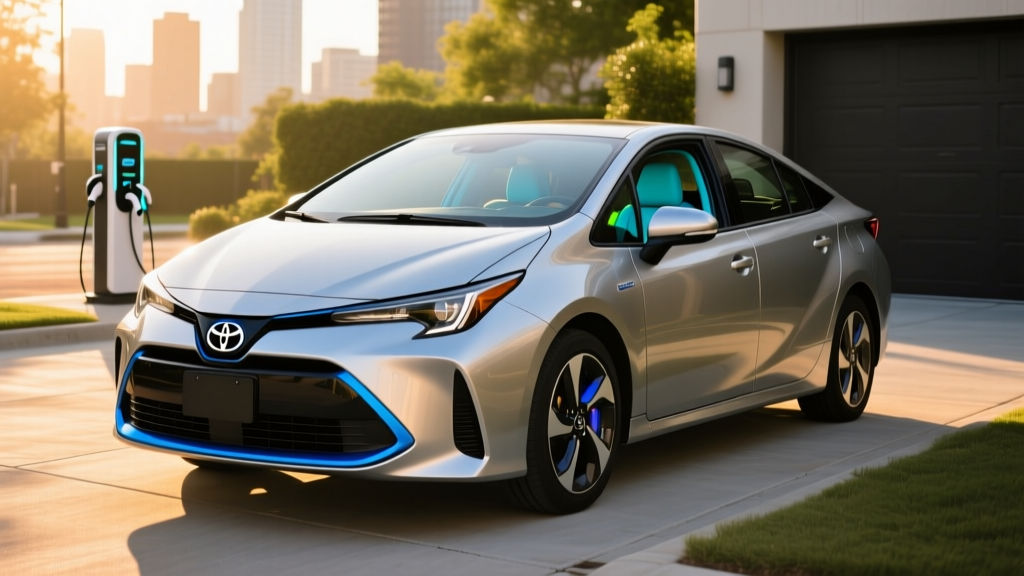
The 2026 Toyota Prius continues the nameplate's reputation as America's benchmark hybrid, but this fifth-generation model is far from the tepid commuter car of years past. With up to 196 horsepower on tap and a redesigned platform, the Prius now delivers genuine performance alongside the efficiency that made it famous. If you're researching the 2026 Toyota Prius hybrid MPG figures, you've landed on the right deep-dive — we'll walk through every EPA number, real-world expectation, powertrain detail, and ownership cost you need before signing a purchase agreement.
This guide covers the conventional Prius hybrid (HEV), which does not plug in, as well as the Prius Prime plug-in hybrid (PHEV). Understanding the difference is critical, because the two models serve different use cases and have very different pricing, range, and incentive profiles.
HEV vs PHEV: Which Prius Is Which?
Conventional Hybrid (HEV) — Prius / Prius LE / XLE / Limited: The standard Prius uses a gasoline engine paired with electric motors and a small battery that recharges through regenerative braking and the engine. You never plug it in. It operates as a self-sustaining system, optimizing the balance between gas and electric power automatically.
Plug-In Hybrid (PHEV) — Prius Prime SE / XSE / XSE Premium: The Prius Prime adds a larger battery and the ability to charge from an external power source. It can drive a meaningful distance on electricity alone before the gasoline engine kicks in, functioning as a conventional hybrid once the battery is depleted.
This distinction matters because buyers sometimes confuse the two, expecting the standard Prius to offer electric-only driving. It does not. If you want EV-like commuting without range anxiety, the Prime is the model to consider. If you want maximum simplicity and no charging infrastructure requirement, the conventional HEV is the right call.
2026 Toyota Prius Hybrid MPG: EPA Ratings and Real-World Numbers
The headline number for the 2026 Prius HEV is its EPA-estimated combined fuel economy, which varies by trim and drivetrain. Front-wheel-drive models achieve the highest figures, while all-wheel-drive (AWD) trims sacrifice a small amount of efficiency for added traction.
| Trim | Drivetrain | City MPG | Highway MPG | Combined MPG |
|---|---|---|---|---|
| LE | FWD | 57 | 56 | 57 |
| XLE | FWD | 52 | 52 | 52 |
| Limited | FWD | 52 | 52 | 52 |
| LE | AWD | 53 | 54 | 54 |
| XLE | AWD | 49 | 50 | 49 |
| Limited | AWD | 49 | 50 | 49 |
Source: EPA Fuel Economy
Real-World MPG Expectations: Toyota hybrids historically overperform their EPA city ratings in stop-and-go traffic, where regenerative braking recaptures the most energy. Expect the LE FWD to deliver 58–62 MPG in urban driving during mild weather. Highway driving at 75+ mph typically drops efficiency to 48–52 MPG. In cold weather (below 30°F), the engine runs more frequently for cabin heat and battery warming, reducing combined MPG by roughly 5–8 MPG. On a mixed 300-mile road trip, plan for approximately 50–54 MPG in the LE and 45–49 MPG in AWD trims.
Prius Prime PHEV: Electric-Only Range and Combined MPG
The 2026 Prius Prime is where plug-in capability enters the picture. It pairs Toyota's fifth-generation hybrid system with a larger lithium-ion battery pack that enables genuine electric-only commuting.
| Specification | Prius Prime SE | Prius Prime XSE / XSE Premium |
|---|---|---|
| Battery Capacity | 13.6 kWh (usable ~11.0 kWh) | 13.6 kWh (usable ~11.0 kWh) |
| EPA Electric-Only Range | 44 miles | 40 miles |
| Total Combined Range (gas + electric) | ~470 miles | ~440 miles |
| EPA Combined MPG (after battery depleted) | 52 MPG | 48 MPG |
| MPGe (electric + gas combined) | 127 MPGe | 117 MPGe |
| Level 1 Charge Time (120V) | ~11 hours (full) | ~11 hours (full) |
| Level 2 Charge Time (240V) | ~4 hours (full) | ~4 hours (full) |
| DC Fast Charging | Not supported | Not supported |
Source: EPA Fuel Economy — Toyota Prius Prime listings
The Prime's 44-mile electric-only range (SE trim) covers the average American's daily round-trip commute. According to FHWA data, the average one-way commute is roughly 16 miles — meaning most Prime owners could drive for days without the gasoline engine engaging, provided they charge nightly at home. Once the battery depletes, the Prime operates as a conventional hybrid with no range limitation beyond the fuel tank.
Charging reality check: The Prius Prime does not support DC fast charging. Level 2 at 240V is the fastest option at approximately 4 hours for a full charge. For overnight charging, even a standard 120V outlet will replenish the battery by morning. This is typical for PHEVs in this class — the battery is small enough that Level 2 is more than adequate.
Powertrain Specs: Horsepower, Engine, and Performance
The fifth-generation Prius uses Toyota's latest Hybrid Synergy Drive, combining a 2.0-liter four-cylinder engine with electric motor-generators. The result is a substantial power increase over previous generations without sacrificing efficiency.
| Specification | Prius HEV (FWD) | Prius HEV (AWD) | Prius Prime |
|---|---|---|---|
| Engine | 2.0L 4-cylinder | 2.0L 4-cylinder | 2.0L 4-cylinder |
| Combined System Horsepower | 194 HP | 196 HP | 220 HP |
| 0–60 MPH | ~7.2 sec | ~7.0 sec | ~6.6 sec |
| Electric Motors | Front motor-generator | Front + rear motor-generators | Front motor-generator |
| Transmission | eCVT | eCVT | eCVT |
| Towing Capacity | Not rated | Not rated | Not rated |
The AWD-e system on conventional Prius models uses a separate rear-axle electric motor that engages automatically when additional traction is needed — there's no mechanical driveshaft connecting the front and rear axles. This keeps weight down and preserves efficiency while improving wet-weather and light-snow confidence.
The Prius Prime's 220 HP makes it the quickest Prius ever sold, with a 6.6-second 0–60 time that outpaces many compact turbocharged sedans. Toyota achieved this by tuning the hybrid system's power delivery for more aggressive electric assist during acceleration.
Pricing, Trims, and Tax Credit Eligibility
The 2026 Prius lineup starts at a competitive price point, with the conventional hybrid undercutting most rival HEVs and the Prius Prime sitting in a more premium position justified by its electric-only capability.
| Model / Trim | MSRP (est.) |
|---|---|
| Prius LE (FWD) | $29,445 |
| Prius XLE (FWD) | $32,695 |
| Prius Limited (FWD) | $35,995 |
| Prius LE (AWD) | $30,845 |
| Prius XLE (AWD) | $34,095 |
| Prius Limited (AWD) | $37,395 |
| Prius Prime SE | $34,095 |
| Prius Prime XSE | $37,395 |
| Prius Prime XSE Premium | $40,695 |
Pricing includes destination charge. Final MSRP subject to Toyota's official 2026 announcement.
Federal Tax Credit for the Prius Prime (PHEV only):
- The conventional Prius HEV does not qualify for the federal §30D tax credit — it is not a plug-in vehicle.
- The Prius Prime may qualify for up to $3,750 under the current IRS §30D rules, contingent on battery-component and critical-mineral sourcing requirements.
- Buyer income caps apply: $150,000 (single), $225,000 (head of household), $300,000 (joint filers) modified AGI.
- MSRP cap: The Prius Prime is classified as a sedan, subject to the $55,000 MSRP cap — all trims clear this threshold.
- Point-of-sale transfer is available, allowing the credit to be applied as a down-payment reduction at the dealer rather than claimed on your tax return.
- Battery sourcing requirements change annually — verify current-year rules at IRS.gov §30D or consult a tax professional before purchasing.
State incentives: Many states offer additional rebates or HOV-lane access for PHEVs. California's CVRP program, for example, has offered rebates for qualifying PHEVs (amounts and availability vary by funding cycle). Check your state's energy office for current programs.
Battery Warranty, Longevity, and Replacement Cost
Hybrid battery reliability is one of the most common concerns among first-time hybrid buyers. Toyota has built a strong track record here, with Prius batteries routinely lasting well beyond their warranty periods.
2026 Prius Hybrid Battery Warranty:
- Hybrid Battery: 10 years / 150,000 miles (whichever comes first) — covers capacity loss and failure
- Hybrid System Components: 8 years / 100,000 miles — includes inverter, motor-generators, and control modules
- Bumper-to-Bumper: 3 years / 36,000 miles
- Powertrain (engine + transaxle): 5 years / 60,000 miles
Toyota's fifth-generation nickel-metal-hydride (HEV) and lithium-ion (Prime) battery packs benefit from improved thermal management and more conservative state-of-charge buffering — meaning the system never fully charges or fully depletes the battery, reducing stress and extending cycle life.
Replacement cost: If a hybrid battery does fail out of warranty, replacement typically costs between $2,500 and $4,500 depending on whether you choose a new OEM pack, a refurbished unit, or an aftermarket option. Independent hybrid shops often offer refurbished batteries with 1–3 year warranties for $1,500–$2,500. However, given Toyota's 10-year/150,000-mile coverage and the real-world longevity data from previous generations, out-of-pocket replacement during typical ownership is uncommon.
Fleet data from taxi and rideshare operators using Prius vehicles regularly shows hybrid batteries reaching 200,000+ miles with less than 15% capacity degradation. The fifth-generation system's improved cooling and chemistry should maintain or improve on that record.
Who Should Buy the Prius Hybrid vs. a PHEV or Full EV?
The Prius lineup covers a wide range of buyer profiles. Here's a decision framework to help you choose:
Choose the Prius HEV if:
- You have no access to home or workplace charging
- You want maximum simplicity — no plugs, no charging apps, no planning
- Your priority is the lowest upfront cost with excellent fuel economy
- You frequently take long road trips and don't want to plan charging stops
- You live in an apartment or rent and can't install a charger
Choose the Prius Prime (PHEV) if:
- You can charge at home (even a standard 120V outlet is sufficient)
- Your daily commute is under 40 miles round-trip
- You want electric driving for daily errands but gas flexibility for road trips
- You want to reduce fuel consumption to near-zero for weekday driving
- You qualify for the federal or state PHEV tax credit
Choose a full EV (BEV) instead if:
- You have reliable home Level 2 charging
- You want zero tailpipe emissions and the lowest per-mile fuel cost
- You're eligible for the full $7,500 federal EV tax credit
- You don't take frequent road trips exceeding 250+ miles one-way
- You want to eliminate oil changes and engine maintenance entirely
Pros and Cons at a Glance
Pros
- Class-leading 57 MPG combined (LE FWD) in real-world and EPA testing
- 194–220 HP across the lineup — genuinely quick for a hybrid
- 10-year / 150,000-mile hybrid battery warranty
- No charging infrastructure required (HEV)
- 44-mile electric-only range on the Prime covers most commutes
- Strong resale value and proven long-term reliability
- AWD available across the conventional lineup
Cons
- Prime does not support DC fast charging
- AWD trims sacrifice 3–5 MPG vs FWD
- Cargo space (behind rear seats) is tighter than compact SUV alternatives
- HEV does not qualify for federal tax credit
- Rear-seat headroom is limited for taller passengers due to the sloping roofline
- Infotainment system, while improved, still lags behind some competitors in responsiveness
Frequently Asked Questions
How many MPG does the 2026 Toyota Prius hybrid get?
The 2026 Prius LE FWD achieves an EPA-estimated 57 city / 56 highway / 57 combined MPG. Higher trims (XLE, Limited) rate at 52 combined. AWD models drop to 49–54 combined depending on trim. Real-world city driving often exceeds EPA estimates by 3–5 MPG, while sustained highway driving at high speeds may fall 5–8 MPG below the sticker.
How far can the Prius Prime go on electric only?
The 2026 Prius Prime SE achieves 44 miles of EPA-estimated electric-only range. The XSE and XSE Premium trims rate at 40 miles due to larger wheels and added weight. Once the battery is depleted, the Prime operates as a conventional hybrid with no range limitation beyond its 10.6-gallon fuel tank, yielding a total combined range of approximately 440–470 miles.
Does the standard Prius hybrid need to be plugged in?
No. The conventional Prius HEV charges its battery entirely through regenerative braking and the gasoline engine. There is no plug, no charging cable, and no external charging required. The Prius Prime is the only variant that plugs in.
Is the Prius hybrid reliable, and what does battery replacement cost?
Toyota's hybrid systems are among the most proven in the industry, with decades of fleet and consumer data supporting long-term durability. The hybrid battery is warranted for 10 years / 150,000 miles. Out-of-warranty replacement typically costs $2,500–$4,500 for a new OEM battery, or $1,500–$2,500 for a refurbished unit. Real-world data shows most Prius batteries lasting 200,000+ miles with minimal degradation.
Does the 2026 Prius qualify for a federal tax credit?
The conventional Prius HEV does not qualify for the federal §30D clean vehicle credit — it is not a plug-in vehicle. The Prius Prime PHEV may qualify for up to $3,750, depending on battery sourcing requirements, buyer income limits, and the vehicle's MSRP falling under the $55,000 sedan cap. Always verify current rules at IRS.gov before purchasing, as critical-mineral and component sourcing thresholds change annually.
How does the Prius compare to a full EV for daily commuting?
If you can charge at home, a full EV like the Hyundai Ioniq 6 or Tesla Model 3 will deliver lower per-mile energy costs (roughly $0.04–$0.06/mile vs $0.08–$0.10/mile for the Prius HEV at $3.50/gallon gas). However, the Prius eliminates charging-planning anxiety, costs significantly less upfront, and provides unlimited range flexibility for road trips. The Prius Prime splits the difference — electric commuting with gas fallback.
Does the Prius AWD system affect fuel economy significantly?
The AWD-e system reduces combined MPG by 3–5 MPG compared to FWD equivalents. The LE AWD achieves 54 combined vs the LE FWD's 57 combined. For buyers in regions with frequent rain, snow, or icy conditions, this is a modest trade-off for substantially improved traction confidence.