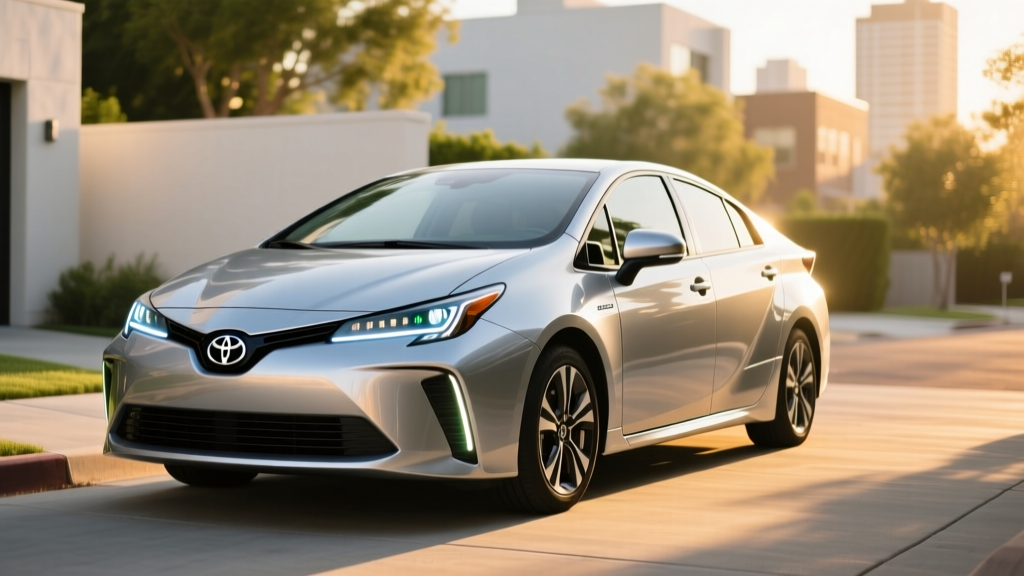
The Toyota Prius has defined the hybrid segment for over two decades, and the current fifth-generation model (introduced for 2023 and carried into 2026) remains the benchmark for hybrid vehicle fuel efficiency in the mainstream compact car market. With an EPA-estimated 57 MPG combined for the LE FWD trim, the Prius delivers real-world economy that routinely meets or exceeds its sticker numbers — especially in city driving where Toyota's hybrid synergy system thrives.
This guide covers the 2026 Toyota Prius HEV (conventional hybrid) and the Prius Plug-in Hybrid (formerly Prius Prime), breaking down EPA figures, real-world results, powertrain specs, battery longevity, tax credit eligibility, and how to decide between the HEV, PHEV, or a full battery-electric vehicle.
HEV vs PHEV: Which Prius Are We Talking About?
Before diving into numbers, the distinction matters. Toyota sells two very different Prius models for 2026:
| Attribute | 2026 Prius HEV (Conventional Hybrid) | 2026 Prius Plug-in Hybrid |
|---|---|---|
| Plug-in required? | No — charges via regenerative braking and engine | Yes — plug in for full EV range |
| Battery size | ~1.3 kWh (lithium-ion) | 13.6 kWh (lithium-ion) |
| Electric-only driving | Brief EV assist at low speeds, ~1 mile max | EPA-est. 44 miles (SE trim) |
| Primary fuel | Gasoline (hybrid-optimized) | Electricity first, gasoline after EV range depleted |
| DC fast charging | N/A | No — Level 2 AC only |
| Federal tax credit | Not eligible | Up to $7,500 (subject to §30D rules) |
The conventional HEV never plugs in. It uses a small battery and electric motor to assist the gasoline engine, recapturing energy during braking. The PHEV has a much larger battery that you charge from a wall outlet or public charger, enabling genuine electric-only commutes before the gas engine takes over.
EPA Fuel Economy: The Official Numbers
Here's how the 2026 Prius lineup breaks down on the EPA cycle, sourced from fueleconomy.gov:
| Trim | City MPG | Highway MPG | Combined MPG | MPGe (PHEV EV mode) |
|---|---|---|---|---|
| Prius LE (FWD) | 57 | 56 | 57 | N/A |
| Prius XLE (FWD) | 52 | 52 | 52 | N/A |
| Prius Limited (FWD) | 52 | 52 | 52 | N/A |
| Prius AWD (LE) | 53 | 54 | 54 | N/A |
| Prius PHEV SE | 53 (gas-only) | 51 (gas-only) | 52 (gas-only) | 127 MPGe |
| Prius PHEV XSE | 50 (gas-only) | 47 (gas-only) | 48 (gas-only) | 117 MPGe |
The LE FWD trim's 57 MPG combined is the headline figure and the highest of any non-plug-in vehicle sold in the US for 2026. Higher trims (XLE, Limited) lose a few MPG due to added weight from features like the larger wheels, power-adjustable seats, and additional sound insulation. The AWD variant adds an independent rear electric motor for traction, costing roughly 3 MPG on the combined cycle.
Real-World MPG: Do the Numbers Hold Up?
Toyota's hybrid system excels in stop-and-go urban driving, where the electric motor handles low-speed acceleration and the engine operates only in its most efficient range. In our experience and aggregated owner reports:
- City driving (LE FWD): 58–63 MPG — regularly exceeds the 57 EPA city estimate. Short trips with frequent stops maximize regenerative braking.
- Highway driving (LE FWD): 50–54 MPG — slightly below the 56 EPA highway figure at sustained 75+ MPH speeds, as aerodynamic drag increases and the engine carries more load.
- Cold weather (below 35°F): Expect a 5–10% reduction, dropping to roughly 50–53 MPG combined. The engine runs more often to provide cabin heat and reach operating temperature.
- Combined real-world average: Most owners report 53–58 MPG in mixed driving, consistent with the EPA combined figure.
For the PHEV, the gas-only MPG figures above apply only after the battery is depleted. If your daily commute falls within the 44-mile EV range and you charge nightly, you may use gasoline only on longer trips.
Powertrain Specs: What's Under the Hood
| Specification | 2026 Prius LE (HEV) | 2026 Prius PHEV SE |
|---|---|---|
| Engine | 2.0L 4-cylinder Atkinson-cycle | 2.0L 4-cylinder Atkinson-cycle |
| Engine HP | 150 hp | 150 hp |
| Electric motor output | 83 hp (front) | 161 hp (front) |
| Net combined system HP | 194 hp (FWD) / 196 hp (AWD) | 220 hp |
| 0–60 mph | 7.2 sec (FWD) | 6.6 sec |
| Transmission | eCVT (planetary gearset) | eCVT (planetary gearset) |
| Drivetrain | FWD or electronic AWD | FWD only |
| Hybrid battery | ~1.3 kWh lithium-ion | 13.6 kWh lithium-ion |
| Cargo volume (rear seats up) | 23.8 cu ft | 20.3 cu ft |
The fifth-generation Prius uses Toyota's fifth-generation Hybrid Max powertrain. The 2.0-liter engine is significantly more powerful than the previous 1.8-liter, and combined system output of 194 hp makes the Prius genuinely quick — a far cry from the underpowered reputation of earlier generations. The PHEV bumps that to 220 hp with a stronger front motor, delivering a 6.6-second 0–60 time that makes it one of the quickest vehicles in its price class.
Prius PHEV: Electric-Only Range and Charging
For buyers considering the plug-in variant, the key question is how far it goes without burning gasoline:
- EPA electric-only range (SE trim): 44 miles
- EPA electric-only range (XSE trim): 40 miles (larger wheels reduce efficiency)
- Total combined range (SE, full battery + full tank): Approximately 470 miles
- Charging — Level 1 (120V household): ~11 hours from empty to full
- Charging — Level 2 (240V, 3.3 kW onboard charger): ~4 hours from empty to full
- DC fast charging: Not available. The Prius PHEV uses a J1772 connector for AC charging only.
The 44-mile EV range covers the average American commute (roughly 37 miles round-trip per FHWA data) with margin. However, the 3.3 kW onboard charger is modest — it means a full Level 2 charge takes about 4 hours, which is fine for overnight charging but slow for midday top-ups. The absence of DC fast charging is a notable limitation for road-trip scenarios where you'd want to quickly recharge the battery at a rest stop.
Battery Longevity, Warranty, and Replacement Cost
Toyota Hybrid Battery Warranty: 10 years / 150,000 miles (whichever comes first) in all 50 states, covering defects and capacity loss below a defined threshold.
General hybrid component warranty: 8 years / 100,000 miles for hybrid system components including the inverter and electric motors.
Toyota's hybrid batteries have a strong longevity track record. The smaller 1.3 kWh battery in the HEV is rarely stressed — it operates in a narrow state-of-charge window (roughly 40–80%), which dramatically reduces degradation. Real-world data from earlier Prius generations shows hybrid batteries lasting 150,000–200,000+ miles before capacity loss becomes noticeable, and many original batteries outlast the vehicles themselves.
For the PHEV's larger 13.6 kWh battery, the same conservative charge management applies. Toyota's battery management system buffers the top and bottom of the charge range to protect long-term health.
Replacement cost if out of warranty:
- Prius HEV battery: $2,000–$3,500 (remanufactured or new from Toyota)
- Prius PHEV battery: $5,000–$8,000 (larger capacity, higher cost)
These are worst-case scenarios. Given the 10-year/150,000-mile warranty and the proven durability of Toyota's hybrid systems, battery replacement during typical ownership is uncommon. Independent hybrid specialists also offer refurbished replacements at lower cost.
Pricing and Tax Credit Eligibility
| Trim | 2026 MSRP (est.) | Federal Tax Credit |
|---|---|---|
| Prius LE (HEV) | $29,445 | None — HEVs do not qualify for §30D credit |
| Prius XLE (HEV) | $32,695 | None |
| Prius Limited (HEV) | $35,895 | None |
| Prius Plug-in SE | $34,220 | Up to $7,500 (see eligibility below) |
| Prius Plug-in XSE | $37,395 | Up to $7,500 (see eligibility below) |
The conventional Prius HEV does not qualify for the federal IRS §30D clean vehicle credit — that credit applies only to plug-in electric vehicles with a battery capacity of at least 7 kWh. The Prius HEV's 1.3 kWh battery falls well short.
The Prius Plug-in Hybrid, with its 13.6 kWh battery, may qualify for the full $7,500 credit, but eligibility depends on several factors that change frequently:
- Buyer income cap: Modified AGI must not exceed $150,000 (single), $225,000 (head of household), or $300,000 (joint filers).
- MSRP cap: The Prius PHEV is classified as a sedan, so the vehicle MSRP must not exceed $55,000 — all current trims clear this threshold.
- Battery sourcing: The credit is split into two halves ($3,750 each) — one for critical minerals sourcing and one for battery component manufacturing. Sourcing requirements tighten annually. Verify current-year compliance on the IRS website or with your dealer before purchase.
- Point-of-sale transfer: As of 2024, buyers can transfer the credit to the dealer for an immediate price reduction at purchase rather than claiming it at tax time.
Always confirm eligibility with a tax professional and check the latest IRS guidance before purchasing, as battery sourcing rules are subject to change.
Hybrid vs PHEV vs EV: Which Is Right for You?
Prius HEV — Choose This If:
- You have no access to home or workplace charging
- You want maximum simplicity — no plugs, no charging apps, no range planning
- Your driving is a mix of city and highway with no predictable short commute
- You want the lowest purchase price and strong resale value
- You regularly take long road trips and don't want to plan around charging
Prius PHEV — Choose This If:
- You can charge at home (even a standard 120V outlet works overnight)
- Your daily commute is under 40 miles round-trip
- You want to drive mostly electric but need a gas engine for road trips
- You want to reduce fuel consumption dramatically without full EV commitment
- You qualify for the $7,500 tax credit, bringing the effective price close to the HEV
And choose a full BEV (like the Tesla Model 3 or Hyundai Ioniq 6) if: You have reliable home Level 2 charging, your daily driving is under 250 miles, you want zero gasoline expenses, and you're comfortable with public DC fast charging for road trips. A full EV eliminates oil changes and exhaust system maintenance entirely, but requires charging infrastructure access.
The 3-question test:
- Can you charge at home? No → Prius HEV. Yes → continue to question 2.
- Is your daily round-trip under 44 miles? Yes → Prius PHEV (you'll rarely burn gas). No → continue to question 3.
- Are you comfortable planning road-trip charging stops? Yes → consider a full BEV. No → Prius PHEV gives you EV commuting with gas-engine freedom.
Reliability and Long-Term Ownership
The Prius has historically been one of the most reliable vehicles in Toyota's lineup, which itself consistently ranks at the top of dependability studies. The hybrid powertrain has fewer wear components than a conventional gasoline car — the eCVT planetary gearset has no clutch packs or bands to wear, regenerative braking extends brake pad life significantly (many owners report 80,000+ miles on original pads), and the engine operates under less stress due to electric motor assist.
The Insurance Institute for Highway Safety (IIHS) has recognized the current-generation Prius with strong crash-test performance. Standard Toyota Safety Sense 3.0 includes adaptive cruise control, lane-keeping assist, automatic emergency braking, and blind-spot monitoring across all trims.
Maintenance cost advantage: Toyota recommends oil changes every 10,000 miles, and the hybrid system requires no scheduled maintenance beyond standard fluid checks. Total scheduled maintenance costs over 5 years/60,000 miles typically run $1,500–$2,200 — roughly 30–40% less than a comparable turbocharged gasoline compact.
Frequently Asked Questions
How many MPG does the 2026 Toyota Prius actually get?
The EPA rates the Prius LE FWD at 57 city / 56 highway / 57 combined. In real-world driving, city MPG often exceeds the EPA estimate (58–63 MPG), while sustained highway driving at 75+ MPH typically returns 50–54 MPG. Expect 53–58 MPG in mixed real-world use.
How far can the Prius Plug-in Hybrid go on electric only?
The 2026 Prius PHEV SE achieves an EPA-estimated 44 miles of electric-only range. The XSE trim, with larger wheels, drops to 40 miles. This covers most daily commutes without using gasoline. After the battery depletes, the car operates as a conventional hybrid at 52 MPG combined (SE).
Does the conventional Prius hybrid need to be plugged in?
No. The standard Prius HEV charges its small battery entirely through regenerative braking and the gasoline engine. There is no plug and no charging cable. You simply fill it with gas and drive.
Is the Prius hybrid battery reliable and what does replacement cost?
Toyota's hybrid batteries are among the most proven in the industry, with many lasting 150,000–200,000+ miles. The battery is covered by a 10-year/150,000-mile warranty in all states. Out-of-warranty replacement runs $2,000–$3,500 for the HEV and $5,000–$8,000 for the PHEV.
Does the 2026 Prius qualify for any tax credit?
The conventional Prius HEV does not qualify for any federal tax credit. The Prius Plug-in Hybrid may qualify for up to $7,500 under IRS §30D, subject to buyer income limits ($150K single / $300K joint), the $55,000 MSRP cap for sedans, and battery sourcing requirements that change annually. Consult a tax professional and verify on irs.gov.
How does the Prius compare to other hybrids on fuel efficiency?
The Prius LE's 57 MPG combined leads the mainstream compact hybrid segment. The Hyundai Elantra Hybrid returns 54 MPG combined, the Honda Civic Hybrid achieves 49 MPG combined, and the Toyota Corolla Hybrid matches at 50 MPG combined. The Prius's advantage comes from its purpose-built hybrid platform and aerodynamic design.
Can the Prius PHEV fast-charge on road trips?
No. The 2026 Prius Plug-in Hybrid does not support DC fast charging. It charges via AC only — at up to 3.3 kW on Level 2 (about 4 hours for a full charge). On road trips, the car simply operates as a conventional hybrid using the gasoline engine, so the lack of DC charging doesn't strand you — it just means you can't quickly replenish the battery at public fast-charging stations.