The 2026 Toyota Hybrid Car Lineup at a Glance
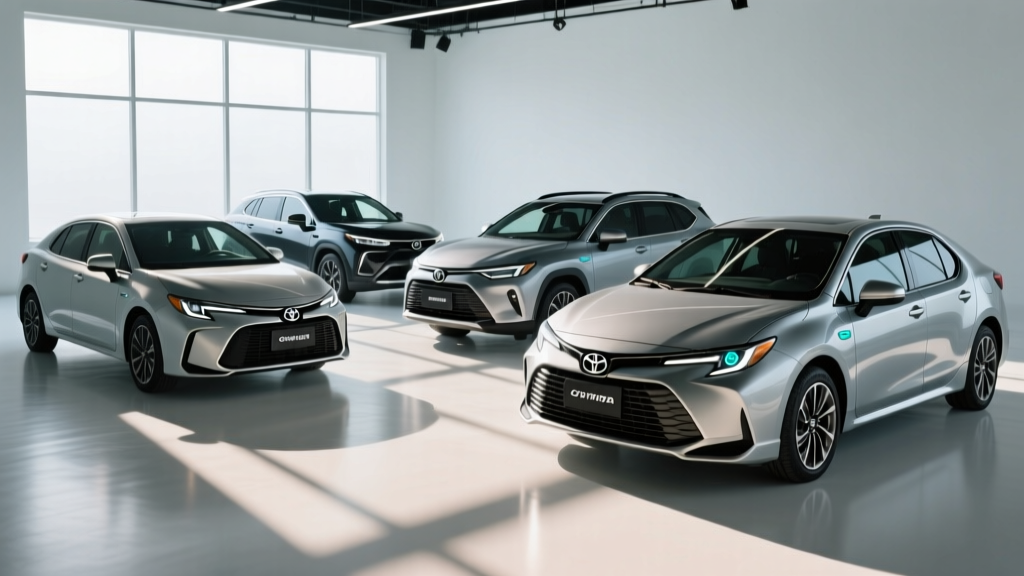
Toyota sells more hybrid vehicles in the United States than any other automaker, and the 2026 lineup is its broadest yet. From the compact Corolla Hybrid to the family-hauling Highlander Hybrid and the plug-in RAV4 Prime, Toyota now offers electrified powertrains across nearly every body style. If you have been searching for a car hybrid Toyota option that fits your commute, budget, and charging situation, this guide breaks down every current model with exact EPA numbers, real-world expectations, and ownership costs.
Before we get into individual models, one distinction matters: Toyota sells two types of electrified non-EV vehicles — conventional hybrids (HEVs) and plug-in hybrids (PHEVs). Understanding the difference prevents costly buying mistakes.
HEV vs. PHEV — What Toyota Buyers Need to Know
| Feature | Conventional Hybrid (HEV) | Plug-in Hybrid (PHEV) |
|---|---|---|
| Plugs in? | No — refuels with gas only | Yes — Level 1 or Level 2 |
| Electric-only driving | Brief, low-speed assist only | 25–42 miles on battery alone |
| Battery size | ~1.0–1.6 kWh (small buffer) | 13.6–18.1 kWh usable |
| Federal tax credit | Not eligible (§30D is BEV/PHEV only) | Eligible — up to $7,500 if sourcing/income rules met |
| Best for | No home charging, long highway commutes | Home chargers, short daily commutes under 40 mi |
EPA MPG & Real-World Fuel Economy by Model
Toyota's fifth-generation hybrid system pairs a 2.0L or 2.5L Dynamic Force four-cylinder engine with one or two motor-generators through an eCVT planetary gearset. The result is exceptional city efficiency — hybrids recapture energy through regenerative braking, so they often beat their EPA city estimates in stop-and-go driving. Highway MPG tends to run slightly below the sticker because the engine must sustain higher loads without electric assist at speed.
| Model (2026) | Powertrain | Combined HP | EPA City | EPA Hwy | EPA Combined | Real-World Expectation |
|---|---|---|---|---|---|---|
| Corolla Hybrid LE AWD | 1.8L + 2 motors | 138 hp | 51 | 44 | 48 | 46–52 city; 40–43 hwy |
| Prius LE | 2.0L + 1 motor | 194 hp | 57 | 56 | 57 | 55–62 city; 50–54 hwy |
| Prius Prime SE (PHEV) | 2.0L + motor + 13.6 kWh | 220 hp | 52 (hybrid) | 48 (hybrid) | 52 / 127 MPGe | 44 mi EV; 480+ mi total |
| Camry Hybrid LE | 2.5L + motor | 225 hp | 53 | 50 | 52 | 50–56 city; 46–49 hwy |
| RAV4 Hybrid XLE AWD | 2.5L + 3 motors | 219 hp | 41 | 38 | 40 | 38–43 city; 35–37 hwy |
| RAV4 Prime (PHEV) AWD | 2.5L + 2 motors + 18.1 kWh | 302 hp | 40 (hybrid) | 36 (hybrid) | 39 / 94 MPGe | 42 mi EV; 520+ mi total |
| Highlander Hybrid Limited AWD | 2.5L + 3 motors | 243 hp | 35 | 35 | 35 | 33–37 city; 32–34 hwy |
Source: EPA Fuel Economy. Real-world figures reflect owner-reported averages and independent testing in mixed suburban/highway conditions at 65–75°F. Cold weather (below 32°F) typically reduces hybrid MPG by 5–12% due to longer engine warm-up cycles and increased cabin heating load.
Prius Prime & RAV4 Prime: Electric-Only Range, Charging & Powertrain
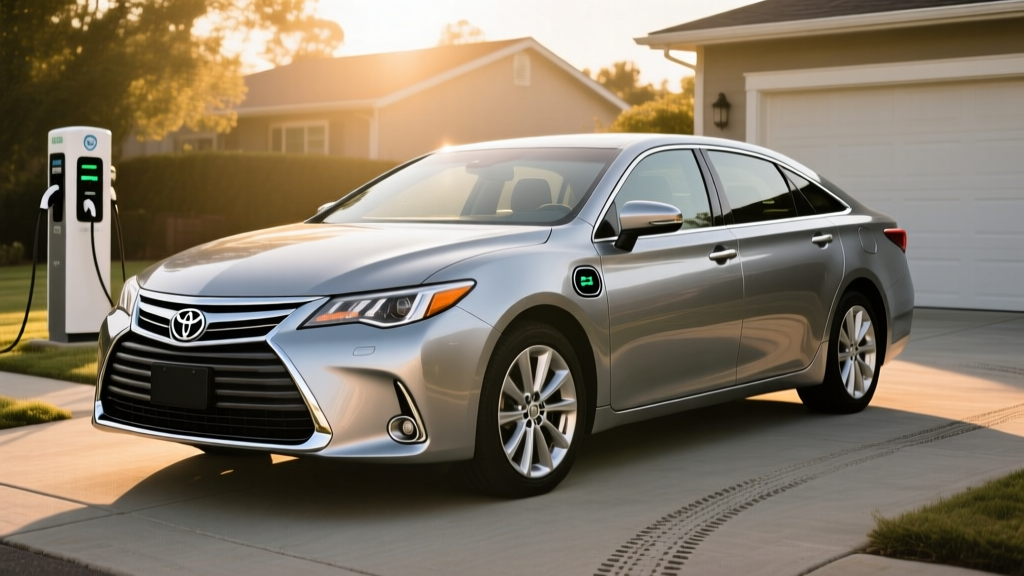
Toyota's two PHEV offerings — the Prius Prime and RAV4 Prime — are the only models in this lineup that can plug in and drive meaningful distances on electricity alone. Here is what that looks like in practice.
| Spec | Prius Prime SE | RAV4 Prime |
|---|---|---|
| Usable battery | 13.6 kWh (NMC) | 18.1 kWh (NMC) |
| EPA electric-only range | 44 miles | 42 miles |
| Real-world EV range | 38–46 mi (weather/load dependent) | 36–44 mi |
| Total range (EV + gas) | ~480 miles | ~520 miles |
| Level 1 charge (120V/12A) | ~1.4 kW, 9–10 hours | ~1.4 kW, 12+ hours |
| Level 2 charge (240V) | ~6.6 kW, 2.5 hours | ~6.6 kW, 2.5 hours (standard); ~4.5 hr w/ 6.6 kW onboard |
| DC fast charging | Not available | Not available |
| 0–60 mph | 6.6 seconds | 5.7 seconds |
| Combined horsepower | 220 hp | 302 hp |
Neither Toyota PHEV supports DC fast charging. That is a deliberate engineering choice: Toyota's PHEV batteries are sized for overnight Level 2 replenishment rather than road-trip fast charging. If you need DC fast charging capability, you are looking at a battery-electric vehicle (BEV), not a PHEV.
Toyota Hybrid Battery Warranty — What's Covered
All 2026 Toyota hybrids and PHEVs carry a 10-year / 150,000-mile hybrid battery warranty (whichever comes first) from the date of first use. This covers capacity loss below a defined threshold and defects. The broader hybrid system (inverter, control module, motor-generators) is warranted for 8 years / 100,000 miles.
Out-of-warranty replacement costs, based on current dealer pricing:
- Corolla Hybrid battery: ~$2,200–$3,000
- Prius / Camry Hybrid battery: ~$2,500–$3,800
- RAV4 Hybrid battery: ~$3,200–$4,500
- Prius Prime / RAV4 Prime battery: ~$5,000–$7,500 (larger PHEV pack)
In practice, Toyota hybrid batteries have demonstrated strong longevity. Data from fleet operators and Consumer Reports reliability surveys consistently rank Toyota hybrid battery failure rates well below 2% within the first 10 years. Many Prius taxis have exceeded 300,000 miles on original hybrid batteries.
Pricing, Trims & Tax Credit Eligibility
Toyota hybrids span from sub-$25,000 compacts to $50,000+ three-row SUVs. Here is where each model lands for the 2026 model year.
| Model | Base Trim MSRP | Top Trim MSRP | Federal §30D Credit |
|---|---|---|---|
| Corolla Hybrid LE | $24,725 | $29,850 (XLE) | Not eligible (HEV) |
| Prius LE | $29,745 | $37,445 (XSE Premium) | Not eligible (HEV) |
| Prius Prime SE | $34,395 | $41,065 (XSE Premium) | Up to $3,750* |
| Camry Hybrid LE | $30,445 | $39,290 (XSE) | Not eligible (HEV) |
| RAV4 Hybrid XLE | $35,225 | $43,740 (Limited) | Not eligible (HEV) |
| RAV4 Prime SE | $45,450 | $51,310 (XSE) | Up to $7,500* |
| Highlander Hybrid LE | $42,220 | $54,070 (Platinum) | Not eligible (HEV) |
*Federal §30D credit eligibility for PHEVs depends on battery critical-mineral sourcing, buyer AGI limits ($150K single / $300K joint), and MSRP caps ($55K sedans, $80K SUVs/vans). The credit can be transferred to the dealer at point of sale. Rules change frequently — verify current eligibility at IRS.gov before purchasing. Conventional hybrids (HEVs) do not qualify for §30D.
Some states offer additional rebates for PHEVs — California's CVRP program, for example, has historically provided up to $1,000–$2,000 for qualifying PHEV purchases, though funding availability varies. Check your state energy office for current programs.
Hybrid vs. PHEV vs. Full EV — Which Toyota Fits Your Life?
Decision Framework
Choose a Toyota HEV (Corolla, Camry, RAV4, Highlander Hybrid) if:
- You cannot install a home charger (apartment, street parking, condo restrictions)
- Your daily driving exceeds 50 miles with no predictable charging stops
- You want maximum simplicity — no plug, no app, no charging network dependency
- Your priority is lowest total cost with minimal behavioral change from a gas car
Choose a Toyota PHEV (Prius Prime, RAV4 Prime) if:
- You have access to Level 2 charging at home or work
- Your daily commute is under 40 miles round-trip (you'll drive on electricity 80%+ of days)
- You want EV-like daily driving with gas backup for road trips
- You qualify for the §30D federal credit, effectively reducing the price premium
Choose a full BEV (bZ4X or competitor) if:
- You have reliable home Level 2 charging
- You want zero tailpipe emissions and the lowest per-mile fuel cost
- Your typical trips fall within 200–250 miles, or you're willing to plan DC fast-charging stops
- You want to maximize federal and state incentives (BEVs get the full $7,500 credit more broadly)
Pros and Cons of the 2026 Toyota Hybrid Lineup
Pros
- Class-leading reliability track record — Toyota's hybrid system has 25+ years of iterative refinement
- Real-world city MPG often exceeds EPA estimates by 2–6 MPG in stop-and-go traffic
- 10-year/150K-mile hybrid battery warranty is among the longest in the industry
- AWD available on nearly every hybrid model with no significant MPG penalty
- No charging infrastructure required for HEVs — identical ownership routine to a gas car
- Strong resale value — Toyota hybrids hold 55–65% of value at 5 years vs. 40–50% for many BEVs
Cons
- PHEVs lack DC fast charging — road-trip EV driving is limited to the initial battery charge
- eCVT acceleration feel is smooth but not sporty — engine drone under hard acceleration in some models
- Conventional hybrids (HEVs) do not qualify for any federal purchase incentive
- RAV4 Prime's $45K+ MSRP pushes it close to fully electric competitors with 300+ mile range
- Infotainment in lower trims still uses resistive-touch interfaces and smaller screens
- Third-row space in Highlander Hybrid is tight for adults on long trips
Ownership Economics: What a Toyota Hybrid Actually Costs Per Mile
Let's compare the five-year fuel cost of a RAV4 Hybrid AWD against its gas-only counterpart (when it was sold) and a comparable BEV. Using 15,000 miles/year, $3.40/gallon regular, and $0.16/kWh national average electricity:
| Vehicle | Efficiency | Annual Fuel Cost | 5-Year Fuel Cost |
|---|---|---|---|
| RAV4 Hybrid AWD | 40 MPG combined | $1,275 | $6,375 |
| Comparable gas SUV (28 MPG) | 28 MPG combined | $1,821 | $9,105 |
| Comparable BEV (3.5 mi/kWh) | 29 kWh/100mi | $663 | $3,315 |
The hybrid saves roughly $2,730 over five years versus a gas SUV — meaningful, though not as dramatic as BEV savings. The hybrid's advantage is that it requires zero infrastructure investment: no $1,200–$2,500 home charger installation, no panel upgrades, no public-charging reliability concerns.
Insurance costs for Toyota hybrids are typically 5–10% higher than their gas equivalents due to higher repair costs for hybrid-specific components, but remain lower than most BEVs. Average annual premium for a RAV4 Hybrid: ~$1,650–$1,900 depending on state and driving record.
Frequently Asked Questions
How many MPG does a Toyota hybrid car get?
It depends on the model. The 2026 Prius LE leads at 57 MPG combined (57 city / 56 highway). The Camry Hybrid achieves 52 combined. The RAV4 Hybrid AWD returns 40 combined. The Corolla Hybrid delivers 48 combined. In real-world city driving with frequent stops, owners commonly report exceeding EPA city estimates by 2–5 MPG thanks to aggressive regenerative braking.
How far can the Prius Prime and RAV4 Prime go on electric only?
The Prius Prime SE achieves 44 miles of EPA-rated electric-only range; the RAV4 Prime manages 42 miles. Real-world range varies from 36–46 miles depending on temperature, terrain, and speed. In warm weather at city speeds, expect the upper end. In sub-freezing temperatures with cabin heat running, expect 30–35 miles from the RAV4 Prime and 34–38 from the Prius Prime.
Is a Toyota hybrid reliable, and what does battery replacement cost?
Toyota's hybrid system is among the most proven in the automotive industry, with over 25 years of production history and millions of units on the road. The hybrid battery is warranted for 10 years or 150,000 miles. Out-of-warranty replacement costs range from ~$2,200 for a Corolla Hybrid to ~$7,500 for a RAV4 Prime PHEV pack. Failure rates within the warranty period are well below 2% based on fleet and survey data.
Does a Toyota hybrid qualify for any tax credit?
Conventional Toyota hybrids (HEVs like the Corolla Hybrid, Camry Hybrid, RAV4 Hybrid) do not qualify for the federal §30D clean vehicle credit — that credit applies only to BEVs and PHEVs. The two Toyota PHEVs — Prius Prime and RAV4 Prime — may qualify for up to $3,750 and $7,500 respectively, depending on battery mineral sourcing, your income, and MSRP caps. Verify current rules at IRS.gov. Some states offer separate hybrid or PHEV rebates.
Do I need to plug in a Toyota hybrid?
No — unless you buy a PHEV. Conventional Toyota hybrids (HEVs) generate all their electricity internally through regenerative braking and the gasoline engine. You never plug them in. PHEVs (Prius Prime, RAV4 Prime) benefit from plugging in to access their electric-only range, but will still operate as regular hybrids if you never charge them.
Which Toyota hybrid is best for a family?
For a family of four or five, the RAV4 Hybrid offers the best balance of cargo space (37.6 cu ft behind rear seats), AWD standard, and 40 MPG combined. If you need three rows, the Highlander Hybrid provides 35 MPG combined with seating for up to eight. If your family's daily driving is under 40 miles and you can charge at home, the RAV4 Prime lets you do most family logistics on electricity while keeping gas flexibility for road trips.