Quick Verdict: The 8-Seat Hybrid That Still Makes Sense
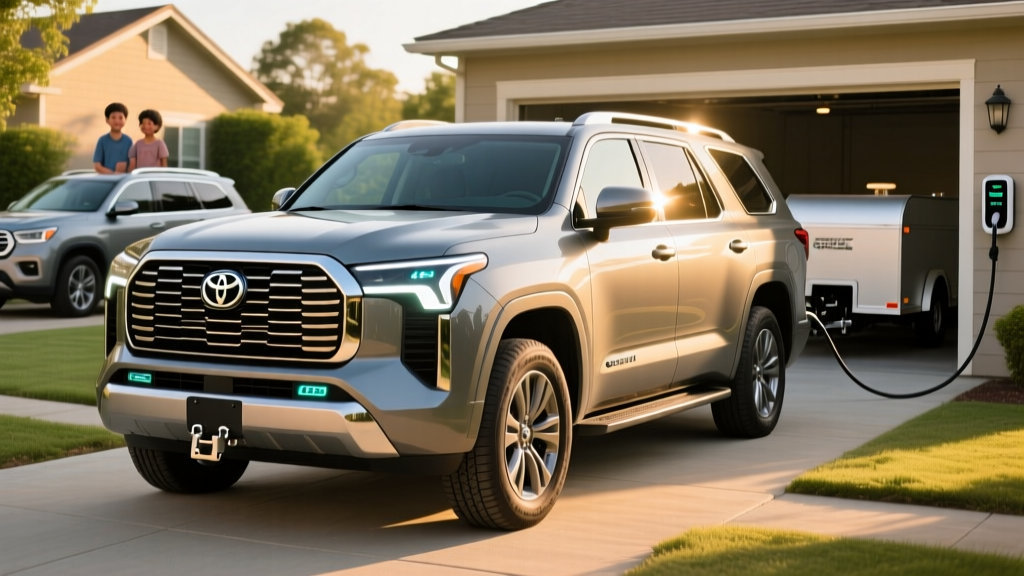
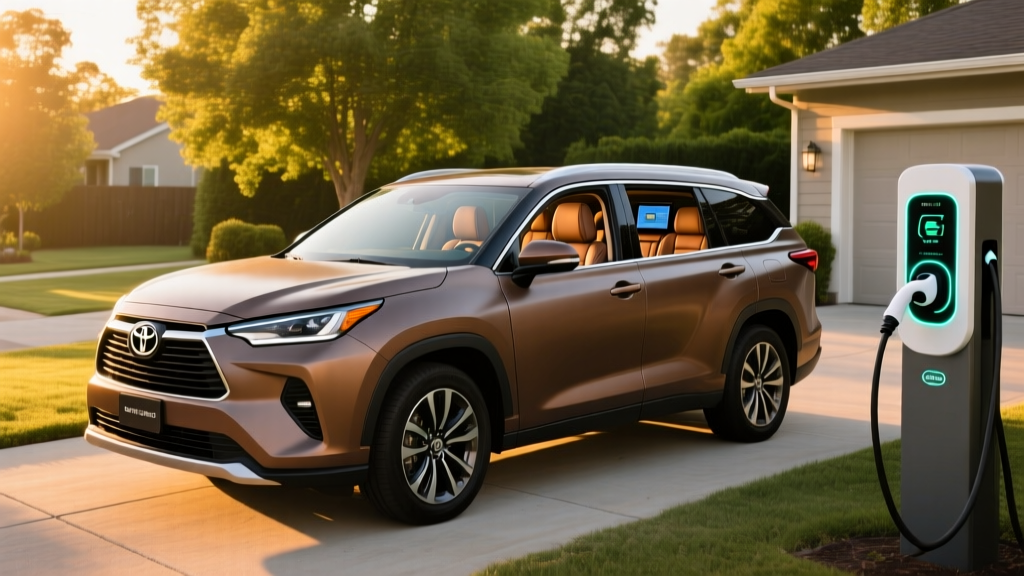
If you're searching for a hybrid 8-seater SUV, the list of contenders is remarkably short. The 2026 Toyota Highlander Hybrid remains one of the only three-row midsize SUVs offering eight-passenger seating with a proven hybrid powertrain — and it delivers an EPA-estimated 35 MPG combined. For families who need the cargo and passenger space but want to cut fuel costs without plugging in, the Highlander Hybrid occupies a practical sweet spot between a conventional gas SUV and a full battery-electric vehicle.
This isn't a plug-in hybrid. The Highlander Hybrid is a conventional hybrid electric vehicle (HEV), meaning it charges its own battery through regenerative braking and the gasoline engine. No charging cable, no outlet required, no range anxiety. You simply fill up at any gas station and drive.
Conventional Hybrid (HEV): The Highlander Hybrid charges its 1.87 kWh battery internally. No plug. Fuel economy gains come from the electric motor assisting the gas engine, regenerative braking, and electric-only low-speed driving.
Plug-in Hybrid (PHEV): Vehicles like the Toyota RAV4 Prime or Chrysler Pacifica Hybrid have larger batteries (18-25 kWh) that you plug in to charge, enabling 30-40 miles of electric-only driving before the gas engine kicks in. The Highlander Hybrid does not offer a PHEV variant for 2026.
2026 Highlander Hybrid: Full Spec Sheet
| Specification | 2026 Toyota Highlander Hybrid |
|---|---|
| Powertrain | 2.5L 4-cyl + 2 electric motors (AWD) or 1 motor (FWD) |
| Combined Horsepower | 243 hp net system |
| Battery | 1.87 kWh nickel-metal hydride (NiMH) |
| EPA MPG (FWD) | 36 city / 35 highway / 36 combined |
| EPA MPG (AWD) | 35 city / 35 highway / 35 combined |
| 0-60 mph | ~7.8 seconds |
| Seating | 8 passengers (bench 2nd row) or 7 (captain's chairs) |
| Cargo Volume | 16.1 cu ft (behind 3rd row) / 48.4 cu ft (3rd row folded) / 84.3 cu ft (max) |
| Towing Capacity | 3,500 lbs |
| Drivetrain | FWD or electronic AWD (AWD-i) |
| Base MSRP | ~$42,270 (LE FWD) to ~$54,070 (Platinum AWD) |
| Federal Tax Credit | Not eligible (§30D requires plug-in capability) |
| Hybrid Battery Warranty | 10 years / 150,000 miles |
Sources: EPA Fueleconomy.gov, Toyota Motor Corporation
Fuel Economy: EPA Numbers vs. Real-World MPG
The 2026 Highlander Hybrid's EPA ratings are impressively consistent across trims and drivetrains:
| Drivetrain | City MPG | Highway MPG | Combined MPG |
|---|---|---|---|
| FWD | 36 | 35 | 36 |
| AWD-i | 35 | 35 | 35 |
Real-World MPG: What Owners Actually Report
Toyota's hybrid system excels in stop-and-go city driving, where the electric motor handles low-speed propulsion and regenerative braking recovers energy that would otherwise be lost. In real-world conditions:
- City driving: Many owners report exceeding the EPA city estimate, seeing 37-39 MPG in moderate-temperature urban commutes. This is typical of Toyota's hybrid synergy drive — the EPA test cycle actually underrepresents the city advantage.
- Highway cruising: Expect 32-34 MPG at sustained 70-75 mph speeds. Hybrids lose their edge on the open road where the gas engine does most of the work without regenerative braking benefits.
- Cold weather (below 30°F): Fuel economy drops 10-15% to roughly 30-32 MPG combined. The engine runs longer to heat the cabin and bring the catalytic converter to operating temperature.
- Loaded/towing: With a full cabin of passengers and cargo, or when towing near the 3,500-lb limit, expect 27-30 MPG.
Powertrain and Performance Details
The 2026 Highlander Hybrid uses Toyota's fourth-generation hybrid system built around a 2.5-liter Dynamic Force inline-4 engine. Here's how the power breaks down:
- Gas engine: 186 hp and 173 lb-ft of torque from the 2.5L Atkinson-cycle 4-cylinder
- Front electric motor: 134 hp, integrated into the transaxle
- Rear electric motor (AWD-i only): 54 hp, powering the rear axle independently
- Net system output: 243 hp (combined, not additive — engine and motors peak at different RPMs)
The AWD-i system is worth understanding: there is no mechanical driveshaft connecting the front and rear axles. Instead, the rear electric motor engages when the system detects slip, during acceleration, or in low-traction conditions. This means the AWD is reactive rather than permanent — adequate for rain, light snow, and gravel, but not a substitute for a dedicated off-road system in severe conditions.
The 0-60 mph time of approximately 7.8 seconds is respectable for a 4,500-lb three-row SUV. Throttle response off the line is immediate thanks to electric motor torque, though highway passing acceleration tapers above 50 mph where the 4-cylinder engine is working near its limits.
Hybrid Battery: Warranty, Longevity, and Replacement Cost
Battery Chemistry and Lifespan
The Highlander Hybrid uses a 1.87 kWh nickel-metal hydride (NiMH) battery pack, not the lithium-ion chemistry found in full EVs. This is deliberate: NiMH batteries are extremely well-proven in Toyota's hybrid lineup, with a track record stretching back to the 1997 Prius. The trade-off is lower energy density and heavier weight compared to lithium-ion, but for a 1.87 kWh pack that only needs to buffer small amounts of energy, the proven reliability is the right engineering choice.
Real-world longevity data is encouraging. Toyota hybrid batteries routinely last 150,000-200,000+ miles before significant degradation. The system never fully charges or fully depletes the battery — it operates in a narrow state-of-charge window (roughly 40-80%), which dramatically reduces stress on the cells.
Battery Replacement Cost
If the hybrid battery does fail outside of warranty:
- New OEM replacement: $3,000–$4,500 (parts and labor at a Toyota dealer)
- Refurbished/reconditioned battery: $1,500–$2,500 from independent hybrid specialists
- Individual module replacement: Some shops replace only failed modules for $500–$1,000, though this is a temporary fix if other modules are also aging
For context, the hybrid battery in the Highlander is far less expensive to replace than the 70-100 kWh traction batteries in full EVs, which can cost $10,000-$20,000+. The smaller battery, proven chemistry, and wide availability of replacement units keep costs manageable.
Pricing, Trims, and Tax Credit Status
The 2026 Toyota Highlander Hybrid is available in five trims, all offering the hybrid powertrain:
| Trim | Drivetrain | Approx. MSRP | Key Features |
|---|---|---|---|
| LE | FWD / AWD | $42,270 / $43,870 | 8-inch touchscreen, Toyota Safety Sense 2.5+, 8 seats |
| XLE | FWD / AWD | $46,270 / $47,870 | SofTex seats, sunroof, power liftgate, wireless CarPlay |
| XSE | AWD | $48,470 | Sport-tuned suspension, 20-inch wheels, black accents |
| Limited | FWD / AWD | $50,670 / $52,270 | Leather, 12.3-inch screen, panoramic roof, JBL audio |
| Platinum | AWD | $54,070 | Head-up display, 360° camera, heated/ventilated 2nd row |
Federal Tax Credit: Not Eligible
The Highlander Hybrid does not qualify for the federal §30D Clean Vehicle Credit. Per IRS rules, the §30D credit of up to $7,500 applies only to plug-in electric vehicles — battery-electric vehicles (BEVs) and plug-in hybrids (PHEVs) with a minimum battery capacity of 7 kWh. Since the Highlander Hybrid is a conventional HEV that cannot be plugged in, it falls outside the credit's scope.
Some states and local utilities offer modest rebates for conventional hybrids (typically $250-$500), but these vary widely by jurisdiction. Check your state energy office or utility provider for current programs.
Highlander Hybrid vs. Alternatives: Which Powertrain Fits You?
✓ Choose the Highlander Hybrid If
- You need 8 seats and three-row cargo space
- You want 35 MPG without changing your fueling habits
- You lack access to home or workplace EV charging
- You regularly take long road trips and don't want to plan charging stops
- You value Toyota's long-term reliability track record
✗ Consider a Full EV or PHEV Instead If
- You have reliable home Level 2 charging and a shorter commute
- You want federal tax credits (up to $7,500 for qualifying BEVs/PHEVs)
- You want pure electric driving for daily errands (PHEV gives 30-40 mi EV range)
- You can accept fewer seats — the Kia EV9 (EV) offers 7 seats, the Chrysler Pacifica PHEV offers 7
- Lower maintenance costs matter (EVs have no oil changes, fewer moving parts)
Direct Competitors Compared
The eight-seat hybrid SUV segment is thin. Here's how the Highlander Hybrid stacks up against its closest rivals:
- Toyota Grand Highlander Hybrid: Larger sibling with more third-row legroom and cargo space. EPA 34 MPG combined (Hybrid MAX: 27 MPG). Starts ~$45,920. The better pick if third-row space is your priority.
- Kia Sorento Hybrid: Offers 6-7 seats (not 8). EPA 35-37 MPG combined. Lower starting price (~$38,490) but less cargo volume. A strong pick for smaller families.
- Honda Pilot (gas-only): 8 seats, but no hybrid option for 2026. EPA 22 MPG combined — significantly higher fuel costs.
- Mazda CX-90 PHEV: Plug-in hybrid with 26 miles EV range, but only 7 seats and EPA 25 MPG once the battery depletes. Eligible for partial federal credit.
Reliability and Ownership Costs
Toyota's hybrid powertrain is among the most reliable in the industry. The Highlander Hybrid carries Toyota's standard warranty package:
- Basic warranty: 3 years / 36,000 miles
- Powertrain warranty: 5 years / 60,000 miles
- Hybrid battery warranty: 10 years / 150,000 miles
- Hybrid system components: 8 years / 100,000 miles (inverter, control module, etc.)
Insurance costs for the Highlander Hybrid run slightly higher than the gas-only version — typically 5-10% more due to the higher purchase price and specialized hybrid components. Expect annual premiums of $1,600-$2,200 depending on your profile, location, and coverage level.
On the maintenance side, the hybrid system actually reduces some costs. Regenerative braking extends brake pad life significantly (many owners report 80,000+ miles on original pads). There's no alternator, starter motor, or accessory belt to replace. You still need standard oil changes (every 10,000 miles with synthetic), tire rotations, and fluid service.
Frequently Asked Questions
How many MPG does the 2026 Highlander Hybrid get?
The EPA rates the Highlander Hybrid at 35 MPG combined for AWD models and 36 MPG combined for FWD. In real-world city driving, many owners exceed these estimates, seeing 37-39 MPG. Highway driving typically yields 32-34 MPG, and cold weather reduces combined economy by 10-15%.
Is the Highlander Hybrid a plug-in hybrid?
No. The 2026 Highlander Hybrid is a conventional hybrid (HEV). It charges its battery through regenerative braking and the gas engine — you never plug it in. Toyota does not currently offer a plug-in hybrid (PHEV) version of the Highlander, though the RAV4 Prime and Prius Prime use PHEV powertrains.
Does the Highlander Hybrid qualify for a federal tax credit?
No. The federal §30D Clean Vehicle Credit applies only to plug-in vehicles (BEVs and PHEVs) meeting battery sourcing, MSRP, and buyer income requirements. As a conventional hybrid, the Highlander Hybrid is not eligible. Check your state and utility for possible local hybrid incentives.
How long will the hybrid battery last and what does replacement cost?
Toyota's NiMH hybrid batteries are engineered to last 150,000-200,000+ miles. The battery is warrantied for 10 years / 150,000 miles. Out-of-warranty replacement costs $3,000-$4,500 for a new OEM battery, or $1,500-$2,500 for a refurbished unit. This is significantly less expensive than replacing a full EV battery pack.
Is the Highlander Hybrid good for towing?
The Highlander Hybrid is rated to tow up to 3,500 pounds — adequate for a small boat, utility trailer, or a pair of jet skis, but less than body-on-frame SUVs. Fuel economy drops to roughly 27-30 MPG when towing near capacity. If you need heavier towing (5,000+ lbs), consider a body-on-frame SUV or truck.
Hybrid vs. PHEV vs. full EV — which should I choose?
Choose a conventional hybrid (HEV) like the Highlander Hybrid if you want better fuel economy without changing how you refuel. Choose a PHEV if you can charge at home and want 30-40 miles of daily electric driving with a gas backup for longer trips. Choose a full EV if you want the lowest operating costs, have reliable charging access, and are comfortable planning longer road trips around DC fast charging. For families who need 8 seats specifically and lack charging infrastructure, the HEV remains the most practical path to lower fuel costs.