Quick Verdict: The Efficiency Bargain of 2026
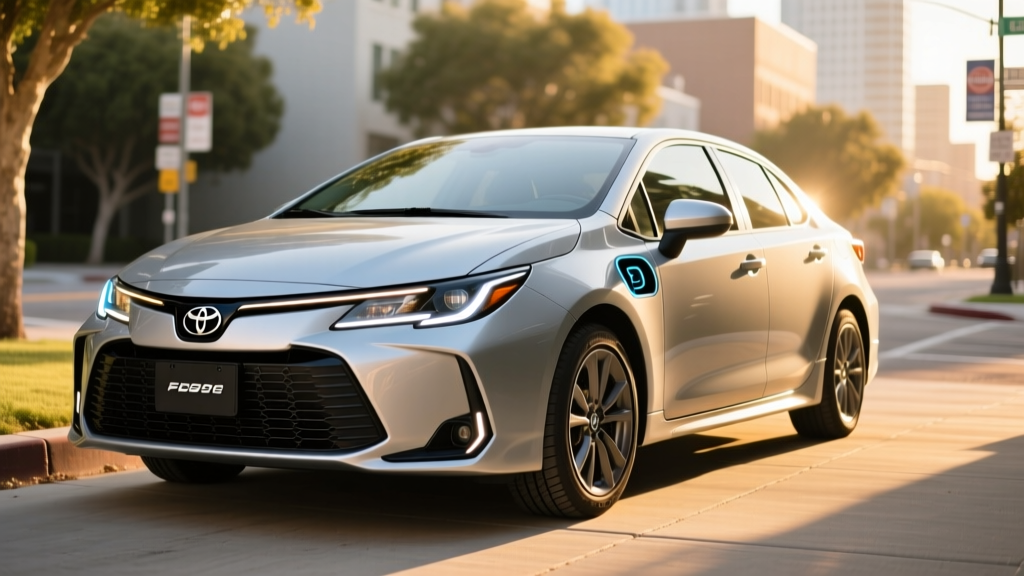
The 2026 Toyota Corolla SE Hybrid occupies a specific niche: buyers who want dramatic fuel savings without plugging in, paying an EV premium, or changing their driving habits. With an EPA-estimated 50 MPG combined and a starting MSRP near $24,000, it remains one of the most accessible high-efficiency vehicles on the market. The SE trim adds sport-tuned suspension, 16-inch alloy wheels, and a leather-trimmed steering wheel over the base LE Hybrid, making it the enthusiast-leaning choice in the Corolla Hybrid lineup.
This is a conventional hybrid (HEV), not a plug-in hybrid (PHEV). You never plug it in — the 1.8-liter engine and regenerative braking system keep the small traction battery charged. If you're looking for electric-only driving, you'll need to look at Toyota's PHEV options like the RAV4 Prime or Prius Prime. But if your goal is maximum MPG with minimum lifestyle change, the Corolla SE Hybrid delivers.
Fuel Economy: EPA Estimates and Real-World MPG
| Driving Condition | EPA Estimate | Real-World Expectation |
|---|---|---|
| City | 53 MPG | 52–58 MPG (hybrids often exceed EPA in city) |
| Highway | 46 MPG | 42–47 MPG (highway favors gas engines slightly) |
| Combined | 50 MPG | 48–54 MPG depending on driving mix |
Source: fueleconomy.gov
With a 11.4-gallon fuel tank, the Corolla SE Hybrid provides roughly 570 miles of total range on a fill-up — enough for most drivers to visit a gas station once every two to three weeks.
HEV vs PHEV vs EV: Which Powertrain Fits You?
| Factor | Corolla SE Hybrid (HEV) | PHEV (e.g., Prius Prime) | Full EV (e.g., Tesla Model 3) |
|---|---|---|---|
| Plug-in required? | No | Yes (for EV range) | Yes |
| Electric-only range | None (EV assist only) | ~39–44 miles | 272–363 miles |
| Fuel/energy cost per mile | ~$0.07 (gas) | ~$0.04 (electric) / $0.07 (gas) | ~$0.03–$0.05 (electric) |
| Home charging needed? | No | Recommended (Level 2) | Essential (Level 2) |
| Base MSRP (2026) | ~$24,000 | ~$33,000 | ~$39,000 |
| Federal tax credit | None | Up to $7,500 (§30D) | Up to $7,500 (§30D) |
The Corolla SE Hybrid is the right call if you lack home charging access, want a low purchase price, and don't want to think about plug-in logistics. A PHEV makes sense if you have a garage with a 120V or 240V outlet and a short commute that can be covered on electric power most days. A full EV offers the lowest per-mile operating cost but demands reliable charging infrastructure and a higher upfront investment.
Powertrain and Performance Specs
| Specification | 2026 Corolla SE Hybrid |
|---|---|
| Engine | 1.8L 4-cylinder Atkinson cycle |
| Combined Net Horsepower | 138 hp |
| Electric Motor | Permanent magnet AC synchronous |
| Hybrid Battery | Lithium-ion, ~1.3 kWh (not plug-in) |
| Transmission | Continuously Variable (CVT) |
| Drivetrain | Front-Wheel Drive (AWD-e available on LE) |
| 0–60 mph | ~9.2 seconds (est.) |
| Fuel Tank | 11.4 gallons |
| Total Range | ~570 miles |
The 138-horsepower combined output is modest, but Toyota's hybrid synergy drive system delivers strong low-speed torque from the electric motor, making the Corolla SE Hybrid feel responsive in city driving. The sport-tuned suspension on the SE trim tightens handling compared to the LE, though it's still tuned for comfort over aggression. The CVT is smooth but can drone under hard acceleration — typical of Toyota's hybrid system.
Note: The SE Hybrid trim is FWD-only for 2026. If you need electronic all-wheel drive (AWD-e, which adds a rear electric motor), you'll need to step to the LE Hybrid or XLE Hybrid trims.
Pricing, Trims, and Tax Credit Eligibility
The 2026 Toyota Corolla SE Hybrid carries an MSRP of approximately $24,050 (including destination charge). Key SE-trim features include:
- Sport-tuned suspension with rear stabilizer bar
- 16-inch dark-gray alloy wheels
- Leather-trimmed steering wheel and shift knob
- Smart Key System with push-button start
- 8-inch Toyota Audio Multimedia touchscreen with wireless Apple CarPlay and Android Auto
- Toyota Safety Sense 3.0 (pre-collision, lane tracing, adaptive cruise, road sign assist)
- The Corolla SE Hybrid is a conventional hybrid (HEV), not a plug-in vehicle.
- The IRS §30D Clean Vehicle Credit applies only to plug-in electric vehicles (BEVs and PHEVs) with sufficient battery capacity.
- Conventional hybrids do not qualify for any federal purchase incentive under current law.
- Some states offer minor rebates for high-efficiency vehicles — check your state's energy office for details.
Source: IRS §30D Clean Vehicle Credit
Without a tax credit, the Corolla SE Hybrid's value proposition rests entirely on its low MSRP and fuel savings. Compared to a gas-only Corolla SE (~$23,000 MSRP, ~34 MPG combined), the hybrid premium is roughly $1,000 — a cost you'll recoup in fuel savings within 12–18 months of average driving.
Battery Warranty, Reliability, and Replacement Cost
- Coverage: 10 years / 150,000 miles (whichever comes first)
- What's covered: Hybrid battery pack, hybrid control module, inverter with converter
- Capacity threshold: Toyota warrants against defects and abnormal degradation; no specific SoH percentage threshold published
- Transferable: Yes, warranty transfers to subsequent owners
Toyota's hybrid system is among the most proven in the industry, with over 25 years of real-world data since the original Prius. The Corolla Hybrid's lithium-ion traction battery is small (~1.3 kWh) and operates in a narrow state-of-charge window (roughly 40–80%), which dramatically reduces stress and extends lifespan. In practice, Toyota hybrid batteries routinely last 150,000–200,000+ miles before needing attention.
Replacement cost if out of warranty: A new OEM hybrid battery pack for the Corolla Hybrid runs approximately $2,000–$3,500 including labor. Third-party refurbished packs are available for $1,000–$1,800. This is a fraction of full EV battery replacement costs ($5,000–$20,000+), reflecting the much smaller battery size.
According to reliability data from IIHS and long-term owner surveys, the Corolla Hybrid powertrain has one of the lowest failure rates in the compact car segment. The hybrid components add complexity, but Toyota's system is mature and well-debugged.
Pros and Cons
- 50 MPG combined — among the highest of any non-plug-in vehicle
- Low $24,050 starting MSRP with strong standard safety tech
- No plug-in required — zero lifestyle change from a gas car
- 10-year/150,000-mile hybrid battery warranty
- Strong real-world city MPG (often exceeds EPA estimate)
- ~570 miles of total range per tank
- No federal tax credit (HEV, not PHEV)
- Modest 138 hp — highway passing requires planning
- CVT drone under hard acceleration
- SE trim is FWD only (AWD-e requires LE/XLE)
- Small rear seat and trunk vs. crossover alternatives
- No electric-only driving mode
Frequently Asked Questions
How many MPG does the 2026 Corolla SE Hybrid get?
The EPA rates the 2026 Corolla SE Hybrid at 53 city / 46 highway / 50 combined MPG. In real-world driving, city commuters often see 52–58 MPG thanks to regenerative braking, while sustained highway driving typically returns 42–47 MPG.
Does the Corolla SE Hybrid need to be plugged in?
No. This is a conventional hybrid (HEV). The battery charges through regenerative braking and the gasoline engine. You fuel it like any other car — just at the pump far less often.
Is the Corolla Hybrid reliable, and what does battery replacement cost?
Toyota's hybrid system is one of the most reliable powertrains in the industry. The hybrid battery is covered by a 10-year/150,000-mile warranty. Out-of-warranty replacement runs $2,000–$3,500 for an OEM pack, or $1,000–$1,800 for a refurbished unit. Most hybrid batteries last 150,000–200,000+ miles.
Does the 2026 Corolla SE Hybrid qualify for any tax credit?
No. The federal §30D Clean Vehicle Credit applies only to plug-in electric vehicles (BEVs and PHEVs). As a conventional hybrid, the Corolla SE Hybrid does not qualify for federal purchase incentives. Some states may offer minor efficiency rebates — check your local programs.
Should I buy the Corolla SE Hybrid or a plug-in hybrid like the Prius Prime?
Choose the Corolla SE Hybrid if you don't have access to home or workplace charging, want the lowest possible purchase price, and drive a mix of city and highway miles. Choose the Prius Prime (PHEV) if you can charge at home, have a commute under 40 miles, and want to drive primarily on electricity while keeping a gas backup for road trips.
How does the SE trim differ from the LE Hybrid?
The SE adds sport-tuned suspension, 16-inch dark-gray alloy wheels, leather-trimmed steering wheel, and exterior styling accents. The LE Hybrid offers available AWD-e (electronic all-wheel drive with a rear motor), which the SE does not. Both share the same 138 hp hybrid powertrain and 50 MPG combined rating.