Quick Verdict: The Efficiency Benchmark for Compact Hybrids
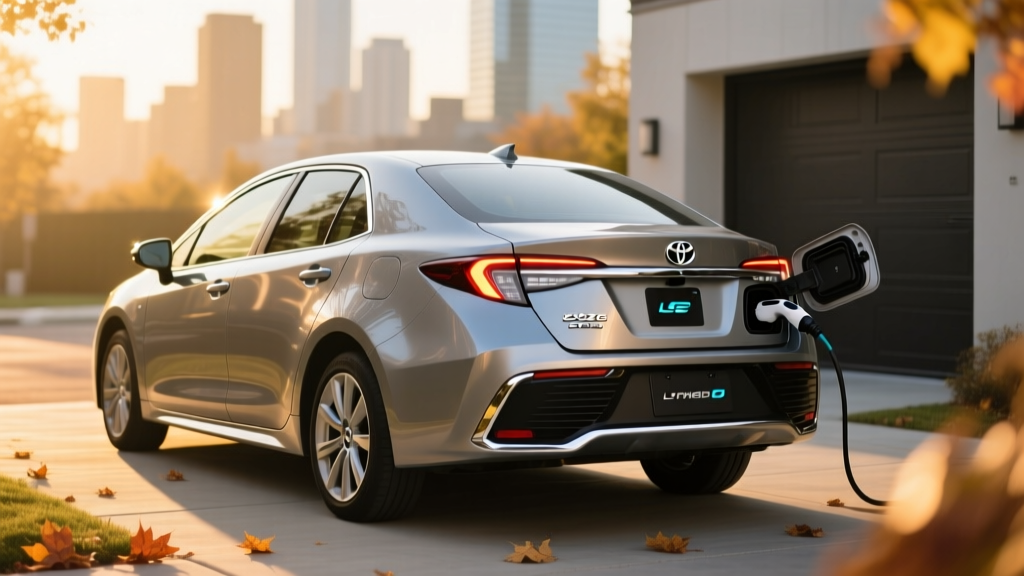
The 2026 Toyota Corolla LE Hybrid occupies a specific niche that full EVs and plug-in hybrids cannot fill: zero-plug-in convenience with fuel economy that embarrasses most compact cars. With an EPA-estimated 52 MPG combined, a starting MSRP around $24,795, and Toyota's proven fifth-generation hybrid system, the Corolla LE Hybrid is a calculated choice for buyers who want maximum fuel savings without altering their daily routine.
This is a conventional hybrid electric vehicle (HEV), not a plug-in. You never plug it in. The 1.8-liter four-cylinder engine and two motor-generators work together seamlessly, recapturing energy during braking and coasting to recharge a small 0.76 kWh nickel-metal hydride (NiMH) traction battery. For drivers covering 12,000 to 15,000 miles annually, the Corolla LE Hybrid's fuel savings versus a comparable gas-only compact add up to hundreds of dollars per year — without the upfront price premium of a full EV or the charging infrastructure requirements of a PHEV.
HEV vs. PHEV: Where the Corolla Hybrid Fits
Toyota offers the Corolla exclusively as a conventional hybrid (HEV) in the U.S. market. There is no plug-in Corolla variant. Understanding this distinction is critical before shopping:
| Feature | Corolla Hybrid (HEV) | Plug-In Hybrid (PHEV) Example | Full EV (BEV) |
|---|---|---|---|
| Plug-in charging required | No — never plugs in | Yes — for electric range | Yes — always |
| Electric-only range | None (EV mode at low speed only) | 25–45 mi typical | 250–400 mi typical |
| Fuel source | Gasoline only | Gasoline + grid electricity | Grid electricity only |
| Federal tax credit (§30D) | Not eligible | Up to $7,500 (if eligible) | Up to $7,500 (if eligible) |
| Home charger needed | No | Recommended (Level 2) | Required |
| Upfront price premium | Low (~$1,500 over gas) | High ($5,000–$10,000+) | High ($5,000–$15,000+) |
The Corolla HEV makes sense for apartment dwellers, street parkers, and anyone without access to home or workplace charging. If you can install a Level 2 charger and your commute is under 40 miles round-trip, a PHEV like the Toyota Prius Prime may deliver greater fuel savings — but at a higher purchase price and with plug-in complexity.
EPA Fuel Economy and Real-World MPG
The EPA rates the 2026 Toyota Corolla LE Hybrid at the following fuel economy figures:
| Driving Cycle | EPA Estimated MPG |
|---|---|
| City | 53 MPG |
| Highway | 50 MPG |
| Combined | 52 MPG |
These numbers apply to the LE trim with standard 16-inch alloy wheels. Higher trims with larger wheels may see a 1–2 MPG reduction.
Real-World MPG: What Owners Actually See
Toyota's hybrid system excels in stop-and-go city driving, where regenerative braking and electric motor assist reduce engine load. In real-world testing and owner reports, the Corolla Hybrid frequently matches or slightly exceeds its EPA city rating in urban and suburban conditions — a rarity among non-electrified vehicles.
However, sustained highway driving at 75–80 mph typically yields 44–48 MPG, below the EPA highway estimate. Cold weather (below 35°F) reduces fuel economy by roughly 5–10% as the engine runs more frequently to maintain cabin heat and battery temperature. On a mixed-driving 12,000-mile year at $3.40/gallon, expect annual fuel costs in the range of $785–$850 — roughly $400–$500 less than a 30-MPG gas-only compact.
Powertrain: 138 HP from Toyota's Fifth-Gen Hybrid System
The 2026 Corolla LE Hybrid pairs a 1.8-liter Atkinson-cycle four-cylinder engine with Toyota's latest hybrid transaxle, which integrates two motor-generators:
| Specification | Detail |
|---|---|
| Engine | 1.8L 4-cylinder Atkinson cycle |
| Engine output | 96 hp / 105 lb-ft torque |
| Motor-generator output | 94 hp (combined motor contribution) |
| Net system horsepower | 138 hp |
| Transmission | Electronically controlled CVT (eCVT) |
| Drivetrain | Front-wheel drive (AWD available on SE/XSE trims) |
| Traction battery | 0.76 kWh NiMH (nickel-metal hydride) |
| 0–60 mph (est.) | ~9.0 seconds |
The eCVT is not a belt-driven continuously variable transmission like those in some competitors. Toyota's planetary gearset design has no belts or pulleys to wear, contributing to the system's well-documented long-term durability. Acceleration is adequate for merging and passing, though the Corolla Hybrid is tuned for efficiency, not performance — expect a deliberate, linear delivery rather than the instant torque punch of a full EV.
Pricing, Trims, and Tax Credit Eligibility
The 2026 Corolla LE Hybrid starts at an MSRP of approximately $24,795 (including destination charge). Key trim pricing:
- LE Hybrid: ~$24,795 — 52 MPG combined, 8-inch touchscreen, wireless CarPlay/Android Auto, Toyota Safety Sense 3.0
- SE Hybrid: ~$27,295 — sport-tuned suspension, 18-inch wheels, paddle shifters (slightly lower MPG)
- XSE Hybrid: ~$29,395 — SofTex seats, premium audio, available AWD
Federal and State Tax Credits
The Corolla Hybrid is a conventional HEV and does not qualify for the federal §30D new clean vehicle credit, which is reserved for plug-in electric vehicles (BEVs and PHEVs) meeting battery-sourcing, MSRP, and buyer income requirements per current IRS guidelines.
Some states offer rebates or tax incentives for high-efficiency hybrids. Check your state energy office or the Alternative Fuels Data Center for jurisdiction-specific programs. These vary widely and change frequently, so verify current availability before purchasing.
Battery Warranty, Reliability, and Replacement Cost
Hybrid Battery Warranty: Toyota covers the Corolla Hybrid's traction battery for 10 years or 150,000 miles (whichever comes first) in all 50 states. This applies to the hybrid battery, battery control module, and related hybrid system components.
Powertrain Warranty: 5 years / 60,000 miles.
Basic Warranty: 3 years / 36,000 miles.
How Long Do Toyota Hybrid Batteries Last?
Toyota's hybrid battery track record is among the strongest in the industry. The Prius, which shares fundamental hybrid architecture with the Corolla Hybrid, has demonstrated battery lifespans routinely exceeding 150,000–200,000 miles with gradual capacity loss rather than sudden failure. The Corolla Hybrid uses a NiMH battery, which is less energy-dense than lithium-ion but has proven exceptionally tolerant of the shallow charge-discharge cycles that characterize hybrid operation.
The hybrid system maintains the battery between roughly 40% and 80% state of charge at all times — it never fully charges or fully depletes — which dramatically reduces degradation stress. In practice, most Toyota hybrid batteries outlast their warranty periods.
Battery Replacement Cost
If replacement is needed outside warranty, a new OEM hybrid battery for the Corolla Hybrid typically costs $2,000–$3,500 including installation at a Toyota dealer. Independent hybrid specialists may offer refurbished or reconditioned units for $1,200–$2,000. Given the 10-year/150,000-mile warranty and the system's reliability history, most original owners will never face this expense.
Who Should Buy the Corolla LE Hybrid (and Who Shouldn't)
Pros
- 52 MPG combined — among the highest of any non-plug-in vehicle
- No plug-in charging required — works with any lifestyle or housing situation
- Low purchase price: ~$24,795 starting MSRP
- Proven hybrid reliability with 10yr/150k-mi battery warranty
- Standard Toyota Safety Sense 3.0 (adaptive cruise, lane keeping, auto emergency braking)
- Strong resale value typical of Toyota hybrids
Cons
- No electric-only driving range — always uses gasoline
- Modest 138 hp — not a performance-oriented vehicle
- No federal tax credit eligibility (HEV, not PHEV/BEV)
- Highway fuel economy drops to ~44–48 MPG at sustained 75+ mph
- Cargo space slightly reduced vs. gas Corolla (battery packaging)
- AWD not available on base LE trim
Decision Framework: Is the Corolla LE Hybrid Right for You?
Choose the Corolla LE Hybrid if:
- You drive 12,000–20,000 miles per year and want maximum fuel savings without plugging in
- You live in an apartment, condo, or home without Level 2 charging access
- You want a low-maintenance, proven powertrain with a long battery warranty
- Your budget is under $28,000 and you want the lowest cost-per-mile compact available
Choose a PHEV (like the Prius Prime) instead if:
- You can install a Level 2 home charger and your daily commute is under 45 miles
- You want electric-only driving for most daily trips with gas backup for road trips
- You may qualify for the federal §30D tax credit (up to $7,500), reducing effective cost
Choose a full EV (like the Chevrolet Equus or Hyundai Kona Electric) instead if:
- You have reliable home or workplace Level 2 charging
- You want zero tailpipe emissions and the lowest per-mile energy cost
- Your typical trips fall within 200–300 miles and you're comfortable with DC fast charging for road trips
Frequently Asked Questions
How many MPG does the 2026 Toyota Corolla LE Hybrid get?
The EPA estimates 53 MPG city, 50 MPG highway, and 52 MPG combined for the LE Hybrid trim. In real-world city driving, many owners report matching or slightly exceeding these figures. Sustained highway driving at 75+ mph typically yields 44–48 MPG.
Does the Corolla Hybrid need to be plugged in?
No. The Corolla Hybrid is a conventional hybrid (HEV). Its small traction battery recharges through regenerative braking and the gasoline engine. You fuel it exclusively at a gas station, just like a conventional car.
Does the 2026 Corolla Hybrid qualify for any federal tax credit?
No. The federal §30D new clean vehicle credit applies only to plug-in electric vehicles (BEVs and qualifying PHEVs). The Corolla Hybrid is a conventional HEV and does not qualify. Some state-level incentives may apply — check your local programs.
How reliable is the Corolla Hybrid and what does a battery replacement cost?
Toyota's hybrid system has a strong long-term reliability record, with hybrid batteries commonly lasting 150,000–200,000+ miles. Toyota covers the hybrid battery for 10 years or 150,000 miles. Out-of-warranty replacement costs typically range from $2,000 to $3,500 for a new OEM battery, or $1,200–$2,000 for a refurbished unit from an independent specialist.
Is the Corolla Hybrid better than the Prius?
The Prius offers slightly higher combined MPG (up to 57 MPG in LE trim), a more aerodynamic design, and a PHEV variant (Prius Prime) with ~44 miles of electric-only range. The Corolla Hybrid offers a more traditional sedan design, a lower starting price, and similar hybrid powertrain technology. If maximum efficiency and a PHEV option matter, the Prius wins. If you want a conventional-looking compact sedan at the lowest price, the Corolla Hybrid is the answer.
Can I get AWD with the Corolla Hybrid?
Electronic on-demand AWD is available on the SE Hybrid and XSE Hybrid trims but not on the base LE Hybrid. AWD-equipped models may see a 1–2 MPG reduction versus FWD.