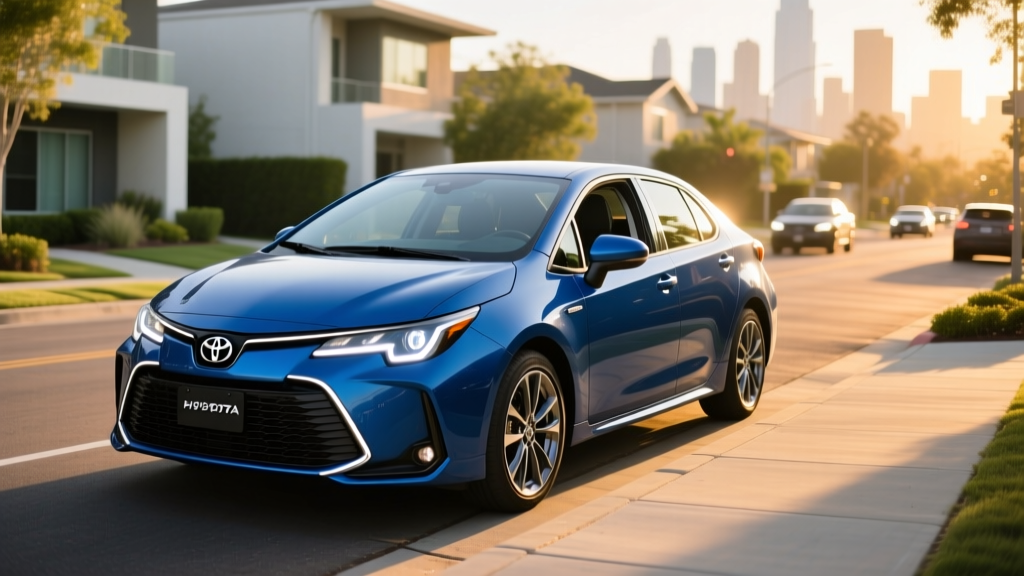
The compact hybrid sedan segment doesn't get much scrutiny from EV-focused publications, but the 2026 Toyota Corolla Hybrid deserves one. With an EPA-estimated 50 MPG combined, a starting price under $25,000, and Toyota's fifth-generation hybrid powertrain, it remains the most accessible gateway into electrified driving for buyers who aren't ready — or able — to plug in. This isn't a plug-in hybrid (PHEV) and it isn't a battery-electric vehicle (BEV). It's a conventional hybrid electric vehicle (HEV), meaning it generates and recovers all its own electricity. No charger, no cord, no range anxiety.
But "hybrid" covers a lot of ground, and Toyota's lineup can confuse first-time electrified car shoppers. Below, we break down exactly what the 2026 Corolla Hybrid delivers in fuel economy, powertrain performance, real-world efficiency, battery longevity, and total cost — and we clarify where it fits relative to the Corolla's PHEV and full-EV alternatives.
HEV vs. PHEV vs. EV: Where Does the Corolla Hybrid Fit?
Before examining specs, it's critical to understand the three electrified powertrain types. Toyota sells all three across its lineup, and confusing them is the single most common mistake hybrid shoppers make.
| Feature | HEV (Corolla Hybrid) | PHEV (e.g., Prius Prime) | BEV (e.g., bZ4X) |
|---|---|---|---|
| Plugs in? | No | Yes | Yes |
| Electric-only range | ~1 mile at low speed | 25–44 miles typical | 200–350+ miles |
| Fuel source | Gasoline + regenerative braking | Gasoline + grid electricity | Grid electricity only |
| Home charging needed? | No | Recommended (Level 2) | Essential |
| Federal tax credit (§30D) | Not eligible | Up to $7,500 (if sourcing/income rules met) | Up to $7,500 (if sourcing/income rules met) |
| Best for | No home charging access; want simplicity | Short commutes + home charging | Full electric lifestyle; home Level 2 |
The 2026 Corolla Hybrid is a conventional HEV. It uses a small lithium-ion battery (approximately 1.0 kWh usable capacity) paired with electric motor-generators to assist the gasoline engine and recapture energy during braking. You never plug it in. The battery charges through the engine and regenerative braking alone. If you need plug-in electric-only commuting, you'd look at the Toyota Prius Prime (a PHEV with roughly 44 miles of electric-only range) instead.
2026 Corolla Hybrid Fuel Economy: EPA Ratings and Real-World MPG
The headline number is what draws buyers in. Here's the full EPA breakdown for the 2026 Corolla Hybrid, sourced from fueleconomy.gov:
| Trim / Drivetrain | City MPG | Highway MPG | Combined MPG |
|---|---|---|---|
| LE (FWD) | 53 | 46 | 50 |
| SE / XLE (FWD) | 50 | 43 | 47 |
| LE (AWD-e) | 51 | 44 | 48 |
| SE / XLE (AWD-e) | 47 | 41 | 44 |
The FWD LE trim's 50 MPG combined is among the highest of any non-plug-in vehicle sold in the U.S., trailing only the Prius and Prius Eco. Toyota achieves this through its fifth-generation hybrid system, which uses a lighter, more compact transaxle and improved motor efficiency over the prior generation.
Powertrain Specs: Engine, Motors, and Horsepower
| Specification | 2026 Corolla Hybrid |
|---|---|
| Engine | 1.8L 4-cylinder Atkinson-cycle |
| Engine output | 96 hp / 105 lb-ft torque |
| Front electric motor | 94 hp (70 kW) |
| AWD-e rear motor (if equipped) | 40 hp (30 kW) |
| Net combined system horsepower | 138 hp (FWD) / 138 hp (AWD-e) |
| Transmission | Electronically controlled CVT (eCVT) |
| 0–60 mph (est.) | ~9.0 seconds (FWD) |
| Hybrid battery | ~1.0 kWh lithium-ion (sealed NiMH on prior gens; Li-ion for 5th-gen) |
| Fuel tank | 11.4 gallons |
| Total driving range (est.) | ~570 miles (LE FWD at 50 MPG combined) |
The 138 net horsepower figure represents the combined output of the engine and front motor operating together — not a simple sum of peak outputs, since the engine and motor reach peak power at different RPMs. For context, the non-hybrid 2026 Corolla with the 2.0L Dynamic Force engine produces 169 hp, so the hybrid trades roughly 30 horsepower for 40% better fuel economy. Around town, the electric motor's instant torque masks this deficit. At highway merging speeds (60–80 mph), the gap becomes more apparent.
The AWD-e system adds a dedicated rear electric motor that engages automatically during acceleration from a stop and in low-traction conditions. It does not provide continuous all-wheel drive at highway speed — it's a traction-assist system, not a performance AWD setup.
Pricing, Trims, and Tax Credit Eligibility
| Trim | Drivetrain | MSRP (2026) |
|---|---|---|
| LE | FWD | $24,795 |
| LE | AWD-e | $26,195 |
| SE | FWD | $27,295 |
| SE | AWD-e | $28,695 |
| XLE | FWD | $29,495 |
| XLE | AWD-e | $30,895 |
All prices include destination charge. The LE FWD at $24,795 positions the Corolla Hybrid roughly $1,500–$2,000 above the equivalent gas-only Corolla LE, a premium most drivers will recoup in fuel savings within 2–3 years at current gas prices.
- The Corolla Hybrid is a conventional HEV, not a PHEV or BEV. It does NOT qualify for the federal §30D New Clean Vehicle Credit (up to $7,500).
- Only vehicles with plug-in capability and a minimum battery capacity of 7 kWh qualify under current IRS §30D rules.
- If you want a Toyota with federal tax credit eligibility, the Prius Prime (PHEV) qualifies for up to $3,750, subject to income caps ($150K single / $300K joint), MSRP caps ($55K sedans), and battery-sourcing requirements.
- Some states offer separate hybrid incentives or HOV lane access — check your state's energy office for current programs.
Battery Warranty, Reliability, and Replacement Cost
Hybrid battery longevity is the number-one concern for first-time hybrid buyers, and it's an area where Toyota has two decades of data working in its favor.
- Hybrid battery: 10 years / 150,000 miles (whichever comes first)
- Hybrid system components (inverter, motor-generators, control module): 8 years / 100,000 miles
- Powertrain warranty: 5 years / 60,000 miles
- Basic warranty: 3 years / 36,000 miles
Real-world reliability: Toyota's hybrid system is mechanically simpler than a conventional automatic transmission. The eCVT has no gears, belts, or clutches to wear — it uses planetary gearsets and motor-generators. There are no starters, alternators, or accessory belts. This means fewer failure points over the vehicle's life. Consumer Reports consistently rates the Corolla Hybrid as one of the most reliable vehicles in its class.
Battery replacement cost: If the hybrid battery does fail outside warranty, a new OEM replacement runs approximately $2,000–$3,500 installed at a Toyota dealer. Refurbished/remanufactored units are available for $1,000–$1,800. Given the 10-year/150,000-mile warranty and Toyota's historical failure rates (extremely low before 150K miles), this is a manageable risk — not the catastrophic expense some buyers fear.
Driving Experience and Technology
The 2026 Corolla Hybrid rides on Toyota's TNGA-C platform and shares its cabin with the gas Corolla. The 8-inch touchscreen runs Toyota's latest Audio Multimedia system with wireless Apple CarPlay and Android Auto. Standard safety features include Toyota Safety Sense 3.0 (TSS 3.0): adaptive cruise control, lane-keeping assist, automatic emergency braking with pedestrian detection, and road-sign assist. These are SAE Level 1–2 driver-assistance features — they support the driver but require full attention and hands-on-wheel engagement at all times.
One practical note: the hybrid battery sits under the rear seat, which preserves trunk space. Cargo volume is 13.1 cubic feet — identical to the gas Corolla. There is no "frunk" as you'd find in a dedicated EV platform.
Who Should Buy the 2026 Corolla Hybrid — And Who Shouldn't
- 50 MPG combined (LE FWD) — among the best of any non-plug-in car
- Under $25K starting price — lowest-cost electrified vehicle from a major brand
- No charging infrastructure needed — works with any gas station
- 10-year / 150,000-mile hybrid battery warranty
- AWD-e available for snow-belt buyers
- Proven Toyota reliability with decades of hybrid data
- 570+ mile total range per tank
- 138 hp feels modest at highway merging speeds
- No federal tax credit eligibility (HEV, not PHEV/BEV)
- No electric-only driving mode for emissions-free short trips
- Rear-seat space is tight for taller passengers
- Infotainment is functional but not class-leading
- AWD-e is traction-assist only, not full-time AWD
- You don't have access to home or workplace charging
- You want maximum fuel savings with zero lifestyle change
- Your budget is under $30K and you want electrified efficiency
- You drive a mix of city and highway and want 500+ mile range
- You have Level 2 home charging and a commute under 40 miles
- You want electric-only daily driving with gas backup for road trips
- You want federal tax credit eligibility (up to $3,750 for Prius Prime)
- You have reliable home Level 2 charging
- You want zero tailpipe emissions and minimal maintenance
- You qualify for the full $7,500 federal credit (making BEVs price-competitive)
Frequently Asked Questions
How many MPG does the 2026 Toyota Corolla Hybrid get?
The most efficient trim, the Corolla Hybrid LE FWD, is EPA-rated at 53 city / 46 highway / 50 combined MPG. In real-world mixed driving, owners typically see 48–55 MPG depending on driving style and climate. Highway-heavy driving at 75+ mph drops efficiency to roughly 42–46 MPG.
Does the Corolla Hybrid need to be plugged in?
No. The 2026 Corolla Hybrid is a conventional hybrid (HEV). It charges its small battery through the gasoline engine and regenerative braking. There is no plug, no charging port, and no electric-only range to manage. You fuel it at a gas station like any other car.
Is the Corolla Hybrid reliable, and what does battery replacement cost?
Toyota's hybrid system has an exceptional reliability record spanning 25+ years since the original Prius. The hybrid battery is warrantied for 10 years / 150,000 miles. If replacement is needed out of warranty, expect $2,000–$3,500 for a new OEM battery installed, or $1,000–$1,800 for a refurbished unit. Most Corolla Hybrids reach 200,000+ miles on the original battery.
Does the 2026 Corolla Hybrid qualify for a federal tax credit?
No. Under current IRS §30D rules, only plug-in electric vehicles (PHEVs and BEVs) with a minimum battery capacity of 7 kWh are eligible for the federal New Clean Vehicle Credit. The Corolla Hybrid's ~1.0 kWh battery disqualifies it. The Toyota Prius Prime (PHEV) qualifies for up to $3,750, subject to income and sourcing requirements.
How does the Corolla Hybrid compare to the Prius?
The 2026 Prius is slightly larger, more powerful (194 hp FWD), and rated at 57 MPG combined (LE trim). It also costs roughly $3,000–$4,000 more. The Corolla Hybrid is the budget pick; the Prius is the efficiency-and-performance pick. Both share Toyota's fifth-generation hybrid architecture. If you can stretch the budget, the Prius delivers noticeably stronger acceleration alongside better MPG.
Is AWD-e worth it on the Corolla Hybrid?
If you live in a region with frequent snow or rain, the AWD-e system adds meaningful traction confidence from a stop. It costs $1,400 extra and reduces combined MPG by 2–6 miles per gallon depending on trim. For dry-climate buyers, the FWD models offer better efficiency and a lower price. AWD-e does not provide full-time all-wheel drive — it engages the rear motor only during low-speed acceleration and slip events.