Quick Verdict: The 2026 Toyota Corolla Cross Hybrid SE at a Glance
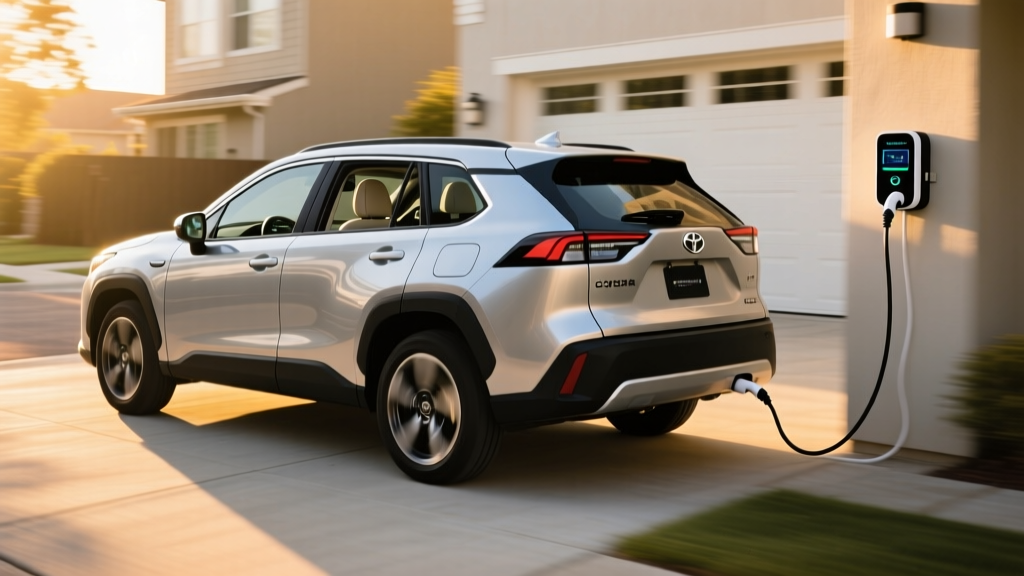
The 2026 Toyota Corolla Cross Hybrid SE occupies a narrow but compelling lane in the compact crossover market: it delivers the raised ride height and cargo practicality of a small SUV with the fuel-sipping efficiency Toyota's hybrid system is known for. The SE trim adds sport-tuned suspension tuning, a blacked-out exterior appearance package, and SofTex-trimmed seats over the base S and mid-tier XSE trims — without sacrificing the 42 MPG combined EPA rating that makes this powertrain worthwhile.
This is a conventional hybrid (HEV), not a plug-in hybrid. That distinction matters: you never plug it in, there is no electric-only driving range to manage, and it does not qualify for the federal §30D EV tax credit. What you get instead is a self-charging system that recovers energy through regenerative braking and engine-driven generation, delivering consistent efficiency whether your commute is 5 miles or 500.
| Specification | 2026 Corolla Cross Hybrid SE |
|---|---|
| Powertrain | 2.0L 4-cyl + 2 electric motors (AWD-i) |
| Combined Horsepower | 196 hp (net system) |
| EPA MPG (City / Hwy / Combined) | 45 / 38 / 42 |
| Fuel Tank Capacity | 10.6 gallons |
| Total Driving Range | ~445 miles |
| 0–60 mph | ~7.5 seconds (est.) |
| Drivetrain | AWD (rear electric motor) |
| Cargo Volume (behind rear seats) | 25.5 cu ft |
| Hybrid Battery Warranty | 10 years / 150,000 miles |
| Starting MSRP (SE trim) | ~$32,350 |
How Many MPG Does the 2026 Corolla Cross Hybrid SE Actually Get?
The EPA rates the 2026 Corolla Cross Hybrid at 45 MPG city, 38 MPG highway, and 42 MPG combined across all trims, including the SE. These figures hold because Toyota's fifth-generation hybrid system prioritizes electric-motor assist in low-speed and stop-and-go driving — precisely where conventional gas engines waste the most fuel.
| Driving Scenario | EPA Estimate | Real-World Expectation |
|---|---|---|
| City / Stop-and-Go | 45 MPG | 44–48 MPG (hybrids often beat EPA in city) |
| Highway (70–75 mph) | 38 MPG | 35–38 MPG (aero drag hurts small crossovers at speed) |
| Combined Mixed Driving | 42 MPG | 40–44 MPG |
| Cold Weather (below 32°F) | N/A | 36–40 MPG (engine runs more for cabin heat) |
Toyota's hybrid system behaves differently than a gas-only car. In city driving, the electric motor handles initial acceleration and low-speed cruising, while the 2.0-liter Atkinson-cycle engine kicks in for higher loads. This means real-world city MPG often exceeds the EPA estimate — something owners of the mechanically similar Corolla Hybrid sedan consistently report on fueleconomy.gov's owner mpg logs.
Highway driving tells a different story. The Corolla Cross Hybrid's crossover profile creates more aerodynamic drag than a sedan, and the hybrid system's advantages diminish at sustained high speeds where the gas engine does most of the work. Expect 35–38 MPG on flat interstate runs at 70–75 mph, dropping further in mountainous terrain or when carrying a full load of passengers and cargo.
HEV vs. PHEV vs. EV: Which Powertrain Fits Your Driving Life?
The Corolla Cross Hybrid is a conventional hybrid (HEV). It has no plug, no electric-only range, and no charging logistics to manage. For some buyers, that simplicity is the entire point. For others, a PHEV or full EV might be a better fit. Here's how the three powertrain types compare in practical terms:
| Factor | HEV (Corolla Cross Hybrid) | PHEV (e.g., RAV4 Prime) | Full EV (e.g., Tesla Model Y) |
|---|---|---|---|
| Plug Required? | No | Yes (optional but recommended) | Yes (mandatory) |
| Electric-Only Range | None | 35–42 mi typical | 270–330 mi typical |
| Total Range | ~445 mi | ~550+ mi (electric + gas) | 270–330 mi (then recharge) |
| Fuel/Energy Cost per Mile | ~$0.10/mi | ~$0.04/mi (electric), ~$0.10/mi (gas) | ~$0.03–0.06/mi |
| Home Charging Needed? | No | Recommended (120V or 240V) | Yes (240V Level 2 ideal) |
| Federal Tax Credit (§30D) | Not eligible | Up to $7,500 (if eligible) | Up to $7,500 (if eligible) |
| Maintenance Complexity | Low (oil changes + hybrid system) | Medium (gas + electric systems) | Low (no engine, fewer fluids) |
| Upfront Price Premium | +$1,500–2,500 vs gas | +$5,000–8,000 vs gas | +$5,000–15,000 vs gas |
Choose the Corolla Cross Hybrid (HEV) if: You lack access to home or workplace charging, you take frequent long road trips where charging infrastructure is uncertain, or you want maximum simplicity with no behavioral changes from a gas car.
Consider a PHEV if: You can install a Level 2 charger at home, your daily commute is under 40 miles (covering most trips on electricity), but you still want gas-engine range for weekend road trips without charging stops.
Go full EV if: You have reliable home charging, your daily driving is predictable, you want the lowest per-mile energy cost, and you're ready to plan longer trips around DC fast-charging stops.
Powertrain Deep Dive: 196 Horsepower with AWD-i
The 2026 Corolla Cross Hybrid uses Toyota's fifth-generation hybrid system built around a 2.0-liter Dynamic Force four-cylinder engine operating on the Atkinson cycle. This engine produces 150 hp and 139 lb-ft of torque on its own, but it's the electric motor integration that defines the driving experience.
Two electric motor-generators work through a planetary-gear eCVT (continuously variable transmission). The front motor handles primary propulsion assist and regenerative braking, while a dedicated rear-axle electric motor provides all-wheel-drive traction — what Toyota calls AWD-i. There is no mechanical driveshaft connecting the front and rear axles. The rear motor activates on demand during acceleration, low-traction conditions, and initial launches, then disengages during steady-state cruising to minimize parasitic losses.
Net system output is 196 horsepower, which puts the Corolla Cross Hybrid ahead of the non-hybrid Corolla Cross (169 hp from a 2.0L gas-only engine) and gives it meaningful passing power on highway on-ramps. The 0–60 mph sprint takes approximately 7.5 seconds — not quick by performance standards, but noticeably brisker than the gas-only model's ~9.2-second run.
The hybrid battery pack is a lithium-ion unit mounted beneath the rear seats. Toyota does not publish the exact kWh capacity for its conventional hybrids because, unlike a PHEV, the pack is never intended to deplete over a meaningful distance. It serves as a buffer — absorbing regenerative braking energy and releasing it for electric-motor assist in short bursts. The system manages state of charge automatically, keeping the battery in a narrow operating window to maximize longevity.
Pricing, Trims, and Tax Credit Reality
The 2026 Toyota Corolla Cross Hybrid is offered in three trims: S, XSE, and SE. The SE sits near the top of the range with sport-tuned suspension, 18-inch black alloy wheels, a black roof, SofTex-trimmed heated front seats, and an 8-inch touchscreen with wireless Apple CarPlay and Android Auto.
| Trim | Starting MSRP (est.) | Key Additions Over Base |
|---|---|---|
| S (base hybrid) | ~$29,990 | Hybrid powertrain, AWD-i, Toyota Safety Sense 3.0 |
| XSE | ~$31,250 | SofTex seats, heated front seats, power liftgate |
| SE | ~$32,350 | Sport-tuned suspension, black exterior accents, 18" black wheels |
All trims include Toyota Safety Sense 3.0 as standard: pre-collision system with pedestrian detection, lane departure alert with steering assist, automatic high beams, and full-speed-range dynamic radar cruise control.
Does the Corolla Cross Hybrid Qualify for Any Tax Credit?
No federal tax credit applies to the Corolla Cross Hybrid. The IRS §30D Clean Vehicle Credit is available only for plug-in electric vehicles (BEVs and PHEVs) that meet specific battery capacity, critical-mineral sourcing, MSRP cap, and buyer income requirements. Because the Corolla Cross Hybrid is a conventional HEV with no plug-in capability, it does not meet the statutory definition of a "clean vehicle" under §30D.
Some states offer their own incentives for hybrid vehicles, though these are less common and less generous than EV incentives. Check your state's energy or environmental agency website for current programs. A few states have offered rebates or reduced registration fees for high-efficiency hybrids, but these programs change frequently and may have income or price caps.
One financial consideration worth noting: the Corolla Cross Hybrid's fuel savings over a gas-only competitor can offset its price premium within 3–5 years depending on annual mileage and fuel prices. At 15,000 miles per year and $3.50/gallon, the difference between 42 MPG and 28 MPG (a typical gas-only compact crossover) works out to roughly $600–700 in annual fuel savings.
Reliability, Battery Longevity, and Replacement Costs
Toyota's hybrid systems have accumulated more than 25 years of real-world data since the original Prius launched in Japan in 1997. The Corolla Cross Hybrid benefits from that institutional knowledge, using a fifth-generation system that is more compact, more efficient, and more thermally managed than its predecessors.
Hybrid Battery Warranty
Toyota covers the hybrid battery pack and hybrid system components for 10 years or 150,000 miles (whichever comes first) on the 2026 Corolla Cross Hybrid. This warranty applies to all 50 states and covers defects in materials and workmanship, as well as capacity loss that causes the battery to fall below a defined performance threshold. The broader powertrain warranty covers 5 years / 60,000 miles, and the basic bumper-to-bumper warranty covers 3 years / 36,000 miles.
How Long Will the Hybrid Battery Last?
Based on long-term data from Toyota's hybrid fleet, most hybrid battery packs last well beyond the warranty period. Failures before 150,000 miles are uncommon, and many Prius and Camry Hybrid owners report original battery packs still functioning at 200,000+ miles. The key factor is that Toyota's hybrid system never fully charges or fully depletes the battery — it operates in a narrow state-of-charge window (roughly 40–80%) that minimizes stress on the cells.
If the battery does eventually need replacement out of warranty, expect to pay between $2,500 and $4,500 for a new OEM pack installed at a dealership, depending on labor rates in your area. Refurbished or aftermarket hybrid battery packs are available for $1,500–$2,500 installed. Individual cell module replacement — where only the degraded modules are swapped — can cost as little as $500–$1,200 at specialized hybrid repair shops.
General Reliability Outlook
The Corolla Cross Hybrid shares its platform and powertrain architecture with vehicles that consistently earn above-average reliability ratings from sources like Consumer Reports and J.D. Power. The eCVT transmission has no conventional gears, bands, or clutches to wear — it's a planetary gearset with far fewer failure points than a traditional automatic or dual-clutch transmission. The NHTSA vehicle page and IIHS ratings should be checked closer to the on-sale date for crash-test results, as the Corolla Cross has historically performed well in IIHS moderate overlap and side-impact testing.
Pros
- 42 MPG combined EPA — among the best in the compact crossover segment
- Standard AWD across all hybrid trims
- No charging infrastructure required — fill up at any gas station
- 10-year / 150,000-mile hybrid battery warranty
- Strong real-world city MPG (often exceeds EPA)
- Toyota Safety Sense 3.0 standard on every trim
Cons
- No federal tax credit eligibility (HEV, not PHEV/EV)
- Highway MPG drops noticeably at 75+ mph
- Cargo volume (25.5 cu ft) trails some competitors
- SE trim pricing pushes past $32,000 before options
- eCVT drone under hard acceleration
- Rear-seat legroom is tight for taller passengers
Who Should Buy the 2026 Corolla Cross Hybrid SE?
The Corolla Cross Hybrid SE makes the most sense for buyers who want crossover practicality with minimal fuel cost and zero lifestyle adjustment. If you currently drive a gas compact crossover and want to cut your fuel bill by 30–40% without thinking about charging, plug-in logistics, or range planning, this is one of the most straightforward paths to that outcome.
The SE trim specifically targets buyers who want a slightly more aggressive appearance and firmer ride than the comfort-oriented XSE. The sport-tuned suspension is noticeably tighter over bumps and during cornering, though it's still a comfort-first setup — this isn't a performance crossover. If ride softness is a priority, the XSE may be a better match.
This hybrid is not the right choice if your daily commute is short enough to cover entirely on electric power and you have home charging access — a PHEV or full EV would deliver lower per-mile energy costs and qualify for federal tax credits. It's also not ideal if you need maximum cargo space; the Corolla Cross's 25.5 cu ft behind the rear seats is adequate for a couple's weekly groceries but tight for a family of four on a road trip. The RAV4 Hybrid (37.6 cu ft, 39 MPG combined) is the natural step up if space matters more than the last 3 MPG.
Frequently Asked Questions
How many MPG does the 2026 Toyota Corolla Cross Hybrid SE get?
The EPA rates it at 45 MPG city, 38 MPG highway, and 42 MPG combined. Real-world city driving often yields 44–48 MPG thanks to the hybrid system's regenerative braking and electric-motor assist at low speeds. Highway efficiency drops to 35–38 MPG at sustained 70–75 mph speeds, and cold weather can reduce combined figures to 36–40 MPG.
Does the Corolla Cross Hybrid need to be plugged in?
No. The Corolla Cross Hybrid is a conventional hybrid (HEV), not a plug-in hybrid (PHEV). It charges its own battery through regenerative braking and engine-driven generation. You simply fill it with gasoline like any other car.
Does the 2026 Corolla Cross Hybrid qualify for a federal tax credit?
No. The federal §30D Clean Vehicle Credit applies only to plug-in electric vehicles (BEVs and PHEVs) that meet battery sourcing, MSRP, and income requirements. Conventional hybrids like the Corolla Cross Hybrid do not qualify. Some states may offer separate hybrid incentives — check your state's energy agency for current programs.
How long does the hybrid battery last, and what does replacement cost?
Toyota's hybrid batteries typically last well beyond the 10-year / 150,000-mile warranty period. Many owners report original batteries functioning past 200,000 miles. If replacement is needed out of warranty, expect $2,500–$4,500 for a new OEM pack, or $1,500–$2,500 for a refurbished unit.
Is the Corolla Cross Hybrid SE worth the premium over the gas-only model?
The hybrid adds roughly $2,000–$2,500 over a comparably equipped gas-only Corolla Cross. At 15,000 miles per year and $3.50/gallon fuel, the hybrid saves approximately $600–$700 annually in fuel costs, paying back the premium in 3–4 years. Beyond fuel savings, the hybrid also delivers standard AWD (not available on all gas trims) and 27 more horsepower.
What's the difference between the SE and XSE trims?
The SE adds sport-tuned suspension, 18-inch black alloy wheels, a black roof, and unique exterior trim for a more aggressive appearance. The XSE focuses on comfort with standard suspension tuning and chrome exterior accents. Both share the same 196 hp hybrid powertrain, 42 MPG combined rating, and interior technology.
How does the Corolla Cross Hybrid compare to the RAV4 Hybrid?
The RAV4 Hybrid delivers 39 MPG combined with significantly more cargo space (37.6 cu ft vs. 25.5 cu ft) and a larger rear seat, but starts roughly $3,000–$4,000 higher. If cargo space and rear-seat comfort are priorities, the RAV4 Hybrid is the stronger choice. If fuel efficiency and a lower entry price matter more, the Corolla Cross Hybrid wins.