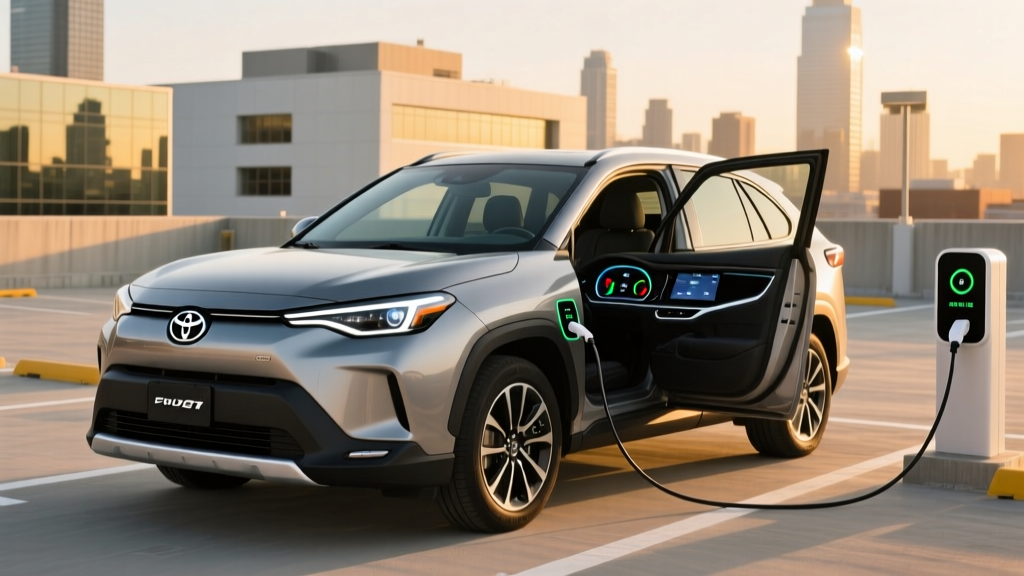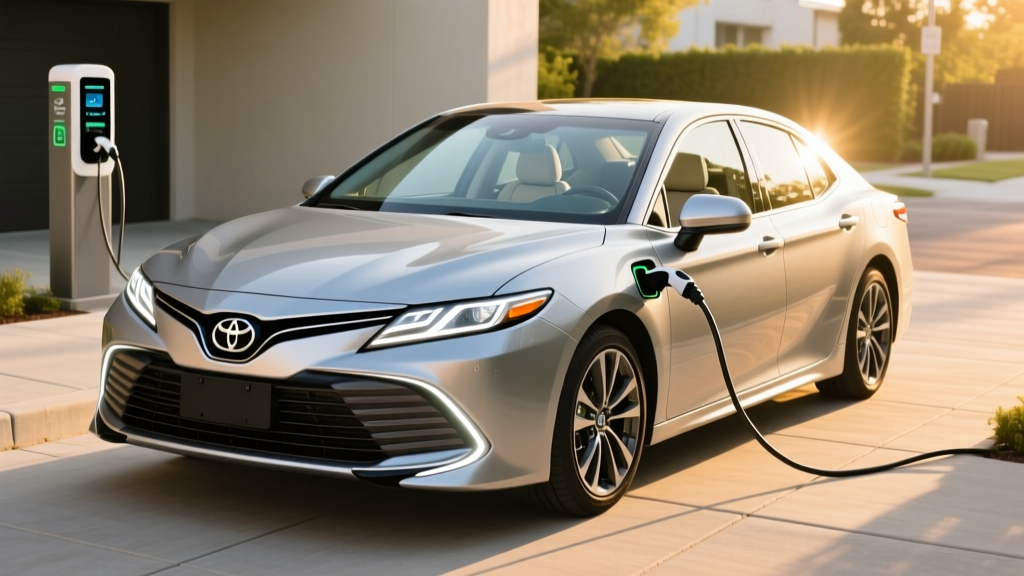
The Toyota Camry went fully hybrid for the 2025 model year, and the 2026 Toyota Camry Hybrid carries forward that all-hybrid lineup with refinements to its fifth-generation powertrain. If you've been searching for a "camry 09 hybrid" — whether you're recalling the early 2009 Camry Hybrid that pioneered the segment or you're simply looking for the latest generation — you've landed on the definitive guide. The 2026 model produces 225 horsepower (FWD) or 232 hp (AWD), achieves up to 51 MPG combined on the EPA cycle, and starts at $29,495. Here's everything you need to know before you buy.
2026 Camry Hybrid Powertrain and Performance Specs
Every 2026 Camry is a hybrid. Toyota dropped the conventional four-cylinder gas engine entirely, betting that the fuel-economy and refinement advantages of its hybrid system would appeal to the broadest buyer base. The result is a midsize sedan that feels more premium than its price suggests while sipping fuel at a rate that rivals compact hatchbacks.
| Specification | FWD (LE/SE) | AWD (LE/SE/XLE/XSE) |
|---|---|---|
| Engine | 2.5L 4-cyl + electric motor | 2.5L 4-cyl + dual electric motors |
| Combined Horsepower | 225 hp | 232 hp |
| Drivetrain | Front-wheel drive | Electronic AWD (rear motor) |
| Transmission | eCVT | eCVT |
| 0-60 mph (est.) | ~7.2 sec | ~6.9 sec |
| Battery Type | Lithium-ion (sealed, self-charging HEV) | |
| Plug-in Required? | No — regenerative braking recharges the battery | |
The electronic AWD system adds a second electric motor on the rear axle, providing up to 232 combined horsepower and improved traction in rain and light snow. Unlike mechanical AWD systems, there's no driveshaft — the rear motor engages only when needed, minimizing efficiency loss.
Fuel Economy: EPA Ratings and Real-World MPG
This is the Camry Hybrid's headline act. The EPA rates the FWD LE trim at an impressive 53 city / 50 highway / 51 combined MPG, while the AWD LE drops slightly to 51 city / 49 highway / 50 combined. Sport-tuned SE and XSE trims with larger 19-inch wheels see a modest penalty: approximately 44 city / 43 highway / 44 combined for the FWD SE and 44/42/43 for the AWD SE.
| Trim | City MPG | Highway MPG | Combined MPG |
|---|---|---|---|
| LE FWD | 53 | 50 | 51 |
| LE AWD | 51 | 49 | 50 |
| SE FWD | 44 | 43 | 44 |
| SE AWD | 44 | 42 | 43 |
| XLE FWD | 48 | 47 | 48 |
| XSE AWD | 44 | 42 | 43 |
Real-world note: Toyota's hybrid system excels in stop-and-go city driving where regenerative braking and electric-motor assist do the heavy lifting. In our experience and consistent owner reports, the Camry Hybrid frequently exceeds its EPA city rating in urban commuting — 54-56 MPG is common in warm weather with moderate acceleration. Highway cruising at 75+ mph will yield figures closer to 42-46 MPG depending on terrain and temperature. In cold weather (below 32°F), expect a 5-10% reduction as the engine runs more frequently to generate cabin heat.
HEV vs PHEV vs EV: Is the Camry Hybrid Right for You?
The 2026 Camry is a conventional hybrid (HEV), not a plug-in hybrid (PHEV). That's a critical distinction that confuses many shoppers. Here's how the three electrified powertrain types compare:
| Factor | HEV (Camry Hybrid) | PHEV (e.g., Prius Prime) | BEV (e.g., Tesla Model 3) |
|---|---|---|---|
| Plug in to charge? | No | Yes (optional) | Yes (required) |
| Electric-only range | ~1 mile at low speed | 30-44 miles | 250-360+ miles |
| Home charging needed? | No | Recommended (120V OK) | Yes (Level 2 ideal) |
| Fuel for long trips | Gasoline only | Gasoline + electricity | Electricity only |
| Federal tax credit | Not eligible (§30D) | Up to $7,500* | Up to $7,500* |
| Best for | No home charging access, road-trippers | Short commutes + long road trips | Home charging + mostly <300-mi trips |
- You don't have access to home or workplace charging
- You take frequent road trips exceeding 300 miles
- You want maximum simplicity — no plugs, no apps, no charging planning
- You want a proven midsize sedan with 50+ MPG at a sub-$30K starting price
- You can plug in at home and your commute is under 40 miles round-trip
- You want electric-only daily driving with gas backup for road trips
- You want to reduce fuel consumption to near-zero on weekdays
- You have reliable Level 2 home charging
- You want zero tailpipe emissions and minimal maintenance
- Your typical trips fall within 250-300 miles and you can plan DC fast-charging stops
2026 Camry Hybrid Pricing by Trim
The 2026 Camry Hybrid lineup spans four trims, all available with AWD. Pricing below reflects Toyota's MSRP including destination charge:
| Trim | FWD MSRP | AWD MSRP |
|---|---|---|
| LE | $29,495 | $30,895 |
| SE | $31,095 | $32,495 |
| XLE | $34,495 | $35,895 |
| XSE | — | $36,295 |
Does the Camry Hybrid Qualify for a Federal Tax Credit?
No. The 2026 Toyota Camry Hybrid is a conventional hybrid (HEV), which does not qualify for the IRS §30D Clean Vehicle Credit. The federal tax credit of up to $7,500 applies only to plug-in electric vehicles (BEVs and PHEVs) that meet battery-sourcing, MSRP, and buyer-income requirements.
However, some states offer their own incentives for high-efficiency hybrids. Check your state's energy office or fueleconomy.gov for state-specific rebates. Additionally, the Camry Hybrid's lower fuel cost — approximately $1,100/year in gasoline at 15,000 miles driven vs. $2,000+ for a comparable gas-only midsize sedan — delivers meaningful savings over the ownership period without any incentive paperwork.
Hybrid Battery Warranty, Lifespan, and Replacement Cost
Battery longevity is the single most common concern among first-time hybrid buyers. Toyota has been refining its hybrid battery systems since the original 1997 Prius, and the 2026 Camry Hybrid benefits from that quarter-century of engineering.
- Hybrid Battery: 10 years / 150,000 miles (whichever comes first)
- Hybrid System Components: 8 years / 100,000 miles
- Transferability: Warranty transfers to subsequent owners
Real-world battery lifespan: Data from millions of Toyota hybrids on the road shows that the vast majority of hybrid batteries last well beyond the warranty period. It's common to see Camry and Prius hybrids reach 200,000+ miles on the original battery pack. Degradation in a conventional HEV is far less severe than in a BEV because the battery operates in a narrow state-of-charge window (typically 40-80%), which dramatically reduces stress on the cells.
Replacement cost if needed: Should the hybrid battery require replacement outside of warranty, expect to pay between $2,000 and $4,000 for a refurbished or new OEM battery pack, including labor at a Toyota dealership. Independent hybrid specialists often offer refurbished packs for $1,500-$2,500. This is a fraction of the cost of a full EV battery replacement and is rarely needed within the first 15 years of ownership.
Reliability, Safety, and Ownership Costs
Toyota's hybrid powertrain is one of the most thoroughly proven systems in the automotive industry. The eCVT transmission has no traditional gears, belts, or clutches to wear out — it uses a planetary gearset that Toyota has refined over decades. Brake wear is also significantly reduced thanks to regenerative braking, which handles most deceleration without engaging the friction brakes. Many Camry Hybrid owners report original brake pads lasting 80,000-100,000 miles.
The 2026 Camry comes standard with Toyota Safety Sense 3.0, which includes:
- Pre-Collision System with Pedestrian Detection
- Lane Departure Alert with Steering Assist
- Full-Speed Range Dynamic Radar Cruise Control
- Lane Tracing Assist
- Road Sign Assist
- Automatic High Beams
For safety ratings, refer to NHTSA and IIHS once 2026 crash-test results are published. The previous-generation Camry consistently earned Top Safety Pick+ honors from IIHS and 5-star overall ratings from NHTSA, and the current platform is expected to maintain or improve upon those results.
Five-Year Cost of Ownership Snapshot
| Cost Factor | Camry Hybrid LE | Comparable Gas Sedan (est.) |
|---|---|---|
| MSRP | $29,495 | $28,000 |
| Fuel (5 yrs, 15K mi/yr) | ~$5,500 | ~$10,500 |
| Maintenance (5 yrs) | ~$2,200 | ~$3,500 |
| Estimated Insurance (5 yrs) | ~$7,500 | ~$7,000 |
| Depreciation (est. 5 yrs) | ~$12,000 | ~$13,500 |
| Est. 5-Year Total | ~$56,695 | ~$62,500 |
The Camry Hybrid's fuel savings alone — roughly $5,000 over five years — more than offset its slightly higher starting price. Toyota hybrids also tend to hold resale value exceptionally well, as evidenced by strong used-market demand for high-mileage Camry and Prius models.
Camry Hybrid vs. the Competition
The midsize hybrid sedan segment is competitive. Here's how the Camry stacks up against key rivals:
| Vehicle | Combined MPG | HP | Starting MSRP | AWD Available? |
|---|---|---|---|---|
| 2026 Toyota Camry Hybrid LE | 51 | 225 (FWD) / 232 (AWD) | $29,495 | Yes |
| 2026 Honda Accord Hybrid | 48 | 204 | $33,655 | No |
| 2026 Hyundai Sonata Hybrid | 47 | 192 | $31,250 | No |
| 2026 Kia K5 Hybrid | ~44 | 192 | ~$32,000 | No |
The Camry Hybrid's combination of class-leading MPG, available AWD, and the lowest starting price in the segment makes it the value benchmark. The Accord Hybrid offers a slightly more refined driving experience and a larger trunk, but it costs over $4,000 more to start and lacks AWD. The Sonata Hybrid provides strong warranty coverage (10-year/100,000-mile powertrain) but trails on efficiency.
Pros
- Class-leading 51 MPG combined (LE FWD)
- Available electronic AWD — rare in the segment
- Proven hybrid reliability with 10-yr/150K-mi battery warranty
- Lowest starting MSRP among midsize hybrid sedans
- Strong resale value and low maintenance costs
- Toyota Safety Sense 3.0 standard on all trims
- Smooth, quiet hybrid powertrain with adequate 225-232 hp
Cons
- No plug-in hybrid variant — pure HEV only
- SE/XSE trims with 19" wheels drop to 43-44 MPG combined
- eCVT can drone under hard acceleration (common to all hybrids)
- Rear seat is slightly tighter than the Accord's
- No DC fast charging (not applicable for HEVs, but worth noting vs. PHEVs)
- Infotainment, while improved, still trails Hyundai/Kia in responsiveness
A Note on the 2009 Camry Hybrid vs. Today's Model
If your search for a "camry 09 hybrid" was specifically about the 2009 model year, here's some useful context. The 2009 Camry Hybrid produced 192 combined horsepower from a 2.4L four-cylinder and electric motor, achieved 33 city / 34 highway MPG, and used a nickel-metal hydride (NiMH) battery pack. The jump to the 2026 model is substantial: 17% more horsepower, a 55% improvement in combined fuel economy, standard advanced safety features that didn't exist in 2009, and a switch to lighter, more energy-dense lithium-ion cells.
If you're shopping for a used 2009 Camry Hybrid, expect to pay $5,000-$8,000 for a well-maintained example with 120,000-160,000 miles. The NiMH battery in that generation is generally robust but may need replacement ($1,500-$2,500) if it hasn't been serviced. The 2026 model's 51 MPG and modern tech make a compelling case for upgrading, especially given the fuel savings that can offset a car payment within a few years.
Frequently Asked Questions
How many MPG does the 2026 Camry Hybrid get?
The EPA rates the Camry Hybrid LE FWD at 53 city / 50 highway / 51 combined MPG. The AWD LE is rated at 51/49/50 MPG. Sport trims (SE, XSE) with larger wheels achieve 44 city / 43 highway / 44 combined (FWD) or 44/42/43 (AWD). Real-world city driving often exceeds the EPA city rating.
Does the Camry Hybrid need to be plugged in?
No. The 2026 Camry Hybrid is a conventional hybrid (HEV). It charges its own battery through regenerative braking and the gasoline engine. There is no plug, no charging port, and no need for any external charging infrastructure. You simply fill it with gasoline like a traditional car.
Is the Camry Hybrid a PHEV?
No. Toyota does not offer the Camry as a plug-in hybrid (PHEV). If you want a Toyota PHEV with electric-only range, look at the Prius Prime (up to 44 miles electric-only) or the RAV4 Prime (up to 42 miles electric-only). The Camry Hybrid is an HEV — no plug, no electric-only highway driving, but outstanding fuel economy with zero lifestyle change.
Is the Camry Hybrid reliable, and what does battery replacement cost?
Toyota's hybrid system is among the most reliable powertrains ever produced, with millions of units on the road exceeding 200,000 miles. The hybrid battery is covered by a 10-year/150,000-mile warranty. Out-of-warranty replacement costs $2,000-$4,000 at a dealership or $1,500-$2,500 through independent specialists, but most batteries last the life of the vehicle.
Does the 2026 Camry Hybrid qualify for any tax credit?
The Camry Hybrid does not qualify for the federal §30D Clean Vehicle Credit, which is reserved for plug-in vehicles (BEVs and PHEVs). Some states may offer rebates for high-efficiency hybrids — check your state's energy office. The Camry Hybrid's savings come from its low fuel consumption rather than purchase incentives.
How does the Camry Hybrid compare to a full EV?
A BEV like the Tesla Model 3 or Hyundai Ioniq 6 offers zero tailpipe emissions, lower per-mile energy costs, and less routine maintenance. However, BEVs require home charging access, involve route planning on long trips, and carry higher starting prices ($38,000-$45,000+). The Camry Hybrid offers a compelling middle ground: 50+ MPG, no charging hassle, a $29,495 starting price, and the freedom to drive anywhere without range planning. If you lack reliable home charging or regularly drive 400+ miles between stops, the Camry Hybrid is the pragmatic choice.
What is the Camry Hybrid's total driving range on a full tank?
With a 13.2-gallon fuel tank and 51 MPG combined (LE FWD), the Camry Hybrid delivers approximately 673 miles of total range per fill-up. That's among the longest ranges of any vehicle on the market — gas, hybrid, or electric — and eliminates range anxiety entirely.