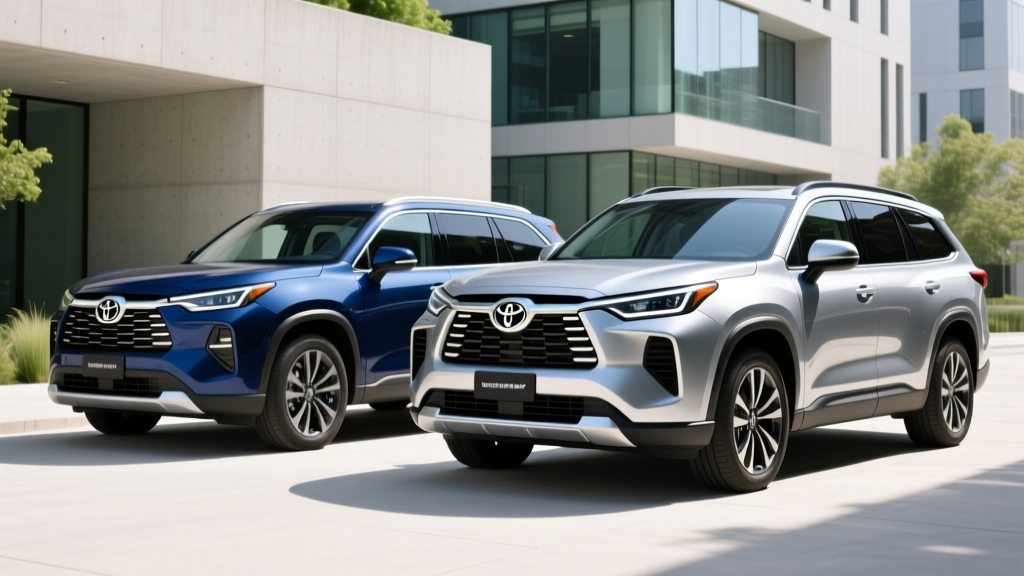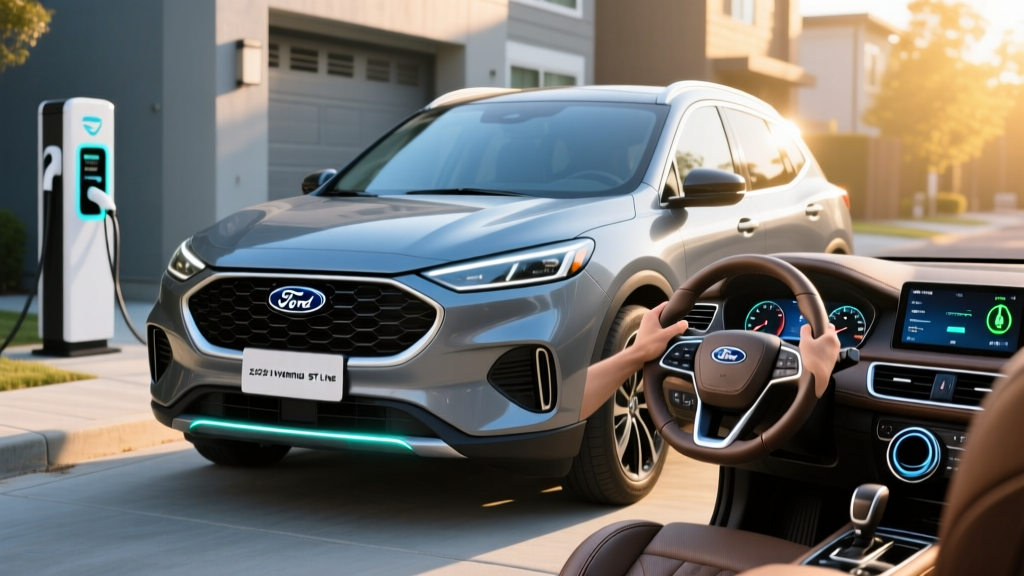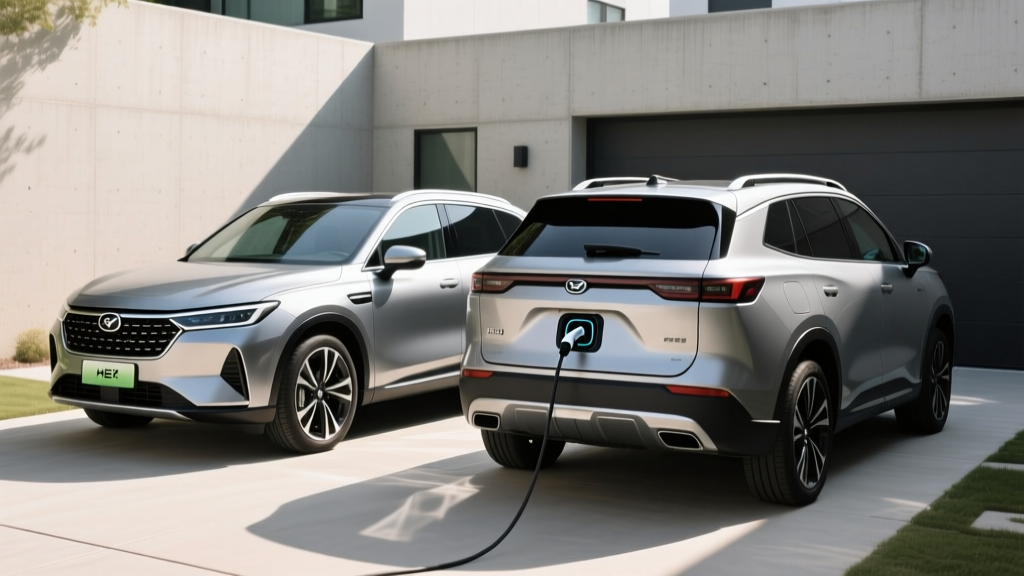
Family haulers are going hybrid, and the 2026 model year brings more three-row options than ever. But the choice isn't as simple as "hybrid vs. gas" anymore. Buyers now face a fork between conventional hybrids (HEVs) that never need plugging in and plug-in hybrids (PHEVs) that deliver 30–40 miles of electric-only driving before the gas engine kicks on. Both promise big MPG gains over a pure gasoline SUV, but the math on which saves you more money depends entirely on your commute, your charging access, and how many kids you're hauling to soccer practice.
This guide breaks down the leading 2026 3-row hybrid SUV contenders — the Toyota Grand Highlander Hybrid, Hyundai Santa Fe Hybrid, Kia Sorento Hybrid and PHEV, and Mazda CX-90 PHEV — with exact EPA figures, real-world expectations, battery specs, and the federal tax-credit landscape that can shave thousands off the sticker price.
HEV vs PHEV: The Core Difference Every Buyer Must Know
Conventional Hybrid (HEV)
- How it works: A small battery (1–2 kWh) pairs with an electric motor and gas engine. The battery recharges through regenerative braking and the engine — you never plug it in.
- Best for: Drivers without home charging, apartment dwellers, or anyone who wants simpler ownership with no plug-in routine.
- Typical MPG: 34–36 combined EPA in a 3-row SUV.
- Tax credit: Generally not eligible for the federal §30D new EV credit (that's reserved for BEVs and PHEVs).
Plug-In Hybrid (PHEV)
- How it works: A larger battery (13–26 kWh) provides 30–40 miles of pure electric driving. Once depleted, it operates as a conventional hybrid. You can plug in at home (Level 1/2) to recharge.
- Best for: Households with short commutes (under 35 miles) who can charge overnight and want near-EV daily driving with gas-engine range for road trips.
- Typical MPGe: 77–80 MPGe combined (electric mode); 33–35 MPG combined (hybrid mode after battery depletion).
- Tax credit: May qualify for up to $7,500 under IRS §30D, subject to MSRP caps, buyer income limits, and battery-sourcing rules. Can be transferred to the dealer at point of sale.
Top 2026 3-Row Hybrid SUV Contenders: Spec-by-Spec
| Model | Type | Powertrain | Combined HP | Battery (kWh) | EPA Range / EV Range | EPA MPG (City/Hwy/Combined) | Base MSRP |
|---|---|---|---|---|---|---|---|
| Toyota Grand Highlander Hybrid | HEV | 2.5L I4 + 2 electric motors (AWD) | 245 hp | ~1.6 kWh (NiMH) | ~600 mi total | 37 / 34 / 36 | $47,170 |
| Hyundai Santa Fe Hybrid | HEV | 1.6L Turbo I4 + electric motor (AWD) | 230 hp | ~1.5 kWh (Li-ion) | ~540 mi total | 35 / 31 / 33 | $40,850 |
| Kia Sorento Hybrid | HEV | 1.6L Turbo I4 + electric motor (AWD) | 230 hp | ~1.5 kWh (Li-ion) | ~540 mi total | 34 / 31 / 33 | $39,590 |
| Kia Sorento Plug-In Hybrid | PHEV | 1.6L Turbo I4 + electric motor (AWD) | 261 hp | 13.8 kWh (Li-ion) | 32 mi EV / ~420 mi total | 79 MPGe / 34 MPG (hybrid) | $51,890 |
| Mazda CX-90 PHEV | PHEV | 2.5L I4 + electric motor (AWD) | 323 hp | 17.8 kWh (Li-ion) | 26 mi EV / ~460 mi total | 56 MPGe / 25 MPG (hybrid) | $51,450 |
Note: MSRP figures reflect base trims before destination charges. Specs sourced from manufacturer press materials and fueleconomy.gov. Final 2026 EPA certifications may vary slightly.
Real-World MPG vs. EPA Sticker: What Owners Actually Report
Hybrids shine in stop-and-go city driving, where regenerative braking recovers energy that a gas car wastes as heat. That means real-world city MPG often exceeds the EPA city estimate. The Grand Highlander Hybrid, for example, frequently returns 38–40 MPG in suburban driving based on owner-reported data on forums and Fuelly. Highway driving is a different story: at sustained 70–80 mph speeds, aerodynamic drag dominates, and hybrid assistance is less impactful. Expect highway MPG to land 1–3 MPG below the EPA sticker, especially with a full load of passengers and cargo.
For PHEVs, the real-world math depends entirely on whether you charge. A Kia Sorento PHEV owner who charges nightly and commutes 25 miles may burn zero gasoline on weekdays. That same owner on a 400-mile road trip will see 33–34 MPG once the battery depletes — solid for a 3-row SUV but not dramatically better than a conventional hybrid. The key insight: PHEV value is maximized by daily plugging in. If you can't or won't charge, you're paying a premium for battery weight you never use.
PHEV Charging: Battery Size, Charge Times, and the DC Fast-Charging Gap
PHEV batteries are small enough that Level 1 charging (120V household outlet) is genuinely viable — a 13.8 kWh Sorento PHEV battery recharges fully in roughly 11–12 hours on a standard outlet. That's adequate for overnight top-ups. Step up to a Level 2 (240V) home charger at 3.3–7.2 kW and you're looking at 3–4.5 hours from empty.
One major caveat: most 3-row PHEVs do not support DC fast charging. The Kia Sorento PHEV and Mazda CX-90 PHEV are limited to Level 2 AC charging only. If you're on a road trip and hoping to top up the battery at a DC fast-charger, you're out of luck. The battery is small enough that this limitation matters less than it would on a full EV — the gas engine covers you — but it does mean public charging infrastructure is largely irrelevant for PHEV owners. Home charging is the whole game.
| Charging Level | Power (kW) | Sorento PHEV (13.8 kWh) Full Charge | CX-90 PHEV (17.8 kWh) Full Charge |
|---|---|---|---|
| Level 1 (120V outlet) | ~1.2 kW | ~11.5 hours | ~15 hours |
| Level 2 (240V, 16A) | ~3.3 kW | ~4.2 hours | ~5.4 hours |
| Level 2 (240V, 32A) | ~7.2 kW | ~2 hours* | ~2.5 hours* |
| DC Fast Charge | N/A | Not supported | Not supported |
*Charge time assumes the vehicle's onboard charger can accept the full 7.2 kW. Check your model's maximum AC charge rate — many PHEVs cap at 3.3 kW onboard, making 32A Level 2 no faster than 16A.
Federal Tax Credits: Which 2026 Hybrids Qualify?
Under the current IRS §30D rules, conventional hybrids (HEVs) do not qualify for the federal new clean vehicle credit. Only plug-in hybrids and battery-electric vehicles are eligible, and even then, the rules are strict:
- MSRP cap: SUVs must be priced at or below $80,000 (all models here qualify).
- Buyer income cap: Adjusted gross income must not exceed $150,000 (single), $225,000 (head of household), or $300,000 (joint filers).
- Battery sourcing: Critical minerals and battery components must meet escalating percentage thresholds from qualifying trade partners. This requirement tightens annually and has disqualified several previously eligible models.
- Point-of-sale transfer: Eligible buyers can transfer the credit to the dealer, reducing the purchase price at the dealership rather than waiting for a tax refund.
- FEOC restriction: Vehicles with battery components from a "foreign entity of concern" (primarily China-based suppliers) may be disqualified.
As of early 2026, the Kia Sorento PHEV and Mazda CX-90 PHEV are the two 3-row PHEV contenders potentially eligible for up to $7,500. However, battery-sourcing compliance changes frequently. Always verify current eligibility on IRS.gov or ask the dealer for a written eligibility confirmation before signing. State-level incentives (California's CVRP, Colorado's innovative motor vehicle credit, etc.) may stack on top — check your state's energy office.
Battery Reliability and Warranty: What You Need to Know
Hybrid Battery Warranty Coverage
| Manufacturer | Hybrid Battery Warranty | Replacement Cost (Est.) |
|---|---|---|
| Toyota | 10 years / 150,000 miles | $3,000–$5,000 |
| Hyundai | 10 years / 100,000 miles | $2,500–$4,500 |
| Kia | 10 years / 100,000 miles | $2,500–$4,500 |
| Mazda | 8 years / 100,000 miles | $4,000–$6,000 |
Replacement costs are out-of-warranty estimates and vary by model and labor rates. Hybrid battery failures within the warranty period are covered at no cost to the owner.
Hybrid battery anxiety is one of the top concerns we hear from buyers, and it's largely overblown for modern vehicles. Toyota's hybrid system, refined over 25+ years since the original Prius, has a proven track record of battery longevity well beyond the warranty period — many taxi-fleet Highlanders have logged 200,000+ miles on the original hybrid battery. The larger PHEV batteries (13.8–17.8 kWh) experience more cycling stress but are engineered with conservative charge buffers (you never actually use 100% of the cells) and liquid or air thermal management to slow degradation.
If a hybrid battery does fail out of warranty, individual cell module replacement (rather than a full pack swap) is increasingly available from independent hybrid shops for $1,500–$3,000, significantly less than a full OEM pack. The bottom line: hybrid battery replacement should not be a dealbreaker, especially given the 8–10 year warranty coverage.
Who Should Buy a 2026 3-Row Hybrid SUV — and Who Shouldn't
Choose a Conventional Hybrid (HEV) If:
- You live in an apartment or lack access to home/work charging
- You want the lowest upfront cost and zero plug-in routine
- Your priority is maximizing MPG without lifestyle changes
- You drive a mix of city and highway with no dominant short commute
Choose a Plug-In Hybrid (PHEV) If:
- You have a garage or driveway with a 120V or 240V outlet
- Your daily round-trip commute is under 30–35 miles
- You want near-EV running costs on weekdays with gas flexibility for weekend road trips
- You qualify for the federal §30D credit, which can offset the PHEV price premium
Choose a Full EV (BEV) Instead If:
- You have reliable home Level 2 charging and your daily driving rarely exceeds 250 miles
- You want zero gasoline purchases, zero oil changes, and minimal drivetrain maintenance
- You're ready for the 250–330 mile EPA range of current 3-row EVs (Kia EV9, Tesla Model X) and can plan road-trip charging stops
Pros and Cons at a Glance
Pros
- 34–36 MPG combined (HEV) crushes the 20–24 MPG of gas-only 3-row SUVs
- PHEV electric mode eliminates weekday gas spending for short commuters
- No range anxiety — gas engine provides 420–600+ miles of total range
- Hybrid batteries backed by 8–10 year / 100,000–150,000 mile warranties
- Lower upfront cost than a full-electric 3-row SUV
- PHEVs may qualify for up to $7,500 federal tax credit + state incentives
Cons
- PHEV premium of $8,000–$12,000 over HEV trims may not pay back without daily charging
- Most 3-row PHEVs lack DC fast charging — public chargers are irrelevant
- Third-row space and cargo volume still compromised vs. body-on-frame SUVs
- HEVs receive no federal tax credit
- Highway MPG gains are modest — hybrids excel in city, not at 75 mph
- Towing capacity (3,500–5,000 lbs) trails V6 gas and diesel alternatives
Frequently Asked Questions
How many MPG does a 2026 3-row hybrid SUV get?
Conventional hybrid 3-row SUVs achieve 33–36 MPG combined on the EPA cycle, with the Toyota Grand Highlander Hybrid leading at 36 MPG combined (37 city / 34 highway). PHEVs deliver 77–80 MPGe in electric mode and 25–34 MPG in hybrid mode after battery depletion. Real-world city driving often exceeds EPA estimates by 2–4 MPG thanks to regenerative braking; highway driving typically falls 1–3 MPG short.
How far can a 3-row PHEV go on electric only?
The Kia Sorento PHEV delivers an EPA-rated 32 miles of electric-only range, while the Mazda CX-90 PHEV manages 26 miles. In mild weather at city speeds, expect those figures to hold or slightly improve. In cold weather (below 30°F) or at highway speeds, expect a 15–25% reduction — roughly 20–27 miles for the Sorento and 19–22 miles for the CX-90.
Hybrid vs PHEV vs EV — which 3-row SUV fits my family?
If you can't charge at home, choose a conventional hybrid (HEV) — it requires no behavioral change and still cuts fuel costs 35–40% vs. a gas-only SUV. If you have home charging and a short commute, a PHEV gives you EV-like daily driving costs with gas-engine freedom for road trips. If you have home charging, rarely drive more than 250 miles in a day, and want to eliminate gasoline entirely, a full EV like the Kia EV9 (300+ mile range) is the most cost-effective long-term choice.
Are hybrid SUVs reliable, and what does battery replacement cost?
Modern hybrid systems from Toyota, Hyundai, and Kia rank among the most reliable powertrains on the road, with fewer moving parts than a conventional automatic transmission (no torque converter, simpler planetary gearset). Hybrid batteries are warrantied for 8–10 years / 100,000–150,000 miles. Out-of-warranty replacement runs $2,500–$6,000 depending on the model, though independent hybrid shops can often replace individual battery modules for $1,500–$3,000.
Does a 2026 3-row hybrid SUV qualify for a tax credit?
Conventional hybrids (HEVs) do not qualify for the federal §30D clean vehicle credit. Plug-in hybrids like the Kia Sorento PHEV and Mazda CX-90 PHEV may qualify for up to $7,500, subject to buyer income caps ($150K single / $300K joint), an $80,000 SUV MSRP cap, and battery critical-mineral sourcing requirements. The credit can be transferred to the dealer at point of sale. Always verify current eligibility at IRS.gov before purchasing, as sourcing rules change annually.
Do I need to plug in a hybrid SUV?
No — a conventional hybrid (HEV) like the Toyota Grand Highlander Hybrid or Kia Sorento HEV charges its small battery entirely through regenerative braking and the gas engine. You fuel it like any other car. Only plug-in hybrids (PHEVs) benefit from plugging in, and even they operate as regular hybrids if you forget to charge.