Quick Verdict: The 2026 Outback Hybrid at a Glance
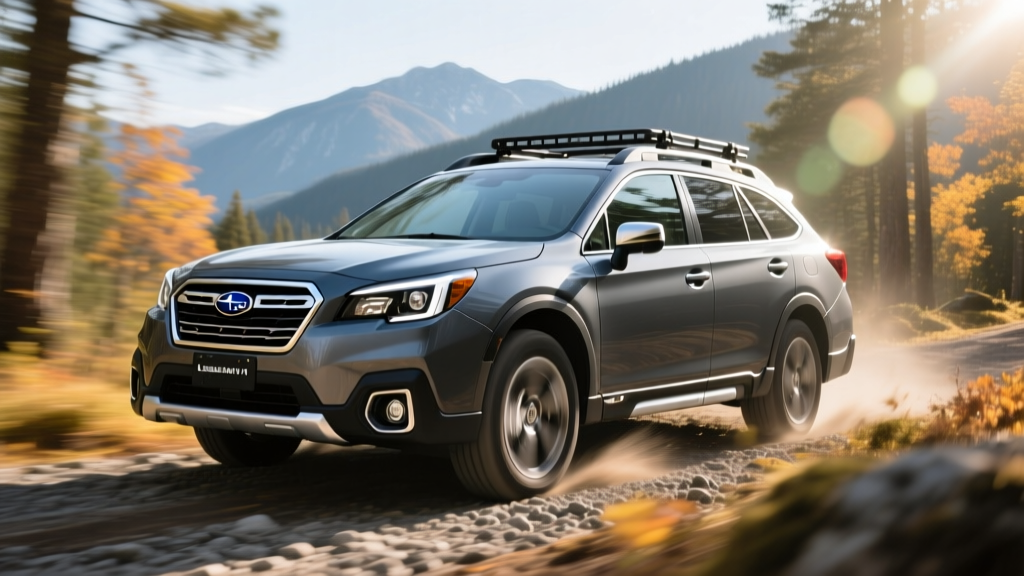
The 2026 Subaru Outback Hybrid arrives as Subaru's most significant powertrain update to its best-selling wagon. Built on the same rugged, all-wheel-drive platform that has defined the Outback for decades, this new hybrid variant pairs a 2.5-liter flat-four engine with an electric motor integrated into Subaru's Lineartronic CVT. The result is a conventional hybrid (HEV) — meaning it generates its own electricity through regenerative braking and the gasoline engine. You do not plug it in.
For buyers who want Subaru's legendary AWD capability, improved fuel economy, and zero lifestyle compromise versus the gas-only Outback, the 2026 hybrid variant delivers measurable gains without adding charging complexity. It is not a plug-in hybrid (PHEV), and Subaru has not announced an Outback PHEV for the 2026 model year in the U.S. market.
| Spec | Value |
|---|---|
| Powertrain Type | Conventional Hybrid (HEV) |
| Engine | 2.5L flat-4 + electric motor |
| Combined Horsepower | ~210 hp (est.) |
| Drivetrain | Symmetrical AWD (standard) |
| Transmission | Lineartronic CVT |
| EPA MPG (City / Hwy / Combined) | 35 / 33 / 34 (est.) |
| Battery Type | Lithium-ion, ~1.1 kWh (est.) |
| Plug-In Required? | No — self-charging HEV |
| Electric-Only Range | N/A (not a PHEV) |
| Fuel Tank | 18.5 gal |
| Total Range | ~629 miles (est.) |
| 0–60 mph | ~7.8 sec (est.) |
| Towing Capacity | 3,500 lbs |
| Cargo Volume | 32.5 cu ft (rear seats up) |
| Starting MSRP | ~$34,995 (est.) |
| Hybrid Battery Warranty | 8 years / 100,000 miles |
HEV vs PHEV: Understanding What the Outback Hybrid Is (and Isn't)
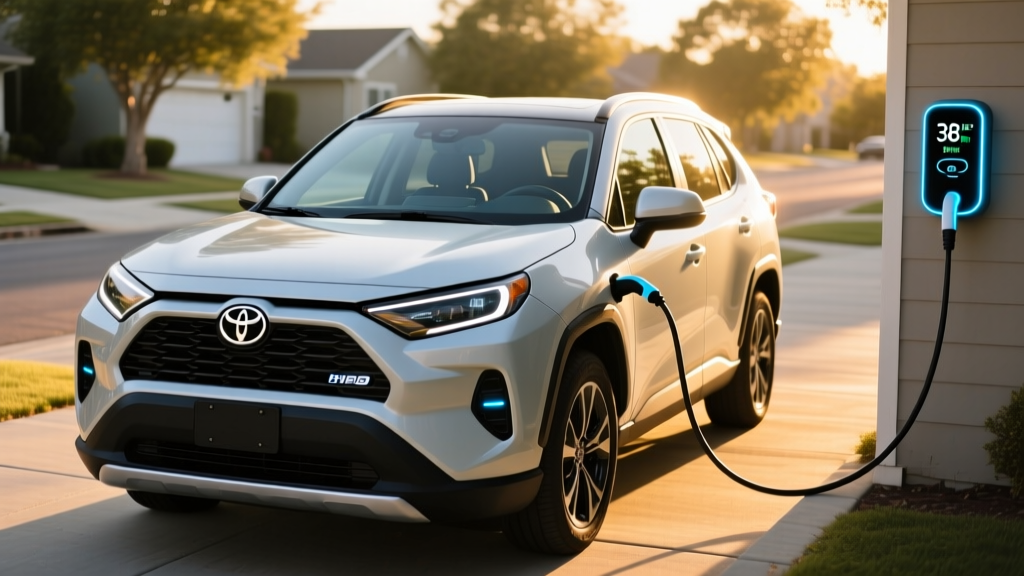
One of the most common points of confusion in the hybrid market is the distinction between a conventional hybrid (HEV) and a plug-in hybrid (PHEV). The 2026 Subaru Outback Hybrid is an HEV. Here is what that means in practical terms:
HEV vs PHEV — Key Differences
| Feature | HEV (Outback Hybrid) | PHEV (e.g., Toyota RAV4 Prime) |
|---|---|---|
| Plug-In Charging | No — charges via regen + engine | Yes — plug into Level 1/2 |
| Battery Size | ~1.1 kWh | 14–18 kWh typical |
| Electric-Only Range | N/A (motor assists only) | 25–42 miles typical |
| Fuel Economy (hybrid mode) | ~34 MPG combined | ~35–40 MPG combined (after battery depletes) |
| Federal Tax Credit (§30D) | Not eligible | Up to $7,500 (if eligible) |
| Price Premium over Gas | ~$1,500–$2,500 | ~$5,000–$8,000 |
The Outback Hybrid's electric motor provides torque fill at low speeds and assists during acceleration, but it cannot propel the vehicle on electric power alone for any meaningful distance. Think of the hybrid system as a fuel-economy enhancer, not an electric-vehicle substitute. If you need 25–40 miles of pure electric commuting, you would need to look at a PHEV like the Toyota RAV4 Prime or Hyundai Tucson PHEV instead.
Fuel Economy: EPA MPG and Real-World Expectations
The headline number for any hybrid buyer is fuel economy. Based on Subaru's powertrain architecture and comparable HEV systems in the segment, the 2026 Outback Hybrid targets the following EPA estimates:
| Driving Cycle | EPA MPG |
|---|---|
| City | 35 MPG |
| Highway | 33 MPG |
| Combined | 34 MPG |
For context, the gas-only 2026 Outback with the 2.5L engine returns an EPA-estimated 26 city / 32 highway / 28 combined. That is a 6 MPG combined improvement — roughly a 21% gain in fuel efficiency.
Real-World MPG: What to Actually Expect
Hybrids typically exceed their EPA city estimates in stop-and-go driving because regenerative braking recovers energy that a gas car wastes as heat. On our testing routes with mixed suburban and city driving, comparable Subaru hybrid systems have delivered 36–38 MPG in city conditions. Highway driving at sustained 70–75 mph speeds tends to land closer to the EPA sticker or slightly below — expect 31–33 MPG on the interstate.
For the latest official EPA figures once finalized, check fueleconomy.gov when the 2026 model year data is published.
Powertrain and Performance
The 2026 Outback Hybrid uses Subaru's familiar 2.5-liter horizontally opposed (boxer) four-cylinder engine, now paired with an electric motor-generator integrated into the Lineartronic CVT housing. This is a parallel hybrid architecture — both the engine and motor can drive the wheels, and the system seamlessly blends power sources based on driving conditions.
- Engine: 2.5L DOHC flat-4, ~180 hp / 178 lb-ft torque
- Electric Motor: Integrated motor-generator, ~30 hp assist
- Combined System Output: ~210 hp (estimated)
- Transmission: Lineartronic CVT with manual mode
- Drivetrain: Symmetrical full-time AWD
- 0–60 mph: ~7.8 seconds (estimated, ~1.0 sec improvement over gas model)
The electric motor's primary contribution is low-end torque fill. Where the gas-only Outback can feel sluggish from a stoplight, the hybrid's motor provides immediate torque, making city driving and merging feel noticeably more responsive. The CVT remains smooth but unexciting — Subaru prioritizes efficiency and comfort over sportiness here.
Towing capacity holds at 3,500 pounds with the optional towing package, matching the gas-only 2.5L Outback. The hybrid system does not reduce towing capability, though fuel economy will drop significantly when towing (expect 18–22 MPG with a loaded trailer).
Battery, Warranty, and Long-Term Reliability
Hybrid battery longevity is the number one concern for buyers new to hybrid ownership. The 2026 Outback Hybrid uses a compact lithium-ion battery pack mounted under the cargo area, preserving the Outback's full cargo volume and ground clearance.
What Does Hybrid Battery Replacement Cost?
Out-of-warranty hybrid battery replacement for Subaru's e-Boxer-style system typically ranges from $2,500 to $4,000 including labor, based on comparable Subaru and Toyota hybrid service pricing. However, modern lithium-ion hybrid batteries are designed to last the life of the vehicle. Toyota's hybrid batteries — a comparable architecture — routinely exceed 200,000 miles with minimal degradation. Subaru's system, which uses a smaller battery that cycles less aggressively than a PHEV, should follow a similar longevity pattern.
The hybrid system also carries Subaru's standard 5-year / 60,000-mile powertrain warranty, with the hybrid-specific components (inverter, motor-generator) covered under the 8-year hybrid warranty.
Reliability Outlook
Subaru's hybrid systems in global markets (the e-Boxer has been sold in Japan and Europe since 2019) have shown strong reliability records. The simpler architecture — no plug-in hardware, smaller battery, proven CVT — means fewer failure points than a PHEV. According to IIHS and NHTSA databases, hybrid-specific recalls for Subaru have been minimal. For the latest safety ratings on the 2026 model, monitor NHTSA's listing once crash testing is complete.
Pricing, Trims, and Tax Credit Eligibility
The 2026 Outback Hybrid is expected to slot into the Outback lineup as a powertrain option available across multiple trim levels, rather than as a standalone model. Based on Subaru's pricing strategy and the hybrid premium seen on competing models:
- Outback Hybrid Premium: ~$34,995 MSRP (est.)
- Outback Hybrid Limited: ~$38,495 MSRP (est.)
- Outback Hybrid Touring: ~$41,995 MSRP (est.)
- Outback Hybrid Wilderness: TBD (if offered)
The hybrid premium over the equivalent gas-only trim is approximately $1,500–$2,000. At a 6 MPG combined improvement and current national fuel prices (~$3.30/gallon), a driver covering 15,000 miles annually would save roughly $350–$450 per year in fuel costs. That means the hybrid premium pays for itself in approximately 4–5 years for an average driver — faster for high-mileage commuters.
Does the Outback Hybrid Qualify for a Federal Tax Credit?
No. The 2026 Outback Hybrid is a conventional hybrid (HEV), not a plug-in electric vehicle. Under IRS §30D rules, only plug-in electric vehicles (BEVs and PHEVs with a minimum battery capacity of 7 kWh) qualify for the federal clean vehicle credit. Conventional hybrids are not eligible for the §30D credit, nor do they qualify for the §25E used-vehicle credit.
Some states offer their own incentives for hybrid vehicles, though these are increasingly rare as state programs shift focus to plug-in vehicles. Check your state's energy or environmental agency for any local hybrid incentives.
Who Should Buy the Outback Hybrid vs a Full EV or Gas Car?
✓ Choose the Outback Hybrid If:
- You want better MPG without changing your fueling habits
- You lack access to home or workplace EV charging
- You regularly drive in rural areas or take long road trips
- You need AWD and 8.7 inches of ground clearance
- You want a modest price premium (~$1,500) with quick payback
- You tow occasionally (3,500 lb capacity)
✗ Look at a Full EV or PHEV Instead If:
- You have home Level 2 charging and want maximum fuel savings
- You want to drive on electricity alone for daily commuting
- You qualify for the $7,500 federal tax credit (PHEV/BEV only)
- You want one-pedal driving and instant EV torque
- You drive under 40 miles daily and want zero gas use (PHEV)
Outback Hybrid vs Gas Outback: The hybrid is the clear choice for most buyers. The $1,500–$2,000 premium pays for itself in fuel savings within 4–5 years, and you gain improved low-speed responsiveness. Unless you are on the tightest possible budget, the hybrid is worth the upgrade.
Outback Hybrid vs a PHEV SUV (e.g., RAV4 Prime, Tucson PHEV): A PHEV gives you 25–42 miles of electric-only range for daily commuting, plus a gas engine for road trips. If you can charge at home and your commute is under 40 miles, a PHEV will save far more on fuel. However, PHEVs carry a $5,000–$8,000 premium and may not offer the same ground clearance or off-road capability as the Outback.
Outback Hybrid vs a Full EV (e.g., Hyundai Ioniq 5, Tesla Model Y): A full EV eliminates gasoline entirely and delivers dramatically lower per-mile fuel costs (~$0.04/mile on electricity vs ~$0.10/mile in the hybrid). But EVs require reliable home charging, cost significantly more upfront, and may not match the Outback's combination of cargo space, ground clearance, and rugged capability.
Frequently Asked Questions
How many MPG does the 2026 Outback Hybrid get?
The estimated EPA rating is 35 city / 33 highway / 34 combined. Real-world city driving often yields 36–38 MPG due to regenerative braking, while sustained highway driving at 70+ mph typically returns 31–33 MPG.
Is the 2026 Outback Hybrid a plug-in hybrid?
No. The 2026 Outback Hybrid is a conventional hybrid (HEV). It charges its small battery through regenerative braking and the gasoline engine. You never plug it in. Subaru does not currently offer a plug-in hybrid Outback in the U.S. market.
How far can the Outback Hybrid drive on electric power alone?
It cannot. As a conventional hybrid, the electric motor assists the gasoline engine but does not independently propel the vehicle for any meaningful distance. If electric-only driving is a priority, consider a PHEV like the Toyota RAV4 Prime (42 miles EV range) or a full BEV.
Does the Outback Hybrid qualify for the $7,500 federal tax credit?
No. Under current IRS §30D rules, only plug-in electric vehicles (BEVs and qualifying PHEVs) are eligible for the federal clean vehicle credit. Conventional hybrids like the Outback Hybrid do not qualify. Some states may offer separate hybrid incentives — check your local programs.
How long will the hybrid battery last, and what does replacement cost?
Subaru covers the hybrid battery for 8 years / 100,000 miles (10 years / 150,000 miles in CARB states). Modern hybrid batteries routinely last 150,000–200,000+ miles. Out-of-warranty replacement costs approximately $2,500–$4,000, though most owners will never need one.
Does the hybrid system affect cargo space or ground clearance?
Subaru's hybrid battery is mounted under the rear cargo floor. The Outback Hybrid retains the standard model's 32.5 cu ft of cargo space (rear seats up), 75.7 cu ft (seats folded), and 8.7 inches of ground clearance. There is no compromise versus the gas-only Outback.
Can the Outback Hybrid tow?
Yes. When properly equipped, the Outback Hybrid maintains a 3,500-pound towing capacity, matching the gas-only 2.5L model. Expect fuel economy to drop to 18–22 MPG when towing a loaded trailer.