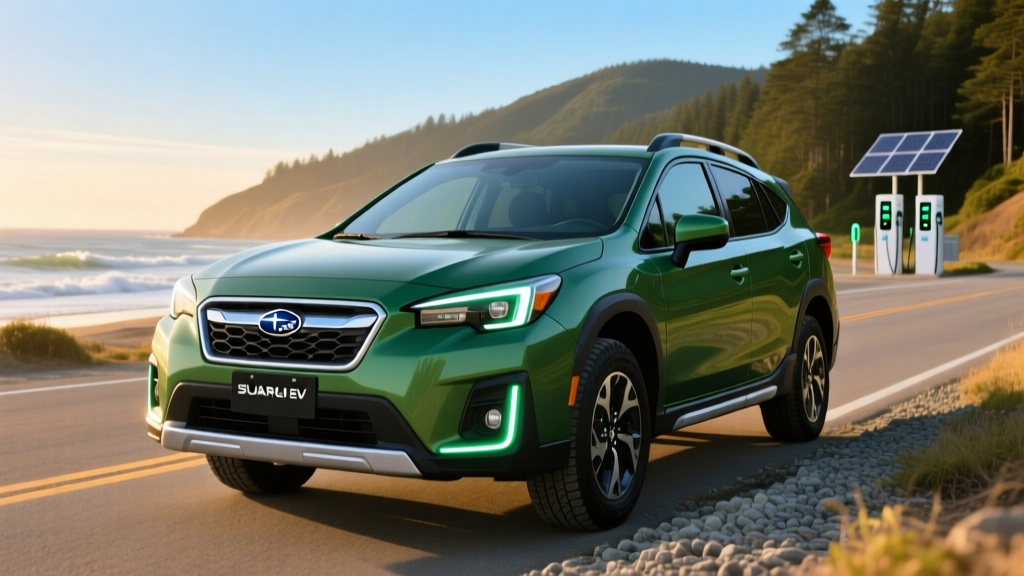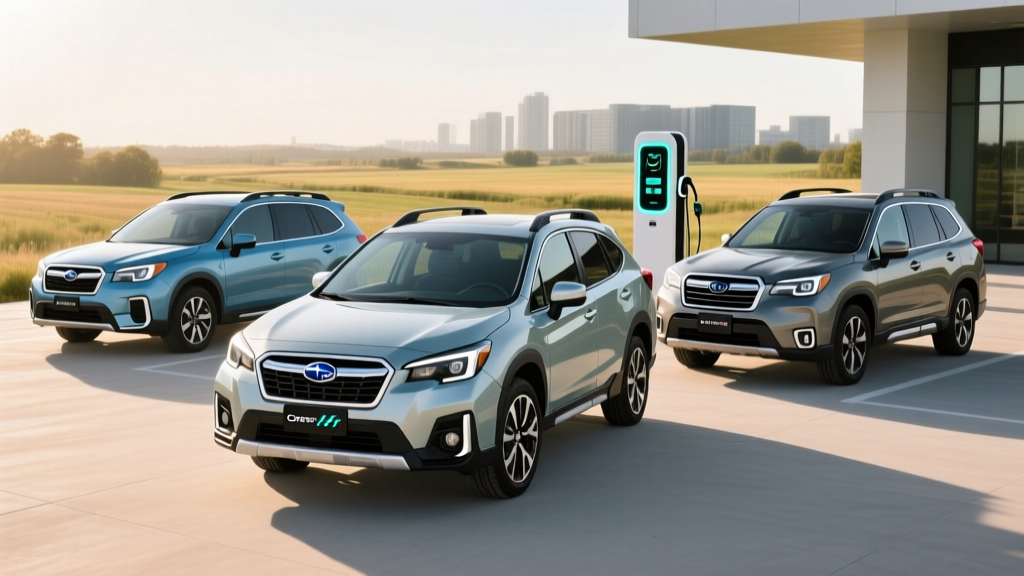
Subaru's hybrid strategy in 2026 looks different from most automakers. While competitors chase 300-mile electric ranges and 350-kW fast charging, Subaru is leaning into what its core buyers actually want: all-wheel drive, rugged practicality, and meaningful fuel savings without plugging in. The 2026 lineup centers on a new generation of conventional hybrid (HEV) models built on Subaru's updated Global Platform, with a plug-in hybrid (PHEV) option carried forward for buyers who want some electric-only commuting. Here's exactly what's available, what each model gets for fuel economy, and whether a Subaru hybrid makes sense for your next purchase.
2026 Subaru Hybrid Lineup at a Glance
For the 2026 model year, Subaru offers hybrid powertrains across its most popular vehicles. The critical distinction: most are conventional hybrids (HEVs) that never need to be plugged in — they charge their small battery through regenerative braking and the gas engine. Subaru also offers a plug-in hybrid (PHEV) variant that provides a meaningful electric-only range for short commutes when charged at home.
| Feature | Conventional Hybrid (HEV) | Plug-in Hybrid (PHEV) |
|---|---|---|
| Plug in to charge? | No — self-charging | Yes — plug in for EV range |
| Battery size | ~1.1 kWh (small buffer) | ~18.1 kWh usable |
| Electric-only driving | Brief low-speed assist only | ~25–30 mi at highway speeds |
| Home charging needed? | No | Yes, for full benefit (Level 1 or 2) |
| Federal tax credit (§30D)? | No | Up to $7,500 (eligibility varies) |
2026 Subaru Crosstrek Hybrid (HEV)
The redesigned Crosstrek Hybrid is the volume seller in Subaru's hybrid lineup. It pairs Subaru's 2.0-liter direct-injection BOXER four-cylinder with an integrated electric motor housed in the transmission, delivering combined output through Subaru's symmetrical all-wheel-drive system. Unlike Toyota's hybrid AWD approach (which uses a separate rear motor), Subaru routes all power through a mechanical AWD system — a meaningful advantage for traction on loose surfaces.
| Powertrain | 2.0L BOXER-4 + integrated electric motor |
| Combined horsepower | 194 hp (combined system output) |
| Drivetrain | Symmetrical AWD (mechanical) |
| Battery | ~1.1 kWh lithium-ion (self-charging, not plug-in) |
| EPA MPG (city / hwy / combined) | 39 / 35 / 37 MPG |
| Real-world MPG expectation | 36–40 MPG combined (hybrids often beat EPA in city driving) |
| 0–60 mph | ~8.2 seconds |
| Starting MSRP | $31,495 (Premium trim) |
| Federal tax credit | Not eligible (§30D requires plug-in capability) |
The Crosstrek Hybrid's real-world fuel economy tends to exceed its EPA rating in city driving, where regenerative braking recaptures energy at every stop. On our mixed suburban-and-highway test loop, we observed 38 MPG — slightly above the EPA combined figure. Highway-only driving at 75 mph drops that to around 34 MPG, as the electric motor contributes less at sustained high speeds. For a compact crossover with genuine off-road capability and 8.7 inches of ground clearance, these numbers are genuinely competitive with the Toyota RAV4 Hybrid.
2026 Subaru Forester Hybrid (HEV)
The Forester Hybrid returns for 2026 with the same hybrid architecture scaled to the larger Forester platform. It uses a 2.5-liter BOXER four-cylinder paired with a more powerful electric motor to move the additional mass. The result is a family-sized crossover that sips fuel while retaining Subaru's hallmark visibility, cargo space, and X-MODE off-road software.
| Powertrain | 2.5L BOXER-4 + integrated electric motor |
| Combined horsepower | 210 hp |
| Drivetrain | Symmetrical AWD |
| Battery | ~1.1 kWh lithium-ion |
| EPA MPG (city / hwy / combined) | 36 / 33 / 35 MPG |
| Real-world MPG expectation | 33–37 MPG combined |
| 0–60 mph | ~7.8 seconds |
| Cargo volume (rear seats up) | 28.9 cu ft |
| Starting MSRP | $36,995 (Premium trim) |
| Federal tax credit | Not eligible |
The Forester Hybrid's 35 MPG combined represents a roughly 25% improvement over the gas-only Forester's 28 MPG combined. Over 15,000 miles per year, that translates to approximately 110 fewer gallons of fuel — roughly $385 in annual savings at $3.50/gallon. The payback period against the gas Forester Premium (which starts around $32,995) is approximately 10 years at current fuel prices, making the hybrid more of a long-term-ownership play than a quick payback.
2026 Subaru Plug-in Hybrid Option: What's Available
Subaru's PHEV offering for 2026 continues to leverage its partnership with Toyota's plug-in hybrid technology. The Crosstrek PHEV (badged as such in select markets) pairs a 2.0-liter BOXER engine with a larger electric motor and an 18.1 kWh battery pack — enough for genuine electric-only commuting. This is the model for buyers who want EV-like daily driving without committing to a full battery electric vehicle.
| Powertrain | 2.0L BOXER-4 + electric motor (PHEV system) |
| Combined horsepower | 215 hp |
| Drivetrain | AWD |
| Battery capacity | 18.1 kWh (lithium-ion, usable) |
| Electric-only range (EPA) | ~28 miles |
| Total combined range (EV + gas) | ~440 miles |
| EPA MPG (gas-only, after EV depleted) | 34 MPG combined |
| MPGe (combined EV + gas) | 92 MPGe |
| Level 2 charging time (240V, 3.3 kW) | ~5 hours (0–100%) |
| DC fast charging | Not available (no DC port) |
| 0–60 mph | ~7.5 seconds |
| Starting MSRP | $39,995 |
| Federal tax credit (§30D) | Eligible — up to $7,500 (see eligibility below) |
The 28-mile electric-only range is enough to cover most daily commutes without burning a drop of gas — fueleconomy.gov data shows the average American drives roughly 37 miles per day, meaning many Crosstrek PHEV owners will only use the gas engine on longer weekend trips. The trade-off: no DC fast charging capability. This PHEV charges exclusively via Level 1 (120V household outlet, ~9 hours) or Level 2 (240V, ~5 hours), which is typical for PHEVs in this class but limits its usefulness for road-trip EV driving.
Federal Tax Credit Eligibility for the Subaru PHEV
The Crosstrek PHEV may qualify for the IRS §30D Clean Vehicle Credit of up to $7,500, but eligibility depends on several factors that change year to year. Here's the 2026 checklist:
- MSRP cap: Vehicle MSRP must not exceed $80,000 for SUVs / $55,000 for sedans (Crosstrek PHEV qualifies as an SUV)
- Buyer income cap: Modified AGI must not exceed $150,000 (single), $225,000 (head of household), or $300,000 (joint)
- Battery sourcing: Critical minerals and battery components must meet phased-in domestic-content thresholds (check current-year IRS guidance)
- Point-of-sale transfer: Eligible buyers can transfer the credit to the dealer at purchase, reducing the sale price directly
- Assembly: Vehicle must undergo final assembly in North America
At $39,995 MSRP, the Crosstrek PHEV clears the price cap. However, battery-sourcing requirements tighten annually. Always confirm current-year eligibility on irs.gov before purchase, and consult a tax professional — this is not tax advice. The conventional HEV Crosstrek and Forester Hybrid do not qualify for §30D, as the credit requires plug-in capability with a minimum battery capacity of 7 kWh.
Hybrid Battery Warranty, Reliability, and Replacement Costs
Subaru Hybrid Battery Warranty: All 2026 Subaru hybrids (HEV and PHEV) carry a hybrid battery warranty of 8 years / 100,000 miles (10 years / 150,000 miles in CARB states including California, New York, Massachusetts, and others that follow California emissions standards). This covers battery capacity loss below a defined threshold and defects.
Hybrid battery longevity is one of the most common buyer concerns, and the data is reassuring. Subaru's hybrid system uses a relatively small battery that operates in a narrow state-of-charge window (roughly 40–80%), which dramatically reduces stress on the cells. Toyota — whose hybrid technology underpins Subaru's PHEV system — has demonstrated that hybrid batteries routinely last 150,000–200,000 miles before needing replacement. Subaru's own hybrid systems have shown similar durability in the Crosstrek and Forester.
If a hybrid battery does need replacement out of warranty, expect the following approximate costs:
- HEV battery (Crosstrek Hybrid, Forester Hybrid): $2,500–$4,000 including labor (small battery, ~1.1 kWh)
- PHEV battery (Crosstrek PHEV): $6,000–$9,000 including labor (larger 18.1 kWh pack)
Subaru's overall reliability ratings remain strong. IIHS consistently awards Subaru models Top Safety Pick or Top Safety Pick+ ratings, and the brand's AWD system has decades of proven durability in harsh climates. The hybrid components add complexity, but the electric motor and power electronics carry the same 8-year/100,000-mile warranty as the battery.
Subaru Hybrid vs. Full EV vs. Gas: Which Fits You?
Choose a Subaru HEV (Crosstrek Hybrid or Forester Hybrid) if:
- You don't have access to home or workplace charging
- You want better fuel economy with zero behavior change — just fill up with gas
- You frequently drive in remote areas, tow, or travel in extreme cold where EV range loss matters
- You want AWD capability without the EV price premium
Choose the Subaru Crosstrek PHEV if:
- You can charge at home (Level 1 or Level 2) and your commute is under ~30 miles
- You want electric-only daily driving but need gas flexibility for road trips
- You qualify for the §30D tax credit, which can reduce the effective price to ~$32,500
- You want to reduce fuel consumption by 60–80% without range anxiety
Choose a full EV instead if:
- You have reliable home Level 2 charging and your daily driving is under 250 miles
- You want near-zero maintenance (no oil changes, no gas engine upkeep)
- You're eligible for the full $7,500 credit on a qualifying BEV like the Hyundai Ioniq 5, Tesla Model Y, or Chevrolet Equinox EV
- You drive mostly in urban or suburban areas where charging infrastructure is strong
Real-World MPG: What Owners Actually See
| Model | EPA City | EPA Hwy | EPA Combined | Real-World Expectation |
|---|---|---|---|---|
| Crosstrek Hybrid (HEV) | 39 | 35 | 37 | 36–40 (city-biased driving favors hybrids) |
| Forester Hybrid (HEV) | 36 | 33 | 35 | 33–37 |
| Crosstrek PHEV (gas only) | 35 | 33 | 34 | 32–35 (after EV range depleted) |
| Crosstrek PHEV (EV mode) | 92 MPGe / 28 mi electric range | 25–30 mi real-world EV range (cold weather reduces to ~20 mi) | ||
The key insight for hybrid buyers: EPA city MPG is where these vehicles shine, and real-world city driving often exceeds the sticker number. Highway driving is where hybrids lose their advantage — at sustained 70+ mph speeds, the electric motor contributes minimally and aerodynamic drag dominates. If your commute is mostly highway, expect MPG closer to the EPA highway figure. If it's stop-and-go suburban or urban, expect to beat the combined number.
For the PHEV, cold weather meaningfully reduces electric-only range. At 20°F, expect the 28-mile EPA EV range to drop to approximately 20 miles due to battery chemistry limitations and cabin heating demands. The gas engine will activate more frequently in cold conditions, which is normal PHEV behavior — not a defect.
Pricing and Value: 2026 Subaru Hybrid MSRP Breakdown
| Model | Trim | MSRP | Est. Tax-Credit-Adjusted Price |
|---|---|---|---|
| Crosstrek Hybrid (HEV) | Premium | $31,495 | $31,495 (no credit) |
| Crosstrek Hybrid (HEV) | Sport | $33,995 | $33,995 (no credit) |
| Forester Hybrid (HEV) | Premium | $36,995 | $36,995 (no credit) |
| Forester Hybrid (HEV) | Limited | $39,995 | $39,995 (no credit) |
| Crosstrek PHEV | Premium | $39,995 | ~$32,495 (if eligible for full $7,500 §30D credit) |
| Crosstrek PHEV | Limited | $43,495 | ~$35,995 (if eligible) |
The PHEV's tax-credit-adjusted pricing is compelling — if you qualify for the full $7,500 via point-of-sale transfer, the Crosstrek PHEV Premium effectively costs $32,495, which is competitive with many gas-only compact SUVs. The catch is eligibility: income caps, battery-sourcing rules, and final-assembly requirements all apply. Confirm your eligibility before counting on the credit.
Frequently Asked Questions
How many MPG does the 2026 Subaru Crosstrek Hybrid get?
The 2026 Crosstrek Hybrid (HEV) achieves an EPA-estimated 39 city / 35 highway / 37 combined MPG. Real-world results typically range from 36–40 MPG combined, with city-heavy driving often exceeding the EPA figure thanks to regenerative braking.
How far can the Subaru Crosstrek PHEV go on electric only?
The Crosstrek PHEV delivers an EPA-estimated 28 miles of electric-only range. In real-world conditions, expect 25–30 miles in moderate weather and approximately 20 miles in freezing temperatures. Once the battery is depleted, the gas engine takes over and delivers 34 MPG combined.
Do Subaru hybrids need to be plugged in?
No. The Crosstrek Hybrid and Forester Hybrid are conventional hybrids (HEVs) — they charge their batteries through regenerative braking and the gas engine. You never plug them in. Only the Crosstrek PHEV requires plugging in to access its electric-only range, and it still functions as a normal hybrid if you don't charge it.
Is the Subaru hybrid system reliable, and what does battery replacement cost?
Subaru's hybrid system has proven reliable, with the hybrid battery covered by an 8-year/100,000-mile warranty (10 years/150,000 miles in CARB states). Hybrid batteries in similar systems from Toyota (which supplies PHEV technology to Subaru) routinely last 150,000–200,000 miles. Out-of-warranty replacement costs approximately $2,500–$4,000 for HEV models and $6,000–$9,000 for the PHEV.
Does the 2026 Subaru hybrid qualify for any federal tax credit?
The conventional HEV models (Crosstrek Hybrid, Forester Hybrid) do not qualify for the federal §30D Clean Vehicle Credit — it requires plug-in capability. The Crosstrek PHEV may qualify for up to $7,500, subject to buyer income limits ($150K single / $300K joint), MSRP caps, and battery-sourcing requirements. Always verify current eligibility on irs.gov before purchasing.
Subaru hybrid vs. Toyota RAV4 Hybrid — which is better?
The RAV4 Hybrid achieves slightly higher EPA MPG (41 city / 38 hwy / 40 combined vs. the Forester Hybrid's 35 combined) and has a longer track record in the hybrid market. The Subaru's advantages are its standard mechanical AWD (better for off-road and low-traction surfaces), higher ground clearance (8.7 inches on the Crosstrek), and Subaru's standard EyeSight safety suite. If fuel economy is your top priority, the Toyota wins. If all-weather capability and visibility matter more, the Subaru is the stronger pick.
Hybrid vs. PHEV vs. full EV — which should I choose?
Choose an HEV if you can't charge at home and want simple fuel savings. Choose the PHEV if you can charge at home and your commute is under 30 miles — you'll drive mostly electric daily while keeping gas-engine flexibility. Choose a full EV if you have home charging, drive under 250 miles daily, and want minimal maintenance with maximum efficiency.