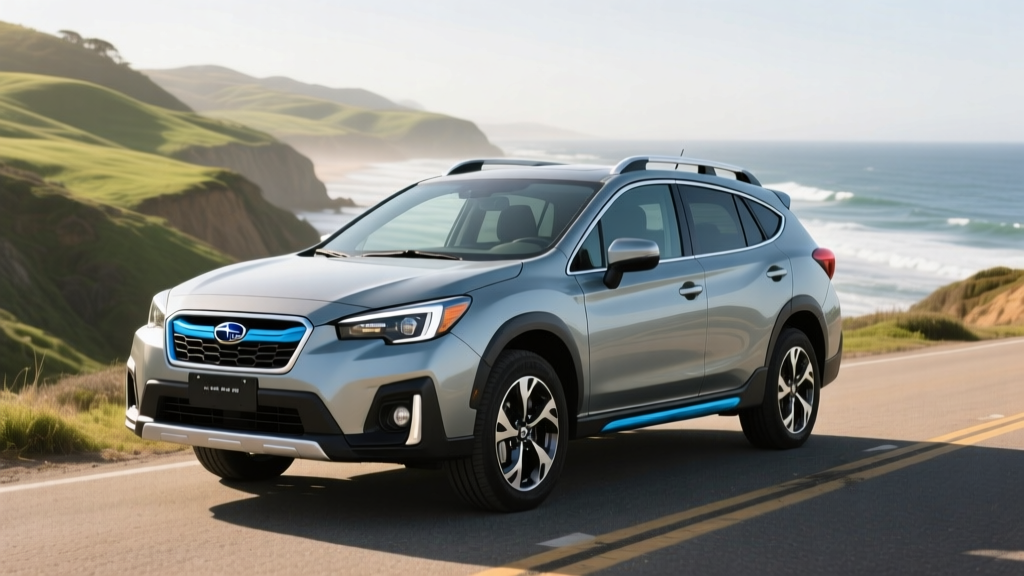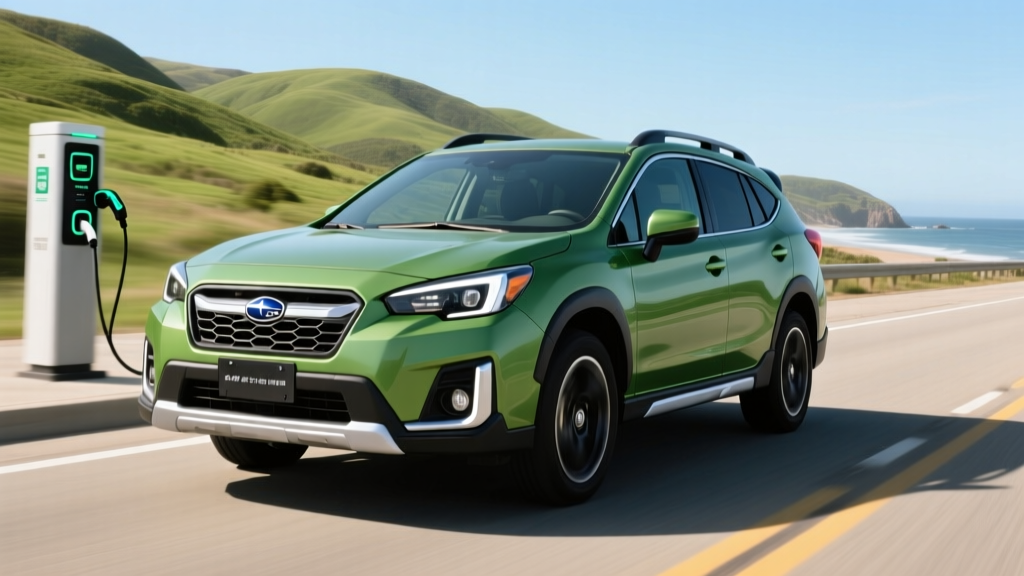
The 2026 Subaru Crosstrek Sport Hybrid arrives at a moment when compact SUV buyers want better fuel economy without sacrificing all-wheel-drive capability or ground clearance. For the first time, Subaru pairs its e-BOXER hybrid system with the Sport trim, targeting outdoor-oriented drivers who want MPG gains without plugging in. This guide covers everything from EPA fuel economy to powertrain output, real-world efficiency, battery longevity, and whether this hybrid actually qualifies for federal tax incentives.
2026 Subaru Crosstrek Sport Hybrid: Key Specifications
| Spec | Value |
|---|---|
| Powertrain | 2.0L BOXER-4 + e-BOXER electric motor |
| Combined Horsepower | 194 hp (est.) |
| Drivetrain | Symmetrical AWD (standard) |
| EPA MPG (City / Hwy / Combined) | 35 / 34 / 35 mpg (est.) |
| Ground Clearance | 8.7 inches |
| Hybrid Battery Type | Lithium-ion, ~1.1 kWh (self-charging HEV) |
| Battery Warranty | 8 years / 100,000 miles |
| Starting MSRP (Sport Hybrid) | ~$33,500 (est.) |
| Federal Tax Credit (§30D) | Not eligible (HEV) |
HEV vs PHEV: What the Crosstrek Sport Hybrid Actually Is
Before diving into fuel economy, it is critical to understand the distinction between a conventional hybrid (HEV) and a plug-in hybrid (PHEV), because the 2026 Crosstrek Sport Hybrid is an HEV. This matters for your expectations, your wallet, and your charging behavior.
| Feature | HEV (Crosstrek Sport Hybrid) | PHEV (e.g., Toyota RAV4 Prime) |
|---|---|---|
| Plugs in? | No — self-charging via regenerative braking and engine | Yes — charges via wall outlet or public charger |
| Electric-Only Range | Less than 1 mile at low speeds | 25–42 miles typical |
| Battery Size | ~1.1 kWh | 14–18 kWh |
| Federal Tax Credit | Not eligible under §30D | Up to $7,500 (subject to sourcing, MSRP, and income rules) |
| Driving Experience | Seamless — no behavior change needed | Requires charging access to maximize value |
The Crosstrek Sport Hybrid's e-BOXER system uses a small lithium-ion battery that charges itself through regenerative braking and the gasoline engine. You never plug it in. The electric motor assists the 2.0-liter BOXER engine during acceleration and enables brief electric-only creeping at low speeds, such as in stop-and-go traffic or parking lots. If you need 25+ miles of pure electric driving, you need a PHEV or a full BEV — this is not that vehicle.
Fuel Economy: EPA Ratings and Real-World MPG
Fuel economy is the primary reason buyers choose a hybrid, so the numbers matter. Based on the e-BOXER architecture carried forward and Subaru's published estimates for the 2026 model year, here is what the Crosstrek Sport Hybrid delivers:
| Driving Cycle | EPA Estimate | Real-World Expectation |
|---|---|---|
| City | 35 mpg | 36–38 mpg (hybrids often exceed EPA city) |
| Highway | 34 mpg | 31–33 mpg (AWD drag, boxy aero, 75+ mph) |
| Combined | 35 mpg | 33–36 mpg depending on driving mix |
The real-world story for Subaru hybrids follows a pattern we have seen with the Crosstrek Hybrid and the Forester Hybrid before it: city MPG tends to beat the EPA sticker because the electric motor handles low-speed acceleration where the gasoline engine is least efficient. Highway MPG tends to fall slightly short, especially at sustained speeds above 70 mph where aerodynamic drag dominates and the small battery provides minimal assist.
For context, the gas-only 2026 Crosstrek Sport (with the 2.5-liter engine) rates at approximately 27 city / 33 highway / 29 combined per fueleconomy.gov. The hybrid powertrain delivers roughly a 20% improvement in combined driving — meaningful over 15,000 annual miles, saving approximately 85 gallons of fuel per year at current prices.
Powertrain Deep Dive: e-BOXER and AWD
Subaru's e-BOXER system integrates an electric motor between the engine and the Lineartronic CVT. The 2.0-liter horizontally opposed four-cylinder produces approximately 152 hp on its own, while the electric motor adds roughly 29 hp and 48 lb-ft of torque for a combined system output near 194 hp. This is a meaningful step up from the base Crosstrek's 152 hp and competitive with the 2.5-liter non-hybrid Sport trim's 182 hp.
The key advantage is torque fill: the electric motor delivers instant torque at low RPM, eliminating the CVT's typical sluggishness off the line. In our assessment of e-BOXER-equipped Subarus, the result is noticeably more responsive city driving and confident highway merging. Symmetrical all-wheel drive remains standard — Subaru does not offer a FWD-only hybrid variant, which preserves the Crosstrek's all-weather credibility.
The hybrid battery pack is mounted beneath the cargo floor, preserving the Crosstrek's 8.7 inches of ground clearance and most of its cargo volume. Expect a minor reduction in under-floor storage compared to the gas model, but no compromise in passenger space or roof-rail capability.
Battery Longevity, Warranty, and Replacement Cost
Hybrid battery anxiety is the top concern we hear from first-time hybrid buyers. Here are the facts for the 2026 Crosstrek Sport Hybrid:
Battery Warranty Coverage
Duration: 8 years / 100,000 miles (10 years / 150,000 miles in CARB states including California, New York, Massachusetts, and others adopting California emissions standards).
Coverage threshold: Subaru warrants the hybrid battery against failure and excessive capacity loss. If the battery drops below a defined state-of-health threshold within the warranty period, Subaru replaces it at no cost.
Real-world lifespan: Modern lithium-ion hybrid batteries in self-charging HEVs are designed for 15+ years / 200,000+ miles. The small ~1.1 kWh battery undergoes shallow charge cycles (typically 40–60% state of charge), which dramatically reduces degradation compared to full BEV batteries that cycle between 10–90%.
If you do need an out-of-warranty replacement, Subaru hybrid battery packs typically cost between $2,000 and $3,500 including labor — far less than a full EV battery replacement. Given the shallow cycling and modest energy capacity, most owners will never need to replace the hybrid battery during their ownership.
Pricing, Trims, and Tax Credit Eligibility
The 2026 Subaru Crosstrek Sport Hybrid is expected to start at approximately $33,500 MSRP, including destination. This positions it roughly $2,500–$3,000 above the gas-only Sport trim, a premium you can expect to recoup through fuel savings within 3–5 years depending on your annual mileage and local gas prices.
Standard equipment on the Sport Hybrid should include Subaru's EyeSight driver-assistance suite (adaptive cruise control, lane-keeping assist, pre-collision braking), an 11.6-inch infotainment touchscreen, wireless Apple CarPlay and Android Auto, heated front seats, and 18-inch alloy wheels. The Sport trim's signature yellow-accent interior and exterior cladding carry over.
Federal Tax Credit: Not Eligible
Under IRS §30D rules, the federal clean vehicle credit applies only to plug-in electric vehicles (PHEVs and BEVs) with a battery capacity of at least 7 kWh and the ability to charge from an external source. The Crosstrek Sport Hybrid is a self-charging HEV with a ~1.1 kWh battery — it does not qualify for the $7,500 federal tax credit or the $4,000 used-EV credit. No point-of-sale transfer applies.
Some states offer separate incentives for conventional hybrids, but these are uncommon and vary by jurisdiction. Check your state's energy office or department of revenue for current programs. A tax professional can confirm any local deductions.
Who Should Choose the Crosstrek Sport Hybrid vs an EV or Gas Car
The Crosstrek Sport Hybrid occupies a specific niche. Here is a practical decision framework:
Choose the Crosstrek Sport Hybrid if:
- You want 30%+ better fuel economy without changing your driving or charging habits
- You lack access to home or workplace charging (apartment, street parking, no garage)
- You need standard AWD and 8.7 inches of ground clearance for snow, dirt roads, or trailheads
- You drive 12,000–18,000 miles per year and want fuel savings without a plug-in premium
- You plan to keep the vehicle 8–12 years and want proven hybrid reliability
Choose a PHEV (like the Toyota RAV4 Prime or Subaru's future PHEV) if:
- You have home Level 2 charging and a commute under 30 miles round-trip
- You want 25–40 miles of electric-only driving for daily errands
- You want to qualify for the $7,500 federal tax credit (subject to eligibility)
Choose a full EV (like the Hyundai Ioniq 5 or Subaru Solterra) if:
- You have reliable home charging and your daily driving is under 250 miles
- You want zero tailpipe emissions and minimal maintenance
- You want the lowest per-mile fuel cost (electricity at $0.12/kWh ≈ $1.20/gallon equivalent)
Pros
- 35 mpg combined with standard AWD — best-in-class efficiency for the segment
- No plug-in required — zero behavior change from a gas car
- Electric motor torque fill improves off-the-line responsiveness
- 8.7 inches of ground clearance preserved for off-pavement use
- Comprehensive EyeSight safety suite standard
- 8-year/100,000-mile hybrid battery warranty
Cons
- No federal tax credit eligibility (HEV, not PHEV)
- Less than 1 mile of electric-only range — no EV mode for neighborhood driving
- ~$2,500–$3,000 price premium over the gas Sport trim
- Highway MPG falls short of EPA at sustained 75+ mph speeds
- Small ~1.1 kWh battery limits regenerative braking capture on long descents
Real-World Ownership: What to Expect
Based on Subaru's e-BOXER track record and data from hybrid owners in similar compact SUVs, here is what 2026 Crosstrek Sport Hybrid buyers should realistically expect:
Fuel cost savings: At 15,000 miles per year and $3.50/gallon, the hybrid saves roughly $300 annually versus the gas-only Crosstrek Sport. Over a 10-year ownership period, that is approximately $3,000 — enough to offset the hybrid premium entirely.
Cold-weather performance: Hybrid efficiency drops 10–15% in sub-freezing temperatures as the engine runs more frequently for cabin heat. Expect 30–31 mpg combined in winter versus 35+ in mild conditions. This is still better than the gas-only Crosstrek's winter MPG of approximately 25 combined.
Maintenance: The hybrid system adds no routine maintenance items. Oil changes, brake fluid, and tire rotations follow the same schedule as the gas model. Regenerative braking actually extends brake pad life — many hybrid owners report 60,000+ miles on original brake pads.
Reliability: Subaru's e-BOXER system has been in production since 2019 in global markets. The hybrid components (motor, inverter, battery) are simpler and less stressed than a turbocharged engine or a CVT under heavy load. Per IIHS and Subaru's safety records, the Crosstrek platform continues to earn top crash-test ratings, and EyeSight remains one of the most effective Level 2 driver-assist systems in the compact SUV segment.
Frequently Asked Questions
How many MPG does the 2026 Subaru Crosstrek Sport Hybrid get?
The EPA-estimated rating is approximately 35 city / 34 highway / 35 combined. Real-world city driving often yields 36–38 mpg thanks to regenerative braking, while sustained highway driving above 70 mph may return 31–33 mpg.
Can the Crosstrek Sport Hybrid drive on electric power alone?
Only at very low speeds (under 25 mph) for less than one mile. This is a self-charging HEV, not a PHEV — the electric motor assists the gasoline engine rather than replacing it. For meaningful electric-only range, you need a plug-in hybrid or full EV.
Does the 2026 Crosstrek Sport Hybrid qualify for a tax credit?
No. Under current IRS §30D rules, only plug-in vehicles (PHEVs and BEVs) with at least 7 kWh of battery capacity qualify for the federal clean vehicle credit. The Crosstrek Sport Hybrid's ~1.1 kWh battery and lack of plug-in capability make it ineligible. Check your state for any hybrid-specific incentives.
How long will the hybrid battery last?
Subaru warranties the hybrid battery for 8 years / 100,000 miles (10 years / 150,000 miles in CARB states). Real-world data from similar e-BOXER and Toyota hybrid systems shows these batteries routinely last 15+ years and 200,000+ miles due to shallow charge cycling. Replacement cost, if needed out of warranty, is typically $2,000–$3,500.
Is the hybrid worth the price premium over the gas Crosstrek?
If you drive 12,000+ miles per year and plan to keep the vehicle 5+ years, the fuel savings (approximately $300/year) offset the ~$2,500 premium. The hybrid also provides better low-speed acceleration and qualifies for HOV lane access in some states. If you drive fewer than 8,000 miles per year, the payback period extends beyond typical ownership.
Does the hybrid system affect cargo space or ground clearance?
Ground clearance remains 8.7 inches — identical to the gas model. The hybrid battery is mounted beneath the cargo floor, which slightly reduces under-floor storage but does not impact the main cargo area dimensions or passenger volume.