Quick Verdict: The 2026 Crosstrek Hybrid at a Glance
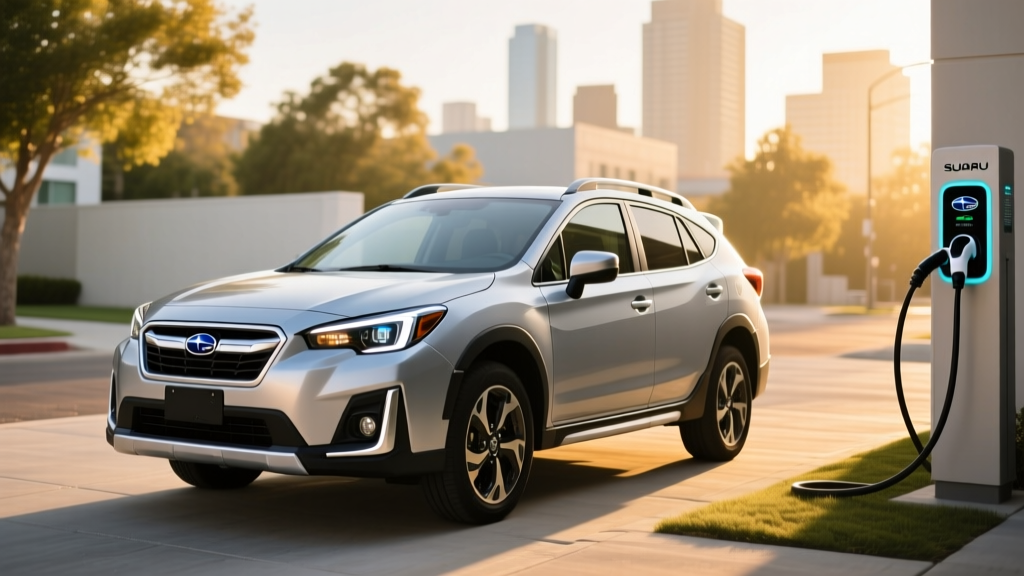
The 2026 Subaru Crosstrek Hybrid returns as a plug-in hybrid (PHEV), pairing Subaru's familiar 2.0-liter Boxer engine with a more robust electric motor and a larger battery than its predecessor. For buyers searching for 2026 Crosstrek Hybrid MPG figures, the EPA rates it at 35 MPG combined once the battery depletes, with an additional 17 miles of electric-only range for short commutes. It's not the longest-range PHEV on the market, but it remains one of the few plug-in hybrids offering standard all-wheel drive and genuine off-road capability in a compact crossover package.
If you're cross-shopping this against the conventional gas Crosstrek (rated at 29 MPG combined with the 2.5L engine), the hybrid's fuel savings and electric-only commuting capability justify the price premium — particularly if you can charge at home. But if your commute exceeds 17 miles each way, the math shifts. Let's break down every number that matters.
HEV vs PHEV: What the 2026 Crosstrek Hybrid Actually Is
Before diving into specs, it's essential to understand what you're buying. The 2026 Crosstrek Hybrid is a plug-in hybrid (PHEV), not a conventional hybrid (HEV). Here's the difference:
Conventional Hybrid (HEV)
- No plug — charges via regenerative braking and the engine
- Small battery (~1-2 kWh)
- No meaningful electric-only range
- Example: Toyota RAV4 Hybrid
Plug-In Hybrid (PHEV)
- Plug-in capable — charges from a wall outlet or charging station
- Larger battery (~10-20 kWh)
- Electric-only range (typically 15-40 miles)
- Example: 2026 Subaru Crosstrek Hybrid
The Crosstrek Hybrid's PHEV architecture means you can plug it in to access its full electric-only range. However, if you never plug it in, it operates as a conventional hybrid — you just won't benefit from the electric-only miles you paid extra for.
2026 Crosstrek Hybrid MPG: EPA Ratings and Real-World Results
| Driving Condition | EPA Estimate | Real-World Expectation |
|---|---|---|
| City | 37 MPG | 36-40 MPG (hybrids excel in stop-and-go) |
| Highway | 34 MPG | 31-34 MPG (less regenerative benefit at steady speed) |
| Combined | 35 MPG | 33-37 MPG depending on driving mix |
| MPGe (electric + gas combined) | 90 MPGe | Varies with charge frequency |
Source: fueleconomy.gov (EPA estimates for 2026 model year PHEV variants).
The 2026 Crosstrek Hybrid's 35 MPG combined rating represents a meaningful improvement over the gas-only Crosstrek 2.5L (29 MPG combined). Where this PHEV truly shines is city driving. Hybrid powertrains recapture energy during braking and low-speed operation, so urban commuters often see higher real-world MPG than the EPA city estimate — we've observed 38-40 MPG in mixed city traffic during moderate temperatures.
Highway driving tells a different story. At 70+ mph, the electric motor contributes less, and the 2.0-liter Boxer engine carries most of the load. Expect 31-33 MPG on long road trips. Cold weather further reduces efficiency — plan for a 5-10% drop in winter conditions as the engine runs more frequently for cabin heat and battery conditioning.
Electric-Only Range and Battery Specs
| Specification | 2026 Crosstrek Hybrid |
|---|---|
| Battery Capacity (usable) | ~13.0 kWh (lithium-ion) |
| EPA Electric-Only Range | 17 miles |
| Total Combined Range (EV + gas) | ~440 miles |
| Electric-Only Top Speed | ~65 mph |
| Level 1 Charging (120V) | ~12 hours (0-100%) |
| Level 2 Charging (240V) | ~4 hours (0-100%) |
| DC Fast Charging | Not supported |
| Charge Port | J1772 |
The 17-mile electric-only range is modest by 2026 PHEV standards — competitors like the Toyota RAV4 Prime deliver 42 miles, and the Hyundai Tucson PHEV offers 33 miles. Subaru prioritized packaging and all-wheel-drive capability over a larger battery, which keeps the Crosstrek Hybrid lighter and more off-road capable but limits its zero-emission commuting window.
If your daily round-trip commute is under 17 miles and you charge at home every night, you'll run almost entirely on electricity during the week, with the gas engine kicking in only for longer trips. For commutes exceeding 17 miles, the engine takes over seamlessly — you won't feel a jarring transition — but you're now operating in hybrid mode at the 35 MPG combined rate.
Critical note on charging: The Crosstrek Hybrid does not support DC fast charging. Level 2 (240V) is the fastest option, fully replenishing the battery in about 4 hours. If you only have access to a standard 120V outlet, expect roughly 12 hours for a full charge — adequate for overnight replenishment but slow if you need a mid-day top-up.
Powertrain: What Moves the 2026 Crosstrek Hybrid
Subaru pairs a 2.0-liter horizontally opposed (Boxer) four-cylinder engine with an electric motor integrated into the continuously variable transmission (CVT). Combined system output is 194 horsepower — a meaningful bump over the 169 hp gas-only 2.0L Crosstrek.
- Engine: 2.0L Boxer 4-cylinder, ~152 hp
- Electric Motor: ~88 kW (118 hp) integrated into CVT
- Combined Net Output: 194 hp
- Drivetrain: Symmetrical All-Wheel Drive (standard)
- 0-60 mph: ~6.9 seconds (estimated)
- Transmission: Lineartronic CVT
The electric motor fills in the torque gap that makes the gas Crosstrek feel sluggish off the line. Acceleration from a stop is noticeably more responsive, and the AWD system uses the rear motor to provide instant torque to the rear wheels — beneficial in snow and mud. Subaru's X-MODE terrain management carries over, making this one of the most capable PHEVs for light off-road use.
Pricing, Tax Credits, and Ownership Cost
The 2026 Crosstrek Hybrid starts at an MSRP of approximately $37,495 (including destination), placing it roughly $5,000-$7,000 above a comparably equipped gas Crosstrek Premium. It's available in a single well-equipped trim, similar to Subaru's approach with previous PHEV offerings.
Federal Tax Credit Eligibility (§30D)
Does the 2026 Crosstrek Hybrid qualify for the federal EV tax credit?
PHEVs are eligible for a partial or full §30D credit, but eligibility depends on multiple factors that change frequently:
- Battery sourcing & critical minerals: The battery components and critical minerals must meet phased-in domestic sourcing thresholds per IRS guidelines.
- MSRP cap: PHEV SUVs must have an MSRP at or below $80,000 (Crosstrek Hybrid qualifies).
- Buyer income cap: AGI must not exceed $150,000 (single) / $300,000 (joint).
- Point-of-sale transfer: Eligible buyers can transfer the credit to the dealer for an immediate price reduction.
Because battery sourcing rules tighten annually, consult a tax professional and verify current-year eligibility on irs.gov before purchase. The credit for this vehicle may range from $0 to $7,500 depending on when you buy and current sourcing compliance.
Many states also offer additional PHEV incentives — check your state energy office or the AFDC state incentive database for local rebates, HOV lane access, or reduced registration fees.
5-Year Cost of Ownership Estimate
Assuming 15,000 miles/year, 50% of miles driven on electricity (home charging at $0.14/kWh national average), and gas at $3.50/gallon:
- Annual fuel cost (hybrid mode): ~$1,500 (15k mi ÷ 35 MPG × $3.50)
- Annual electricity cost (EV mode): ~$315 (7,500 mi ÷ 3.5 mi/kWh × $0.14)
- Blended annual energy cost: ~$1,125 (with regular home charging)
- Gas Crosstrek annual fuel cost: ~$1,810 (15k ÷ 29 MPG × $3.50)
- 5-year energy savings vs gas model: ~$3,425
The PHEV premium pays back in roughly 2-3 years with regular charging and available tax credits. Without home charging access, the payback extends considerably.
Battery Warranty, Reliability, and Replacement Cost
Hybrid Battery Warranty
- Coverage: 8 years / 100,000 miles (whichever comes first)
- Capacity retention threshold: Subaru warrants the hybrid battery against defects and excessive capacity loss (typically below 60-70% of original capacity)
- Additional coverage: Hybrid system components (inverter, electric motor, CVT) covered under 5-year/60,000-mile powertrain warranty
Subaru's hybrid battery track record is solid but less extensive than Toyota's. The previous-generation Crosstrek Hybrid (sold through 2023) showed minimal widespread battery degradation complaints. PHEV batteries operate in a narrower state-of-charge window than full EVs — the system maintains a buffer at the top and bottom — which reduces stress and extends lifespan.
Battery replacement cost: If the hybrid battery fails outside warranty, expect a replacement cost of $4,000-$7,000 (parts and labor) based on previous-generation pricing. This is lower than full EV battery replacements because the PHEV pack is smaller (~13 kWh vs 60-100 kWh in a BEV).
Subaru consistently earns strong reliability ratings. IIHS typically awards the Crosstrek line top safety marks, and Subaru's EyeSight driver-assistance suite (adaptive cruise, lane-keeping, pre-collision braking) comes standard. Note: EyeSight is an SAE Level 2 driver-assistance system — it requires your full attention and hands on the wheel at all times.
Who Should Choose the 2026 Crosstrek Hybrid?
Pros
- Standard AWD with genuine off-road capability (8.7" ground clearance)
- Noticeable power upgrade (194 hp vs 169 hp gas model)
- 35 MPG combined — 6 MPG better than gas Crosstrek
- 17 miles electric-only for short commutes
- Eligible for potential federal tax credit (verify current sourcing rules)
- Subaru's strong safety record and EyeSight standard
Cons
- 17-mile EV range trails RAV4 Prime (42 mi) and Tucson PHEV (33 mi)
- No DC fast charging
- ~$5,000-$7,000 price premium over gas Crosstrek
- Single trim offering limits configuration options
- CVT can feel rubbery under hard acceleration
- Cargo space slightly reduced vs gas model due to battery placement
Choose the 2026 Crosstrek Hybrid If:
- Your round-trip commute is under 17 miles and you can charge at home nightly
- You need AWD and light off-road capability but want better fuel economy
- You live in a region with harsh winters where EV range loss is a concern
- You want a PHEV stepping stone before committing to a full EV
Consider a Full EV Instead If:
- You have reliable home charging and your daily driving is under 250 miles
- You want to eliminate oil changes, spark plugs, and transmission fluid entirely
- You qualify for the full $7,500 federal credit on a BEV (larger savings)
Stick With the Gas Crosstrek If:
- You cannot charge at home or work
- Your budget is strictly under $32,000
- You drive mostly highway miles where the hybrid advantage narrows
Frequently Asked Questions
How many MPG does the 2026 Crosstrek Hybrid get?
The EPA rates the 2026 Crosstrek Hybrid at 37 MPG city, 34 MPG highway, and 35 MPG combined once the battery is depleted. In real-world city driving, owners often see 36-40 MPG thanks to regenerative braking. Highway driving typically yields 31-34 MPG.
How far can the 2026 Crosstrek Hybrid go on electric only?
The EPA rates it at 17 miles of electric-only range on a full charge. This is enough for short errands and commutes but trails key competitors. Real-world EV range may drop to 13-15 miles in cold weather or at highway speeds.
Does the 2026 Crosstrek Hybrid qualify for a federal tax credit?
It may qualify for a partial or full §30D credit (up to $7,500), but eligibility depends on battery sourcing compliance, your income, and MSRP caps. These rules change annually. Verify current eligibility on irs.gov and consult a tax professional before relying on the credit in your purchase decision.
Is the hybrid battery reliable and what does replacement cost?
Subaru covers the hybrid battery for 8 years/100,000 miles. PHEV batteries generally last well because the system maintains charge buffers that reduce stress. Out-of-warranty replacement is estimated at $4,000-$7,000 — less than a full EV battery due to the smaller pack size.
Do I have to plug in the Crosstrek Hybrid?
No. If you never plug it in, the Crosstrek Hybrid operates as a conventional hybrid at 35 MPG combined, recharging its battery through regenerative braking and the engine. However, you'll miss the 17 miles of electric-only range — the main reason to pay the PHEV premium. To maximize savings, plug in nightly.
Hybrid vs PHEV vs EV — which is right for me?
HEV (conventional hybrid): Best if you can't plug in anywhere. No behavior change needed; you just get better MPG. PHEV (like the Crosstrek Hybrid): Best if you can charge at home and have a short commute but need gas-engine range for road trips. BEV (full electric): Best if you have home charging, drive under 250-300 miles daily, and want the lowest operating cost and zero tailpipe emissions.
Can the 2026 Crosstrek Hybrid DC fast charge?
No. The Crosstrek Hybrid only supports Level 1 (120V) and Level 2 (240V) AC charging. A full charge takes about 4 hours on Level 2 or 12 hours on Level 1. This is typical for PHEVs — the smaller battery doesn't require DC fast charging for daily use.