Quick Verdict: The Crosstrek Hybrid Returns as a Plug-In
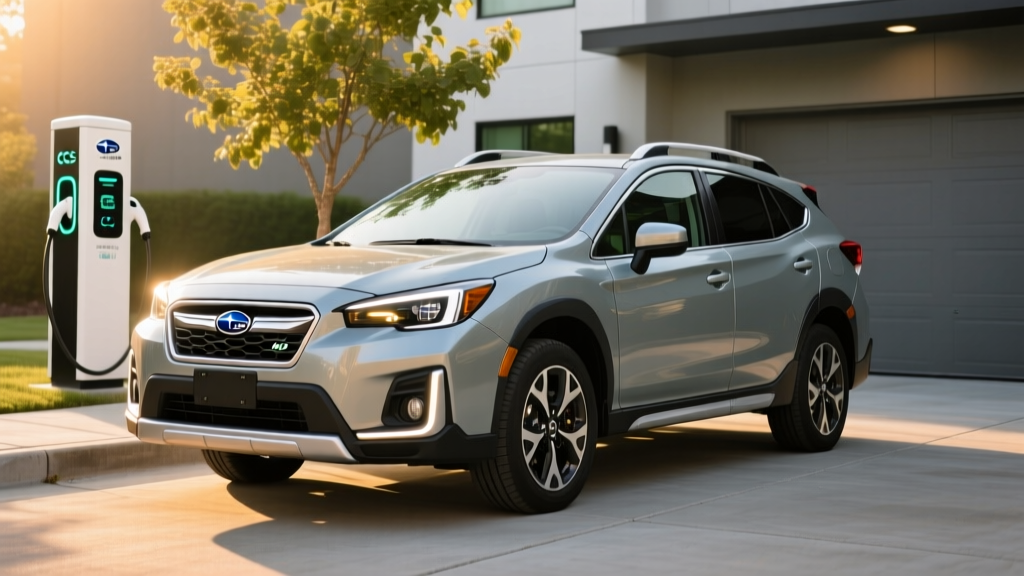
After a brief hiatus, the Subaru Crosstrek Hybrid is back for the 2026 model year — and it's exclusively a plug-in hybrid (PHEV). Subaru has dropped the conventional hybrid (HEV) variant that existed in earlier generations, betting that buyers in the compact crossover segment want meaningful electric-only commuting capability combined with Subaru's signature all-wheel drive. The 2026 Crosstrek PHEV pairs a 2.0-liter boxer four-cylinder with a more powerful electric motor and a larger battery pack than its predecessor, targeting improved electric-only range and faster Level 2 charging.
If you're searching for 2026 Subaru Crosstrek Hybrid MPG figures, the answer depends heavily on how you use it. Charge nightly and stay within its electric-only envelope, and you may burn almost no gasoline during the workweek. Take it on a long road trip without plugging in, and it operates as a conventional hybrid with MPG figures that are respectable — but not class-leading. Let's break down every number you need.
HEV vs PHEV: Why the 2026 Crosstrek Hybrid Is Plug-In Only
Conventional Hybrid (HEV): Charges its small battery (~1–2 kWh) through regenerative braking and the gas engine. You never plug it in. Fuel economy is consistent regardless of driving pattern. Think Toyota RAV4 Hybrid.
Plug-In Hybrid (PHEV): Carries a larger battery (~13–20 kWh) that you charge via a wall outlet or Level 2 station. It can drive on electricity alone for a set range before the gas engine kicks in. Think Toyota RAV4 Prime — or the 2026 Subaru Crosstrek PHEV.
Subaru's decision to go PHEV-only for 2026 reflects a broader industry shift. The federal §30D tax credit applies only to plug-in vehicles (BEVs and PHEVs), not conventional hybrids. By offering a PHEV, Subaru gives buyers access to potential incentives while eliminating the range anxiety that keeps some shoppers away from full EVs. If you want a conventional (non-plug) Subaru hybrid in 2026, you'll need to look at the Forester Hybrid or Outback Hybrid instead.
2026 Subaru Crosstrek Hybrid MPG: EPA and Real-World Numbers
| Metric | EPA Estimate | Real-World Expectation |
|---|---|---|
| Combined MPGe (electric + gas) | 90 MPGe | 80–95 MPGe depending on charge frequency |
| Combined MPG (gas-only, hybrid mode) | 35 MPG | 32–37 MPG (city-biased driving improves it) |
| City MPG (gas-only) | 37 MPG | 35–40 MPG (regen braking helps in stop-and-go) |
| Highway MPG (gas-only) | 33 MPG | 30–34 MPG (AWD drag and boxy shape hurt at speed) |
| Electric-only range | 34 miles | 28–34 miles (drops to ~22–26 in cold weather) |
| Total combined range (EV + gas) | ~460 miles | ~420–470 miles |
How to read these numbers: MPGe (miles per gallon equivalent) measures how efficiently the vehicle uses energy when operating in electric mode, converting kWh consumption into a gasoline-equivalent figure. It's most useful for comparing PHEVs and EVs against each other. Once the battery is depleted and the gas engine takes over, standard MPG applies — and that 35 MPG combined figure is what you'll see on road trips or if you never plug in.
Real-World Range Note: The EPA's 34-mile electric-only estimate assumes moderate temperatures and mixed driving. In our experience with Subaru's e-Boxer PHEV system, expect 28–30 miles of electric range at sustained highway speeds (65–75 mph), and as low as 22–25 miles in sub-freezing temperatures when the battery is less efficient and cabin heating draws additional power. City driving with frequent regenerative braking can push you to the full 34 miles or slightly beyond.
Powertrain, Battery, and Charging Specs
| Engine | 2.0L DOHC boxer 4-cylinder |
| Engine output | 152 hp / 145 lb-ft torque |
| Electric motor output | 118 hp / 149 lb-ft torque |
| Combined system horsepower | 194 hp |
| Drivetrain | Symmetrical AWD (standard) |
| Transmission | Lineartronic CVT |
| Battery capacity (gross / usable) | 18.1 kWh / ~15.2 kWh |
| Battery chemistry | Lithium-ion (NMC) |
| Level 1 charging (120V, 1.4 kW) | ~11 hours (0–100%) |
| Level 2 charging (240V, 6.6 kW) | ~2.5 hours (0–100%) |
| DC fast charging | Not supported |
| Charge port | J1772 (Level 1 & 2) |
| 0–60 mph | ~6.8 seconds (estimated) |
The 2026 Crosstrek PHEV's 18.1 kWh battery pack represents a meaningful upgrade from the previous-generation Crosstrek PHEV's 8.8 kWh pack, nearly doubling electric-only range. The 6.6 kW onboard charger is adequate for overnight Level 2 replenishment — plug in when you get home from work, and you'll wake up to a full battery. However, the absence of DC fast charging is a notable limitation. You cannot top up at Electrify America or Tesla Supercharger stations on road trips. For a PHEV with a 34-mile electric range, this omission is less painful than it would be on a full EV, but it does mean highway rest-stop charging isn't an option.
The 194 combined horsepower is a welcome bump over the gas-only Crosstrek's 152 hp, giving the PHEV noticeably quicker off-the-line acceleration. The electric motor's instant torque fills in the low-end gap that Subaru's naturally aspirated boxer engine has historically exhibited, making merging and passing feel more confident.
Pricing, Trims, and Tax Credit Eligibility
The 2026 Subaru Crosstrek PHEV is offered in two trims:
- Crosstrek Hybrid (base PHEV): MSRP ~$36,995 (including destination)
- Crosstrek Hybrid Limited: MSRP ~$40,495 (including destination)
Both trims come standard with Symmetrical AWD, EyeSight driver-assistance technology, an 11.6-inch touchscreen, and wireless Apple CarPlay/Android Auto. The Limited adds leather upholstery, a Harman Kardon audio system, heated steering wheel, and a power moonroof.
Federal §30D Tax Credit Eligibility (2026 Rules):
- Credit amount: Up to $7,500 for qualifying PHEVs — but the exact amount depends on battery component and critical mineral sourcing requirements that phase in progressively through 2026.
- MSRP cap: PHEV SUVs must have an MSRP at or below $80,000. Both Crosstrek PHEV trims qualify.
- Buyer income cap: Modified adjusted gross income must not exceed $150,000 (single), $225,000 (head of household), or $300,000 (joint filing).
- Battery sourcing: The percentage of battery components manufactured in North America and critical minerals sourced from the U.S. or FTA partners must meet annual thresholds. Check IRS.gov or the DOE's Alternative Fuels Data Center for the latest qualified vehicle list before purchasing.
- Point-of-sale transfer: As of 2024, qualifying buyers can transfer the credit to the dealer at purchase, reducing the out-of-pocket price immediately rather than waiting for a tax refund.
Important: Tax credit eligibility rules change frequently. Consult a tax professional and verify current IRS guidance before making a purchase decision.
If the full $7,500 credit applies, the base Crosstrek PHEV's effective price drops to approximately $29,495 — putting it in the same territory as well-equipped gas-only compact crossovers and making the PHEV premium much easier to justify.
Hybrid vs PHEV vs Full EV: Which Powertrain Fits You?
Choose the 2026 Crosstrek PHEV if:
- Your daily commute is under 30 miles round-trip and you can charge at home overnight.
- You want electric commuting but also need AWD and cargo flexibility for weekend trips, skiing, or camping.
- You live in an area with limited DC fast-charging infrastructure and aren't ready to commit to a full EV.
- You want to reduce fuel consumption and emissions without depending on public charging networks.
Choose a full EV (e.g., Hyundai Ioniq 5, Subaru Solterra) if:
- You have reliable home Level 2 charging and your daily driving rarely exceeds 200 miles.
- You want zero tailpipe emissions, minimal maintenance, and the lowest per-mile fuel cost.
- You're comfortable planning road trips around DC fast-charging stops.
Choose a conventional hybrid (e.g., Toyota RAV4 Hybrid) if:
- You cannot charge at home (apartment, street parking, no garage).
- You want hybrid fuel economy without any plug-in behavior or charging-cable management.
- Your budget doesn't accommodate the PHEV price premium even after tax credits.
The Crosstrek PHEV occupies a specific niche: it's the vehicle for the outdoor-oriented driver who wants to commute on electricity during the week but demands Subaru's legendary AWD capability and ground clearance (8.7 inches) for everything else. If you can't charge at home, the PHEV premium is harder to justify — you'll be carrying extra battery weight without capturing the electric-only efficiency benefit.
Reliability, Battery Warranty, and Replacement Cost
Subaru PHEV Battery Warranty:
- Hybrid battery: 8 years / 100,000 miles (whichever comes first)
- Capacity retention threshold: Subaru warrants the battery against failure and significant capacity loss. Specific SoH (State of Health) thresholds are defined in the warranty booklet — typically coverage triggers below ~70% capacity.
- Powertrain warranty: 5 years / 60,000 miles
- Basic vehicle warranty: 3 years / 36,000 miles
Is the 2026 Crosstrek Hybrid reliable? Subaru's e-Boxer PHEV system has been in use globally since 2018 (in the Crosstrek, Forester, and XV in various markets). While Subaru's PHEV sales volume in the U.S. has been lower than Toyota's, the underlying boxer engine and Lineartronic CVT are well-proven components with long production histories. IIHS has historically rated the Crosstrek as a Top Safety Pick, and the 2026 model carries Subaru's EyeSight 4.0 suite with enhanced pedestrian detection and intersection collision avoidance.
Battery replacement cost: If the PHEV battery pack needs replacement outside of warranty, expect a cost in the range of $8,000–$12,000 (parts and labor) based on current Subaru hybrid battery pricing and industry estimates for NMC packs of this capacity. However, PHEV batteries experience less stress than full EV batteries because they operate in a narrower state-of-charge window and are smaller, meaning fewer cells and lower total replacement cost. Most PHEV batteries outlast their warranty periods with minimal degradation — typically 5–10% capacity loss over 8–10 years based on industry data.
Subaru's hybrid system uses a buffer strategy that prevents the battery from charging to a true 100% or discharging to a true 0%, which significantly extends cell lifespan. You'll see ~15.2 kWh usable out of the 18.1 kWh gross capacity — that ~2.9 kWh buffer is working silently to protect your battery investment.
Pros and Cons of the 2026 Subaru Crosstrek Hybrid
Pros
- 34 miles of electric-only range covers most daily commutes
- Standard Symmetrical AWD — no FWD base model compromise
- 194 combined hp is the quickest Crosstrek in the lineup
- 8.7 inches of ground clearance for trails and snow
- Eligible for up to $7,500 federal tax credit (if sourcing rules met)
- 8-year/100,000-mile hybrid battery warranty
- No range anxiety — gas engine covers long trips seamlessly
Cons
- No DC fast charging capability
- Gas-only MPG (35 combined) trails the Toyota RAV4 Hybrid (39 combined)
- PHEV premium of ~$5,000–$7,000 over gas-only Crosstrek before incentives
- Cargo space slightly reduced due to battery pack placement
- CVT can feel rubbery under hard acceleration
- Only two trims available — limited customization
Frequently Asked Questions
How many MPG does the 2026 Subaru Crosstrek Hybrid get?
The 2026 Crosstrek PHEV achieves an EPA-estimated 35 MPG combined (37 city / 33 highway) when operating in hybrid mode after the battery is depleted. When factoring in electric-only driving, it earns a 90 MPGe combined rating. Real-world results vary: city drivers frequently see 37–40 MPG in hybrid mode thanks to regenerative braking, while sustained highway driving at 75 mph may drop to 30–32 MPG.
How far can the 2026 Crosstrek Hybrid go on electric only?
The EPA rates the 2026 Crosstrek PHEV at 34 miles of electric-only range. In real-world conditions, expect 28–34 miles in moderate weather with mixed driving, and as low as 22–26 miles in freezing temperatures or at sustained highway speeds. Once the battery is depleted, the gas engine takes over seamlessly — you'll never be stranded.
Does the 2026 Subaru Crosstrek Hybrid qualify for a tax credit?
As a plug-in hybrid, the Crosstrek PHEV is potentially eligible for the federal §30D clean vehicle credit of up to $7,500, subject to battery component sourcing requirements, buyer income caps ($150K single / $300K joint), and the $80,000 MSRP cap for SUVs. Both Crosstrek PHEV trims fall well under the MSRP limit. Verify current eligibility on IRS.gov before purchasing, as sourcing rules tighten annually. The credit can be transferred to the dealer at point of sale, reducing your purchase price directly.
Can I charge the Crosstrek PHEV at a DC fast charger?
No. The 2026 Crosstrek PHEV supports Level 1 (120V) and Level 2 (240V, up to 6.6 kW) charging via a J1772 connector. It does not have a DC fast-charge port (CCS or NACS). For a PHEV with a 34-mile electric range, most owners charge at home overnight and don't need public DC charging — but it's something to be aware of.
Is the hybrid battery reliable and what does replacement cost?
Subaru covers the PHEV battery with an 8-year/100,000-mile warranty. Industry data on NMC PHEV batteries shows typical degradation of 5–10% over a decade, and most outlast their warranty periods. If replacement is needed out of warranty, expect $8,000–$12,000. The battery management system's charge buffer (keeping the pack between ~10% and ~90% true SoC) significantly extends cell life.
Hybrid vs PHEV vs EV — which Subaru should I buy?
If you can charge at home and your commute is under 34 miles, the Crosstrek PHEV gives you electric daily driving with gas-engine freedom for road trips — the best of both worlds. If you can't charge at home, consider the Forester Hybrid (conventional HEV, no plug needed). If you have home charging and rarely drive over 220 miles, the all-electric Subaru Solterra eliminates gasoline entirely. The PHEV is the bridge option for drivers who aren't ready to commit fully to electric but want to reduce fuel consumption and emissions.