Quick Verdict: The Sportage Hybrid SX Prestige at a Glance
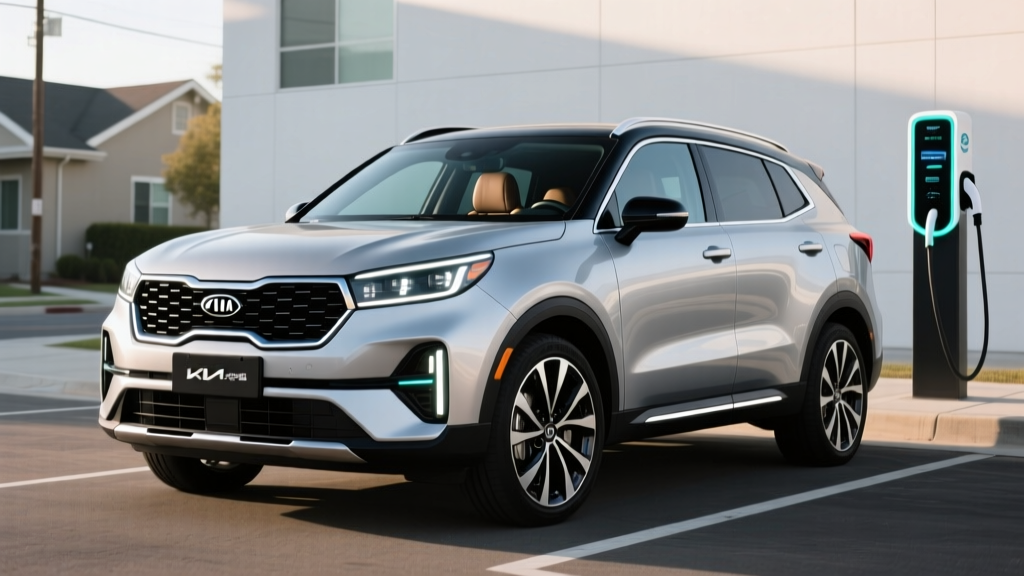
The 2026 Kia Sportage Hybrid SX Prestige sits at the top of Kia's compact hybrid SUV lineup, pairing a 232-horsepower turbocharged hybrid powertrain with a premium equipment list that rivals luxury crossovers at twice the price. For buyers who want electrified efficiency without plugging in, this conventional hybrid (HEV) delivers an EPA-estimated 38 MPG combined while offering all-wheel drive and a feature-dense cabin. The SX Prestige trim adds a panoramic sunroof, heated and ventilated front seats, a 360-degree camera, and Kia's full suite of ADAS technology — all for an MSRP that undercuts fully electric competitors by thousands.
But how does the real-world fuel economy stack up against the EPA sticker? Is the hybrid battery a long-term liability? And does this trim qualify for any federal tax incentives? This review breaks down every number that matters.
| Spec | Value |
|---|---|
| Powertrain | 1.6L turbo I-4 + electric motor (HEV) |
| Combined Horsepower | 232 hp |
| Combined Torque | 258 lb-ft |
| Transmission | 6-speed automatic |
| Drivetrain | AWD (standard on SX Prestige) |
| EPA Fuel Economy (City / Hwy / Combined) | 38 / 38 / 38 MPG |
| Fuel Tank Capacity | 13.7 gallons |
| Estimated Total Range | ~520 miles |
| 0-60 mph | ~7.4 seconds (est.) |
| Cargo Volume (behind rear seats) | 39.5 cu ft |
| Cargo Volume (rear seats folded) | 73.7 cu ft |
| Towing Capacity | 2,000 lbs |
| Hybrid Battery Warranty | 10 years / 100,000 miles |
| MSRP (SX Prestige AWD) | ~$39,590 |
HEV vs PHEV: Which Sportage Hybrid Is Right for You?
Kia offers the 2026 Sportage in three powertrain flavors: a conventional gas model, a conventional hybrid (HEV), and a plug-in hybrid (PHEV). The SX Prestige trim is available on both the HEV and PHEV, and confusing them is one of the most common buyer mistakes we see. Here's the critical difference:
Conventional Hybrid (HEV) — This Article's Focus
No plug required. The HEV charges its small battery (~1.5 kWh) through regenerative braking and the gas engine. You fuel it like any other car and get better MPG. The Sportage HEV cannot drive on electric-only power for meaningful distances.
Plug-In Hybrid (PHEV) — Separate Model
Requires plugging in to unlock its ~34 miles of electric-only range. The Sportage PHEV carries a larger 13.8 kWh battery, qualifies for partial federal tax credits (up to $3,750 depending on sourcing and income), and has a higher MSRP (~$43,090 for SX Prestige). Total combined range exceeds 430 miles. If you want the PHEV variant, see our dedicated Sportage PHEV guide.
| Attribute | Sportage HEV | Sportage PHEV | Full EV (e.g., EV6) |
|---|---|---|---|
| Plug in to charge? | No | Yes (Level 1/2) | Yes (Level 1/2/DC) |
| Electric-only range | N/A | ~34 miles | 232-310 miles |
| EPA Combined | 38 MPG | 84 MPGe / 35 MPG (gas) | 117-134 MPGe |
| Fuel/energy cost per mile | ~$0.12 | ~$0.05 (elec) / ~$0.13 (gas) | ~$0.04-$0.06 |
| Federal tax credit | None (§30D excludes HEVs) | Up to $3,750* | Up to $7,500* |
| Home charging install needed? | No | Recommended (Level 2) | Essential (Level 2) |
| Base MSRP (SX Prestige) | ~$39,590 | ~$43,090 | ~$52,000+ (EV6) |
*Federal tax credit amounts per IRS §30D rules are subject to buyer income caps, MSRP limits, battery sourcing requirements, and annual phase-out thresholds. Always verify eligibility with a tax professional.
Fuel Economy: EPA Ratings vs Real-World MPG
The 2026 Sportage Hybrid AWD carries an EPA rating of 38 MPG city / 38 MPG highway / 38 MPG combined, according to fueleconomy.gov. That equal city/highway split is typical of hybrids — the electric motor shoulders low-speed loads where gas engines are least efficient, while highway driving relies more heavily on the engine alone.
Real-World MPG Expectations
- City / suburban driving: 37-41 MPG. Hybrids thrive here. Expect to meet or slightly exceed the EPA city figure with moderate acceleration and regular regen braking.
- Highway (70-80 mph sustained): 33-36 MPG. The turbo engine carries more load at speed, and aerodynamic drag cuts efficiency. Plan on 3-5 MPG below the EPA highway sticker on long interstate trips.
- Cold weather (below 30°F): 31-35 MPG combined. Engine runs more often for cabin heat, and battery efficiency drops. A 10-15% reduction is normal for any hybrid in winter.
- Mixed real-world average: Most owners report 35-38 MPG combined across seasons, aligning closely with the EPA figure.
With a 13.7-gallon fuel tank, the real-world total range sits between 470 and 520 miles depending on driving conditions — enough for most drivers to visit the gas station once every two weeks.
Powertrain and Driving Performance
The Sportage Hybrid pairs a 1.6-liter turbocharged four-cylinder engine with a 47.7 kW electric motor integrated into the 6-speed automatic transmission. Combined output is 232 horsepower and 258 lb-ft of torque, routed through a standard all-wheel-drive system on the SX Prestige.
Acceleration to 60 mph takes approximately 7.4 seconds — brisk for a compact SUV and noticeably quicker than the non-turbo Toyota RAV4 Hybrid (7.3 seconds with 219 hp, but less low-end torque punch). The hybrid system's electric motor fills in torque at low RPMs before the turbo spools, giving the Sportage a responsive feel from stoplights.
The AWD system uses a traditional mechanical connection to the rear axle (not a separate rear electric motor like the RAV4 Hybrid's eAWD), which means more consistent torque distribution but slightly more drivetrain complexity. In practice, traction in rain and light snow is confident, and the system operates transparently.
Driving Modes and Regenerative Braking
Kia provides Eco, Normal, Sport, and Smart drive modes. Eco mode maximizes electric-motor assist and softens throttle response for best fuel economy. Sport mode sharpens shift points and holds the engine in its power band. The regenerative braking system offers adjustable levels via paddle shifters, though it does not provide true one-pedal driving — you'll still use the friction brake for complete stops, as expected in a conventional hybrid.
SX Prestige Trim: What You Get for the Money
The SX Prestige is the top-tier trim in the Sportage Hybrid lineup, and its equipment list justifies the premium over the mid-range EX ($33,590) and base LX ($30,590). Here's what the ~$39,590 MSRP includes:
- 12.3-inch dual panoramic displays (instrument cluster + infotainment)
- Harman Kardon premium audio system
- Panoramic sunroof with power sunshade
- Heated and ventilated front seats; heated steering wheel
- Leather-trimmed seats with driver memory
- 360-degree surround-view monitor
- Highway Driving Assist 2 (HDA2) with lane-centering and adaptive cruise
- Remote Smart Parking Assist
- Wireless Apple CarPlay and Android Auto
- Head-up display
- LED projection headlights with dynamic bending light
- 19-inch alloy wheels
- Power liftgate with smart opening
Destination charge adds approximately $1,395, bringing the out-the-door MSRP to around $40,985 before any dealer adjustments or regional incentives.
Tax Credits and Incentives: What Applies to the HEV?
Here's where many buyers get confused. The 2026 Kia Sportage Hybrid (HEV) does not qualify for the federal §30D Clean Vehicle Credit. That credit — up to $7,500 — applies only to battery electric vehicles (BEVs) and plug-in hybrids (PHEVs) that meet battery-sourcing, MSRP, and buyer-income requirements. Conventional hybrids are excluded by statute.
Federal Tax Credit Eligibility — Sportage HEV
- IRS §30D Clean Vehicle Credit: Not eligible (HEV, not a PHEV or BEV)
- IRS §25D Residential Energy Credit: Not applicable (no home charging)
- State-level hybrid incentives: Varies by state — some states (e.g., California's CVRP) previously offered rebates for hybrids, but most have shifted focus to zero-emission vehicles. Check your state energy office for current programs.
- Dealer or manufacturer incentives: Kia occasionally offers loyalty cash or low-APR financing on hybrid trims. Check Kia's current offers page for your ZIP code.
If the federal tax credit is a priority for your purchase, consider stepping up to the Sportage PHEV, which may qualify for a partial credit (typically $3,750 based on recent battery-component sourcing compliance), subject to the same IRS income and MSRP caps.
Battery Warranty, Reliability, and Replacement Cost
Hybrid Battery Warranty
Kia covers the Sportage Hybrid's battery pack with a 10-year / 100,000-mile warranty (whichever comes first). This warranty covers defects and capacity loss below a functional threshold. Kia's industry-leading powertrain warranty (also 10 years/100,000 miles) covers the hybrid motor, inverter, and related components. The basic bumper-to-bumper warranty runs 5 years / 60,000 miles.
How Long Will the Hybrid Battery Last?
The Sportage Hybrid uses a relatively small lithium-ion polymer battery pack (~1.5 kWh total capacity). Because conventional hybrids keep the battery in a narrow state-of-charge window (roughly 40-80% SoC) and never deep-cycle it, degradation is minimal. Based on data from Kia and Hyundai hybrid platforms now in their second decade of production, hybrid battery packs routinely exceed 150,000-200,000 miles before any meaningful capacity loss affects fuel economy.
This is fundamentally different from a full EV battery, which cycles through much wider SoC ranges and carries far more energy. Hybrid battery stress is low by comparison.
Battery Replacement Cost
If the hybrid battery does fail outside warranty, replacement costs for the Sportage Hybrid typically range from $2,000 to $3,500 including parts and labor at a Kia dealership. Independent hybrid-specialty shops may offer refurbished packs for $1,200-$2,000. For context, this is significantly less than a full EV battery replacement ($8,000-$20,000+) because the pack is small and accessible.
Given the 10-year warranty and the low-stress duty cycle, battery replacement is a low-probability event during typical ownership.
Who Should Buy the Sportage Hybrid SX Prestige?
Choose the Sportage HEV SX Prestige If:
- You want 38 MPG without changing your fueling habits — no plugs, no chargers, no range planning.
- You lack access to home or workplace charging, making a PHEV or BEV impractical.
- You want a loaded compact SUV under $41,000 with AWD, premium audio, and advanced driver-assist features.
- You drive a mix of city and highway miles and want consistent efficiency in both.
- You plan to keep the vehicle 8-10 years and value Kia's long warranty coverage.
Consider a PHEV or Full EV Instead If:
- You have home Level 2 charging and a short commute — a PHEV's electric-only range or a BEV's zero tailpipe emissions would save more on fuel.
- The federal tax credit matters to your budget — HEVs don't qualify, but PHEVs and BEVs can.
- You want to minimize lifetime fuel spend — a BEV at $0.04-$0.06/mile beats $0.12/mile over 150,000 miles by roughly $9,000-$12,000.
- You live in a state with HOV lane access for zero-emission vehicles — the HEV doesn't qualify in most jurisdictions.
Pros and Cons
Pros
- 38 MPG combined with no plug-in requirement
- 232 hp provides confident acceleration for the class
- SX Prestige trim is loaded with luxury-tier features
- 10-year/100,000-mile hybrid battery and powertrain warranty
- Strong cargo space (39.5 cu ft) for a compact hybrid SUV
- AWD standard on SX Prestige — no extra-cost option
- ~520-mile total range between fill-ups
Cons
- No federal tax credit eligibility (HEV exclusion)
- Highway MPG drops to ~33-36 in real-world driving
- No one-pedal driving capability (expected for HEV)
- SX Prestige price approaches PHEV territory without electric-only benefits
- 6-speed automatic feels less refined than competitors' e-CVT or 8-speed units
- Towing limited to 2,000 lbs
Frequently Asked Questions
How many MPG does the 2026 Sportage Hybrid SX Prestige get?
The EPA rates the 2026 Sportage Hybrid AWD at 38 MPG city, 38 MPG highway, and 38 MPG combined. In real-world driving, expect 37-41 MPG in city conditions, 33-36 MPG on sustained highway trips, and an overall average of 35-38 MPG across seasons.
Does the Sportage Hybrid need to be plugged in?
No. The Sportage Hybrid (HEV) is a conventional hybrid that charges its battery through regenerative braking and the gas engine. You simply fill it with gasoline like any other car. If you want a plug-in model, look at the Sportage PHEV, which is a separate variant with ~34 miles of electric-only range.
Does the 2026 Sportage Hybrid qualify for any tax credit?
The conventional Sportage Hybrid (HEV) does not qualify for the federal §30D Clean Vehicle Credit, which is reserved for plug-in hybrids and battery electric vehicles. Some states may offer minor incentives for hybrids, but these vary widely. Check the IRS Clean Vehicle Credit page and your state energy office for current details.
Is the Sportage Hybrid reliable? What about battery replacement?
Kia's hybrid powertrain has a strong reliability track record, shared with the Hyundai Tucson Hybrid platform. The hybrid battery is warrantied for 10 years / 100,000 miles and operates under low-stress conditions, typically lasting 150,000+ miles. Out-of-warranty replacement runs $2,000-$3,500 — far less than an EV battery swap.
How does the Sportage Hybrid compare to the RAV4 Hybrid?
The Toyota RAV4 Hybrid offers a similar 39-41 MPG combined (depending on trim) with 219 hp and a slightly more proven long-term reliability record. The Sportage Hybrid counters with more horsepower (232 vs 219), a more premium interior on the SX Prestige trim, a longer standard warranty (10 vs 8 years on the hybrid battery), and a larger infotainment display. Cargo space is comparable. The RAV4 Hybrid's eAWD system uses a rear electric motor, while the Sportage uses a mechanical AWD link — both effective, with different trade-offs in complexity and response.
What is the difference between the Sportage Hybrid and the Sportage PHEV?
The Sportage Hybrid (HEV) cannot be plugged in and has no meaningful electric-only range — it simply improves MPG through regenerative braking and electric motor assist. The Sportage PHEV has a larger 13.8 kWh battery, can be plugged into a Level 1 or Level 2 charger, and offers approximately 34 miles of electric-only driving before the gas engine engages. The PHEV costs roughly $3,500 more but may qualify for a partial federal tax credit and offers lower per-mile fuel costs for short commutes.