Quick Verdict: A Practical 3-Row Hybrid That Doesn't Need a Plug
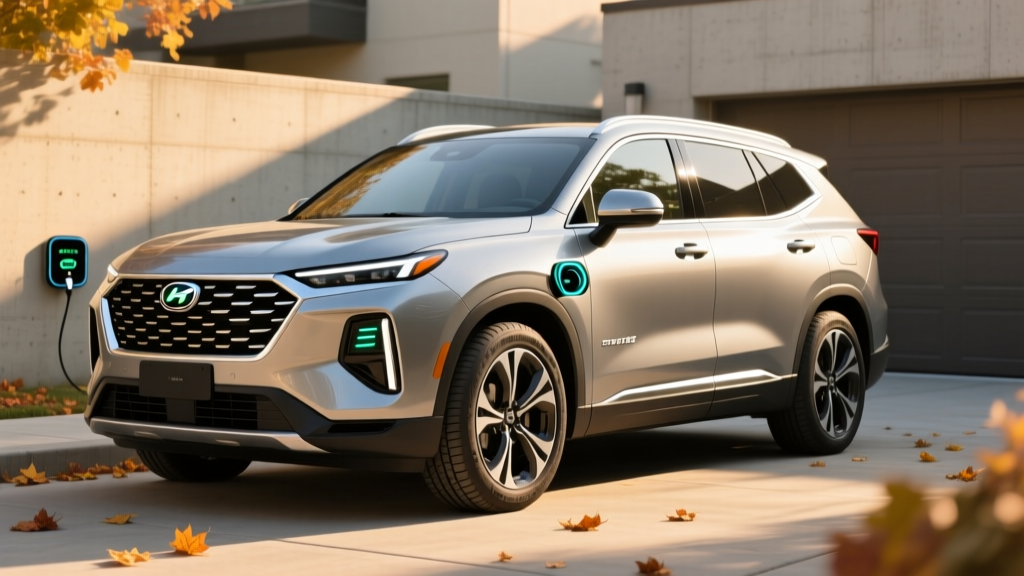
The 2026 Hyundai Santa Fe Hybrid slots into a narrow but increasingly popular space: a midsize, three-row SUV that delivers genuine fuel savings without requiring any change in driving habits. You don't plug it in. You don't manage battery state of charge. You just drive it, and the 1.6-liter turbocharged hybrid powertrain quietly sips fuel at rates that make gas-station visits noticeably less frequent.
For the 2026 model year, Hyundai carries over the boxy, adventure-oriented redesign introduced for 2024, with minor trim and tech updates. The conventional hybrid (HEV) remains the volume play, while the plug-in hybrid (PHEV) variant — which we'll address in detail below — offers a meaningful electric-only commute option for those with home charging access. Both share the same platform and general architecture, but their ownership experiences diverge significantly.
Here's what you need to know before you buy.
2026 Santa Fe Hybrid Powertrain and Performance Specs
| Specification | Value |
|---|---|
| Engine | 1.6L turbocharged 4-cylinder |
| Electric Motor | 47.7 kW (64 hp) integrated motor |
| Combined System Output | 230 hp / 271 lb-ft torque |
| Transmission | 6-speed automatic |
| Drivetrain | HTRAC AWD (standard on hybrid) |
| Hybrid Battery | ~1.5 kWh lithium-ion (self-charging, no plug) |
| 0–60 mph | ~7.8 seconds (est.) |
| Towing Capacity | 2,000 lbs |
| Seating | 7 passengers (standard) |
The hybrid system pairs Hyundai's Smartstream 1.6L turbo four with a compact electric motor sandwiched between the engine and the 6-speed automatic. Total system output is 230 horsepower and 271 lb-ft of torque. That's adequate for highway merging and loaded family hauling, though it won't win any stoplight races. The electric motor fills in torque at low RPM, which gives the Santa Fe Hybrid a surprisingly responsive feel from a stop — a trait common to most modern hybrids where the electric motor's instant torque masks the turbo's slight spool-up lag.
HTRAC all-wheel drive is standard across all hybrid trims. Hyundai's hybrid AWD system uses a conventional mechanical rear driveshaft rather than a separate rear electric motor, which keeps weight and complexity down but means you won't find the torque-vectoring sophistication of some competitors' electrified AWD systems.
Fuel Economy: EPA Ratings vs. Real-World MPG
This is the primary reason buyers choose the Santa Fe Hybrid over its gas-only sibling, so let's get straight to the numbers.
| Driving Cycle | EPA MPG |
|---|---|
| City | 35 MPG |
| Highway | 30 MPG |
| Combined | 33 MPG |
Source: EPA fueleconomy.gov
The city-biased EPA rating (35 city vs. 30 highway) is a hallmark of conventional hybrids. If your commute involves heavy traffic, school drop-offs, and suburban errands, the Santa Fe Hybrid will reward you. If you drive 90% highway miles, the fuel savings over the turbocharged gas-only Santa Fe (rated at roughly 24 MPG combined) shrink but remain meaningful — roughly a 35–40% improvement in fuel consumption either way.
HEV vs. PHEV: Which 2026 Santa Fe Is Right for You?
Hyundai offers the Santa Fe in both conventional hybrid (HEV) and plug-in hybrid (PHEV) configurations for 2026. The distinction matters enormously for your daily routine and wallet.
| Attribute | Santa Fe Hybrid (HEV) | Santa Fe Plug-In Hybrid (PHEV) |
|---|---|---|
| Plug-in Charging Required? | No — self-charging via regen and engine | Yes — plug in to unlock electric-only range |
| Hybrid Battery Size | ~1.5 kWh | ~13.8 kWh (usable) |
| Electric-Only Range | N/A (motor assists only) | EPA est. 30–33 miles |
| Combined System HP | 230 hp | 261 hp |
| EPA Combined MPG (gas mode) | 33 MPG | ~30 MPG (after battery depleted) |
| MPGe (electric + gas) | N/A | ~79 MPGe |
| Level 2 Charge Time (0–100%) | N/A | ~3.5 hours at 7.2 kW |
| DC Fast Charging | N/A | No DC fast charge capability |
| Starting MSRP (2026) | ~$39,500 | ~$46,500 |
| Federal Tax Credit (§30D) | Not eligible | Up to $7,500 (eligibility varies — see below) |
The PHEV variant uses a larger 13.8 kWh battery and a more powerful electric motor, enabling an EPA-estimated 30–33 miles of electric-only driving. If your daily round-trip commute is under 30 miles and you can charge at home overnight on a Level 2 (240V) outlet, you may go weeks without the gasoline engine running at all. Once the battery is depleted, the PHEV operates as a conventional hybrid, though with slightly lower MPG (~30 combined) because it's hauling a heavier battery pack.
The PHEV does not support DC fast charging — a notable limitation if you were hoping to top up at a public fast charger during the day. Level 2 charging at home or at a workplace charger is the intended use case, and a full charge takes roughly 3.5 hours on a 7.2 kW Level 2 circuit.
Pricing, Trims, and Tax Credit Eligibility
The 2026 Santa Fe Hybrid is offered across multiple trims, generally starting with the SEL Premium and extending through the Limited and Calligraphy grades.
| Trim | Estimated MSRP |
|---|---|
| SEL Premium Hybrid | $39,500 |
| Limited Hybrid | $43,500 |
| Calligraphy Hybrid | $47,000 |
Pricing is estimated based on 2025 carryover plus minor adjustments. Confirm with your dealer or Hyundai's official configurator at time of purchase.
- Santa Fe Hybrid (HEV): Not eligible. Conventional hybrids that cannot plug in do not qualify for the federal EV tax credit.
- Santa Fe Plug-In Hybrid (PHEV): May qualify for up to $7,500 under IRS §30D, but eligibility depends on multiple factors including buyer income caps (AGI ≤ $150K single / $300K joint), MSRP cap ($80,000 for SUVs — the Santa Fe PHEV clears this easily), and critical-mineral/battery-component sourcing requirements that shift annually. As of 2026, many PHEVs have seen partial or full credit reductions due to tightening sourcing rules. The credit can be applied as a point-of-sale rebate through a registered dealer. Always verify current eligibility on IRS.gov before purchasing.
Battery Warranty, Reliability, and Long-Term Costs
Hybrid battery anxiety is one of the most common concerns we hear from first-time hybrid buyers. Here's the data-driven reality: Hyundai's lithium-ion hybrid packs have proven durable. The small ~1.5 kWh battery in the HEV variant operates within a narrow state-of-charge window (roughly 40–60% SoC most of the time), which dramatically reduces stress on the cells compared to a full EV that regularly cycles from 10% to 90%. This shallow-cycling approach is a primary reason hybrid batteries routinely last well beyond their warranty periods — 150,000+ miles without significant degradation is common.
The PHEV's larger 13.8 kWh pack sees deeper cycles but still benefits from a substantial buffer (the usable capacity is less than the gross capacity) and active thermal management. If a replacement is ever needed out of warranty, expect a hybrid battery replacement cost in the range of $2,000–$4,000 for the HEV and $5,000–$8,000 for the PHEV, based on current parts pricing and independent shop labor rates. Dealer pricing will be higher.
On reliability more broadly, Hyundai's hybrid powertrains have earned solid marks. The 6-speed automatic transmission (rather than a CVT) avoids the droning feel and long-term durability concerns some buyers associate with CVTs. The turbocharged 1.6L engine is shared across multiple Hyundai/Kia models with a generally favorable track record.
Driving Experience: What It's Like Day-to-Day
The 2026 Santa Fe Hybrid drives like a well-sorted midsize SUV that happens to be efficient — not like an efficiency project that compromises on comfort. The boxy exterior design, inspired by Land Rover's visual language, translates to genuinely usable interior volume. Third-row adults won't love long trips back there, but kids and occasional-use passengers will find it adequate, and cargo space with the third row folded is generous for the segment.
The hybrid powertrain's transitions between electric-only, engine-only, and combined modes are nearly imperceptible from the driver's seat. Hyundai's calibration prioritizes smoothness over aggressive regen, which means the brake pedal feel is linear and predictable — a welcome contrast to some hybrids where the transition from regenerative to friction braking creates a grabby, unsettling sensation.
One real-world note: the Santa Fe Hybrid's ~1.5 kWh battery is small enough that electric-only driving at any meaningful speed lasts only a mile or two before the engine fires up. This is normal for conventional hybrids — the electric motor's role is to assist, smooth out stop-start traffic, and capture braking energy, not to provide sustained zero-emission driving. If sustained electric-only operation is important to you, the PHEV is the correct choice.
Who Should Buy the 2026 Santa Fe Hybrid?
Choose the Santa Fe Hybrid (HEV) If:
- You want 3-row SUV practicality with 33+ MPG without changing your fueling routine
- You don't have access to home or workplace charging
- Your driving is a mix of city errands and highway trips
- You want a lower purchase price and don't need electric-only commuting
- You value simplicity — no charging cables, no range management
Choose the Santa Fe PHEV Instead If:
- Your daily round-trip commute is under 30 miles
- You can install a Level 2 charger at home
- You want to drive mostly on electricity during the week and use gas for road trips
- You may qualify for the §30D federal tax credit, narrowing the price gap
- You want the additional 31 hp from the more powerful PHEV powertrain
Consider a Full EV Instead If:
- You have reliable home charging and your daily driving is under 250 miles
- You want zero tailpipe emissions and minimal maintenance
- You're willing to plan longer road trips around DC fast-charging stops
- You want to eliminate gasoline costs entirely
Stick With the Gas-Only Santa Fe If:
- You drive very low annual miles and fuel cost savings won't offset the hybrid premium
- You want the lowest possible purchase price
- You tow frequently near the max rating (hybrid efficiency drops significantly under heavy load)
Frequently Asked Questions
How many MPG does the 2026 Santa Fe Hybrid get?
The EPA rates the 2026 Santa Fe Hybrid at 35 MPG city, 30 MPG highway, and 33 MPG combined. In real-world suburban driving, many owners report 33–36 MPG combined. Highway-only driving at 75+ mph typically yields 28–30 MPG.
Does the Santa Fe Hybrid need to be plugged in?
No. The conventional hybrid (HEV) charges its small battery through regenerative braking and the gasoline engine. You never plug it in. Only the Santa Fe Plug-In Hybrid (PHEV) variant requires plugging in to access its electric-only range.
How far can the Santa Fe PHEV go on electric only?
The Santa Fe PHEV delivers an EPA-estimated 30–33 miles of electric-only range on a full charge. This covers most daily commutes. Once the battery is depleted, the vehicle operates as a conventional hybrid with no range limitation beyond the gas tank.
Is the hybrid battery reliable, and what does replacement cost?
Hyundai's hybrid batteries are covered for 10 years / 100,000 miles and have proven durable in real-world use, often lasting well beyond 150,000 miles. If replacement is needed out of warranty, expect roughly $2,000–$4,000 for the HEV battery and $5,000–$8,000 for the PHEV battery, depending on labor rates and parts sourcing.
Does the 2026 Santa Fe Hybrid qualify for a tax credit?
The conventional hybrid (HEV) does not qualify for the federal §30D Clean Vehicle Credit. The plug-in hybrid (PHEV) variant may qualify for up to $7,500, subject to buyer income limits, MSRP caps, and battery-sourcing requirements that change annually. Verify current eligibility at IRS.gov before purchasing. Some states offer additional incentives for PHEVs — check your state's energy office or AFDC state incentive database.
How does the Santa Fe Hybrid compare to competitors?
The Toyota Highlander Hybrid (35–36 MPG combined, standard hybrid) is the closest competitor and offers slightly better fuel economy with a proven long-term reliability record. The Kia Sorento Hybrid shares the same powertrain as the Santa Fe (they're platform siblings) but in a slightly smaller package with a lower starting price. The Mazda CX-70 PHEV and Ford Explorer Hybrid are larger but less efficient. The Santa Fe Hybrid's differentiator is its boxy, spacious interior design and class-leading warranty coverage.