What We Know About the 2026 Honda Ridgeline Hybrid
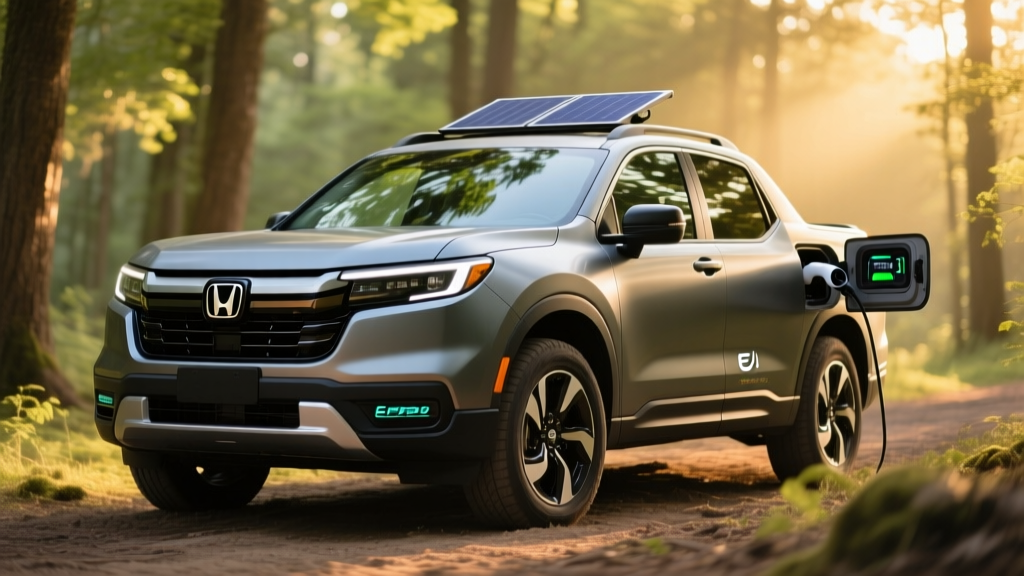
Honda has confirmed that a hybrid version of the Ridgeline midsize pickup is in development, joining the CR-V Hybrid and Accord Hybrid in Honda's expanding electrified lineup. The 2026 Ridgeline Hybrid represents Honda's first hybrid pickup truck, targeting buyers who want the fuel savings of a hybrid powertrain without sacrificing the utility the Ridgeline is known for — its lockable in-bed trunk, dual-action tailgate, and unibride construction.
As of early 2026, Honda has not published final EPA fuel economy figures or confirmed an exact on-sale date. What follows is a detailed breakdown of everything we can reasonably project based on Honda's current hybrid architecture, the refreshed Ridgeline platform, and official statements. Where figures are estimates, they are labeled as such and grounded in comparable Honda hybrid systems already in production.
| Spec | Projected / Known |
|---|---|
| Powertrain Type | Conventional Hybrid (HEV) — no plug-in required |
| Engine | 3.5L V6 + dual-motor hybrid system (expected) |
| Combined Horsepower | ~310–330 hp (estimated) |
| Transmission | Direct-drive (e-CVT-style, no fixed gears) |
| Drivetrain | AWD standard (hybrid AWD via rear motor) |
| EPA MPG (Combined) | ~24–27 MPG (estimated) |
| Towing Capacity | 5,000 lbs (target, pending confirmation) |
| Payload Capacity | ~1,500 lbs (estimated) |
| Base MSRP | ~$43,000–$45,000 (estimated) |
| Federal Tax Credit | Not eligible (HEVs do not qualify for §30D) |
| Battery Warranty | 8 years / 100,000 miles (minimum, per Honda precedent) |
HEV vs. PHEV: The Ridgeline Hybrid Is a Conventional Hybrid
Before examining the powertrain in detail, it's essential to clarify what Honda is building here. The 2026 Ridgeline Hybrid is expected to be a conventional hybrid electric vehicle (HEV), not a plug-in hybrid (PHEV). This distinction matters for ownership, fueling, and incentive eligibility.
| Feature | HEV (Conventional Hybrid) | PHEV (Plug-In Hybrid) |
|---|---|---|
| Plug-in Charging | No — refuels via gas + regenerative braking | Yes — charges via plug and gas engine |
| Electric-Only Range | Less than 1 mile (assist only) | 20–50 miles typical |
| Battery Size | 1.0–2.0 kWh | 13–25 kWh |
| Federal Tax Credit (§30D) | Not eligible | Up to $7,500 (if requirements met) |
| Home Charger Needed | No | Recommended (Level 2) |
| Best For | Drivers without home charging access | Drivers with home charging + short commutes |
Honda's current PHEV offerings are limited (the Clarity PHEV was discontinued years ago). The Ridgeline Hybrid will almost certainly follow the CR-V Hybrid's lead: a self-charging HEV that requires zero change in fueling habits. You fill up at the gas station, and the hybrid system recovers energy during braking and deceleration to supplement the gasoline engine.
Projected Fuel Economy: How Many MPG Will the Ridgeline Hybrid Get?
The current gasoline-only 2025 Honda Ridgeline is EPA-rated at 18 city / 24 highway / 21 combined MPG (source: fueleconomy.gov). A hybrid powertrain should meaningfully improve those numbers, particularly in city driving where regenerative braking and electric-motor assist provide the biggest gains.
| Vehicle | City MPG | Highway MPG | Combined MPG |
|---|---|---|---|
| 2025 Ridgeline (gas, AWD) | 18 | 24 | 21 |
| 2026 Ridgeline Hybrid (est.) | 24–27 | 24–26 | 24–27 |
| 2025 Ford Maverick Hybrid (FWD) | 42 | 33 | 37 |
| 2025 Toyota Tacoma Hybrid (4WD) | 23 | 24 | 23 |
| 2025 Hyundai Santa Cruz (gas, AWD) | 19 | 27 | 22 |
Why the city MPG jump is so significant: Honda's two-motor hybrid system (the same architecture used in the CR-V Hybrid and Accord Hybrid) allows the electric motor to handle low-speed driving and launch, where gasoline engines are least efficient. In stop-and-go traffic, the engine shuts off entirely and the motor takes over. This is why hybrids often achieve higher city MPG than highway MPG — the opposite of conventional gas vehicles.
Real-world MPG expectations: Based on how Honda hybrids perform in real-world testing, expect the Ridgeline Hybrid to deliver approximately 25–28 MPG combined in mixed suburban driving, potentially exceeding its EPA city rating in heavy traffic. Highway-only driving at 75+ mph will likely yield 23–25 MPG, as aerodynamic drag dominates at higher speeds and the hybrid system provides less benefit. Cold-weather operation (below 30°F) typically reduces hybrid fuel economy by 5–10% as the engine runs more frequently to provide cabin heat and warm the catalytic converter.
Powertrain Details: Engine, Motors, and Output
Honda's hybrid strategy centers on its two-motor hybrid system, which pairs a gasoline engine with a drive motor and a generator motor. In the CR-V Hybrid, this system uses a 2.0L four-cylinder. For the heavier Ridgeline, Honda is widely expected to retain the 3.5L V6 as the gasoline component, augmented by the hybrid motor system.
The projected combined output of 310–330 horsepower would represent a notable increase over the current gas-only Ridgeline's 280 hp, improving both acceleration and towing confidence. The hybrid system's electric motor delivers instant torque from zero RPM, which should make the Ridgeline Hybrid feel noticeably more responsive off the line than the current model.
Honda's hybrid AWD system uses a rear-mounted electric motor to drive the rear wheels, eliminating the need for a traditional mechanical driveshaft. This approach — already proven in the CR-V Hybrid AWD — provides responsive torque vectoring to the rear axle while saving weight and reducing drivetrain losses. For the Ridgeline, this could enhance the truck's already competent traction in snow and wet conditions.
Battery Warranty, Lifespan, and Replacement Cost
Hybrid battery longevity is consistently the top concern for hybrid buyers, and it's a fair one. The good news is that modern hybrid batteries are engineered for the life of the vehicle.
Battery Warranty Expectations
Federal mandate: The U.S. EPA requires hybrid battery warranties of at least 8 years / 80,000 miles in most states, and 10 years / 150,000 miles in CARB states (California, New York, Massachusetts, and others that follow California emissions standards).
Honda's precedent: The CR-V Hybrid and Accord Hybrid carry Honda's standard hybrid battery warranty of 8 years / 100,000 miles (10 years / 150,000 miles in CARB states). Expect the Ridgeline Hybrid to match this coverage.
Real-world lifespan: Data from Honda's hybrid fleet shows most hybrid batteries retain functional capacity well beyond the warranty period. Unlike full EVs, HEV batteries are small (typically 1.0–2.0 kWh) and operate within a narrow state-of-charge window (roughly 40–60%), which dramatically reduces degradation stress. Failures before 150,000 miles are uncommon.
Replacement cost: If replacement is needed out of warranty, Honda hybrid battery packs typically cost $2,000–$4,000 for parts and labor at a dealership. Third-party refurbished options can reduce this to $1,500–$2,500. This is far less than a full EV battery replacement.
Pricing, Trims, and Tax Credit Eligibility
The current 2025 Honda Ridgeline starts at approximately $40,150 for the Sport trim and climbs to around $47,000 for the Black Edition. A hybrid variant will command a premium, as is typical across the industry.
Estimated pricing for the 2026 Ridgeline Hybrid:
- RTL (base hybrid trim): ~$43,000–$45,000 MSRP
- RTL-E: ~$47,000–$49,000 MSRP
- Black Edition: ~$50,000–$52,000 MSRP
These are estimates based on the typical $2,000–$4,000 hybrid premium Honda has applied to the CR-V Hybrid vs. the gas CR-V. Final pricing will be confirmed closer to the on-sale date.
Does the Ridgeline Hybrid Qualify for a Federal Tax Credit?
No. The federal Clean Vehicle Credit under IRS §30D (source: irs.gov) applies only to plug-in electric vehicles — battery electric vehicles (BEVs) and plug-in hybrids (PHEVs) with a minimum battery capacity of 7 kWh. Because the Ridgeline Hybrid is expected to be a conventional HEV with a battery well under 2 kWh, it does not qualify for the federal tax credit of up to $7,500.
Some states offer separate incentives for conventional hybrids, though these are increasingly rare as states redirect funds toward plug-in vehicles. Check your state's energy office or AFDC incentive database for current local programs.
Who Should Choose the Ridgeline Hybrid vs. a Full EV or Gas Truck?
Choose the Ridgeline Hybrid If:
- You want better fuel economy without changing your fueling routine
- You don't have access to home or workplace charging (no plug needed)
- You need a midsize pickup for weekend projects, light towing, or outdoor gear
- You drive in heavy city traffic where hybrid MPG gains are largest
- You want AWD traction with improved efficiency over the gas model
- You plan to own the truck 8+ years (hybrid systems are proven long-term)
Consider a Full EV or Gas Truck Instead If:
- Full EV (e.g., Rivian R1T, Ford F-150 Lightning): You have home charging, want zero tailpipe emissions, need maximum torque for towing, and your daily driving is under 300 miles
- PHEV (none currently in midsize trucks): You want some electric-only range for short commutes — but no midsize PHEV pickup exists yet
- Gas Ridgeline: You drive mostly highway miles (where hybrid gains shrink), want the lowest upfront cost, and don't mind 21 MPG combined
- Ford Maverick Hybrid: You prioritize maximum MPG (37 combined) and don't need AWD or the Ridgeline's larger bed and cabin
The Ridgeline Hybrid occupies a specific niche: it's for the buyer who wants a comfortable, car-like midsize pickup with meaningful fuel savings, but who isn't ready — or able — to plug in. It won't match the Maverick Hybrid's city MPG, but it offers more interior space, a standard AWD system, a 5,000-lb tow rating, and Honda's strong reputation for long-term reliability.
Frequently Asked Questions
How many MPG does the 2026 Ridgeline Hybrid get?
Based on Honda's hybrid architecture and the current gas Ridgeline's 21 MPG combined, the hybrid is projected to achieve approximately 24–27 MPG combined (EPA estimated, pending official certification). City driving should see the largest improvement, potentially reaching 27+ MPG in stop-and-go traffic thanks to regenerative braking and electric-motor assist.
Is the 2026 Ridgeline Hybrid a plug-in?
No. The Ridgeline Hybrid is expected to be a conventional hybrid (HEV), meaning it charges its small battery through regenerative braking and the gasoline engine. You never need to plug it in. You simply refuel at the gas station as you would with any conventional vehicle.
Does the Ridgeline Hybrid qualify for any tax credit?
It does not qualify for the federal §30D Clean Vehicle Credit, which requires plug-in capability and a minimum 7 kWh battery. Conventional hybrids are not eligible. Some states may offer modest hybrid incentives — check your state's energy office or the AFDC database for details.
How long will the hybrid battery last?
Honda's hybrid batteries are warranted for 8 years / 100,000 miles (10 years / 150,000 miles in CARB states). Real-world data from Honda's hybrid fleet shows most batteries function well beyond these thresholds. The small battery in an HEV operates in a narrow charge window, which minimizes degradation. Out-of-warranty replacement, if needed, typically costs $2,000–$4,000.
Will the hybrid Ridgeline tow as much as the gas model?
Honda has not confirmed the hybrid's tow rating, but the target is expected to match the current gas Ridgeline's 5,000-lb capacity. The added hybrid torque could improve towing feel, though the additional weight of the hybrid system may slightly reduce maximum payload. Honda will publish official figures before launch.
When will the 2026 Ridgeline Hybrid go on sale?
Honda has confirmed the hybrid Ridgeline is in development but has not announced an exact on-sale date. Industry projections place it in late 2026 as a 2027 model-year vehicle, though it could arrive earlier. Honda's U.S. press site and dealer communications will provide the definitive timeline.
How does the Ridgeline Hybrid compare to the Toyota Tacoma Hybrid?
The Toyota Tacoma i-FORCE MAX hybrid is rated at 23 MPG combined (4WD). The Ridgeline Hybrid is projected to match or slightly exceed this figure, while offering a more car-like ride (unibody vs. body-on-frame), a larger cabin, and the Ridgeline's unique in-bed trunk. The Tacoma offers more off-road capability and a higher tow rating (up to 6,000 lbs). Your choice depends on whether you prioritize on-road comfort and efficiency (Ridgeline) or off-road chops and towing (Tacoma).