Quick Verdict: The RAV4 Prime XSE Still Sets the PHEV Benchmark
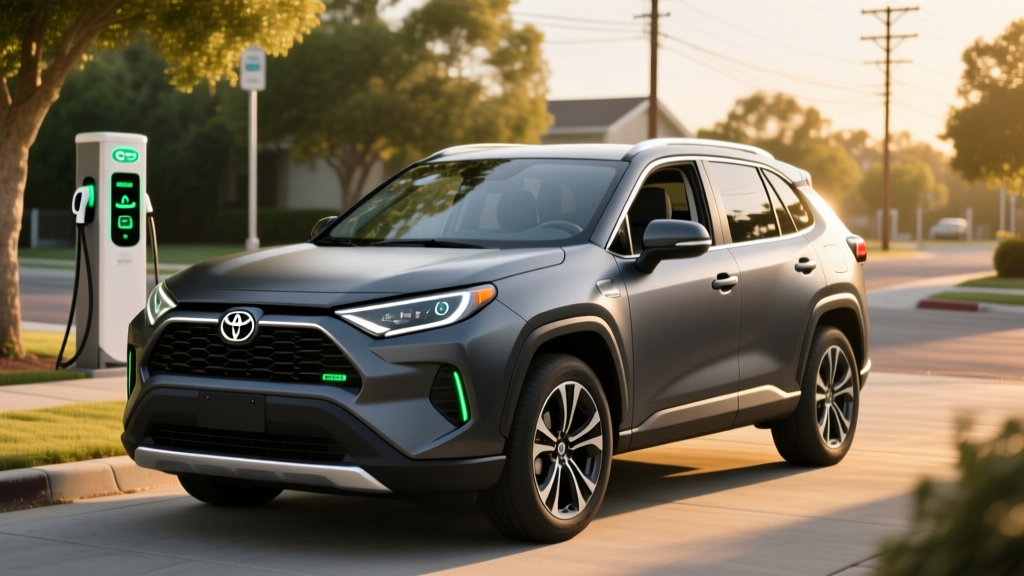
The new 2026 Toyota RAV4 Plug-In Hybrid XSE SUV — marketed as the RAV4 Prime — remains one of the most compelling plug-in hybrids on the market for buyers who want meaningful electric-only commuting without surrendering the flexibility of a gas engine for longer trips. With an EPA-rated 42 miles of electric-only range, 302 combined horsepower, and standard all-wheel drive, the XSE trim slots between the base SE and the fully loaded XSE Premium, offering a sport-tuned suspension and distinctive styling at a mid-tier price point.
For 2026, Toyota carries forward the proven powertrain architecture that made the RAV4 Prime an perennial sellout, with incremental updates to infotainment and driver-assistance features. The critical question for most shoppers: does the PHEV premium over the conventional RAV4 Hybrid justify itself in real-world fuel and electricity savings? We break down every number below.
HEV vs PHEV: What's the Difference in the RAV4 Lineup?
Toyota sells two electrified RAV4 variants, and confusing them is the most common mistake shoppers make at the dealership:
| Feature | RAV4 Hybrid (HEV) | RAV4 Prime (PHEV) |
|---|---|---|
| Plug-in charging required? | No — self-charging via regen and engine | Yes — plug in to access full electric range |
| Electric-only range | ~1 mile at very low speeds | 42 miles (EPA) |
| Combined horsepower | 219 hp | 302 hp |
| Battery capacity | 1.6 kWh (NiMH) | 18.1 kWh (Li-ion) |
| EPA combined MPG (gas) | 39 MPG | 38 MPG (charge-sustaining) |
| MPGe (electric mode) | N/A | 94 MPGe |
| 0-60 mph | 7.4 sec | 5.7 sec |
| Starting MSRP (2026) | ~$33,500 | ~$44,500 (SE) |
| Federal tax credit eligible? | No | Potentially — see details below |
The conventional RAV4 Hybrid is an excellent vehicle in its own right — it requires zero behavioral change, no charging cable, and delivers strong city MPG. But the Prime (PHEV) is a fundamentally different proposition: a larger battery you can charge at home or at work, giving you a 42-mile electric commute that covers the vast majority of daily driving without burning a drop of gasoline. When the battery depletes, it seamlessly operates as a conventional hybrid.
Range, MPGe, and Real-World Fuel Economy
The EPA rates the 2026 RAV4 Prime at 42 miles of electric-only range and 94 MPGe when operating in EV mode. Once the battery is depleted and the gas engine takes over (charge-sustaining mode), it returns an EPA-estimated 38 MPG combined (40 city / 36 highway).
| Driving Mode | City | Highway | Combined |
|---|---|---|---|
| EV Mode (electric only) | — | — | 94 MPGe |
| Hybrid Mode (gas engine) | 40 MPG | 36 MPG | 38 MPG |
Real-World Range Reality: The EPA's 42-mile EV estimate assumes moderate temperatures and mixed driving. In our experience, expect 36–40 miles on the highway at 70 mph, and 44–47 miles in city driving at lower speeds where regenerative braking recaptures more energy. In cold weather (below 30°F), plan for a 15–25% reduction — roughly 30–35 miles of electric range. The gas engine may also engage briefly to heat the cabin unless you precondition while plugged in.
Total combined range — electric plus a full 14.5-gallon tank — exceeds 600 miles, eliminating range anxiety entirely. This is the core appeal of a PHEV: short trips are electric, road trips are gas, and you never need to plan around charging stations.
How Many MPG Does the RAV4 Prime Actually Get?
Real-world results depend heavily on your driving mix and charging habits. Owners who plug in nightly and commute under 40 miles round-trip may use gasoline only a handful of times per month, effectively achieving 80–100+ MPGe on an annualized basis. Owners who never plug in will see the charge-sustaining 38 MPG — still excellent for a 302-hp AWD SUV, but you're carrying around 400+ lbs of battery you're not utilizing. The math only works if you charge regularly.
Powertrain, Battery, and Charging Specs
The RAV4 Prime pairs a 2.5-liter inline-4 Atkinson-cycle engine with two electric motors — one on each axle — for standard electronic all-wheel drive (eAWD). Combined output is 302 horsepower, making it the quickest RAV4 Toyota sells and one of the quickest compact SUVs in its class at 5.7 seconds to 60 mph.
| Specification | 2026 RAV4 Prime XSE |
|---|---|
| Engine | 2.5L I4 Atkinson-cycle |
| Combined System Output | 302 hp |
| Front Motor | 134 kW (180 hp) |
| Rear Motor | 40 kW (54 hp) |
| Battery Capacity | 18.1 kWh (lithium-ion) |
| Usable Battery Capacity | ~14.9 kWh |
| EV Range (EPA) | 42 miles |
| Level 1 Charging (120V) | ~12 hours (0–100%) |
| Level 2 Charging (240V, 3.3 kW) | ~4.5 hours (0–100%) |
| Level 2 Charging (240V, 6.6 kW) | ~2.5 hours (0–100%) |
| DC Fast Charging | Not supported |
| 0–60 mph | 5.7 seconds |
| Drivetrain | eAWD (electronic) |
| Towing Capacity | 1,500 lbs |
Charging: What You Need to Know
The RAV4 Prime uses a standard J1772 connector for AC charging. There is no DC fast-charging capability — this is a deliberate engineering choice by Toyota, as the 18.1 kWh battery is small enough that overnight Level 2 charging fully replenishes it. Most PHEV owners charge at home or at work, where a full recharge in 2.5–4.5 hours is more than adequate.
The XSE trim comes with the upgraded 6.6 kW onboard charger (the base SE trim has a 3.3 kW charger), which is a meaningful advantage. With a 240V Level 2 home charger, you'll wake up to a full battery every morning. We recommend installing a dedicated 30-amp or 40-amp Level 2 charger — expect $500–$1,500 for equipment and installation depending on your electrical panel's capacity and proximity to your parking spot.
Pricing, Trims, and Federal Tax Credit Eligibility
The 2026 RAV4 Prime lineup starts at approximately $44,500 for the SE trim. The XSE trim, with its sport-tuned suspension, SofTex-trimmed seats, 19-inch alloy wheels, and upgraded interior, starts around $48,000. The XSE Premium, with features like a panoramic moonroof and head-up display, pushes past $52,000. Destination charges add approximately $1,350.
Does the 2026 RAV4 Prime Qualify for a Federal Tax Credit?
This is where PHEV buyers need to pay close attention. Under the current IRS §30D Clean Vehicle Credit rules, the RAV4 Prime's eligibility is not guaranteed and depends on several factors:
- MSRP Cap: SUVs must have an MSRP at or below $80,000 — the RAV4 Prime clears this easily.
- Buyer Income Limits: Modified adjusted gross income must not exceed $150,000 (single), $225,000 (head of household), or $300,000 (joint filing).
- Battery Component Sourcing: A percentage of battery components must be manufactured or assembled in North America, and critical minerals must meet sourcing thresholds. These thresholds increase annually through 2029. Toyota has historically sourced RAV4 Prime batteries from Japan, which has complicated credit eligibility in prior years.
- Point-of-Sale Transfer: If eligible, you can transfer the credit to the dealer at purchase for an immediate price reduction, or claim it on your tax return.
Bottom line: Check the current eligibility status on fueleconomy.gov before purchasing, as battery sourcing requirements tighten each year. Do not assume the full $7,500 credit applies — it may be $3,750 (meeting one requirement but not the other) or $0 depending on the specific build date and battery pack sourcing. Consult a tax professional for your specific situation.
Some states and utilities offer additional rebates for PHEVs — California's CVRP, Colorado's state credit, and various utility off-peak charging incentives can stack with federal credits. Check your state energy office and local utility for current programs.
Reliability, Battery Warranty, and Replacement Costs
The RAV4 Prime's hybrid powertrain is one of the most proven systems in Toyota's lineup. Toyota's hybrid synergy drive architecture has been refined over two decades, and the RAV4 Prime specifically has been in production since the 2021 model year with strong reliability track records.
Battery & Hybrid System Warranty:
- Hybrid Battery: 10 years / 150,000 miles (whichever comes first) — covers capacity loss and defects
- Hybrid System Components: 8 years / 100,000 miles — covers inverter, transaxle, control modules
- Basic Vehicle: 3 years / 36,000 miles
- Powertrain: 5 years / 60,000 miles
Is the Hybrid Battery Reliable and What Does Replacement Cost?
Toyota's lithium-ion hybrid batteries are designed to last the life of the vehicle under normal use. Unlike full BEV batteries that cycle through deep charge/discharge ranges daily, the RAV4 Prime's battery management system keeps the state of charge within a protective window (roughly 20%–85% in hybrid mode), significantly reducing degradation stress.
That said, if a replacement is needed outside of warranty, expect a cost in the range of $4,000–$6,500 for the high-voltage battery pack, plus labor. Third-party refurbishment and cell-level repair services are increasingly available for $2,000–$3,500. For context, conventional engine or transmission replacements on gas vehicles often cost similar amounts — the hybrid battery is not the financial liability many buyers fear.
According to data from IIHS, the RAV4 Prime carries top safety ratings, and the high-voltage system is well-protected in crash structures. There are no widespread reports of premature battery degradation in the RAV4 Prime fleet.
Who Should Buy the RAV4 Prime XSE — and Who Shouldn't?
Pros
- 42 miles of real electric commuting eliminates daily gas use
- 302 hp makes it genuinely quick — 5.7s 0–60
- 600+ mile total range; zero road-trip range anxiety
- 6.6 kW onboard charger (XSE) enables practical overnight top-ups
- Proven Toyota hybrid reliability with 10-year battery warranty
- Standard eAWD without a mechanical driveshaft
Cons
- ~$11,000 premium over the RAV4 Hybrid — payback takes years
- No DC fast charging — irrelevant for most, limiting for some
- 1,500-lb towing capacity trails some competitors
- Federal tax credit eligibility uncertain due to battery sourcing
- Cargo space slightly reduced vs. gas RAV4 (battery packaging)
- High demand means dealer markups remain common
Hybrid vs PHEV vs Full EV — Which Is Right for You?
Choose the RAV4 Prime (PHEV) if: You have access to home or workplace Level 2 charging, your daily round-trip commute is under 45 miles, and you regularly take longer road trips where you don't want to plan around charging infrastructure. You want the electric experience for daily driving without sacrificing gas flexibility.
Choose the RAV4 Hybrid (HEV) if: You can't charge at home (apartment, street parking, no garage), you want maximum simplicity with zero plug-in behavior change, or the $11,000 PHEV premium doesn't pencil out given your low annual mileage. You'll still get 39 MPG combined without lifting a finger.
Choose a full BEV (like the Toyota bZ4X or Tesla Model Y) if: You have reliable home charging, your daily driving is under 250 miles, you want zero tailpipe emissions and minimal maintenance (no oil changes, no gas engine), and you're ready to use public DC fast chargers for road trips. Total cost of ownership often favors BEVs over PHEVs when charging is cheap and the federal credit applies.
Frequently Asked Questions
How far can the 2026 RAV4 Prime go on electric only?
The EPA rates it at 42 miles of electric-only range. In real-world driving, expect 36–40 miles on the highway and up to 47 miles in stop-and-go city driving where regenerative braking maximizes efficiency. Cold weather can reduce this to 30–35 miles.
How many MPG does the RAV4 Prime get when the battery is dead?
In charge-sustaining (hybrid) mode with a depleted battery, the EPA rates it at 38 MPG combined (40 city / 36 highway). This is comparable to the conventional RAV4 Hybrid — you're still driving a highly efficient vehicle even without plug-in charging.
Does the RAV4 Prime qualify for the $7,500 federal tax credit?
It depends on current battery sourcing compliance under IRS §30D rules. The MSRP and buyer income thresholds are easily met, but critical-mineral and battery-component sourcing requirements have historically been challenging for the Japan-built RAV4 Prime. Check fueleconomy.gov for the latest eligibility before purchasing.
How long does it take to charge the RAV4 Prime at home?
With the XSE's 6.6 kW onboard charger and a 240V Level 2 home station, a full charge takes approximately 2.5 hours. On a standard 120V household outlet (Level 1), expect about 12 hours. Most owners plug in overnight and wake up to a full battery every morning.
Is the RAV4 Prime battery expensive to replace?
Outside of the 10-year/150,000-mile warranty, a replacement high-voltage battery pack costs approximately $4,000–$6,500 including labor. However, Toyota's hybrid batteries rarely fail prematurely — the battery management system keeps the cells in a protective state-of-charge window that minimizes degradation. Many Prius batteries from the early 2000s are still in service after 200,000+ miles.
Can the RAV4 Prime DC fast charge?
No. The RAV4 Prime supports AC charging only (Level 1 at 120V and Level 2 at 240V via J1772). Toyota determined that DC fast charging was unnecessary for a PHEV with an 18.1 kWh battery — overnight Level 2 charging fully replenishes it. If DC fast charging is a priority, a full BEV is the better choice.
Is the XSE trim worth it over the base SE?
The XSE adds the 6.6 kW onboard charger (vs. 3.3 kW on the SE), sport-tuned suspension, SofTex upholstery, 19-inch wheels, and a power liftgate. The faster onboard charger alone is worth serious consideration if you plan to charge during midday breaks or at public Level 2 stations where time matters. The ~$3,500 premium is justified for most buyers.