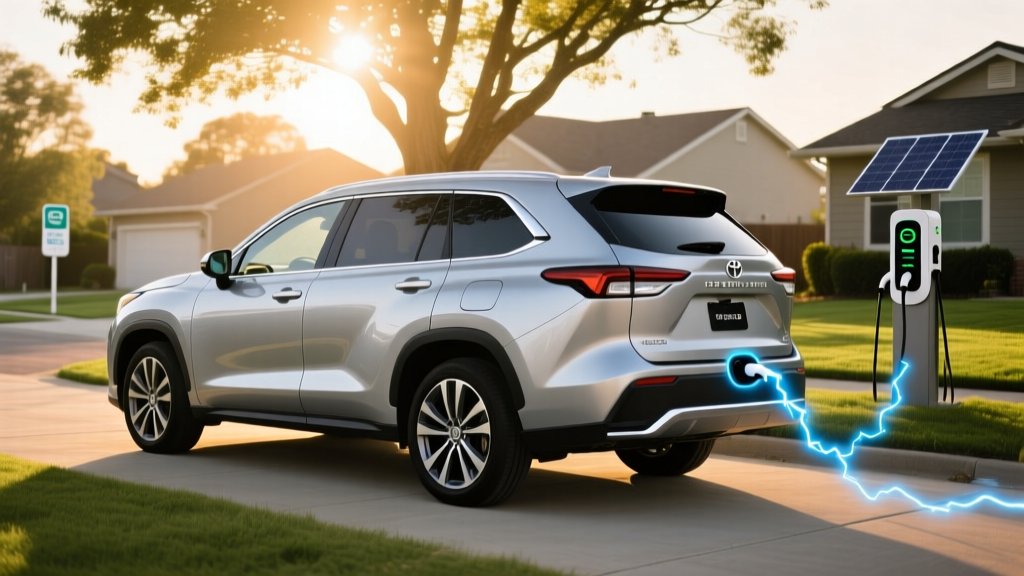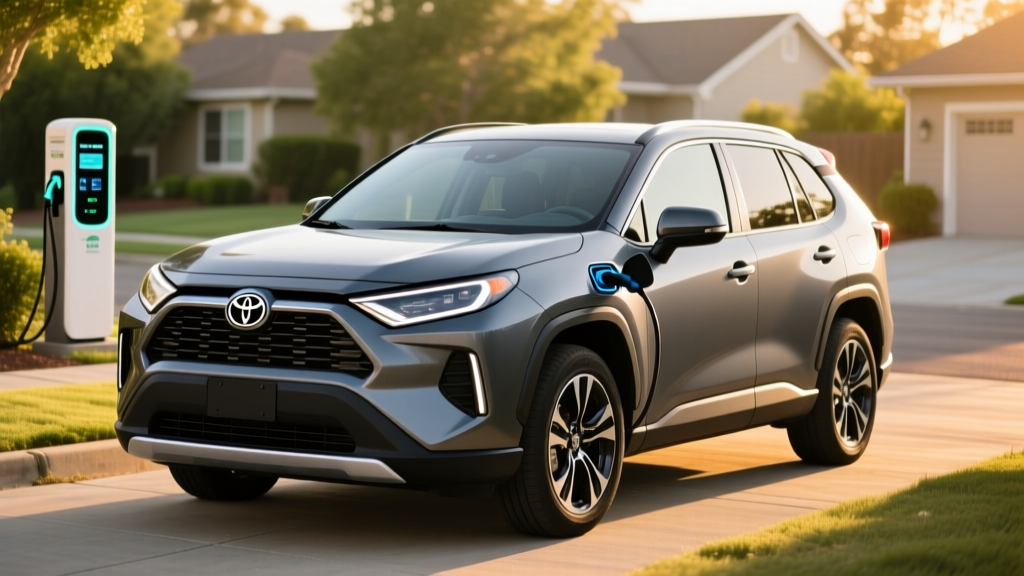
The Toyota RAV4 Prime has been the benchmark plug-in hybrid SUV for years, and the 2026 RAV4 plug-in variant continues that streak with meaningful updates to efficiency, tech, and pricing. If you want electric-only commuting without the range-commitment of a full EV, this is one of the most compelling PHEVs on the market. Here's the complete data-driven breakdown.
What Is the 2026 RAV4 Plug-In Hybrid (Prime)?
The 2026 Toyota RAV4 Prime is a plug-in hybrid electric vehicle (PHEV) — meaning it pairs a gasoline engine with a larger battery pack and electric motors that you can charge from a wall outlet. Unlike a conventional hybrid (HEV) such as the standard RAV4 Hybrid, which generates all its electricity from the engine and regenerative braking, the Prime's 18.1 kWh battery can be plugged in to deliver roughly 42 miles of pure electric driving before the gas engine kicks in.
HEV vs. PHEV: What's the Difference?
| Feature | RAV4 Hybrid (HEV) | RAV4 Prime (PHEV) |
|---|---|---|
| Plug-in charging | No — self-charging | Yes — plug in at home or public charger |
| Electric-only range | ~1 mile at low speed | 42 miles (EPA) |
| Battery capacity | 1.6 kWh | 18.1 kWh (usable ~14.5 kWh) |
| Combined horsepower | 219 hp | 302 hp |
| 0–60 mph | 7.4 sec | 5.7 sec |
| Starting MSRP | ~$33,575 | ~$44,490 |
| Federal tax credit | None | Up to $7,500 (eligibility varies) |
The trade-off is straightforward: the Prime costs roughly $11,000 more upfront than the HEV but delivers dramatically more electric driving, substantially quicker acceleration, and potential tax-credit savings that narrow the gap.
Electric-Only Range and Total Driving Range
The EPA rates the 2026 RAV4 Prime at 42 miles of electric-only range. In real-world driving, expect 35–40 miles in mixed conditions and potentially as low as 28–30 miles in sustained cold weather (below 30°F) when the cabin heater draws from the battery.
Real-World Expectation: 35–40 mi (mild weather), 28–30 mi (cold/highway)
Total Combined Range (electric + gas): ~520 miles
Once the battery depletes to its buffer threshold, the Prime operates as a conventional hybrid. The 14.5-gallon fuel tank combined with hybrid-mode efficiency of roughly 38 MPG gives you approximately 478 additional miles of gas range, for a total combined range of around 520 miles.
For context, a 30-mile round-trip commute falls within the electric-only envelope for most days. Owners with home Level 2 charging who commute within that window can go weeks without visiting a gas station.
Fuel Economy: MPGe and MPG Breakdown
| Mode | City | Highway | Combined |
|---|---|---|---|
| Charge-depleting (EV+gas blended) | 94 MPGe | 94 MPGe | 94 MPGe |
| Charge-sustaining (hybrid-only) | 40 MPG | 36 MPG | 38 MPG |
MPGe (miles per gallon equivalent) measures efficiency when the vehicle is drawing from its charged battery. The 94 MPGe figure is the EPA's combined rating for the blended electric-and-gas phase. Once the battery is depleted, the Prime reverts to standard hybrid operation at 38 MPG combined — competitive with the standard RAV4 Hybrid's 39 MPG combined, despite carrying roughly 300 lbs. of additional battery weight.
In real-world city driving, many owners report hybrid-mode MPG figures of 40–43 MPG thanks to aggressive regenerative braking and frequent electric-assist at low speeds. Highway cruising at 75+ mph typically yields 33–35 MPG in hybrid mode, consistent with most compact SUVs.
Powertrain and Performance Specs
| Specification | 2026 RAV4 Prime (PHEV) |
|---|---|
| Engine | 2.5L 4-cylinder Atkinson-cycle |
| Engine output | 177 hp / 165 lb-ft |
| Front electric motor | 134 kW (180 hp) |
| Rear electric motor | 40 kW (54 hp) |
| Combined system horsepower | 302 hp |
| 0–60 mph | 5.7 seconds |
| Drivetrain | Electronic AWD (e-AWD) |
| Transmission | eCVT (planetary gearset) |
| Towing capacity | 1,500 lbs |
| Battery capacity (gross / usable) | 18.1 kWh / ~14.5 kWh |
| Battery chemistry | Lithium-ion (NMC) |
The 302-horsepower combined output makes the RAV4 Prime the quickest RAV4 variant Toyota sells. The eCVT provides seamless power delivery without the shift-shock of a traditional automatic. The rear motor engages automatically for traction, providing all-weather capability without a mechanical driveshaft.
Charging: Speeds, Connectors, and Home Setup
The 2026 RAV4 Prime charges via a J1772 connector (the standard for all non-Tesla PHEVs and EVs in North America, though NACS adoption is accelerating). Here's what charging looks like across levels:
| Charging Level | Power (kW) | Time (0–100%) | Notes |
|---|---|---|---|
| Level 1 (120V household) | ~1.4 kW | ~12 hours | Standard outlet; overnight for small batteries |
| Level 2 (240V, 16A) | ~3.3 kW | ~5.5 hours | Standard Prime onboard charger |
| Level 2 (240V, 32A)* | ~6.6 kW | ~2.5 hours | Available with Premium trim upgrade |
| DC Fast Charge | N/A | N/A | Not supported |
*The 6.6 kW onboard charger is available on higher trims or as a package option. Verify trim-level availability at purchase.
Critical note: The RAV4 Prime does not support DC fast charging. This is typical for PHEVs — the battery is small enough that Level 2 fully replenishes it overnight. For a 14.5 kWh usable battery, even a basic 3.3 kW Level 2 home charger restores a full charge in about 5.5 hours, which is more than adequate for daily use.
A 240V Level 2 home charger installation typically costs $800–$2,000 including equipment and electrician labor, depending on panel proximity and local permit fees. The RAV4 Prime's modest charging demands mean you won't need a panel upgrade in most homes — a 20-amp or 30-amp dedicated circuit is sufficient.
Pricing, Trims, and Tax Credit Eligibility
The 2026 RAV4 Prime is offered in two main trims:
- SE: Starting MSRP ~$44,490 (includes destination charge)
- XSE: Starting MSRP ~$48,390 (adds premium audio, panoramic roof option, 6.6 kW charger)
Federal Tax Credit (§30D)
The RAV4 Prime may qualify for up to $7,500 under the IRS §30D Clean Vehicle Credit, but eligibility depends on several conditions that change periodically:
- MSRP cap: SUVs must be under $80,000 — the Prime qualifies easily
- Buyer income cap: AGI must not exceed $150,000 (single), $225,000 (head of household), or $300,000 (joint)
- Battery sourcing: Critical minerals and battery components must meet phased-in domestic-content thresholds — Toyota's supply chain compliance varies by model year; verify on IRS.gov or fueleconomy.gov at time of purchase
- Point-of-sale transfer: As of 2024+, you can transfer the credit to the dealer for an immediate price reduction rather than waiting for tax filing
- Final assembly: Must occur in North America — the RAV4 Prime is assembled in Japan, which has historically affected eligibility. Confirm current status before purchase.
Important: The RAV4 Prime's Japan assembly has been the primary barrier to federal credit eligibility in recent years. Toyota has shifted some production, and rules continue to evolve. Always check the latest VIN-eligibility tool on fueleconomy.gov before committing to a purchase. Some buyers may qualify for state-level PHEV incentives instead — check your state's energy office for current programs.
Battery Warranty, Reliability, and Replacement Cost
Powertrain Warranty: 5 years / 60,000 miles
Capacity retention threshold: Toyota covers the battery if it falls below approximately 70% of original capacity during the warranty period
Toyota's hybrid battery reliability track record is among the best in the industry. The Prius, now over 25 years old in production, has demonstrated that nickel-metal-hydride and lithium-ion hybrid batteries routinely last 150,000–200,000+ miles with minimal degradation. The RAV4 Prime's larger lithium-ion pack benefits from active thermal management, which slows degradation compared to passively cooled packs.
Real-world data from fleet and owner surveys suggests PHEV battery degradation of approximately 8–12% over the first 100,000 miles — meaning a 42-mile electric range might drop to roughly 37–38 miles after a decade of typical use. This is well within the warranty threshold.
Out-of-warranty replacement cost: If the battery eventually needs replacement beyond the warranty window, expect $4,000–$6,500 for the battery pack plus labor. Third-party refurbishment shops are increasingly offering remanufactured PHEV batteries for $2,500–$4,000. For most owners, this is a decade-plus concern, not an imminent one.
The RAV4 line has consistently earned top marks from IIHS and strong reliability scores from Consumer Reports and J.D. Power, reinforcing the platform's long-term ownership appeal.
RAV4 Prime vs. Full EV vs. Gas: Which Should You Choose?
Choose the RAV4 Prime (PHEV) if:
- Your daily commute is under 40 miles round-trip and you can charge at home
- You take road trips regularly and don't want to plan around charging infrastructure
- You want EV-like daily driving but your household has only one vehicle
- You live in a cold climate where EV range loss is significant
Choose a full EV (e.g., Tesla Model Y, Hyundai Ioniq 5) if:
- You have reliable home charging and your daily driving is under 250 miles
- You want to eliminate gas entirely and minimize maintenance (no oil changes, fewer moving parts)
- Your region has robust DC fast-charging infrastructure for road trips
Choose the standard RAV4 Hybrid (HEV) if:
- You cannot install a home charger (apartment, street parking)
- You want hybrid efficiency without the plug-in price premium
- Your driving is mostly longer highway trips where PHEV electric range offers little benefit
The RAV4 Prime occupies a specific and valuable niche: it's the bridge vehicle for drivers who want electric commuting but aren't ready — or able — to go fully electric. The 42-mile EV range covers most daily driving, the hybrid mode handles road trips seamlessly, and the 302-hp powertrain makes it genuinely fun to drive.
Pros and Cons
Pros
- 42 miles of electric-only range covers most commutes
- 302 hp makes it the quickest RAV4 ever
- Standard e-AWD for all-weather traction
- 38 MPG hybrid mode even after battery depletion
- 10-year/150,000-mile battery warranty
- ~520-mile total range eliminates road-trip anxiety
- Strong resale value and reliability reputation
Cons
- $44,490+ starting price is steep for a compact SUV
- No DC fast charging (acceptable for PHEV, but limiting)
- Federal tax credit eligibility uncertain due to Japan assembly
- 3.3 kW base onboard charger is slow for public Level 2
- 1,500-lb towing capacity trails some competitors
- Dealer markups remain common on Prime trims
- Cargo space slightly reduced vs. gas RAV4 (battery packaging)
Frequently Asked Questions
How many MPG does the 2026 RAV4 Prime get?
In hybrid mode (after the battery is depleted), the RAV4 Prime achieves 40 MPG city, 36 MPG highway, and 38 MPG combined per the EPA. In charge-depleting mode using both battery and gas, it earns 94 MPGe combined. Real-world city driving often exceeds the EPA hybrid estimate by 2–5 MPG thanks to regenerative braking.
How far can the RAV4 Prime go on electric only?
The EPA rates it at 42 miles of electric-only range. In real-world conditions, expect 35–40 miles in moderate weather and 28–30 miles in cold weather or sustained highway driving. This is sufficient for most daily commutes under 40 miles round-trip.
Does the 2026 RAV4 Prime qualify for the $7,500 federal tax credit?
It may, but eligibility is not guaranteed. The RAV4 Prime is assembled in Japan, and the §30D credit requires North American final assembly plus battery-sourcing and buyer-income thresholds. Check fueleconomy.gov for the latest VIN-specific eligibility before purchasing. State-level incentives may also apply.
Is the RAV4 Prime reliable, and what does battery replacement cost?
Toyota's hybrid powertrains have an exceptional reliability record spanning 25+ years. The Prime's lithium-ion battery is covered for 10 years/150,000 miles. Out-of-warranty replacement runs $4,000–$6,500, though most owners will never need one. Degradation is typically 8–12% over 100,000 miles.
Do I need to plug in the RAV4 Prime?
You don't have to — if you never plug it in, it operates as a conventional hybrid at 38 MPG combined. But you'll miss the entire point of the PHEV premium. Plugging in nightly at home unlocks 42 miles of cheap, quiet electric commuting. Without home charging access, the standard RAV4 Hybrid is a better value.
Can the RAV4 Prime use DC fast chargers?
No. Like nearly all PHEVs, the RAV4 Prime only accepts AC charging (Level 1 and Level 2 via J1772 connector). The 18.1 kWh battery is small enough that a Level 2 home charger replenishes it fully in 2.5–5.5 hours depending on the onboard charger option.
How does the RAV4 Prime compare to a full EV like the Tesla Model Y?
The Model Y offers 300+ miles of range, DC fast charging, and lower running costs — but requires commitment to charging infrastructure. The Prime gives you 42 electric miles for daily use plus unlimited gas range for road trips. If you have one vehicle and take regular long trips, the Prime is more versatile. If you have home charging and mostly drive under 250 miles daily, a full EV will save more on fuel and maintenance long-term.
Sources: fueleconomy.gov (EPA ratings), IRS §30D Clean Vehicle Credit, Toyota Motor Corporation specifications.