Quick Verdict: The PHEV RAV4 Makes Sense If You Can Plug In
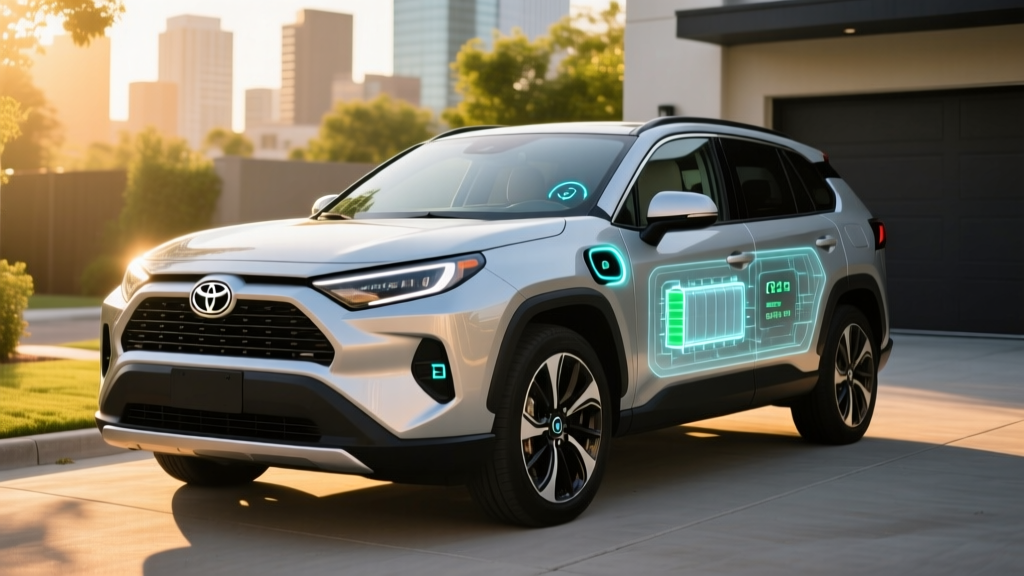
The Toyota RAV4 Prime — Toyota's name for the PHEV RAV4 — occupies a narrow but valuable slice of the electrified-vehicle market. It gives you 42 miles of EPA-rated electric-only driving for daily commutes, then seamlessly switches to a 38 MPG combined hybrid mode for road trips. With 304 combined horsepower, it's also the quickest RAV4 in the lineup, hitting 0–60 mph in roughly 5.7 seconds.
For 2026, the RAV4 Prime continues with the same proven powertrain but faces stiffer competition from newer plug-in hybrids. The question isn't whether it's a good vehicle — it is — but whether its ~$44,000 starting price and limited federal tax credit eligibility make it the right electrified choice for your situation.
HEV vs PHEV: What's the Difference in the RAV4 Lineup?
Toyota sells the RAV4 in three powertrain flavors. Understanding the difference is critical before you visit a dealer.
| Attribute | RAV4 Hybrid (HEV) | RAV4 Prime (PHEV) | RAV4 EV (BEV) — Not Offered |
|---|---|---|---|
| Plugs in? | No — self-charging | Yes — Level 1 & Level 2 | N/A |
| Electric-only range | None (EV mode very limited) | 42 miles (EPA) | N/A |
| Combined MPG / MPGe | 39 MPG combined | 94 MPGe (electric) / 38 MPG (hybrid) | N/A |
| Combined horsepower | 219 hp | 304 hp | N/A |
| Battery capacity | 1.6 kWh (small buffer) | 18.1 kWh usable | N/A |
| Base MSRP (2026) | ~$33,000 | ~$44,490 | N/A |
| Federal tax credit | Not eligible | Up to $7,500 (see eligibility below) | N/A |
The conventional RAV4 Hybrid never plugs in. It recovers energy through regenerative braking and the gasoline engine, storing a small amount in its ~1.6 kWh battery. You drive it exactly like a gas car — just fill up and go — but it returns roughly 39 MPG combined instead of the 28–30 MPG a gas-only RAV4 would get.
The RAV4 Prime (PHEV) has a much larger 18.1 kWh battery that you charge by plugging in. That battery enables 42 miles of pure electric driving at speeds up to 84 mph. Once the battery depletes, the Prime automatically becomes a conventional hybrid, delivering 38 MPG combined with no change in driving behavior.
RAV4 Prime Fuel Economy: EPA Numbers and Real-World MPG
Here's the full fuel-economy breakdown from fueleconomy.gov:
| Mode | City | Highway | Combined |
|---|---|---|---|
| Electric-only (MPGe) | 105 MPGe | 84 MPGe | 94 MPGe |
| Hybrid mode (MPG) | 40 MPG | 36 MPG | 38 MPG |
Real-World MPG: What to Actually Expect
Toyota's hybrid system excels in city driving, where regenerative braking recovers energy at every stop. In real-world testing, owners routinely report 40–43 MPG in city hybrid mode, matching or slightly exceeding the EPA city rating. Highway driving is a different story: at sustained 75+ mph speeds, expect 33–35 MPG in hybrid mode, below the 36 MPG EPA highway estimate.
In electric-only mode, the 42-mile EPA range assumes moderate temperatures and mixed driving. In winter conditions (below 40°F), expect 32–36 miles of electric range due to cabin heating demands and reduced battery efficiency. Summer highway driving at 70+ mph may also trim electric range to roughly 36–38 miles.
Total combined range — electric plus a full 14.5-gallon tank in hybrid mode — exceeds 600 miles, eliminating any range anxiety on long trips.
Powertrain and Performance Specs
| Specification | 2026 RAV4 Prime |
|---|---|
| Engine | 2.5L 4-cylinder Atkinson cycle |
| Engine output | 176 hp / 163 lb-ft |
| Front electric motor | 134 kW (180 hp) |
| Rear electric motor | 40 kW (54 hp) |
| Combined system output | 304 hp |
| 0–60 mph | ~5.7 seconds |
| Drivetrain | Electronic AWD (eAWD) |
| Battery (usable) | 18.1 kWh, lithium-ion |
| Electric-only range | 42 miles (EPA) |
| Electric-only top speed | 84 mph |
| Max Level 2 charge rate | 6.6 kW (onboard charger) |
| DC fast charging | Not supported |
| Fuel tank | 14.5 gallons |
| Towing capacity | 2,500 lbs |
The 304 hp figure comes from Toyota's combined net output calculation — it is not simply the sum of engine and motor peak outputs, since they peak at different RPMs. Still, the result is a compact SUV that accelerates with genuine urgency. The eAWD system uses the rear electric motor to power the rear wheels, providing traction without a mechanical driveshaft.
Charging the RAV4 Prime
The RAV4 Prime charges via a J1772 connector (the standard for non-Tesla PHEVs in North America). It does not support DC fast charging — a limitation shared with nearly all plug-in hybrids due to their smaller batteries.
| Charging Method | Power | Time (0–100%) | Notes |
|---|---|---|---|
| Level 1 (120V household outlet) | ~1.4 kW | ~12 hours | Included cord; adequate for overnight |
| Level 2 (240V, 32A circuit) | 6.6 kW | ~2.5 hours | Requires home Level 2 station or public L2 |
Because the battery is only 18.1 kWh, a Level 2 home charger fills it fully in about 2.5 hours. Most owners plug in overnight on Level 1 and wake to a full battery — the 12-hour Level 1 time is perfectly adequate if you drive 42 miles or fewer per day and have 10+ hours between plug-ins.
Pricing, Trims, and Tax Credit Eligibility
The 2026 RAV4 Prime comes in two trims:
- SE: Starting at approximately $44,490 (MSRP, before destination)
- XSE: Starting at approximately $48,475 (MSRP, before destination)
Destination charges add roughly $1,350. Fully loaded XSE models with premium packages can exceed $54,000.
Federal Tax Credit (§30D) — The Complicated Part
The RAV4 Prime may qualify for up to $7,500 under the IRS §30D clean vehicle credit, but eligibility depends on several factors that change based on battery sourcing rules. Here's what to check:
- MSRP cap: SUVs must be under $80,000 — the RAV4 Prime passes easily.
- Buyer income cap: Modified AGI must not exceed $150,000 (single), $225,000 (head of household), or $300,000 (joint).
- Battery sourcing: Critical minerals and battery components must meet escalating domestic-content thresholds. Toyota's supply chain compliance varies by model year and production batch.
- Point-of-sale transfer: Eligible buyers can transfer the credit to the dealer at purchase, reducing the out-of-pocket price immediately rather than waiting for a tax refund.
Always verify current eligibility on IRS.gov or with a tax professional before purchasing. Credit rules and qualifying VIN lists are updated periodically.
With the full $7,500 credit, the effective price of an SE trim drops to roughly $38,340 — competitive with well-equipped conventional RAV4 Hybrid trims once you factor in fuel savings.
Reliability, Battery Warranty, and Replacement Cost
Toyota Hybrid Battery Warranty: Toyota covers the RAV4 Prime's high-voltage battery for 10 years or 150,000 miles (whichever comes first) against defects and excessive capacity loss. This warranty applies in all 50 states. The broader powertrain warranty covers 5 years / 60,000 miles, and the basic new-vehicle warranty covers 3 years / 36,000 miles.
Toyota's hybrid powertrains have a strong reliability track record spanning two decades since the original Prius. The RAV4 Prime's series-parallel hybrid system is well-proven, and the larger PHEV battery operates within conservative charge/discharge windows that minimize degradation.
Battery Replacement Cost
If the high-voltage battery requires replacement out of warranty, expect a cost between $5,000 and $8,000 including parts and labor at a Toyota dealer. Third-party hybrid battery refurbishers offer rebuilt units for $3,000–$4,500. In practice, Toyota hybrid batteries routinely last 150,000–200,000+ miles before significant degradation, and many first-generation Prius batteries exceeded 200,000 miles without replacement.
According to IIHS, the RAV4 Prime has earned top safety ratings, adding to its long-term ownership appeal.
Who Should Buy the RAV4 Prime vs. a Full EV or Gas Car?
Pros
- 42 miles electric covers most daily commutes gas-free
- 600+ mile total range — no charging anxiety on road trips
- 304 hp makes it the fastest RAV4 available
- Standard eAWD without a fuel-economy penalty
- Proven Toyota reliability with 10-year battery warranty
- No need to rely on public charging infrastructure
Cons
- $11,000+ premium over the conventional RAV4 Hybrid
- No DC fast charging — Level 2 only
- Federal tax credit eligibility not guaranteed (sourcing rules)
- Cargo space slightly reduced vs. non-Prime RAV4
- Dealer markups still common due to limited supply
Choose the RAV4 Prime (PHEV) if:
- Your daily round-trip commute is under 40 miles and you can charge at home
- You take regular road trips where EV charging infrastructure is sparse
- You want electric daily driving but aren't ready to commit to a full EV
- You need AWD and a compact SUV form factor
Choose the RAV4 Hybrid (HEV) if:
- You cannot charge at home (apartment, no garage, street parking)
- Your budget is tighter and the $11,000 premium isn't justified
- Your daily driving exceeds 50+ miles, reducing the PHEV advantage
Choose a full EV (e.g., Tesla Model Y, Hyundai Ioniq 5) if:
- You have reliable home charging and your trips rarely exceed 250 miles
- You want zero gasoline purchases and minimal maintenance
- You qualify for the full $7,500 federal credit on an eligible EV
Ownership Costs: RAV4 Prime vs. RAV4 Hybrid
Let's compare 5-year estimated ownership costs for a driver covering 12,000 miles per year (60,000 total), assuming 80% of RAV4 Prime miles are driven on electricity:
| Cost Category | RAV4 Prime (PHEV) | RAV4 Hybrid (HEV) |
|---|---|---|
| Purchase price (after credit) | ~$38,340* | ~$34,350 |
| Fuel / electricity (5 yrs) | ~$2,400 | ~$6,500 |
| Maintenance (5 yrs) | ~$2,200 | ~$2,800 |
| Insurance (5 yrs) | ~$7,800 | ~$7,200 |
| Estimated 5-yr total | ~$50,740* | ~$50,850 |
*Assumes full $7,500 federal tax credit. Without the credit, the Prime's 5-year total rises to ~$58,240. Electricity at $0.14/kWh; gasoline at $3.50/gal. Actual costs vary by region and driving habits.
The math is close. With the full tax credit, the Prime roughly breaks even with the Hybrid over five years despite its higher sticker price, thanks to dramatically lower fuel costs. Without the credit, the Hybrid wins on pure economics unless fuel prices rise significantly.
Frequently Asked Questions
How many MPG does the RAV4 PHEV get?
The RAV4 Prime returns 94 MPGe combined when running on electricity and 38 MPG combined in hybrid mode after the battery depletes. In real-world city driving, hybrid-mode MPG often reaches 40–43. Highway hybrid driving typically yields 33–35 MPG.
How far can the RAV4 Prime go on electric only?
The EPA rates the RAV4 Prime at 42 miles of electric-only range. In cold weather (below 40°F), expect 32–36 miles. In moderate temperatures with mixed driving, many owners report achieving the full 42 miles or occasionally slightly more.
Does the RAV4 Prime qualify for a tax credit?
It may qualify for up to $7,500 under the IRS §30D clean vehicle credit, subject to buyer income limits ($300,000 joint AGI cap), MSRP caps ($80,000 for SUVs — easily met), and battery component/critical mineral sourcing requirements. Check the fueleconomy.gov tax credit lookup and confirm with a tax professional before purchasing.
Is the RAV4 Prime reliable, and what does a battery replacement cost?
Toyota's hybrid systems have an excellent reliability record over 20+ years. The Prime's high-voltage battery is covered for 10 years / 150,000 miles. Out-of-warranty replacement costs $5,000–$8,000 at a dealer, though real-world battery lifespans frequently exceed 150,000 miles without major degradation.
Can the RAV4 Prime DC fast charge?
No. The RAV4 Prime supports Level 1 (120V, ~1.4 kW) and Level 2 (240V, up to 6.6 kW) charging only. This is standard for plug-in hybrids — the 18.1 kWh battery is small enough that Level 2 fills it in about 2.5 hours, making DC fast charging unnecessary for most owners.
Should I get the RAV4 Prime or a full EV?
If you can charge at home, drive under 40 miles daily, and regularly take trips exceeding 250 miles — especially in regions with sparse public charging — the RAV4 Prime offers the best of both worlds. If your daily driving is longer, you have reliable home and workplace charging, and you want zero gasoline costs, a full EV like the Hyundai Ioniq 5 or Tesla Model Y may serve you better.