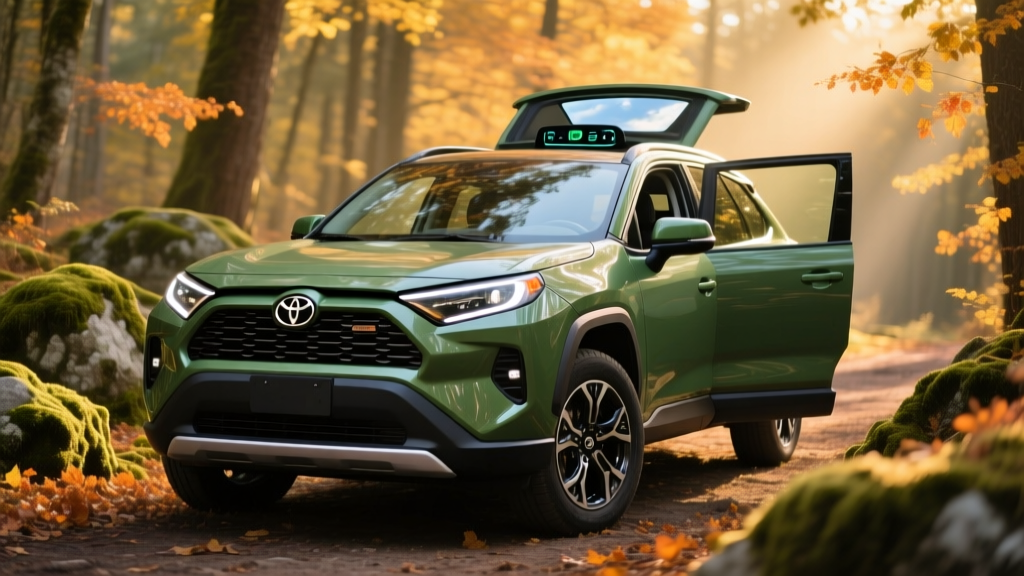
The 2026 Toyota RAV4 Hybrid Woodland Edition occupies a narrow but compelling lane: a rugged-styled, all-wheel-drive hybrid crossover that sips fuel without requiring a plug. For buyers who want the off-road aesthetic and trail capability of a TRD-flavored SUV but can't stomach the fuel bills of a body-on-frame rig, the Woodland Edition makes a strong case. Here's a data-driven breakdown of what this trim actually delivers — and where it falls short.
What Exactly Is the RAV4 Hybrid Woodland Edition?
The Woodland Edition is a conventional hybrid electric vehicle (HEV), not a plug-in hybrid (PHEV). That distinction matters enormously for ownership expectations. The HEV generates all its electricity internally through regenerative braking and its gasoline engine — you never plug it in. The related RAV4 Prime is the PHEV variant with a larger battery, an electric-only driving mode, and a charging port.
HEV vs PHEV: RAV4 Hybrid vs RAV4 Prime
| Feature | RAV4 Hybrid (HEV) | RAV4 Prime (PHEV) |
|---|---|---|
| Plug-in charging | No — self-charging | Yes — Level 1/2 |
| Electric-only range | ~1 mi at low speed | 42 mi (EPA) |
| Battery size | ~1.6 kWh (NiMH) | 18.1 kWh (Li-ion) |
| Combined HP | 219 hp | 302 hp |
| EPA combined MPG | 39 MPG | 94 MPGe / 38 MPG (gas) |
| Federal tax credit | No | No (assembled outside US) |
| Starting MSRP (2026) | ~$37,450 | ~$44,900 |
Source: fueleconomy.gov, Toyota Motor Corporation
Fuel Economy: EPA Ratings and Real-World MPG
The 2026 RAV4 Hybrid carries EPA ratings of 41 MPG city / 38 MPG highway / 39 MPG combined across most AWD trims. The Woodland Edition, with its all-terrain tires and slightly higher ride weight, typically sees a 1-2 MPG reduction on the highway sticker, landing around 40 city / 36 highway / 38 combined depending on final EPA certification.
| Metric | Rating |
|---|---|
| City MPG | 40 MPG |
| Highway MPG | 36 MPG |
| Combined MPG | 38 MPG |
| Fuel tank capacity | 14.5 gallons |
| Total driving range | ~551 miles |
Real-World MPG: What Owners Actually See
Toyota's hybrid synergy drive system excels in stop-and-go city driving, where regenerative braking and electric-motor assist do the heavy lifting. Many RAV4 Hybrid owners report exceeding the EPA city estimate by 2-4 MPG in moderate climates with conservative driving. Highway driving is the opposite story: at 75+ mph, the gasoline engine carries nearly all the load, and the boxy crossover shape creates aerodynamic drag that pushes real-world highway fuel economy down to 33-35 MPG.
Cold weather (below 35°F) typically reduces hybrid fuel economy by 8-12% due to engine warm-up cycles, increased battery internal resistance, and cabin heating demands. Expect roughly 34-35 MPG combined in winter conditions if you're in a northern climate.
Powertrain Specs: 219 HP and Standard AWD
The RAV4 Hybrid pairs a 2.5-liter Dynamic Force four-cylinder engine (176 hp, 163 lb-ft) with two electric motor-generators — one front (88 kW / 118 hp) and one rear (40 kW / 54 hp) — for a net system output of 219 horsepower. The rear motor provides electronic on-demand all-wheel drive without a mechanical driveshaft, improving traction on loose surfaces and in snow.
| Specification | Detail |
|---|---|
| Engine | 2.5L 4-cyl Atkinson-cycle |
| Engine output | 176 hp / 163 lb-ft |
| Front motor | 88 kW (118 hp) |
| Rear motor | 40 kW (54 hp) |
| Net system horsepower | 219 hp |
| Transmission | eCVT (planetary gearset) |
| 0-60 mph | ~7.4 seconds |
| Drivetrain | Electronic AWD (AWD-i) |
| Towing capacity | 1,750 lbs |
| Ground clearance | 8.6 inches |
The Woodland Edition adds TRD-tuned suspension with raised coil springs, Falken Wildpeak all-terrain tires, and underbody skid plates. These upgrades give it genuine capability on forest service roads and moderate trails, though the 1,750-lb tow rating limits it to light utility trailers or a pair of dirt bikes — not a camper.
Battery, Warranty, and Long-Term Reliability
Hybrid Battery Warranty
Coverage: 10 years / 150,000 miles (whichever comes first) for the hybrid battery pack and all hybrid-system components including the inverter and motor-generators.
Battery chemistry: Nickel-metal hydride (NiMH) — proven, thermally stable, less energy-dense than lithium-ion but exceptionally durable in Toyota's hybrid applications.
Replacement cost (out of warranty): $2,500–$4,000 for a refurbished or new hybrid battery pack from Toyota, plus ~$500–$800 in labor. Third-party refurbished options run $1,500–$2,500 installed.
Toyota's hybrid system is among the most proven in the automotive industry. The Prius platform has accumulated billions of real-world miles since 1997, and the RAV4 Hybrid's fourth-generation Toyota Hybrid System (THS II) benefits from that institutional knowledge. The NiMH battery pack is deliberately undersized relative to its capacity — Toyota's battery management system (BMS) keeps the state of charge between roughly 40% and 80% at all times, avoiding the deep cycles that accelerate degradation.
In practice, RAV4 Hybrid battery packs routinely exceed 200,000 miles without significant capacity loss. Independent fleet data and owner surveys consistently show less than 5% of Toyota hybrid batteries requiring replacement within the warranty period. The eCVT transmission, which uses a planetary gearset rather than belts or clutches, is similarly robust — there are no friction bands to wear out.
For the Woodland Edition specifically, the mechanical differentiator is the TRD-tuned suspension and all-terrain tires. These components carry standard Toyota warranty coverage (3 years / 36,000 miles bumper-to-bumper, 5 years / 60,000 miles powertrain), and the all-terrain tires will likely need replacement at 35,000-45,000 miles depending on driving surface — a cost of roughly $800-$1,200 for a set of four.
Pricing, Trims, and Tax Credit Eligibility
The 2026 RAV4 Hybrid Woodland Edition carries an estimated starting MSRP of approximately $37,450, including destination charge. This positions it roughly $2,000 above the XLE Hybrid and $1,500 below the fully loaded Limited Hybrid. Key standard equipment on the Woodland Edition includes:
- TRD-tuned off-road suspension with raised coil springs
- Falken Wildpeak A/T all-terrain tires on 18-inch TRD alloy wheels
- Multi-terrain select (Mud/Sand, Rock/Dirt, Normal)
- Underbody skid plates
- Toyota Safety Sense 3.0 (adaptive cruise, lane-tracing, pre-collision, road-sign assist)
- 8-inch Toyota Audio Multimedia touchscreen with wireless Apple CarPlay and Android Auto
- Roof rails with integrated cross bars
- Weather-resistant SofTex-trimmed seats
Does the RAV4 Hybrid Qualify for a Federal Tax Credit?
No. The conventional RAV4 Hybrid (HEV) does not qualify for the federal §30D Clean Vehicle Credit. That credit applies only to plug-in electric vehicles (BEVs and PHEVs) meeting battery-sourcing, critical-mineral, MSRP, and buyer-income requirements as defined by the IRS.
The RAV4 Prime PHEV also fails to qualify for the federal credit in 2026 because Toyota assembles the RAV4 lineup outside the United States (primarily in Japan and Canada), violating the §30D final-assembly requirement. Always verify current eligibility on fueleconomy.gov's tax credit tracker before purchasing, as rules change with legislation.
Some states and municipalities offer their own hybrid or high-efficiency vehicle rebates — check your state energy office or DMV for current programs, as these vary widely by jurisdiction.
Who Should Buy the Woodland Edition — And Who Shouldn't?
Pros
- 38+ MPG combined in a capable AWD crossover
- Genuine light-off-road capability (8.6" clearance, A/T tires, skid plates)
- Proven hybrid reliability with 10-year battery warranty
- No plug-in charging infrastructure required
- 550+ mile total range eliminates refueling stops on road trips
- Standard Toyota Safety Sense 3.0 ADAS suite
Cons
- No federal tax credit (HEV or PHEV assembly disqualifies)
- 1,750-lb tow rating is low for the segment
- eCVT drone under hard acceleration
- A/T tires generate more road noise than highway tires
- No DC fast charging (not applicable to HEV, but PHEV Prime also lacks it)
- 8-inch screen feels dated vs competitors' 12-inch displays
Hybrid vs PHEV vs EV: Which RAV4 Fits Your Life?
Choose the RAV4 Hybrid (HEV) if: You lack reliable access to home or workplace charging, you drive 30+ miles daily in mixed city/highway conditions, you want minimal ownership complexity, and you value the longest possible range between fuel stops. The Woodland Edition specifically suits buyers who regularly drive on unpaved roads, forest service roads, or in snowy conditions where the A/T tires and raised suspension pay dividends.
Choose the RAV4 Prime (PHEV) if: You can install a Level 2 charger at home, your daily commute is under 42 miles (allowing full electric-only operation most days), you want the 302-hp performance upgrade, and you're willing to pay the ~$7,500 MSRP premium for the larger 18.1 kWh battery. Just know that the federal tax credit doesn't apply due to assembly location.
Choose a full BEV (like the Toyota bZ4X or a competitor) if: You have reliable home charging, your daily driving is under 250 miles, you want zero tailpipe emissions and minimal drivetrain maintenance, and you're prepared for the higher upfront cost and route-planning requirements on long road trips.
How the Woodland Edition Compares
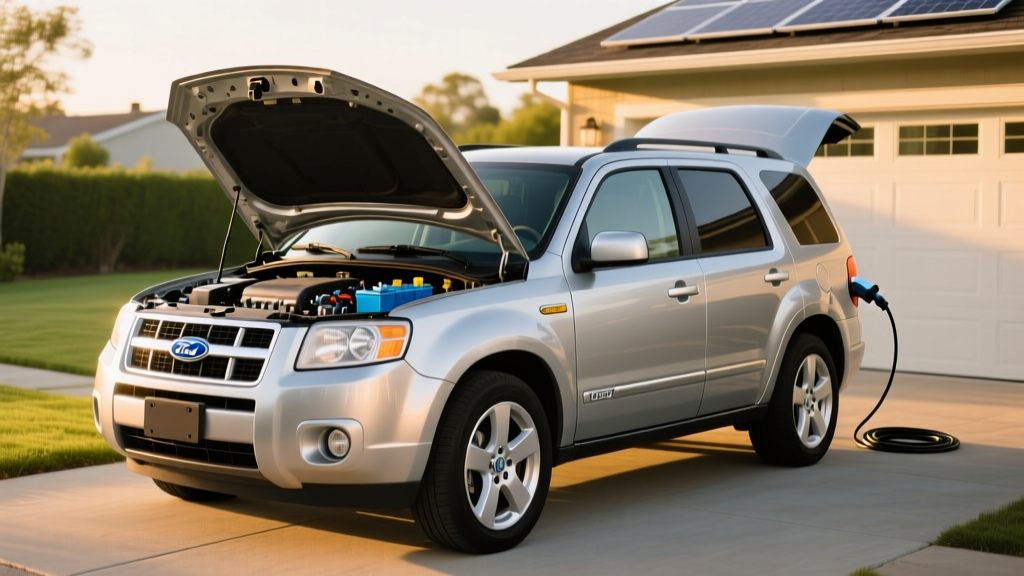
In the hybrid compact-SUV segment, the RAV4 Hybrid Woodland Edition faces limited direct competition. The Honda CR-V Hybrid Sport Touring offers comparable fuel economy (40 city / 35 highway) but no off-road-oriented trim. The Subaru Crosstrek Hybrid was discontinued, and the Ford Escape Hybrid lacks the Woodland's ground clearance and all-terrain hardware. For buyers specifically wanting a hybrid with trail manners, the RAV4 Hybrid Woodland Edition is essentially a segment of one.
Against the gas-only RAV4 TRD Off-Road (203 hp, ~28 MPG combined), the Hybrid Woodland Edition delivers a 35% fuel-economy improvement, more horsepower (219 vs 203), and smoother low-speed torque delivery — at the cost of roughly $3,000 in additional MSRP. That premium pays for itself in fuel savings within 3-4 years for a driver covering 15,000 miles annually at $3.50/gallon.
Frequently Asked Questions
How many MPG does the 2026 RAV4 Hybrid Woodland Edition get?
The EPA rates the RAV4 Hybrid at approximately 40 MPG city / 36 MPG highway / 38 MPG combined for the Woodland Edition trim. Real-world city driving often exceeds the EPA estimate by 2-4 MPG thanks to regenerative braking, while sustained highway driving above 70 mph typically yields 33-35 MPG.
Is the RAV4 Hybrid Woodland Edition a plug-in hybrid?
No. The RAV4 Hybrid is a conventional hybrid (HEV) that charges its small battery through regenerative braking and the gasoline engine. You never plug it in. The plug-in variant is the RAV4 Prime, which has a larger 18.1 kWh battery and offers 42 miles of electric-only range.
How far can the RAV4 Hybrid drive on electric power alone?
As a conventional hybrid, the RAV4 Hybrid can only travel roughly 1 mile or less at very low speeds (under 25 mph) on electric power alone — typically in parking lots or heavy stop-and-go traffic. For meaningful electric-only driving, you need the RAV4 Prime PHEV with its 42-mile electric range.
Is the RAV4 Hybrid battery reliable, and what does replacement cost?
Toyota's hybrid batteries are among the most reliable in the industry, routinely lasting 200,000+ miles. The hybrid battery is covered by a 10-year / 150,000-mile warranty. Out-of-warranty replacement costs $2,500-$4,000 for an OEM pack, or $1,500-$2,500 for a refurbished unit installed by a qualified shop.
Does the RAV4 Hybrid qualify for any federal tax credit?
No. The federal §30D Clean Vehicle Credit applies only to plug-in vehicles (BEVs and PHEVs), and the RAV4 Hybrid is a conventional HEV. Even the RAV4 Prime PHEV does not qualify in 2026 because the RAV4 is assembled outside the United States, failing the final-assembly requirement. Check IRS.gov for the latest rules.
Can the RAV4 Hybrid Woodland Edition handle real off-road trails?
It's competent on moderate terrain — forest service roads, gravel, snow, mud, and rocky fire roads. The 8.6 inches of ground clearance, A/T tires, and multi-terrain select system give it genuine capability beyond typical crossovers. However, it lacks a low-range transfer case, locking differentials, or serious approach/departure angles for technical rock crawling. Think Overlanding light, not Wrangler rival.
What is the towing capacity?
The RAV4 Hybrid is rated to tow up to 1,750 lbs when properly equipped. This is sufficient for a small utility trailer, a pair of personal watercraft, or a lightweight pop-up camper, but not for most travel trailers or boat-and-trailer combinations exceeding that weight.