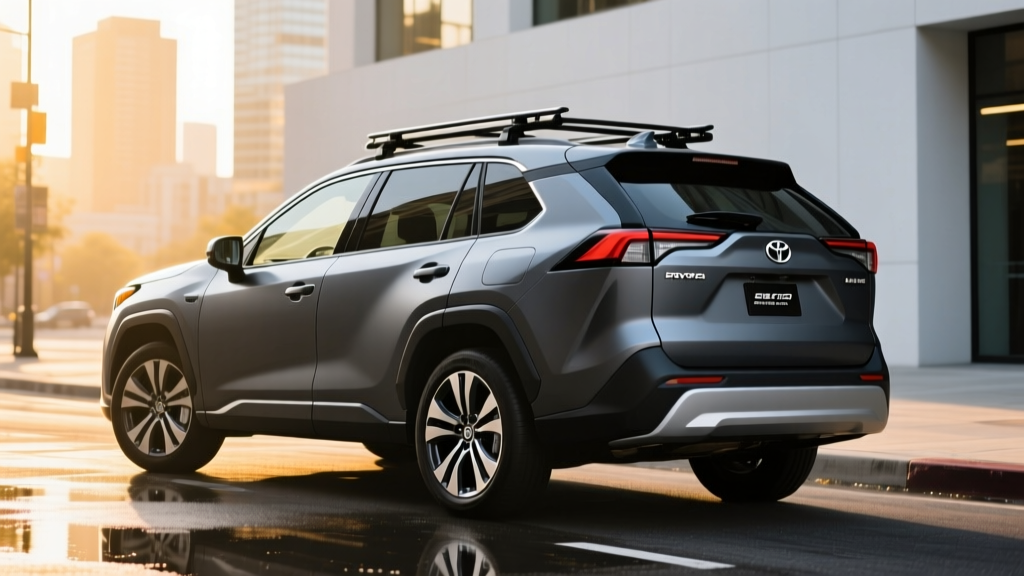
The 2026 Toyota RAV4 Hybrid Limited sits at the top of the conventional hybrid lineup, pairing a 219-horsepower hybrid powertrain with premium features that rival luxury compact SUVs — all while returning an EPA-estimated 41 MPG combined. For buyers who want electrified efficiency without ever plugging in, this trim represents one of the most practical daily drivers on the market. But is the Limited worth the premium over lower trims, and how does it stack up against the plug-in RAV4 Prime or a full battery-electric vehicle?
We break down the exact numbers — fuel economy, powertrain specs, pricing, battery longevity, and real-world efficiency — so you can make a spec-driven decision.
2026 RAV4 Hybrid Limited: Core Specifications
| Specification | 2026 RAV4 Hybrid Limited |
|---|---|
| Powertrain | 2.5L 4-cyl + 3 electric motors (AWD-i) |
| Combined Horsepower | 219 hp |
| EPA MPG (City / Hwy / Combined) | 41 / 38 / 41 |
| Fuel Tank | 14.5 gallons |
| Total Driving Range (EPA est.) | ~594 miles |
| 0–60 mph | 7.4 seconds |
| Drivetrain | Electronic On-Demand AWD |
| Hybrid Battery | 1.6 kWh (sealed NiMH), self-charging |
| Cargo Volume (behind rear seats) | 37.5 cu ft |
| Base MSRP | ~$41,500 (est.) |
| Hybrid Battery Warranty | 10 years / 150,000 miles |
| Federal Tax Credit (§30D) | Not eligible (HEV) |
Fuel Economy: EPA Ratings vs. Real-World MPG
The 2026 RAV4 Hybrid Limited carries an EPA-estimated 41 MPG combined (41 city / 38 highway). Toyota's hybrid system leverages regenerative braking and electric-motor assist at low speeds, which is why the city figure actually exceeds the highway number — the opposite of a conventional gas vehicle.
| Driving Scenario | Expected MPG |
|---|---|
| City / stop-and-go | 41–45 MPG |
| Suburban mixed | 39–42 MPG |
| Highway (65 mph) | 37–39 MPG |
| Highway (75+ mph) | 35–37 MPG |
| Cold weather (mixed) | 36–39 MPG |
HEV vs. PHEV: RAV4 Hybrid or RAV4 Prime?
This is the most important distinction for RAV4 shoppers. The RAV4 Hybrid (HEV) is a conventional hybrid — it never plugs in. The gasoline engine and regenerative braking keep a small 1.6 kWh battery charged. You simply fuel up and drive. The RAV4 Prime (PHEV) adds a larger 18.1 kWh battery, a plug-in charge port, and 42 miles of electric-only range before the hybrid system takes over.
| Feature | 2026 RAV4 Hybrid (HEV) | 2026 RAV4 Prime (PHEV) |
|---|---|---|
| Plug-in Required? | No — self-charging | Yes — Level 1 or Level 2 |
| Battery Capacity | 1.6 kWh (NiMH) | 18.1 kWh (lithium-ion) |
| Electric-Only Range | N/A (EV assist only) | 42 miles (EPA est.) |
| Combined Horsepower | 219 hp | 302 hp |
| EPA Combined MPG / MPGe | 41 MPG | 94 MPGe (electric) / 38 MPG (gas) |
| Total Range | ~594 miles | ~600 miles |
| 0–60 mph | 7.4 sec | 5.7 sec |
| Base MSRP (top trim) | ~$41,500 (Limited) | ~$47,000 (XSE) |
| Federal Tax Credit | None | Up to $7,500 (§30D, subject to eligibility) |
The HEV makes sense if you lack home charging access, want a lower purchase price, or drive primarily longer highway routes where the PHEV's electric range offers less benefit. The PHEV is ideal if you can charge at home and your daily commute falls under 42 miles — effectively making it an EV for weekday driving with gas-engine backup for road trips.
Powertrain and Performance
The RAV4 Hybrid Limited uses Toyota's fifth-generation hybrid system: a 2.5-liter Dynamic Force four-cylinder engine (176 hp, 163 lb-ft torque) paired with three electric motor-generators. Two motors drive the front wheels, while a dedicated rear-axle motor provides electronic on-demand AWD — no mechanical driveshaft. Combined system output is 219 horsepower.
The result is a 0–60 mph time of approximately 7.4 seconds, which is competitive for the compact SUV segment. The transition between electric and gas power is seamless; under light acceleration from a stop, the RAV4 Hybrid launches on electric torque alone, with the gas engine engaging as speed or load increases. Under hard acceleration, all power sources combine for maximum thrust.
The AWD-i system can send up to 50% of available torque to the rear wheels when slip is detected or during hard cornering. It's not a trail-rated off-roader, but it handles rain, light snow, and gravel roads with confidence.
What the Limited Trim Adds
The Limited sits at the top of the RAV4 Hybrid range (above LE, XLE, XLE Premium, SE, and Woodland Edition). For the 2026 model year, the Limited trim typically includes:
- SofTex-trimmed heated and ventilated front seats
- Heated steering wheel
- 12.3-inch Toyota Audio Multimedia touchscreen with wireless Apple CarPlay and Android Auto
- JBL 11-speaker premium audio system
- Panoramic glass roof
- Digital rearview mirror
- 360-degree camera system with panoramic view
- Qi-compatible wireless smartphone charging
- 19-inch alloy wheels
- Toyota Safety Sense 3.0 suite (adaptive cruise, lane tracing, pre-collision with pedestrian detection, blind-spot monitor with rear cross-traffic alert)
The premium is meaningful. If features like ventilated seats and the JBL system aren't priorities, the XLE Premium trim offers strong value at roughly $3,000–$4,000 less.
Pricing, Tax Credits, and Ownership Costs
The 2026 RAV4 Hybrid Limited carries an estimated MSRP of approximately $41,500, including destination charge. Fully loaded with optional packages (such as advanced parking assist or premium paint), expect a window sticker near $43,000–$44,000.
For buyers who want the §30D credit (up to $7,500, subject to income caps of $150K single / $300K joint, MSRP cap of $80K for SUVs, and critical-mineral/battery-component sourcing rules), the RAV4 Prime PHEV is the path — though availability is often constrained and the credit eligibility should be verified with a tax professional before purchase.
On total cost of ownership: at $3.50/gallon and 15,000 miles/year, the RAV4 Hybrid Limited would consume roughly 366 gallons annually (~$1,281/year in fuel). A comparable gas-only RAV4 (28 MPG combined) would burn 536 gallons (~$1,876/year). That's approximately $595 in annual fuel savings, or about $2,975 over five years — a meaningful offset to the hybrid's upfront premium.
Hybrid Battery Warranty and Longevity
Toyota's hybrid battery track record is among the best in the industry. Data from fleet operators and long-term owners shows that the NiMH packs in Toyota hybrids routinely last 150,000–200,000+ miles before significant capacity loss. Unlike a full EV battery, the hybrid pack is small (1.6 kWh) and operates within a narrow state-of-charge window — it never fully charges or fully depletes — which dramatically reduces degradation stress.
If replacement is needed out of warranty, a new OEM hybrid battery for the RAV4 Hybrid currently costs approximately $2,000–$3,500 including labor. Refurbished or reconditioned packs are available for $1,000–$1,800. This is a fraction of full EV battery replacement costs, which can exceed $10,000.
The 12-volt auxiliary battery (which powers electronics and starts the hybrid system) is a separate maintenance item, typically lasting 4–6 years at a replacement cost of $200–$350.
Who Should Choose the RAV4 Hybrid Limited?
Choose the RAV4 Hybrid Limited if:
- You want 40+ MPG without plugging in or changing driving habits
- You lack access to home or workplace charging (apartment, street parking)
- You take frequent long road trips where EV charging infrastructure is sparse
- You want a premium-feature compact SUV under $45,000
- You live in a cold climate where EV range loss is a concern
Consider the RAV4 Prime (PHEV) instead if:
- You can install a Level 2 charger at home
- Your daily commute is under 42 miles round-trip
- You want the $7,500 federal tax credit (verify eligibility)
- You want 302 hp and 5.7-second 0–60 performance
Consider a full EV (BEV) instead if:
- You want zero tailpipe emissions and lowest per-mile fuel cost
- You have reliable home charging and your trips rarely exceed 250 miles
- You want minimal drivetrain maintenance (no oil changes, no gas engine)
Frequently Asked Questions
How many MPG does the 2026 RAV4 Hybrid Limited get?
The EPA rates it at 41 MPG city, 38 MPG highway, and 41 MPG combined. In real-world city driving with frequent stops, many owners report 43–45 MPG. Highway driving at 75+ mph drops to approximately 35–37 MPG.
Does the RAV4 Hybrid need to be plugged in?
No. The RAV4 Hybrid is a conventional (self-charging) hybrid. The battery charges through regenerative braking and the gasoline engine. You fuel it like any other car at a gas station.
How far can the RAV4 Hybrid go on a full tank?
With a 14.5-gallon fuel tank and 41 MPG combined, the EPA-estimated total range is approximately 594 miles. Real-world range varies from roughly 510 miles (highway-heavy, cold weather) to 650+ miles (city-heavy, moderate temperatures).
Is the hybrid battery reliable and what does replacement cost?
Toyota's hybrid batteries have an exceptional longevity record, often lasting 150,000–200,000+ miles. The battery is warranted for 10 years/150,000 miles. Out-of-warranty replacement runs approximately $2,000–$3,500 for a new OEM pack.
Does the 2026 RAV4 Hybrid qualify for any tax credit?
Not the federal §30D Clean Vehicle Credit — that credit is reserved for plug-in vehicles (BEVs and PHEVs). Some states and utilities offer hybrid-specific rebates or HOV lane access. Check the Alternative Fuels Data Center for programs in your area.
RAV4 Hybrid Limited vs. RAV4 Prime: which is better?
It depends on your charging access and commute. If you can charge at home and drive under 42 miles daily, the Prime delivers 94 MPGe in electric mode, 302 hp, and potential tax-credit eligibility. If you can't charge at home or drive longer distances, the Hybrid Limited offers simpler ownership, lower upfront cost, and still-excellent 41 MPG without ever plugging in.