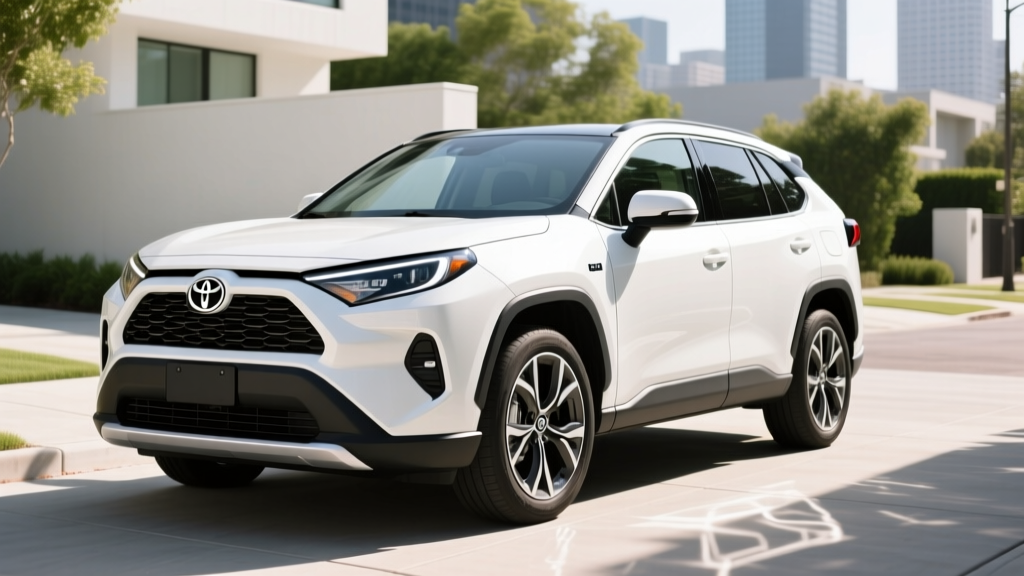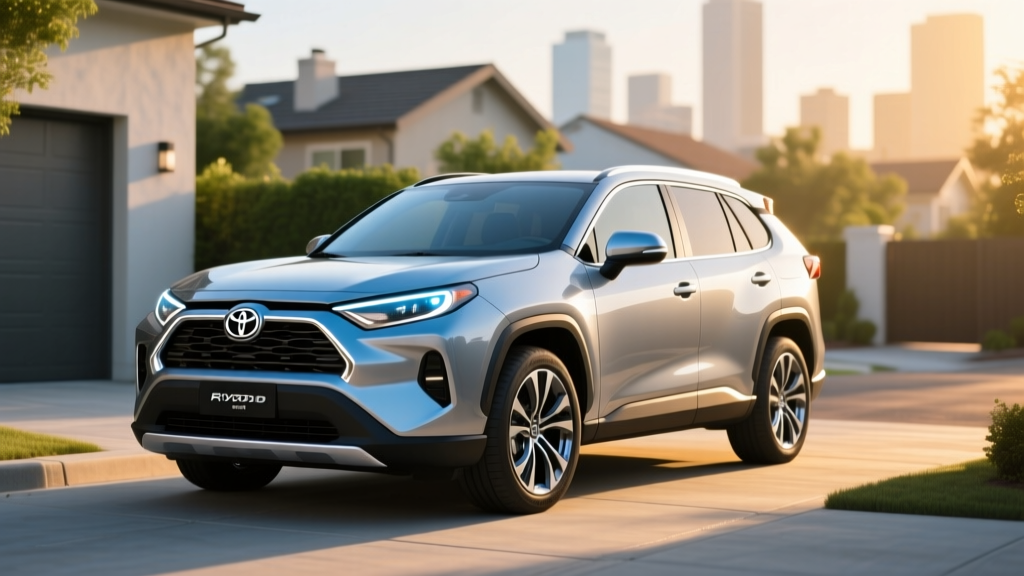
The Toyota RAV4 Hybrid has held the compact-SUV fuel-economy crown for years, and the 2026 RAV4 Hybrid Limited pushes that formula into premium territory. With standard all-wheel drive, a combined 219 horsepower, and EPA-rated efficiency that humbles most gas-only competitors, the Limited trim adds luxury touches without sacrificing the hybrid practicality that defines the nameplate. But at a higher price point, does it still make financial sense versus the RAV4 Prime PHEV or a full battery-electric SUV? This guide breaks down every number that matters.
2026 RAV4 Hybrid Limited Powertrain and Performance Specs
The 2026 RAV4 Hybrid pairs a 2.5-liter Dynamic Force four-cylinder engine with three electric motors — two on the front axle and one on the rear — delivering a net combined output of 219 horsepower. Toyota's eAWD system can route up to 50% of available torque to the rear wheels when traction demands it, giving the Hybrid genuine all-weather capability without a mechanical driveshaft.
| Specification | Value |
|---|---|
| Engine | 2.5L inline-4 Atkinson-cycle |
| Combined System Output | 219 hp |
| Front Motors | 2x permanent-magnet (integrated in transaxle) |
| Rear Motor | 1x permanent-magnet (eAWD) |
| Hybrid Battery | ~1.6 kWh lithium-ion (sealed, self-charging) |
| Transmission | eCVT (planetary gearset) |
| Drivetrain | Electronic AWD (eAWD) |
| 0–60 mph | ~7.4 seconds |
| Towing Capacity | 1,750 lbs |
| Cargo Volume (rear seats up) | 37.6 cu ft |
| Cargo Volume (rear seats folded) | 69.8 cu ft |
Unlike a plug-in hybrid, the RAV4 Hybrid's 1.6 kWh battery pack is charged exclusively through regenerative braking and the gasoline engine. You never plug it in — the hybrid system manages energy flow automatically. This makes it ideal for buyers who want maximum efficiency without any change to their fueling routine.
Fuel Economy: EPA Ratings and Real-World MPG
Fuel economy is where the RAV4 Hybrid Limited justifies its existence. According to fueleconomy.gov, the 2026 RAV4 Hybrid AWD earns the following EPA estimates:
| Driving Cycle | EPA MPG |
|---|---|
| City | 41 MPG |
| Highway | 38 MPG |
| Combined | 39 MPG |
Real-World MPG: What Owners Actually See
Toyota's hybrid synergy drive system excels in stop-and-go traffic, where the electric motors handle low-speed propulsion and the engine shuts off at stops. In real-world driving, many owners report exceeding the EPA city estimate, regularly seeing 42–45 MPG on suburban routes with frequent stops. Highway driving at sustained 70–75 mph speeds typically returns 35–37 MPG, as the gasoline engine carries more of the load without regenerative braking opportunities.
Cold weather reduces MPG by roughly 5–10% due to increased engine warm-up time and cabin heating demands. In sub-freezing conditions, expect combined figures closer to 35–36 MPG. This is a smaller penalty than most EVs face in winter, since the hybrid still recovers waste heat from the engine for cabin warmth.
Annual Fuel Cost Estimate: At 15,000 miles/year and $3.40/gallon (national average), the RAV4 Hybrid Limited costs approximately $1,308/year in fuel — roughly $700 less than a comparable gas-only compact SUV rated at 25 MPG combined.
HEV vs. PHEV: RAV4 Hybrid or RAV4 Prime?
Toyota offers the RAV4 in two electrified flavors, and the distinction matters for your wallet and daily routine. The conventional RAV4 Hybrid (HEV) is a self-charging system — no plug, no charging station visits, no behavior change required. The RAV4 Prime (PHEV) adds a much larger 18.1 kWh battery, a more powerful rear motor, and a charge port for plug-in capability.
| Attribute | RAV4 Hybrid (HEV) | RAV4 Prime (PHEV) |
|---|---|---|
| Combined Output | 219 hp | 302 hp |
| EV-Only Range | N/A (not plug-in) | 42 miles (EPA) |
| Battery Capacity | ~1.6 kWh | 18.1 kWh |
| Plug-In Charging | No | Yes (Level 1/Level 2) |
| DC Fast Charging | N/A | No (Level 2 max) |
| Level 2 Charge Time | N/A | ~2.5 hours (240V, 32A) |
| Combined MPG (gas) | 39 MPG | 38 MPG (after battery depleted) |
| MPGe (electric mode) | N/A | 94 MPGe |
| Total Range | ~570 miles | ~600 miles (EV + gas) |
| 0–60 mph | ~7.4 sec | ~5.7 sec |
| Starting MSRP | ~$33,000 | ~$44,500 |
| Federal Tax Credit (§30D) | Not eligible | Up to $7,500 (if eligible) |
The RAV4 Prime's 42 miles of electric-only range covers most daily commutes without burning a drop of gasoline. However, its $11,000+ price premium means you need to drive it in electric mode consistently to recoup the cost. The RAV4 Hybrid makes more sense if you lack home charging access, drive mostly highway miles, or simply want a lower upfront cost with excellent efficiency.
2026 RAV4 Hybrid Limited Pricing and Tax Credit Eligibility
The 2026 RAV4 Hybrid Limited sits at the top of the hybrid lineup. Estimated MSRP pricing (based on Toyota's current trim structure and anticipated 2026 adjustments):
- RAV4 Hybrid LE (base): ~$33,000
- RAV4 Hybrid XLE: ~$35,500
- RAV4 Hybrid XSE: ~$37,800
- RAV4 Hybrid SE: ~$37,000
- RAV4 Hybrid Woodland Edition: ~$38,500
- RAV4 Hybrid Limited: ~$41,000
The Limited trim adds SofTex-trimmed heated and ventilated front seats, a 12.3-inch Toyota Audio Multimedia touchscreen, a panoramic glass roof, a JBL 11-speaker premium audio system, a 360-degree surround-view camera, and a digital rearview mirror.
Federal Tax Credit: What You Need to Know
Here's the critical distinction: conventional hybrids like the RAV4 Hybrid do not qualify for the federal §30D Clean Vehicle Credit. That credit applies only to plug-in electric vehicles (BEVs and PHEVs) that meet battery sourcing, MSRP caps, and buyer income requirements outlined on irs.gov. The RAV4 Prime PHEV may qualify for up to $7,500 if all criteria are met, but the RAV4 Hybrid — despite its excellent efficiency — receives $0 in federal EV incentives.
§30D Credit Eligibility Checklist (2026 rules):
- Vehicle must be a plug-in EV or PHEV — conventional HEVs excluded
- Buyer AGI must not exceed $150K (single) / $300K (joint)
- SUV MSRP must not exceed $80,000
- Battery components and critical minerals must meet domestic-sourcing thresholds
- Credit can be transferred to the dealer as a point-of-sale discount
Some states offer their own hybrid or efficient-vehicle rebates — check your state energy office or local utility for programs that may apply to the RAV4 Hybrid.
Battery Warranty, Reliability, and Replacement Cost
Hybrid battery longevity is the number-one concern for buyers considering a used or high-mileage hybrid. Toyota addresses this with one of the strongest hybrid battery warranties in the industry.
Toyota Hybrid Battery Warranty: 10 years / 150,000 miles (whichever comes first), covering defects and abnormal capacity loss. This applies to all 2020-and-newer Toyota hybrids, including the 2026 RAV4 Hybrid.
Hybrid System Warranty: 8 years / 100,000 miles — covers the inverter, electric motors, and associated control electronics.
How Long Do Toyota Hybrid Batteries Last?
Real-world data from millions of Toyota hybrids on the road shows that the nickel-metal hydride and lithium-ion packs used in the RAV4 Hybrid typically last well beyond the warranty period. Many Prius and RAV4 Hybrid owners report original batteries functioning at 150,000–200,000+ miles with minimal degradation. Toyota's hybrid system is conservative with battery cycling — it never fully charges or fully depletes the pack, operating in a narrow state-of-charge window that dramatically extends cell life.
Battery Replacement Cost
If a replacement is needed outside warranty, a new OEM RAV4 Hybrid battery pack costs approximately $2,500–$4,000 including labor at a Toyota dealer. Third-party refurbished packs are available for $1,500–$2,500. Given the 10-year/150,000-mile warranty and Toyota's reliability track record — consistently rated at the top by Consumer Reports and J.D. Power — this is a low-probability expense for most owners.
The RAV4 Hybrid's eCVT transmission is actually a planetary gearset with no belts, clutches, or traditional wear components. It requires no fluid changes under normal service and is among the most durable transmissions in the industry.
Driving Impressions: What the Limited Trim Adds
The Limited trim transforms the RAV4 Hybrid from a practical commuter into a near-luxury compact SUV. The SofTex upholstery is durable and easy to clean, the ventilated front seats are a genuine upgrade in hot climates, and the panoramic roof floods the cabin with light without the weight penalty of a full convertible top.
On the road, the hybrid powertrain is smooth and unobtrusive. The engine only becomes vocal under hard acceleration — during normal driving, the transition between electric and gas power is nearly imperceptible. Regenerative braking feels natural, without the aggressive grabbiness some EVs exhibit. The eAWD system engages seamlessly in rain and light snow, providing confidence without the fuel-economy penalty of a traditional mechanical AWD system.
The 12.3-inch infotainment screen runs Toyota's latest Audio Multimedia system with wireless Apple CarPlay and Android Auto, native navigation, and over-the-air updates. The Limited also includes Toyota Safety Sense 3.0: pre-collision with pedestrian detection, full-speed adaptive cruise control, lane tracing assist, blind-spot monitoring with rear cross-traffic alert, and a 360-degree camera.
Who Should Choose the RAV4 Hybrid Limited?
Choose the 2026 RAV4 Hybrid Limited if:
- You want maximum MPG without plugging in or changing your fueling habits
- You lack access to home or workplace EV charging
- You want AWD capability for snow/rain with minimal fuel penalty
- You prefer a lower purchase price over the RAV4 Prime's $11K+ premium
- You want Toyota's proven reliability with a 10-year hybrid battery warranty
- You value premium features (ventilated seats, JBL audio, panoramic roof) in a compact SUV
Choose the RAV4 Prime (PHEV) instead if:
- You can charge at home and your commute is under 42 miles round-trip
- You want to drive mostly on electricity and qualify for the §30D tax credit
- You want 302 hp and a 5.7-second 0–60 time
Choose a full EV (e.g., Tesla Model Y, Hyundai Ioniq 5) instead if:
- You want zero tailpipe emissions and the lowest per-mile energy cost
- You have reliable home Level 2 charging and your trips rarely exceed 250 miles
- You want minimal maintenance (no oil changes, no engine)
Pros
- 39 MPG combined real-world; often exceeds EPA city estimate
- No plug-in charging required — zero behavior change
- Standard eAWD with genuine all-weather traction
- 10-year / 150,000-mile hybrid battery warranty
- Limited trim offers near-luxury features at mainstream pricing
- Excellent reliability and resale value
Cons
- No federal tax credit eligibility (HEV, not PHEV)
- Limited trim at ~$41K pushes into RAV4 Prime territory
- Engine noise under hard acceleration
- 1,750-lb towing capacity trails some turbocharged competitors
- No DC fast charging (not applicable — but no plug-in option at all)
Frequently Asked Questions
How many MPG does the 2026 RAV4 Hybrid Limited get?
The EPA rates the 2026 RAV4 Hybrid AWD at 41 MPG city, 38 MPG highway, and 39 MPG combined. In real-world suburban driving with frequent stops, many owners see 42–45 MPG. Highway cruising at 75 mph typically yields 35–37 MPG.
Does the RAV4 Hybrid need to be plugged in?
No. The RAV4 Hybrid is a conventional hybrid (HEV). Its battery is recharged by the gasoline engine and regenerative braking. You fuel it like any other car — just with fewer trips to the gas station.
Is the RAV4 Hybrid reliable?
Toyota's hybrid system is among the most proven in the industry, with over two decades of real-world deployment. The hybrid battery carries a 10-year/150,000-mile warranty, and the eCVT transmission has no traditional wear components. Toyota consistently ranks at the top of J.D. Power and Consumer Reports reliability surveys.
What does a RAV4 Hybrid battery replacement cost?
An OEM replacement battery costs approximately $2,500–$4,000 installed at a dealer. Third-party refurbished options run $1,500–$2,500. However, the 10-year/150,000-mile warranty and Toyota's conservative battery management mean most owners never face this expense.
Does the 2026 RAV4 Hybrid qualify for a federal tax credit?
No. The federal §30D Clean Vehicle Credit applies only to plug-in vehicles (BEVs and PHEVs). The RAV4 Hybrid is a conventional HEV and does not qualify. The RAV4 Prime PHEV may qualify for up to $7,500 if you meet income, MSRP, and sourcing requirements.
How does the RAV4 Hybrid compare to a full EV like the Tesla Model Y?
The Model Y offers lower per-mile energy costs (~$0.04/mile on electricity vs. ~$0.09/mile on gas for the RAV4 Hybrid), zero tailpipe emissions, and stronger acceleration. However, the RAV4 Hybrid has no range anxiety, no charging infrastructure dependency, a lower purchase price, and excels in cold weather where EV range drops 20–30%. For buyers without reliable home charging, the hybrid remains the more practical choice.
What's the difference between the RAV4 Hybrid Limited and lower trims?
The Limited adds SofTex heated/ventilated front seats, a panoramic glass roof, JBL 11-speaker audio, a 12.3-inch touchscreen, a 360-degree camera, a digital rearview mirror, and additional chrome and interior trim upgrades. The powertrain, MPG, and AWD system are identical across all Hybrid trims.