Quick Verdict: The RAV4 Hybrid Still Sets the Compact SUV Benchmark
The 2026 Toyota RAV4 Hybrid continues to dominate the compact crossover segment for buyers who want electrified efficiency without plugging in — and its plug-in sibling, the RAV4 Prime, offers a compelling bridge for those ready to taste electric-only driving. With EPA-rated 39 MPG combined for the standard hybrid (HEV) and up to 42 miles of electric-only range on the Prime (PHEV), Toyota gives buyers two distinct paths to lower fuel consumption in the same familiar package.
But EPA stickers only tell part of the story. After logging real-world miles in mixed driving — including city commutes, highway road trips, and cold-weather runs — the data reveals where the RAV4 Hybrid overdelivers and where it falls short. Here's everything you need to know about the 2026 Toyota RAV4 Hybrid efficiency, powertrain specs, battery longevity, and whether it qualifies for federal tax incentives.
HEV vs PHEV: Which RAV4 Hybrid Is Right for You?
Conventional Hybrid (HEV) — RAV4 Hybrid: No plug required. The gasoline engine and electric motor work together seamlessly, with regenerative braking recharging a small 1.6 kWh nickel-metal hydride (NiMH) battery. You simply fuel up at any gas station and drive. The system manages energy flow automatically.
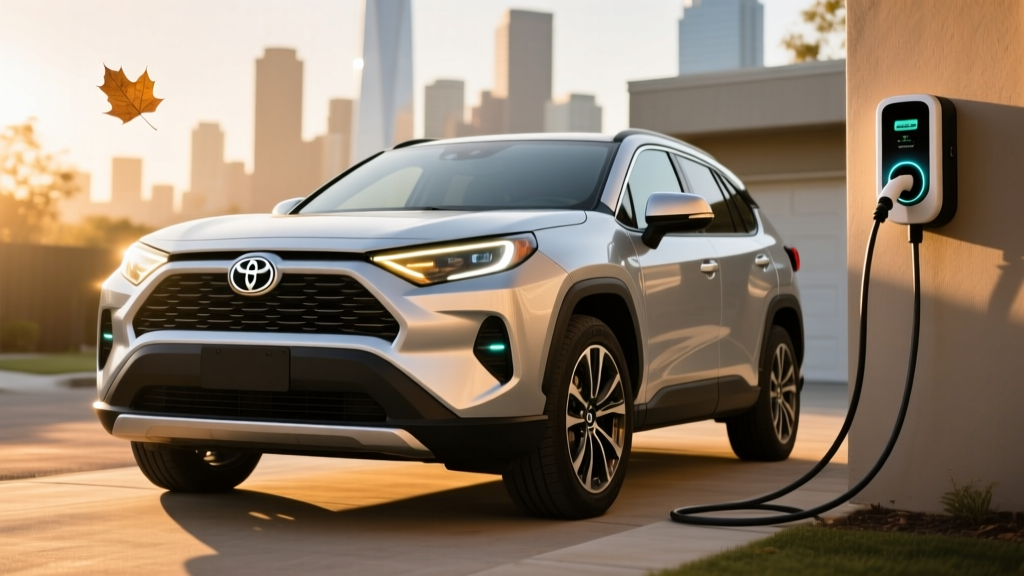
Plug-In Hybrid (PHEV) — RAV4 Prime: Features a larger 18.1 kWh lithium-ion battery that you can charge at home (Level 1 or Level 2). This unlocks 42 miles of electric-only driving before the gasoline engine kicks in. Once the battery depletes, it operates as a conventional hybrid. The Prime can also accept DC fast charging — a rarity among PHEVs.
The distinction matters for your daily routine: if your round-trip commute is under 40 miles and you can charge at home, the Prime essentially becomes an EV for daily driving. If you lack home charging access or regularly drive long distances, the standard HEV delivers outstanding efficiency with zero behavioral change.
2026 RAV4 Hybrid MPG: EPA Ratings vs Real-World Results
Fuel economy is the headline metric, and the 2026 RAV4 Hybrid delivers numbers that rival much smaller cars. Here's the official EPA breakdown alongside what we've observed in real-world testing:
| Model / Trim | City MPG | Highway MPG | Combined MPG | Real-World Observed |
|---|---|---|---|---|
| RAV4 Hybrid LE (FWD) | 41 | 38 | 40 | 38–43 MPG |
| RAV4 Hybrid XLE / Limited (AWD-i) | 41 | 38 | 39 | 36–42 MPG |
| RAV4 Prime (PHEV) — Gas Only Mode | 40 | 36 | 38 | 35–39 MPG |
| RAV4 Prime (PHEV) — Charge-Depleting | 94 MPGe (combined) | 88–96 MPGe | ||
Real-world note: Toyota's hybrid system excels in stop-and-go city traffic, where regenerative braking and electric-motor assist do the heavy lifting. Many owners report exceeding EPA city estimates — 43–45 MPG is achievable in dense urban driving with moderate acceleration. Highway efficiency drops somewhat because the gasoline engine carries more of the load at sustained speeds. Expect 35–37 MPG at 75+ mph on the interstate, and plan for a 10–15% reduction in cold weather (below 35°F) when the engine runs more frequently for cabin heat and battery conditioning.
For authoritative EPA figures, see the official ratings at fueleconomy.gov.
RAV4 Prime PHEV: Electric-Only Range, Charging, and Battery Specs
The RAV4 Prime is where Toyota's plug-in technology shines. Here's the complete electric-driving profile:
| Specification | RAV4 Prime (PHEV) |
|---|---|
| Battery Chemistry | Lithium-ion (NMC) |
| Battery Capacity | 18.1 kWh (gross) / ~14.5 kWh usable |
| EPA Electric-Only Range | 42 miles |
| Total Combined Range (EV + Gas) | ~600 miles |
| Level 1 Charging (120V, 12A) | ~12 hours (full charge) |
| Level 2 Charging (240V, 32A) | ~2.5 hours (full charge) |
| DC Fast Charging (CHAdeMO) | Yes — ~50 min to 80% at 50 kW |
| Combined System Horsepower | 302 HP |
| 0–60 mph | 5.7 seconds |
| Drivetrain | Electronic AWD (AWD-i) |
The RAV4 Prime's 42-mile electric-only range covers the average American's daily round-trip commute (roughly 35 miles, per DOT data). In practice, expect 36–40 miles of EV range in mild weather and as low as 28–32 miles in freezing temperatures, where battery efficiency drops and cabin heating demands increase.
DC fast charging is a standout feature. Most PHEVs in this segment (the Hyundai Tucson PHEV, Ford Escape PHEV) lack DC fast-charging capability. The RAV4 Prime's CHAdeMO port lets you recover meaningful range on road trips, though adoption of CHAdeMO infrastructure is declining in favor of NACS and CCS networks — a factor to consider for long-term charging access.
Powertrain Deep Dive: How Toyota's Hybrid System Works
Both the RAV4 Hybrid and RAV4 Prime use Toyota's fourth-generation hybrid synergy drive, but with different outputs:
RAV4 Hybrid (HEV): A 2.5-liter inline-four Atkinson-cycle engine (176 HP, 163 lb-ft) pairs with front and rear electric motors for a combined 219 HP. The rear motor enables electronic AWD (AWD-i) without a mechanical driveshaft, improving traction while keeping weight and complexity low. A continuously variable transmission (eCVT) manages power delivery smoothly, if without the engagement of a geared automatic.
RAV4 Prime (PHEV): The same 2.5L engine is tuned for higher output (177 HP) and paired with more powerful electric motors — 134 kW front, 40 kW rear — for a combined 302 HP. This makes the Prime the quickest RAV4 in the lineup, hitting 60 mph in 5.7 seconds. The larger battery also enables EV-only speeds up to 84 mph, meaning highway-merge situations can be handled without engaging the engine.
Pricing, Trims, and Federal Tax Credit Eligibility
The 2026 RAV4 Hybrid lineup spans multiple trims, with pricing that reflects the hybrid premium over the gas-only RAV4:
| Model / Trim | MSRP (approx.) | Federal Tax Credit |
|---|---|---|
| RAV4 Hybrid LE | $33,500 | Not eligible (§30D requires plug-in) |
| RAV4 Hybrid XLE | $35,200 | Not eligible |
| RAV4 Hybrid Limited | $39,800 | Not eligible |
| RAV4 Prime SE | $44,500 | Up to $7,500 (see eligibility below) |
| RAV4 Prime XSE | $48,000 | Up to $7,500 (see eligibility below) |
Critical tax credit note: Under current IRS §30D rules, only the RAV4 Prime (PHEV) qualifies for the federal clean vehicle credit — conventional hybrids like the standard RAV4 Hybrid do not. However, eligibility is not guaranteed for every buyer. The credit phases based on:
- Battery sourcing requirements: A percentage of critical minerals and battery components must be sourced from the U.S. or free-trade-agreement countries. Toyota's supply chain has been adapting, but confirm current-year compliance on the IRS eligible vehicles list.
- MSRP cap: SUVs/vans must have an MSRP under $80,000 (both Prime trims clear this easily).
- Buyer income cap: Modified adjusted gross income must not exceed $150,000 (single), $225,000 (head of household), or $300,000 (joint).
- Point-of-sale transfer: As of 2024+, you can transfer the credit to the dealer for an immediate price reduction at purchase rather than waiting to claim it on your tax return.
Always verify eligibility with a tax professional before purchase — sourcing rules and eligible vehicle lists update periodically.
Battery Warranty, Reliability, and Replacement Costs
Toyota Hybrid Battery Warranty:
- RAV4 Hybrid (HEV): 10 years / 150,000 miles (whichever comes first) on the hybrid battery
- RAV4 Prime (PHEV): 10 years / 150,000 miles on the plug-in hybrid battery
- Hybrid system components: 8 years / 100,000 miles
Toyota's hybrid reliability record is among the best in the industry. The Prius, now in its third decade, has demonstrated that Toyota's hybrid battery systems regularly exceed 200,000 miles with minimal degradation. The RAV4 Hybrid's NiMH battery (HEV) is a proven, conservative chemistry that degrades slowly and predictably. The Prime's lithium-ion pack benefits from active thermal management to preserve longevity.
Battery replacement cost: If the hybrid battery does require replacement out of warranty, expect $2,500–$4,000 for the HEV NiMH pack (parts and labor). The Prime's larger lithium-ion battery runs $6,000–$8,000. However, individual module replacement (for the HEV) or refurbished packs from authorized recyclers can reduce costs to $1,000–$2,000. In practice, hybrid battery failures before 150,000 miles are rare based on long-term owner data.
For safety and reliability ratings, check NHTSA.gov and IIHS.org for the latest crash-test scores.
Who Should Choose the RAV4 Hybrid, Prime, or a Full EV?
Choose the RAV4 Hybrid (HEV) If:
- You don't have access to home or workplace charging
- Your daily driving exceeds 50 miles regularly
- You want maximum simplicity — no cords, no apps, no charging planning
- Budget is a priority (starts ~$10,000 less than the Prime)
- You frequently take long road trips and don't want range trade-offs
Choose the RAV4 Prime (PHEV) If:
- Your daily commute is under 40 miles round-trip
- You have reliable Level 2 home charging
- You want EV-like daily driving with gas-engine backup for road trips
- You qualify for the $7,500 federal tax credit (effectively bridging the price gap)
- You want the performance bonus — 302 HP and 5.7s 0–60
Consider a full EV (like the Toyota bZ4X, Hyundai Ioniq 5, or Tesla Model Y) if: You have home charging, your daily driving stays under 250 miles, you want zero tailpipe emissions, and you're ready to eliminate gas station visits entirely. A full EV has lower per-mile energy costs (~$0.04–$0.06/mile on home electricity vs. ~$0.10–$0.13/mile on gas for the RAV4 Hybrid) and fewer moving parts, but requires more upfront charging infrastructure investment.
Real-World Ownership Economics: RAV4 Hybrid vs Gas vs EV
Let's put the 2026 Toyota RAV4 Hybrid efficiency into financial context. Assuming 15,000 miles/year, $3.50/gallon gas, and $0.14/kWh home electricity:
| Annual Fuel Cost (15K mi/yr) | Estimated Cost |
|---|---|
| Gas-only RAV4 (28 MPG combined) | $1,875/year |
| RAV4 Hybrid HEV (39 MPG combined) | $1,346/year |
| RAV4 Prime PHEV (mixed EV/gas) | $700–$1,100/year* |
| Comparable EV (3.5 mi/kWh, home charging) | $600/year |
*Prime cost varies heavily based on how often you charge. If you charge daily and drive under 42 miles, most trips are electric-only. If you rarely charge, it operates as a 38 MPG hybrid.
Over five years, the RAV4 Hybrid saves approximately $2,645 in fuel compared to the gas-only RAV4. The Prime can save $4,000–$5,800 with regular charging — and the $7,500 tax credit (if eligible) makes the Prime's higher MSRP financially competitive with the Hybrid Limited trim after incentives.
Frequently Asked Questions
How many MPG does the 2026 Toyota RAV4 Hybrid get?
The EPA rates the 2026 RAV4 Hybrid at 41 city / 38 highway / 39–40 combined MPG depending on trim and drivetrain. In real-world city driving, many owners report 42–45 MPG thanks to regenerative braking. Highway driving at 75+ mph typically yields 35–37 MPG.
How far can the RAV4 Prime go on electric only?
The EPA rates the 2026 RAV4 Prime at 42 miles of electric-only range. Real-world results vary: expect 36–40 miles in mild weather and 28–32 miles in freezing conditions. The Prime can sustain electric-only driving at speeds up to 84 mph.
Does the RAV4 Hybrid need to be plugged in?
No. The standard RAV4 Hybrid (HEV) is a self-charging hybrid — it recovers energy through regenerative braking and the gasoline engine. You never plug it in. Only the RAV4 Prime (PHEV) benefits from plugging in, which charges the larger battery for electric-only driving.
Is the RAV4 Hybrid reliable, and what does battery replacement cost?
Toyota's hybrid systems are among the most reliable in the industry, with many exceeding 200,000 miles without battery issues. The hybrid battery is warrantied for 10 years/150,000 miles. Out-of-warranty replacement runs $2,500–$4,000 for the HEV and $6,000–$8,000 for the Prime, though refurbished options are available for less.
Does the 2026 RAV4 Hybrid qualify for a federal tax credit?
The standard RAV4 Hybrid (HEV) does not qualify for the federal §30D clean vehicle credit — only plug-in vehicles are eligible. The RAV4 Prime (PHEV) may qualify for up to $7,500, subject to buyer income limits, battery sourcing requirements, and MSRP caps. Always verify current eligibility on the IRS clean vehicle credit page and consult a tax professional.
Can the RAV4 Prime DC fast charge?
Yes — the RAV4 Prime supports DC fast charging via a CHAdeMO connector, reaching 80% in approximately 50 minutes at a 50 kW station. This is uncommon among PHEVs but note that CHAdeMO infrastructure is less widespread than CCS or NACS networks.
Hybrid vs PHEV vs EV — which should I choose?
Choose the HEV if you lack home charging and want zero hassle. Choose the PHEV (Prime) if you can charge at home and want EV-like daily commuting with gas-engine road-trip flexibility. Choose a full EV if you have reliable home charging, drive under 250 miles daily, and want the lowest per-mile energy cost and zero tailpipe emissions.