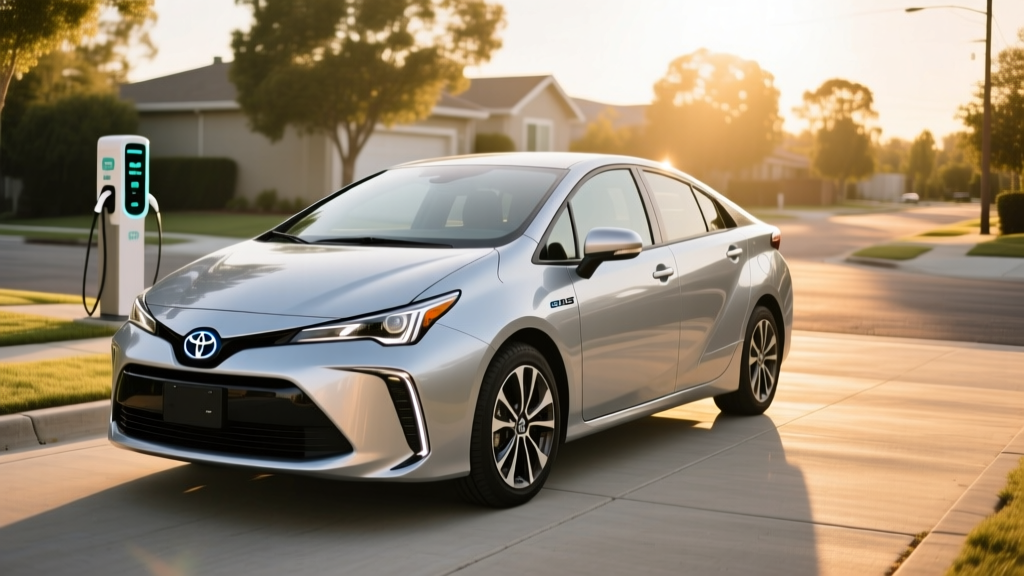
The Toyota Prius didn't just survive its 2023 redesign — it became the hybrid benchmark that every other HEV is measured against. But with four trims, a plug-in Prime sibling, and a price range stretching nearly $9,000, understanding the real Prius hybrid cost requires more than glancing at a window sticker. This guide breaks down every dollar: MSRP by trim, fuel savings versus gas alternatives, battery longevity, tax-credit eligibility, and who should (and shouldn't) buy one in 2026.
2026 Prius Hybrid Pricing by Trim
Toyota has kept the fifth-generation Prius lineup tight for the 2026 model year. The conventional hybrid (HEV) comes in three trims; the plug-in Prius Prime adds two more. Here is the current MSRP structure before destination charges:
| Model | Trim | Drivetrain | MSRP |
|---|---|---|---|
| Prius HEV | LE | FWD | $28,550 |
| Prius HEV | XLE | FWD / AWD-e | $32,395 |
| Prius HEV | Limited | FWD / AWD-e | $36,765 |
| Prius Prime | SE | FWD | $33,975 |
| Prius Prime | XSE | FWD | $37,220 |
The entry LE is the value champion. At $28,550, it undercuts the Honda Accord Hybrid by roughly $2,000 and the Hyundai Elantra Hybrid by a narrower margin while delivering class-leading fuel economy. Adding AWD-e (standard on XLE and Limited trims) costs approximately $1,400 and drops combined MPG from 57 to 54 — a worthwhile trade for snowbelt buyers.
MPG and Real-World Fuel Economy
The EPA rates the 2026 Prius LE at 57 MPG combined (57 city / 56 highway), per fueleconomy.gov. The XLE and Limited with AWD-e dip to 54 combined. These aren't lab-only fantasies — the Prius has a long-documented tendency to exceed its EPA city rating in stop-and-go driving, where regenerative braking recaptures the most energy.
| Trim | City MPG | Highway MPG | Combined MPG |
|---|---|---|---|
| LE (FWD) | 57 | 56 | 57 |
| XLE / Limited (FWD) | 55 | 53 | 54 |
| XLE / Limited (AWD-e) | 53 | 54 | 54 |
Real-world expectations: In warm-weather city driving, owners consistently report 58–62 MPG on the LE. Highway-only trips at 75+ MPH yield 48–52 MPG because aerodynamic drag dominates and the Atkinson-cycle 2.0L engine carries more of the load. In cold climates (below 30°F), expect a 5–10% reduction as the engine runs longer to heat the cabin and warm the catalytic converter. If your commute is 90% urban, the Prius will likely beat its sticker. If it's 90% interstate, plan for mid-40s.
Prius HEV vs Prius Prime: Which Powertrain Fits?
This is where buyers get tripped up. The Prius HEV (conventional hybrid) never plugs in. It recovers energy through regenerative braking and engine optimization to charge its small 1.0 kWh lithium-ion pack. The Prius Prime is a plug-in hybrid (PHEV) with a larger 13.6 kWh battery that delivers an EPA-rated 44 miles of electric-only range before the gasoline engine engages.
| Factor | Prius HEV | Prius Prime (PHEV) |
|---|---|---|
| Plugs in? | No | Yes (Level 1 or Level 2) |
| Electric-only range | N/A | 44 miles (EPA) |
| Battery capacity | 1.0 kWh | 13.6 kWh |
| Total combined range | ~620 miles | ~490 miles (EV + gas) |
| Combined HP | 194 (FWD) / 196 (AWD-e) | 220 |
| Level 2 charge time | N/A | ~4 hours (3.3 kW onboard) |
| DC fast charging | N/A | Not supported |
| Combined MPGe (EV mode) | N/A | 127 MPGe |
| Gas-mode MPG (charge-depleted) | 57 combined | 52 combined |
The Prime's 220 combined horsepower gives it noticeably stronger acceleration — 0–60 MPH in roughly 6.6 seconds versus 7.2 for the HEV FWD. But the Prime trades some cargo space (the larger battery raises the load floor slightly) and loses AWD availability. If you can charge at home nightly and your round-trip commute is under 44 miles, the Prime effectively becomes an EV for daily use with a gas safety net for road trips.
Powertrain Specs and What's Under the Hood
Both the Prius and Prius Prime share Toyota's fifth-generation hybrid system architecture, but with meaningful differences:
Prius HEV: A 2.0-liter four-cylinder Atkinson-cycle engine (150 HP) paired with a front-mounted electric motor-generator. Combined system output is 194 HP for FWD and 196 HP with the rear AWD-e motor. The AWD-e system adds a small independent rear motor that activates below 43 MPH for traction, then disengages to avoid drivetrain drag.
Prius Prime: The same 2.0L engine, but a more powerful front motor-generator and the 13.6 kWh battery push combined output to 220 HP. No AWD option. The Prime's EV-mode top speed is 84 MPH — sufficient for most highway merging scenarios without engaging the gas engine.
Tax Credits and Incentives: What You Actually Qualify For
This is the section where expectations need calibrating. Under current IRS §30D rules referenced at irs.gov, only the Prius Prime (PHEV) may qualify for a federal tax credit — the conventional Prius HEV does not, because it lacks sufficient battery capacity and plug-in capability.
- §30D Credit Eligibility Checklist (2026):
- ✔ Vehicle must be a new plug-in hybrid or BEV with ≥7 kWh battery (Prime qualifies)
- ✔ MSRP cap: $55,000 for sedans (both Prime trims clear this)
- ✔ Buyer AGI cap: $150,000 single / $300,000 married filing jointly
- ✔ Battery critical minerals and component sourcing requirements (phase-in thresholds tighten annually)
- ✔ Point-of-sale transfer available — apply credit at the dealer to reduce out-of-pocket
- ✘ Conventional Prius HEV does NOT qualify for §30D
The maximum credit is up to $7,500, split between a critical-minerals requirement ($3,750) and a battery-component requirement ($3,750). Toyota's supply-chain sourcing determines how much of the full $7,500 the Prime qualifies for in a given model year. Check the latest IRS guidance before purchasing — these sourcing thresholds tighten annually, and a vehicle eligible in January may have reduced credit by December.
Some states offer additional rebates for PHEVs (California's CVRP, for instance, has offered up to $1,000–$2,000 for qualifying PHEVs based on income). Check your state energy office for current programs.
Battery Warranty, Lifespan, and Replacement Cost
Hybrid Battery: 10 years / 150,000 miles (whichever comes first), covering capacity below 70% of original. Applies in all 50 states.
Hybrid System Components: 8 years / 100,000 miles (inverter, transaxle, control module).
Transferability: Warranty transfers to subsequent owners, supporting resale value.
The lithium-ion hybrid battery in the conventional Prius is small (1.0 kWh) and operates within a narrow state-of-charge window — Toyota's battery management system rarely allows it to charge above ~80% or discharge below ~20%. This shallow cycling dramatically extends cell life. Real-world data from third-generation Prius taxis and high-mileage owners routinely shows 200,000+ miles on the original pack.
If replacement is needed out of warranty: A new OEM Prius hybrid battery costs approximately $2,500–$3,500 installed at a dealer. Refurbished or aftermarket packs are available for $1,200–$2,000. The Prime's larger 13.6 kWh pack will cost more — estimated $4,500–$6,500 for OEM replacement, though its warranty coverage is identical.
5-Year Total Cost of Ownership
Comparing the Prius LE against a typical gas-only compact sedan reveals where the hybrid cost advantage compounds. This model assumes 15,000 miles/year, $3.50/gallon regular unleaded, and $0.15/kWh for the Prime (home charging):
| Cost Factor | Prius LE (HEV) | Prius Prime SE | Gas Sedan (30 MPG) |
|---|---|---|---|
| Purchase price (MSRP) | $28,550 | $33,975 | $27,000 |
| Federal tax credit | $0 | Up to $7,500* | $0 |
| Effective purchase | $28,550 | ~$26,475 | $27,000 |
| Fuel / energy (5 yr) | $4,605 | $1,688 (EV) + $771 (gas) | $8,750 |
| Estimated maintenance | $2,100 | $1,800 | $3,200 |
| 5-year total (est.) | $35,255 | $30,734 | $38,950 |
*Assumes full $7,500 §30D credit eligibility and buyer qualification. Actual credit may be $3,750 depending on sourcing compliance. State incentives not included.
The Prius HEV saves roughly $3,700 over five years versus a gas sedan, driven almost entirely by fuel savings. The Prime, with the tax credit applied, can undercut both — but only if you charge regularly. A Prime that never plugs in is just a heavier, thirstier Prius getting 52 MPG instead of 57.
Who Should Buy the Prius — and Who Shouldn't
- You can't charge at home (apartment, street parking)
- Your budget is firm at $28,000–$32,000
- You want maximum simplicity — no plug, no plug-in tax-credit paperwork
- You drive 400+ miles between fill-ups regularly
- You want proven, low-maintenance ownership for 10+ years
- You have Level 2 home charging access
- Your daily round-trip commute is under 44 miles
- You qualify for the §30D tax credit (income under cap)
- You want EV-like daily driving with gas backup for road trips
- 220 HP and stronger acceleration matter to you
- You need more than 27.2 cu-ft cargo volume (consider a RAV4 Hybrid)
- You want a full EV experience — explore the Tesla Model 3 or Hyundai Ioniq 6
- You tow (Prius is not rated for towing beyond 1,500 lbs for the HEV)
- You want a manual or sporty driving feel — the CVT drones under hard acceleration
Frequently Asked Questions
How many MPG does the 2026 Prius get in real driving?
The EPA rates the LE at 57 combined MPG. In real-world urban driving, many owners report 58–62 MPG thanks to aggressive regenerative braking. Highway-only driving at 75+ MPH typically yields 48–52 MPG. Cold weather can reduce these figures by 5–10%.
How far can the Prius Prime go on electric only?
The EPA rates the 2026 Prius Prime at 44 miles of electric-only range. Real-world range varies: 40–42 miles at highway speeds, up to 48 miles in mild-weather city driving with gentle throttle input. Once the battery depletes, the gas engine engages and the Prime operates as a conventional hybrid at 52 MPG combined.
Does the Prius hybrid need to be plugged in?
No. The conventional Prius HEV charges its battery entirely through regenerative braking and the gasoline engine. Only the Prius Prime (PHEV) requires plugging in to access its electric-only range. If you buy the standard Prius, treat it exactly like a gas car — just fill up and go.
Is the Prius hybrid reliable and what does a battery replacement cost?
Toyota's hybrid system is among the most proven in the industry, with two decades of real-world data. The hybrid battery is warrantied for 10 years / 150,000 miles. Out-of-warranty OEM replacement runs $2,500–$3,500 for the HEV and an estimated $4,500–$6,500 for the Prime. Many Prius batteries last well beyond 200,000 miles with Toyota's conservative charge-management strategy.
Does the 2026 Prius qualify for any tax credit?
The conventional Prius HEV does not qualify for the federal §30D tax credit — it lacks plug-in capability and sufficient battery capacity. The Prius Prime may qualify for up to $7,500, subject to battery-sourcing requirements, MSRP caps (both trims qualify), and buyer income limits ($150K single / $300K joint). Check current IRS guidance before purchasing, as sourcing thresholds change annually.
How does Prius cost compare to a full EV like the Tesla Model 3?
A base Prius LE at $28,550 is roughly $10,000 less than a Tesla Model 3 RWD before incentives. The Model 3 offers 341 miles of range, DC fast charging, and lower per-mile energy costs — but requires reliable home or public charging access. If you can charge at home and your budget allows, the Model 3 delivers a superior daily experience. If charging access is uncertain or your budget is firm under $30,000, the Prius HEV eliminates range anxiety entirely while still cutting fuel costs roughly in half versus a gas car.