Quick Verdict: The Performance SUV That Plugs In
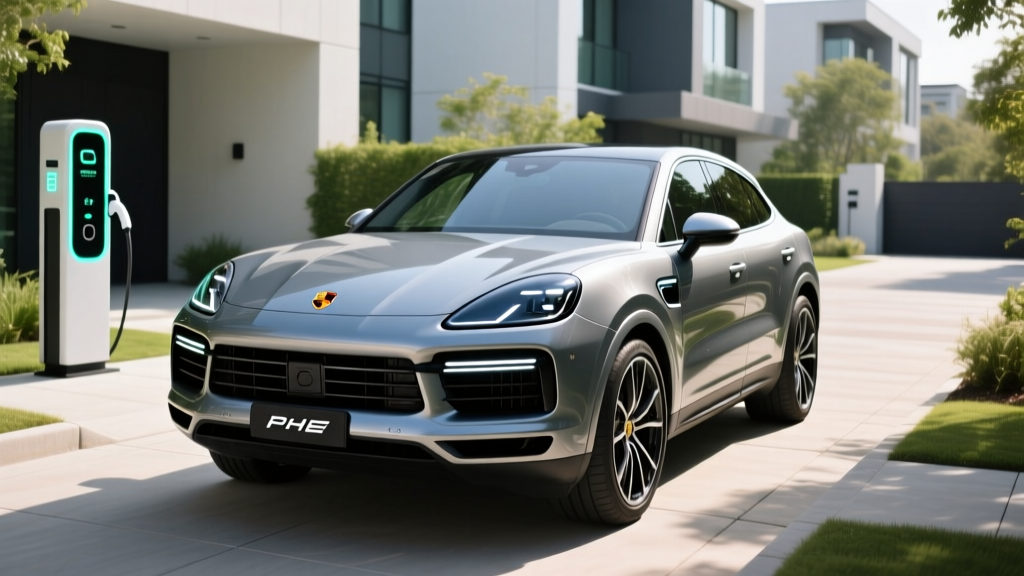
The 2026 Porsche Cayenne E-Hybrid occupies a narrow but compelling lane: a luxury midsize SUV that delivers genuine electric-only commuting range, sports-car acceleration, and the cargo practicality of a five-seat crossover — all while avoiding the range-commitment anxiety of a full battery-electric vehicle. Porsche refreshed the Cayenne lineup with a larger traction battery and more powerful electric motor for the current generation, and the 2026 model year carries those gains forward with updated infotainment and expanded driver-assistance features.
If you can charge at home and your daily driving stays under 30 miles, the Cayenne E-Hybrid functions as a weekday EV and a weekend road-trip machine. If you lack home charging access, the value proposition narrows considerably — you're paying a premium for electric hardware you won't fully exploit.
| Spec | Cayenne E-Hybrid | Cayenne S E-Hybrid |
|---|---|---|
| Powertrain | 3.0L turbo V6 + electric motor | 3.0L turbo V6 + electric motor |
| Combined Output | 391 hp / 479 lb-ft | 512 hp / 553 lb-ft |
| 0–60 mph | 5.2 sec | 4.5 sec |
| Battery (gross / usable) | 25.9 kWh / ~22.0 kWh | 25.9 kWh / ~22.0 kWh |
| EV-Only Range (WLTP) | Up to 57 mi (est. ~30–34 mi EPA) | Up to 53 mi (est. ~28–32 mi EPA) |
| Onboard AC Charger | 11 kW (optional 7.2 kW base) | 11 kW standard |
| DC Fast Charging | Not available | Not available |
| Level 2 Charge Time (0–100%) | ~2 hr 15 min (11 kW) | ~2 hr 15 min (11 kW) |
| Drivetrain | AWD (8-speed Tiptronic) | AWD (8-speed Tiptronic) |
| Cargo Volume | 27.2 cu ft (rear seats up) | 27.2 cu ft (rear seats up) |
| Base MSRP (est.) | ~$93,000 | ~$105,000 |
Source: Porsche USA. EPA range estimates are projected based on WLTP figures and prior-generation EPA testing patterns; final EPA certification may vary.
HEV vs PHEV: Understanding What the Cayenne E-Hybrid Actually Is
Before we break down the numbers, it's critical to distinguish between the two hybrid architectures on the market — because the Cayenne E-Hybrid is firmly a plug-in hybrid (PHEV), not a conventional hybrid (HEV).
| Feature | Conventional Hybrid (HEV) | Plug-In Hybrid (PHEV) |
|---|---|---|
| Battery Size | 1–2 kWh | 12–30 kWh (Cayenne: 25.9 kWh) |
| Plugs In? | No — regenerates via braking/engine | Yes — Level 1 or Level 2 AC charging |
| Electric-Only Range | 0–1 mile at low speed | 20–50+ miles at highway speed |
| EV-Only Top Speed | ~25 mph | ~84 mph (Cayenne E-Hybrid) |
| Tax Credit Eligibility | No | Potentially (see §30D rules below) |
| Example | Toyota RAV4 Hybrid | Porsche Cayenne E-Hybrid |
The Cayenne E-Hybrid's 25.9 kWh battery pack (gross) sits beneath the cargo floor and powers a 130 kW (174 hp) electric motor integrated into the eight-speed Tiptronic transmission. When the battery depletes, the 3.0-liter turbocharged V6 takes over seamlessly — you're never stranded. The system operates as a series-parallel hybrid: it can drive on electricity alone, engine alone, or both simultaneously for maximum output.
Porsche does not currently sell a conventional (non-plug-in) hybrid Cayenne in the US market. If you're cross-shopping, the BMW X5 xDrive50e and Volvo XC90 Recharge are the closest PHEV competitors.
Electric-Only Range and Total Driving Range
EPA EV-Only Range (estimated): ~30–34 miles (Cayenne E-Hybrid), ~28–32 miles (S E-Hybrid)
Real-World Expectation: Expect 25–30 miles in mixed driving with climate control active. Highway-only driving at 70+ mph may yield 22–26 miles. In cold weather (below 35°F), plan for 18–24 miles due to battery resistance and cabin heating load.
Total Combined Range: Approximately 400–440 miles (full battery + 18.7-gallon fuel tank)
Porsche publishes WLTP range figures for European markets — up to 91 km (~57 miles) for the base E-Hybrid. WLTP testing is more generous than EPA methodology, so US buyers should expect roughly 55–65% of the WLTP number in real-world conditions. This aligns with the 30–34 mile EPA estimate.
For context, that's enough electric range for most Americans' daily commutes. The Federal Highway Administration reports the average US driver covers roughly 37 miles per day. If you charge at home overnight, you'll burn very little gasoline on weekdays.
Fuel Economy: EPA MPG and MPGe Breakdown
| Metric | E-Hybrid (est.) | S E-Hybrid (est.) |
|---|---|---|
| MPGe (combined, with charge) | ~50–54 MPGe | ~46–50 MPGe |
| MPG (gas only, combined) | ~21–23 MPG | ~20–22 MPG |
| MPG (gas only, city) | ~20–22 MPG | ~19–21 MPG |
| MPG (gas only, highway) | ~22–24 MPG | ~21–23 MPG |
| kWh/100 mi (EV mode) | ~42–46 kWh/100 mi | ~44–48 kWh/100 mi |
Figures are estimates based on prior model-year EPA data and updated powertrain specs. Final EPA certifications will be published at fueleconomy.gov.
Real-World MPG vs EPA Sticker
PHEVs are uniquely sensitive to how you use them. If you charge nightly and drive 25 miles per day, you may go weeks without visiting a gas station — effectively achieving 80–100+ MPGe in practice. If you never plug in, the Cayenne E-Hybrid functions as a heavy 5,000-lb luxury SUV and returns roughly 20–22 MPG combined, which is unremarkable for the segment.
On a 200-mile highway road trip with no initial charge, expect the gas-only MPG to settle around 22–24 MPG at 70 mph cruising. The V6 engine is efficient at steady-state loads, and the eight-speed transmission keeps revs low. City driving with frequent stops benefits from regenerative braking, which recaptures energy and recharges the battery modestly.
Charging: Level 2 Specs, Times, and What You Need at Home
The Cayenne E-Hybrid charges exclusively via AC — there is no DC fast-charging capability. This is typical for PHEVs, whose smaller batteries don't justify the cost and weight of DC hardware.
| Charging Level | Power | 0–100% Time | Miles of EV Range per Hour |
|---|---|---|---|
| Level 1 (120V household) | ~1.4 kW | ~16–18 hours | ~2–3 mi/hr |
| Level 2 (240V, standard outlet) | 7.2 kW | ~3 hr 15 min | ~9–10 mi/hr |
| Level 2 (240V, upgraded onboard charger) | 11 kW | ~2 hr 15 min | ~13–15 mi/hr |
Home charging setup: A Level 2 home charger (such as a Porsche Mobile Charger Connect or a universal unit like the ChargePoint Home Flex) on a 240V / 48-amp circuit will fully replenish the battery overnight — typically in 2–3 hours. Since the battery is only ~26 kWh, you don't need the 80-amp circuits that full BEVs like the Taycan or Rivian R1S demand.
Installation cost: Expect $500–$1,500 for a Level 2 home charging installation if your electrical panel has capacity. A panel upgrade (to 200A service) can add $1,500–$3,000. Consult a licensed electrician for a site-specific quote.
Cost to charge: At the US average residential electricity rate of ~$0.17/kWh (EIA), a full charge costs roughly $3.75–$4.40 — yielding an effective fuel cost of about $0.13–$0.15 per electric mile. Compare that to $0.22–$0.25 per mile on premium gasoline at 22 MPG.
Powertrain Deep Dive: Horsepower, Torque, and Driving Dynamics
The Cayenne E-Hybrid pairs a 3.0-liter turbocharged V6 (producing approximately 260 hp on its own in the base E-Hybrid) with a 130 kW (174 hp) electric motor embedded in the transmission housing. Combined system output reaches 391 horsepower and 479 lb-ft of torque in the base model, and 512 hp / 553 lb-ft in the S E-Hybrid variant.
The electric motor provides instant torque from 0 RPM, which gives the Cayenne E-Hybrid a responsive, eager feel around town that the gas-only Cayenne can't match at low speeds. The transition between electric and gas power is well-managed — one of Porsche's engineering strengths versus some competitors where the handoff is clunky.
Driving modes include E-Power (electric-only), Hybrid Auto (system-managed), E-Hold (preserves battery for later), E-Charge (engine charges battery while driving), Sport, and Sport Plus. The Sport Chrono package adds a Sport Response button for 20 seconds of maximum combined output.
Pricing, Trims, and Federal Tax Credit Eligibility
The 2026 Porsche Cayenne E-Hybrid is expected to start around $93,000 (including destination), with the S E-Hybrid beginning near $105,000. Porsche's options list is famously extensive — a moderately equipped E-Hybrid typically transactions between $100,000 and $115,000.
Does the Cayenne E-Hybrid Qualify for the Federal EV Tax Credit?
Under IRS §30D rules for new clean vehicles, PHEVs are eligible if they meet all of the following criteria:
- Battery capacity: ≥ 7 kWh (Cayenne: 25.9 kWh ✓)
- GVWR: Under 14,000 lbs (Cayenne: ~6,000 lbs ✓)
- Final assembly: In North America — the Cayenne is assembled in Bratislava, Slovakia, which likely disqualifies it ✗
- MSRP cap: SUVs must be under $80,000 — the Cayenne exceeds this cap ✗
- Buyer income cap: $150K single / $300K joint filers
- Battery sourcing & critical minerals: Must meet phased-in percentage thresholds
Bottom line: The 2026 Cayenne E-Hybrid does not qualify for the $7,500 federal tax credit under §30D. It fails on two counts: the MSRP exceeds the $80,000 SUV cap, and final assembly occurs outside North America. Always verify current rules at IRS.gov, as regulations can shift.
Some states offer their own incentives for PHEVs regardless of assembly location or price. Check your state's energy office or DMV for local programs — but do not count on a credit when budgeting for this vehicle.
Battery Warranty, Reliability, and Replacement Cost
Porsche PHEV Battery Warranty: 8 years / 100,000 miles (whichever comes first), covering defects and capacity loss below a specified threshold (typically 70% of original capacity).
Hybrid System Warranty: 8 years / 100,000 miles on hybrid-specific components (electric motor, power electronics, charging system).
New Vehicle Limited Warranty: 4 years / 50,000 miles bumper-to-bumper.
Is the Cayenne E-Hybrid Reliable?
Porsche's hybrid powertrains have proven durable in the Panamera E-Hybrid and prior Cayenne generations, with few widespread battery-failure reports. The 25.9 kWh pack uses NMC (nickel-manganese-cobalt) chemistry with liquid thermal management, which helps mitigate degradation. PHEV batteries experience shallower charge cycles than full BEVs (you're using 25 kWh rather than 80–100 kWh daily), which generally translates to longer calendar life.
Based on industry data from similar PHEV platforms, expect 10–15% battery degradation over 8–10 years of typical use. This means your 30-mile EV range might gradually reduce to 25–27 miles — still functional for daily commuting.
Battery Replacement Cost
Out-of-warranty high-voltage battery replacement for the Cayenne E-Hybrid is estimated at $12,000–$18,000 (parts and labor), based on prior-generation pricing and industry estimates for comparable PHEV packs. This is a worst-case scenario; most owners will never face this cost within the vehicle's typical ownership cycle, and the 8-year warranty provides substantial protection.
Pros
- 30+ miles of real EV range covers most commutes
- 391–512 hp with seamless electric/gas transitions
- No range anxiety — 400+ mile total range
- 11 kW AC charging fills battery in ~2.25 hours
- Porsche build quality and driving dynamics
- AWD standard with strong regenerative braking
Cons
- $93K+ base price; easily exceeds $110K with options
- No DC fast charging
- No federal tax credit (MSRP cap + non-US assembly)
- Gas-only MPG (~21–23 combined) is mediocre if you don't plug in
- Cargo floor raised slightly by battery pack
- Premium fuel required
Cayenne E-Hybrid vs Full EV vs Gas: Which Should You Choose?
Choose the Cayenne E-Hybrid if:
- You have home Level 2 charging and a daily commute under 30 miles
- You want one vehicle for EV commuting and 400+ mile road trips
- Performance and brand cachet matter, and you're not ready for a full BEV
- You regularly tow or drive in remote areas with sparse charging infrastructure
Choose a full EV (e.g., Porsche Taycan Cross Turismo, BMW iX, Rivian R1S) if:
- You want zero gasoline expenses and minimal maintenance
- You have reliable home and/or workplace charging
- Most of your trips are under 250 miles, or you're willing to plan DC fast-charge stops
Choose the gas Cayenne if:
- You lack any home or workplace charging access
- You drive mostly long highway routes where PHEV advantages diminish
- You want a lower purchase price and simpler powertrain
Frequently Asked Questions
How many MPG does the 2026 Porsche Cayenne E-Hybrid get?
An estimated 50–54 MPGe combined when regularly charged, or approximately 21–23 MPG combined on gasoline alone. City driving with a charged battery maximizes efficiency; highway-only driving without charging yields the lowest numbers (~22–24 MPG gas-only).
How far can the Cayenne E-Hybrid go on electric only?
Approximately 30–34 miles EPA-estimated on a full charge, with real-world results of 25–30 miles in mixed driving. Cold weather and high speeds reduce this to roughly 18–26 miles. The electric motor can propel the Cayenne up to ~84 mph in E-Power mode.
Does the 2026 Cayenne E-Hybrid qualify for any tax credit?
It does not qualify for the $7,500 federal §30D clean vehicle credit due to exceeding the $80,000 MSRP cap for SUVs and being assembled outside North America (Bratislava, Slovakia). Some state-level PHEV incentives may apply — check your local energy office. The IRS publishes current eligibility at IRS.gov.
Is the Cayenne hybrid reliable, and what does battery replacement cost?
Porsche's hybrid systems have a solid reliability track record across the Panamera and Cayenne lines. The high-voltage battery is warrantied for 8 years / 100,000 miles. Out-of-warranty replacement is estimated at $12,000–$18,000, though most owners will not need this within a typical ownership period. The shallower daily discharge cycles of a PHEV (vs. a full BEV) generally support longer battery longevity.
Can the Cayenne E-Hybrid DC fast charge?
No. The Cayenne E-Hybrid supports AC charging only — Level 1 (120V) and Level 2 (240V). With the available 11 kW onboard charger, a full Level 2 charge takes approximately 2 hours and 15 minutes. DC fast charging is not offered on any current Cayenne PHEV variant.
What's the difference between the Cayenne E-Hybrid and S E-Hybrid?
The S E-Hybrid uses a higher-output tune of the same 3.0L V6 + electric motor system, producing 512 hp (vs. 391 hp) and achieving 0–60 mph in 4.5 seconds (vs. 5.2 seconds). EV range is slightly lower due to the more aggressive calibration. The S E-Hybrid starts roughly $12,000 higher.
Do I need to plug in the Cayenne E-Hybrid?
You don't have to — the vehicle operates as a conventional hybrid when the battery is depleted, using the V6 engine and regenerative braking. However, to capture the fuel-economy and electric-driving benefits (and justify the price premium over a gas Cayenne), regular plug-in charging is strongly recommended. Without it, you're carrying 600+ lbs of battery hardware you're not utilizing.