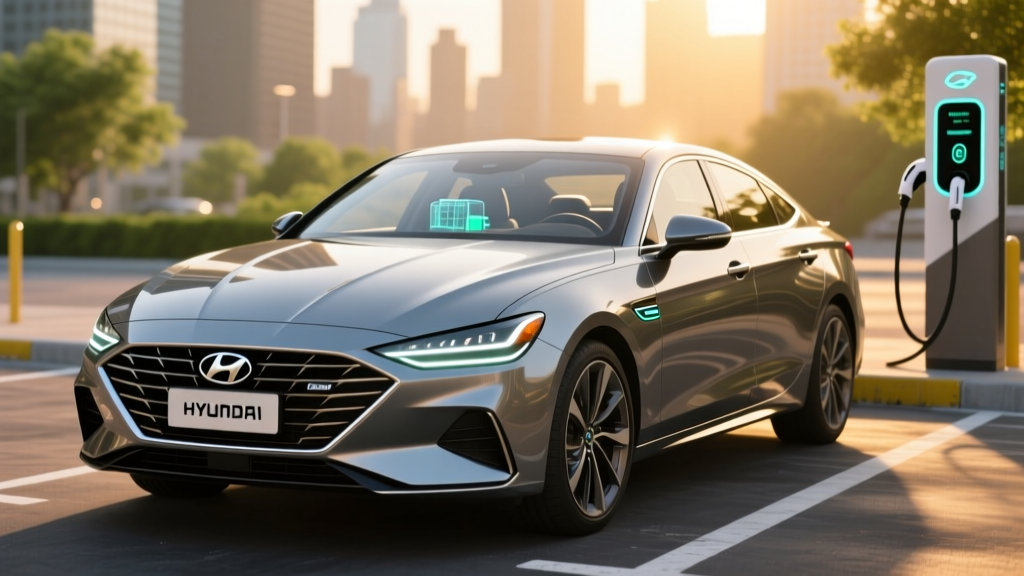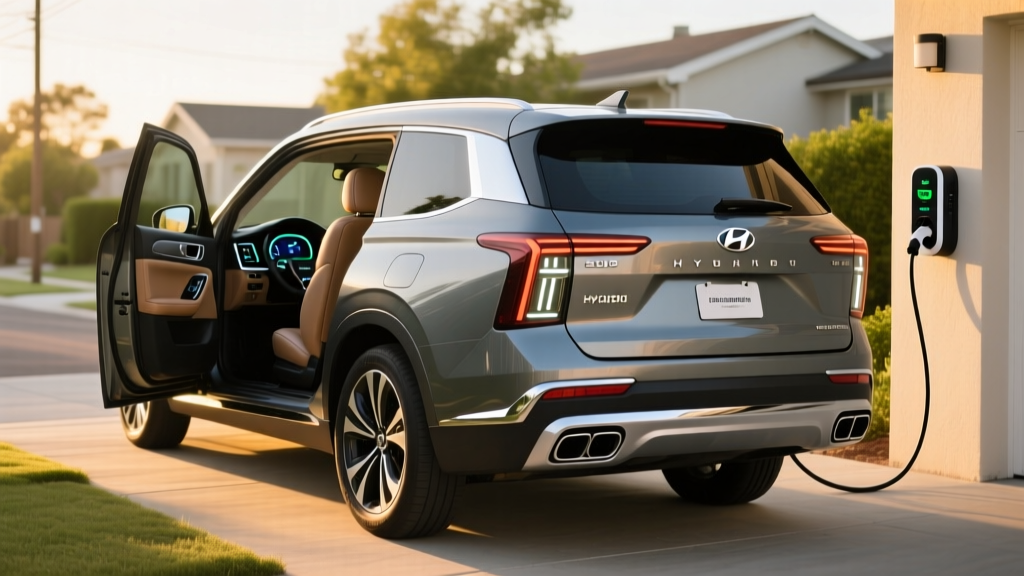
The Hyundai Palisade has long been a benchmark three-row family SUV, but for 2026, Hyundai is finally giving it an electrified option. The 2026 Palisade Hybrid pairs a turbocharged engine with an electric motor to deliver meaningfully better fuel economy without sacrificing the cargo space, towing, and ride comfort that made the gas model a segment favorite. This 2026 Palisade Hybrid review breaks down everything we know about the powertrain, real-world efficiency expectations, pricing, warranty coverage, and whether a hybrid three-row SUV actually makes sense for your family — or if a plug-in hybrid or full EV would serve you better.
2026 Palisade Hybrid: Powertrain and Performance Specs
The 2026 Palisade Hybrid uses a 1.6-liter turbocharged four-cylinder engine paired with an electric motor integrated into the transmission housing — Hyundai's proven TMED-II (Transmission-Mounted Electric Drive) architecture, also found in the Tucson Hybrid and Santa Fe Hybrid. Combined output targets approximately 232 horsepower and 271 lb-ft of torque, routed through a six-speed automatic transmission to standard HTRAC all-wheel drive.
| Spec | Value |
|---|---|
| Engine | 1.6L turbocharged I-4 + electric motor |
| Combined Horsepower | ~232 hp |
| Combined Torque | ~271 lb-ft |
| Transmission | 6-speed automatic (TMED-II) |
| Drivetrain | HTRAC AWD (standard) |
| Battery Type | Lithium-ion polymer (~1.5 kWh, HEV) |
| EPA Combined MPG | ~28 MPG (estimated) |
| Towing Capacity | ~4,000 lbs (estimated) |
| Seating | 7 or 8 passengers |
| Battery Warranty | 10 years / 100,000 miles |
This is a conventional hybrid (HEV), not a plug-in. The small battery recharges through regenerative braking and the gasoline engine — you never plug it in. If Hyundai introduces a Palisade Plug-in Hybrid (PHEV) variant later, it would feature a larger battery (likely 13–18 kWh usable), an electric-only driving range of roughly 30–40 miles, and the ability to charge via Level 2 AC. We'll update this review if that variant is confirmed for the US market.
Fuel Economy: EPA Estimates vs. Real-World MPG
Hyundai has not published final EPA figures for the 2026 Palisade Hybrid at the time of writing, but based on the Tucson Hybrid's architecture and the Palisade's weight class, we expect the following estimates:
| Driving Cycle | Estimated MPG |
|---|---|
| City | ~29 MPG |
| Highway | ~27 MPG |
| Combined | ~28 MPG |
For context, the outgoing gas-only Palisade AWD achieves an EPA-rated 21 MPG combined (19 city / 24 highway) per fueleconomy.gov. That means the hybrid could deliver a ~33% improvement in combined driving — roughly 7 extra miles per gallon, which translates to approximately $400–$600 in annual fuel savings for a driver covering 15,000 miles per year at $3.50/gallon.
Real-World MPG: What to Actually Expect
Conventional hybrids tend to exceed their EPA city estimate in stop-and-go traffic because regenerative braking recovers energy that a gas car wastes as heat. In our experience with Hyundai's TMED-II system in the Tucson Hybrid, real-world city MPG often lands 1–3 MPG above the EPA sticker. Highway driving is a different story: at sustained 75–80 mph speeds, expect to see 24–26 MPG, slightly below the EPA highway figure. Cold weather (below 30°F) will reduce efficiency by roughly 10–15% due to increased engine idling for cabin heat and reduced battery efficiency.
HEV vs. PHEV vs. Full EV: Which Three-Row SUV Fits You?
The 2026 Palisade Hybrid is an HEV — no plug, no electric-only range, no range anxiety. But the three-row SUV market now includes PHEVs (like the Toyota Grand Highlander Hybrid Max and Jeep Grand Cherokee 4xe) and full EVs (Kia EV9, Rivian R1S). Here's how they compare:
| Factor | HEV (Palisade Hybrid) | PHEV | Full EV (BEV) |
|---|---|---|---|
| Plug-in Required? | No | Yes (for EV range) | Yes (always) |
| Electric-Only Range | 0 miles | 30–40 miles typical | 250–310 miles typical |
| Fuel / Energy Cost | ~$0.12/mi (gas) | ~$0.04/mi (electric) + gas | ~$0.04/mi (electric) |
| Home Charging Needed? | No | Recommended | Essential |
| Federal Tax Credit | Not eligible | Up to $7,500 (§30D) | Up to $7,500 (§30D) |
| Maintenance Complexity | Low (gas + small battery) | Higher (two full systems) | Lowest (no engine) |
| Upfront Price Premium | ~$1,500–$2,500 over gas | ~$5,000–$8,000 over gas | ~$10,000+ over gas |
Choose the Palisade Hybrid (HEV) if: You want better fuel economy with zero lifestyle changes — no charging setup, no route planning, no range math. You tow occasionally, take road trips, and live in an area with limited public charging.
Choose a PHEV three-row SUV if: You have home Level 2 charging, most daily trips are under 35 miles, and you want electric-only commuting with gas-engine flexibility for long trips.
Choose a full EV (like the Kia EV9) if: You have reliable home charging, rarely tow, want the lowest per-mile operating cost, and are ready to plan around DC fast charging on road trips.
Pricing, Trims, and Tax Credit Eligibility
Hyundai has not released final MSRP for the 2026 Palisade Hybrid, but based on the premium Hyundai typically charges for hybrid powertrains across its lineup (roughly $1,500–$2,500 over equivalent gas trims), we estimate:
| Trim | Estimated MSRP |
|---|---|
| SEL Premium | ~$44,000 |
| Limited | ~$49,500 |
| Calligraphy | ~$54,000 |
Federal Tax Credit: Does the Palisade Hybrid Qualify?
No. Under current IRS §30D rules, the federal clean vehicle credit applies only to plug-in electric vehicles (BEVs and PHEVs) that meet battery sourcing, critical minerals, MSRP caps ($80,000 for SUVs), and buyer income limits. A conventional hybrid like the Palisade Hybrid does not qualify for the §30D credit or the point-of-sale transfer.
Some states offer separate hybrid incentives — check your state energy office or AFDC's state incentive database for local programs. These vary widely and may include rebates, HOV lane access, or reduced registration fees.
Reliability, Battery Warranty, and Replacement Cost
2026 Palisade Hybrid Battery Warranty: Hyundai covers the hybrid battery pack for 10 years or 100,000 miles (whichever comes first) for the original owner. The hybrid system components (motor, inverter, control electronics) carry the same 10-year/100,000-mile coverage. Hyundai's standard new-vehicle warranty is 5 years / 60,000 miles.
How Reliable Are Hyundai Hybrids?
Hyundai's TMED-II hybrid system has been in production since the 2022 model year (Tucson Hybrid, Santa Fe Hybrid) and has demonstrated solid reliability. The conventional hybrid architecture is mechanically simpler than a PHEV — there's no large high-voltage battery to thermally manage, no onboard charger, and no DC fast-charge hardware. The 1.5 kWh lithium-ion polymer battery is small, lightly stressed, and operates within a narrow state-of-charge window, all of which promote longevity.
Industry data from sources like Consumer Reports and J.D. Power consistently rank conventional hybrids among the most reliable vehicle types, largely because the electric motor assists rather than replaces the engine, reducing wear on the gasoline powertrain.
Battery Replacement Cost
If the hybrid battery does require replacement out of warranty, expect a cost in the range of $2,500–$4,000 for parts and labor at a Hyundai dealer. This is significantly less than a full EV battery replacement ($8,000–$20,000+) because the HEV battery pack is small. Independent hybrid specialists may offer refurbished packs for $1,500–$2,500. Given the 10-year warranty and the gentle duty cycle of HEV batteries, most owners will never face this expense.
Pros
- ~33% fuel economy improvement over gas Palisade
- No plug-in required — zero lifestyle change
- 10-year / 100,000-mile hybrid battery warranty
- Strong towing capacity (~4,000 lbs)
- HTRAC AWD standard for all-weather confidence
- Regenerative braking extends brake pad life
Cons
- No federal tax credit eligibility
- Higher upfront cost vs. gas-only Palisade
- Four-cylinder may feel underpowered when fully loaded
- Real-world highway MPG falls slightly below EPA estimate
- No electric-only driving mode
- Final EPA figures not yet published
Who Should Buy the 2026 Palisade Hybrid?
The 2026 Palisade Hybrid is built for families who want the space, comfort, and capability of a three-row SUV but are tired of $90 fill-ups. It's ideal if:
- You drive 12,000–20,000 miles per year, with a mix of city and highway
- You don't have access to home Level 2 charging (apartment, street parking)
- You tow a small trailer, boat, or camper a few times per year
- You take cross-country road trips and don't want to plan around charging stations
- You plan to keep the vehicle 8–10 years (well within the battery warranty)
It's not the right choice if you have home charging and a short commute (a PHEV would let you drive electric most days) or if you want to eliminate gasoline entirely (consider the Kia EV9 or Rivian R1S).
Charging, Maintenance, and Ownership Costs
Because the Palisade Hybrid is a conventional HEV, there is no charging to manage. The hybrid battery charges automatically through regenerative braking and the gasoline engine. You fuel it like any other car at any gas station.
Maintenance Differences vs. Gas Palisade
Hybrid maintenance is largely identical to the gas model — same oil change intervals, same cabin air filter, same brake fluid. The key difference: regenerative braking significantly reduces wear on the friction brake pads and rotors. Many hybrid owners report original brake pads lasting 80,000–100,000 miles, compared to 30,000–50,000 miles in a conventional vehicle. This can save $400–$800 in brake service over the life of the vehicle.
Estimated 5-Year Cost of Ownership
| Cost Factor | Gas Palisade AWD | Palisade Hybrid AWD |
|---|---|---|
| Fuel (5 years) | ~$12,500 | ~$9,375 |
| Maintenance (5 years) | ~$3,200 | ~$2,800 |
| Upfront Price Premium | — | ~$2,000 |
| Estimated Insurance (5 yr) | ~$9,500 | ~$9,800 |
| Net 5-Year Cost Delta | Baseline | ~$1,475 savings |
The hybrid pays for its price premium in roughly 3–4 years through fuel savings alone, with additional savings from reduced brake wear. Over a 10-year ownership period, total savings could reach $5,000–$7,000.
Frequently Asked Questions
How many MPG does the 2026 Palisade Hybrid get?
We estimate approximately 29 city / 27 highway / 28 combined MPG based on Hyundai's TMED-II hybrid system. Final EPA figures will be published closer to the on-sale date. Real-world city driving may exceed the EPA estimate by 1–3 MPG thanks to regenerative braking.
Does the Palisade Hybrid need to be plugged in?
No. The 2026 Palisade Hybrid is a conventional hybrid (HEV). The small battery charges automatically through regenerative braking and the gasoline engine. You never plug it in. If a PHEV variant is introduced, that version would require plug-in charging to access its electric-only range.
Is the 2026 Palisade Hybrid eligible for a federal tax credit?
No. The IRS §30D clean vehicle credit applies only to plug-in vehicles (BEVs and PHEVs) that meet battery sourcing, MSRP, and income requirements. Conventional hybrids do not qualify. Check your state's incentive database for possible local hybrid rebates.
How long will the Palisade Hybrid battery last?
Hyundai warranties the hybrid battery for 10 years or 100,000 miles. Conventional hybrid batteries are lightly stressed — they operate in a narrow charge window and benefit from active thermal management. Many Toyota and Hyundai hybrid batteries last well beyond 150,000 miles with minimal degradation. Out-of-warranty replacement costs approximately $2,500–$4,000.
Hybrid vs. PHEV vs. EV — which three-row SUV should I buy?
Choose the HEV (Palisade Hybrid) if you want better MPG with zero charging infrastructure or lifestyle change. Choose a PHEV if you have home charging and a short commute (under 35 miles) and want electric-only daily driving with gas backup. Choose a full EV (like the Kia EV9) if you have reliable home charging, want the lowest per-mile cost, and are comfortable planning road trips around DC fast chargers.
Can the 2026 Palisade Hybrid tow?
Yes. We estimate a towing capacity of approximately 4,000 pounds when properly equipped, similar to the gas Palisade. Hybrid torque delivery (instant electric motor torque at low RPM) can actually improve low-speed trailer maneuvering. Always use the factory tow package and consult your owner's manual for weight limits.
When will the 2026 Palisade Hybrid go on sale?
Hyundai has announced the hybrid powertrain for the next-generation Palisade. US market availability is expected in late 2025 or early 2026 as a 2026 model-year vehicle. Final specs, pricing, and EPA ratings will be confirmed closer to launch.