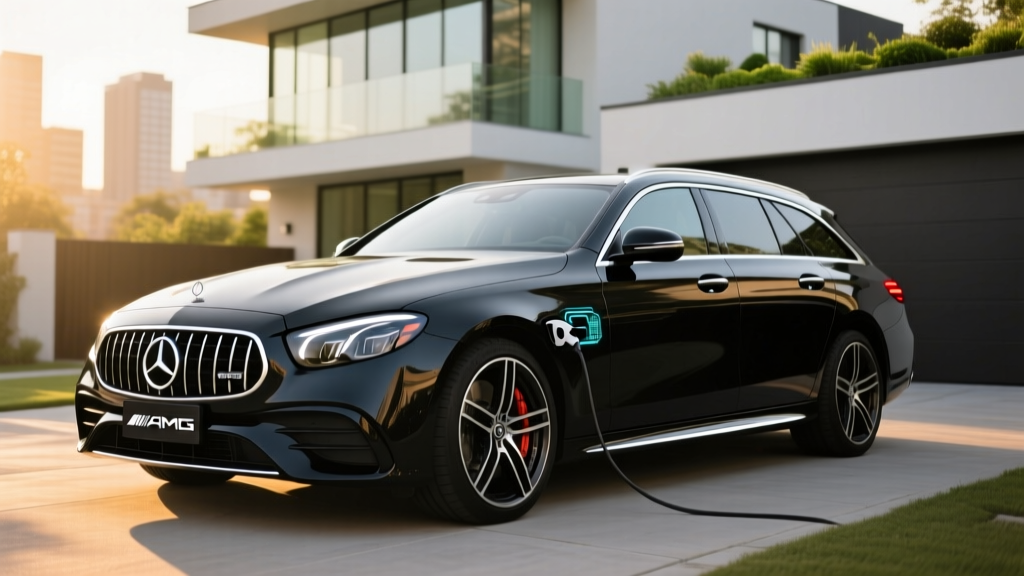
The 2026 Mercedes-AMG E 53 Hybrid Wagon occupies a rare niche: a performance-tuned plug-in hybrid estate that can silently commute on electric power during the week and deliver AMG straight-six fury on the weekend. With 469 combined horsepower, a 21.2 kWh battery, and an EPA-estimated 27 miles of electric-only range, this PHEV wagon asks a fundamental question — can you have electrified daily driving without sacrificing the character that makes an AMG desirable?
Below, we break down the exact numbers that matter: real-world MPG versus EPA estimates, charging speeds and times, battery warranty coverage, federal tax credit eligibility under current IRS §30D rules, and whether this PHEV wagon makes more sense than a full battery-electric vehicle (BEV) or a conventional hybrid for your specific driving pattern.
HEV vs. PHEV: Where the E 53 Hybrid Wagon Fits
Before diving into specs, it's essential to understand what the E 53 Hybrid Wagon actually is — because Mercedes's naming can blur the lines.
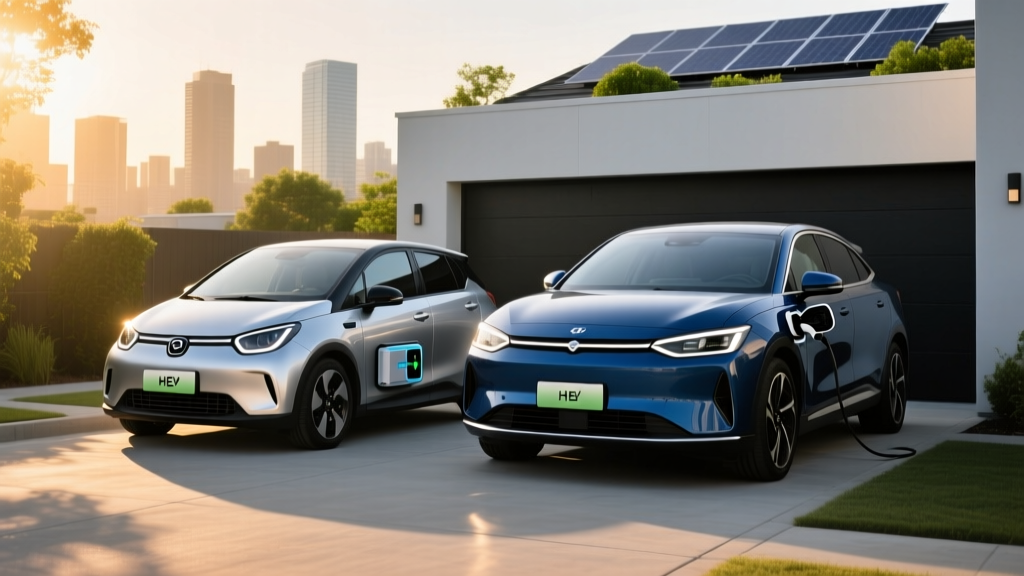
Conventional Hybrid (HEV) vs. Plug-In Hybrid (PHEV)
| Feature | Conventional Hybrid (HEV) | Plug-In Hybrid (PHEV) |
|---|---|---|
| Plugs in to charge? | No — charges via regen and engine | Yes — external charging required for EV range |
| Electric-only range | 1–2 miles at low speed | 20–50 miles typical |
| Battery size | 1–2 kWh | 13–25 kWh |
| Federal tax credit | Generally not eligible | Up to $7,500 (subject to §30D rules) |
| Example | Toyota Prius, Honda CR-V Hybrid | Mercedes-AMG E 53, Toyota RAV4 Prime |
The 2026 E 53 Hybrid Wagon is a plug-in hybrid (PHEV). It has a large enough battery to drive meaningful distances on electricity alone, and it must be plugged in to unlock that benefit. If you never plug it in, you'll still get hybrid efficiency from regenerative braking and engine assist — but you'll be carrying around a heavy battery you're not using to its potential.
Powertrain and Performance Specs
| Specification | 2026 Mercedes-AMG E 53 Hybrid Wagon |
|---|---|
| Engine | 3.0L turbocharged inline-6 + 48V integrated starter-generator |
| Electric motor | Permanently excited synchronous (PHEV system) |
| Combined output | 469 hp / 516 lb-ft torque |
| Transmission | AMG SPEEDSHIFT TCT 9-speed automatic |
| Drivetrain | 4MATIC+ all-wheel drive |
| 0–60 mph | 4.3 seconds (manufacturer est.) |
| Battery capacity | 21.2 kWh (usable, lithium-ion) |
| EPA electric-only range | ~27 miles |
| Total combined range | ~400 miles (gas + electric) |
| Onboard charger (AC) | 7.4 kW (Level 2) |
| DC fast charging | Not available (AC only) |
| Base MSRP | ~$82,900 (est., destination included) |
The powertrain pairs AMG's well-proven turbocharged 3.0-liter inline-six with an electric motor integrated into the drivetrain. The result is seamless torque fill — the electric motor covers the turbo's brief spool-up lag, delivering immediate thrust from a standstill. The 48-volt mild-hybrid system also powers the integrated starter-generator for smoother stop-start operation and brief torque assists.
The 4.3-second 0–60 time puts this wagon firmly in sports-sedan territory while offering the cargo practicality of a long-roof estate. That's a combination almost no BEV wagon currently matches at this price point.
EPA MPG and Real-World Fuel Economy
PHEV fuel economy is uniquely complex because the EPA reports multiple figures depending on how much you drive on electricity versus gasoline.
| Mode | City | Highway | Combined |
|---|---|---|---|
| Charge-depleting (EV + gas blended) | — | — | ~65 MPGe |
| Charge-sustaining (gas engine, battery depleted) | ~25 mpg | ~30 mpg | ~27 mpg |
How to interpret these numbers:
- MPGe (miles per gallon equivalent) measures energy efficiency when the battery is charged and you're driving in blended EV/gas mode. The EPA rates this across a full charge-discharge cycle.
- Charge-sustaining MPG is what you'll get on a long road trip once the battery is depleted and the gas engine does all the work. This is the number that matters if you can't charge at home.
Real-world expectations: If your daily commute is under 25 miles and you charge every night, you may go weeks without burning fuel. Owners who charge regularly report 80–100+ MPGe in mixed driving. However, if you drive 60+ miles daily without charging, expect the charge-sustaining figure of roughly 25–28 mpg — respectable for a 4,800-pound AWD performance wagon, but not Prius territory.
Highway driving at 75+ mph will reduce both electric range (expect ~20 miles instead of 27) and gas-only MPG (closer to 26 mpg). Cold weather (below 35°F) typically reduces electric range by 15–25% due to battery chemistry limitations and cabin heating demands.
Electric Range, Charging Speed, and Battery Details
The E 53 Hybrid Wagon's 21.2 kWh usable battery delivers an EPA-estimated 27 miles of electric-only range. In real-world conditions, plan for:
- Ideal conditions (55–65°F, city driving, moderate speed): 25–28 miles
- Highway at 70 mph: 19–22 miles
- Cold weather (below 32°F): 17–22 miles
Charging times:
| Charging Level | Power | 0–100% Time | Notes |
|---|---|---|---|
| Level 1 (120V outlet) | ~1.4 kW | ~15 hours | Emergency/trickle only |
| Level 2 (240V, home/public) | 7.4 kW | ~3 hours | Recommended daily charging |
| DC Fast Charging | N/A | N/A | Not supported on this model |
The lack of DC fast charging is a notable limitation. While most PHEV owners charge at home overnight (where Level 2 is perfectly adequate for a 21.2 kWh battery), you cannot rapidly top up at a highway rest stop. For a PHEV with 27 miles of range, this is less critical than it would be for a BEV — the gas engine takes over seamlessly — but it's worth knowing if you hoped to maximize electric driving on road trips.
The battery uses lithium-ion cells. Mercedes does not publish the specific cathode chemistry (NMC vs. LFP) for this application, though most European PHEV systems in this segment use NMC (nickel manganese cobalt) for its higher energy density in a compact package.
Battery Warranty Coverage
Mercedes-Benz covers the high-voltage PHEV battery for 6 years or 62,000 miles (whichever comes first) against defects and excessive capacity loss. This is slightly shorter than the 8-year/100,000-mile coverage offered by many competitors (Toyota, Hyundai, BMW). Mercedes defines "excessive loss" as dropping below 70% of original capacity within the warranty period.
Battery replacement cost (out of warranty): Estimated at $8,000–$14,000 depending on labor and whether the full pack or individual modules can be serviced. PHEV batteries are smaller and generally less expensive to replace than full BEV packs.
Pricing and Federal Tax Credit Eligibility
The 2026 Mercedes-AMG E 53 Hybrid Wagon carries an estimated starting MSRP of approximately $82,900 including destination. Fully loaded with AMG Performance Package, Driver Assistance Package Plus, and premium leather, expect to reach $95,000–$100,000+.
Federal tax credit (§30D) eligibility — critical caveats:
- MSRP cap: Vans, SUVs, and pickup trucks are capped at $80,000. Sedans and wagons are capped at $55,000. The E 53 Wagon's ~$82,900 MSRP likely exceeds the wagon/sedan cap, which would make it ineligible for the federal credit.
- Income limits: Even if the MSRP qualified, buyers must have modified AGI below $150,000 (single) / $300,000 (joint) to claim the credit.
- Battery sourcing: Current §30D rules require critical minerals and battery components to meet escalating domestic-sourcing thresholds, which many European-built vehicles do not fully satisfy.
- Point-of-sale transfer: If eligible, the credit can be applied at purchase as a price reduction rather than claimed on your tax return.
For definitive eligibility, consult the IRS clean vehicle credit page and verify with a tax professional. The classification of the E 53 Wagon (sedan vs. SUV for MSRP-cap purposes) is the pivotal question — and as of early 2026, wagons fall under the $55,000 sedan cap, effectively excluding this model from the federal credit.
Some states offer additional incentives for PHEVs that may apply regardless of federal eligibility. Check your state's energy office or fueleconomy.gov's incentives database for local programs.
Who Should Choose the E 53 Hybrid Wagon vs. a BEV or Gas Car?
Reasons to Choose This PHEV Wagon
- Short daily commute (under 25 miles) that can be fully electric
- Want a single vehicle for commuting AND long road trips without range anxiety
- Value the AMG inline-six character and performance that no current EV wagon replicates
- Need cargo versatility of a wagon with AWD for all-weather driving
- Cannot install home Level 2 charging for a BEV but can charge a smaller PHEV battery on standard 120V in a pinch
Consider a Full EV Instead If
- Your commute exceeds 30 miles and you want to avoid burning gas daily
- You have reliable home Level 2 charging and want zero tailpipe emissions
- Lower maintenance costs are a priority (no oil changes, fewer moving parts)
- You drive a vehicle eligible for the full $7,500 federal credit (the E 53 likely is not)
Choose the E 53 Hybrid Wagon if: You want a performance wagon that can electric-commute on weekdays, you regularly take road trips exceeding 300 miles, and you value the turbocharged inline-six driving experience.
Choose a full EV (e.g., Porsche Taycan Cross Turismo, Audi A6 Avant e-tron) if: You charge at home, your trips are mostly under 250 miles, and you want to maximize fuel savings and minimize maintenance.
Choose a conventional hybrid wagon (if available) or gas model if: You have no charging access at all and want simpler ownership without plug-in requirements.
Ownership Costs and Long-Term Outlook
Over five years, the E 53 Hybrid Wagon's total cost of ownership depends heavily on your charging habits:
- Fuel/energy: A driver who charges nightly and commutes 20 miles/day may spend $800–$1,200/year on electricity + occasional gas. A driver who never charges will spend $2,400–$3,000/year on premium fuel alone.
- Maintenance: Expect $1,200–$1,800/year. The hybrid system adds complexity (two powertrains) but the electric motor reduces brake wear through regenerative braking.
- Insurance: Performance AMG models carry elevated premiums. Expect $2,500–$4,000/year depending on location and driving record.
- Depreciation: PHEVs in the luxury segment have historically depreciated faster than comparable BEVs, partly due to rapid battery technology advancement and buyer preference shifting toward full electric.
Mercedes-Benz reliability ratings for the current E-Class platform are mid-pack among luxury brands. The PHEV system itself has proven robust across Mercedes's lineup, with few widespread battery failure reports. The primary reliability concern is the complexity of managing two full powertrains — if the turbo system or the electric drive system requires out-of-warranty service, costs can be significant.
Frequently Asked Questions
How many MPG does the 2026 Mercedes-AMG E 53 Hybrid Wagon get?
In charge-sustaining mode (battery depleted, gas engine doing all the work), expect approximately 25 city / 30 highway / 27 combined MPG. When driving with a charged battery in blended mode, the EPA rates it around 65 MPGe combined. Real-world results vary significantly based on how often you charge — regular charging can yield effective economy well above 80 MPGe.
How far can the E 53 Hybrid Wagon go on electric power alone?
The EPA estimates 27 miles of electric-only range. In real-world driving, expect 19–28 miles depending on speed, temperature, and terrain. Highway driving and cold weather reduce range; city driving in moderate temperatures maximizes it.
Does the 2026 E 53 Hybrid Wagon qualify for the $7,500 federal tax credit?
Almost certainly not. Under current IRS §30D rules, wagons fall under the $55,000 MSRP cap for sedans. The E 53 Hybrid Wagon's estimated MSRP of ~$82,900 exceeds this threshold. Additionally, battery sourcing requirements may further disqualify European-built vehicles. Always verify current rules on irs.gov and consult a tax professional.
Is this hybrid reliable, and what does battery replacement cost?
Mercedes's PHEV systems have shown good reliability across the brand's lineup. The high-voltage battery is warranted for 6 years/62,000 miles. Out-of-warranty replacement is estimated at $8,000–$14,000. The 6-year warranty is shorter than the 8–10 year coverage from competitors like Toyota and Hyundai, which is worth considering if you plan to own the vehicle long-term.
Can I charge the E 53 Hybrid Wagon at a DC fast charger?
No. The E 53 Hybrid Wagon supports Level 1 (120V) and Level 2 (240V, up to 7.4 kW) AC charging only. It does not have a DC fast-charge port. For a PHEV with 27 miles of range, most owners charge overnight at home on Level 2, which fully replenishes the battery in about 3 hours.
Hybrid vs. PHEV vs. full EV — which should I choose?
If you have home charging and a commute under 25 miles, the PHEV E 53 lets you drive electrically on weekdays while keeping gas-engine range for road trips. A conventional hybrid (HEV) makes sense only if you cannot plug in at all. A full BEV is the better financial and environmental choice if you charge at home, drive under 300 miles daily, and want minimal maintenance. The E 53 PHEV specifically targets buyers who refuse to compromise on performance character — no current electric wagon offers the same AMG inline-six driving experience.