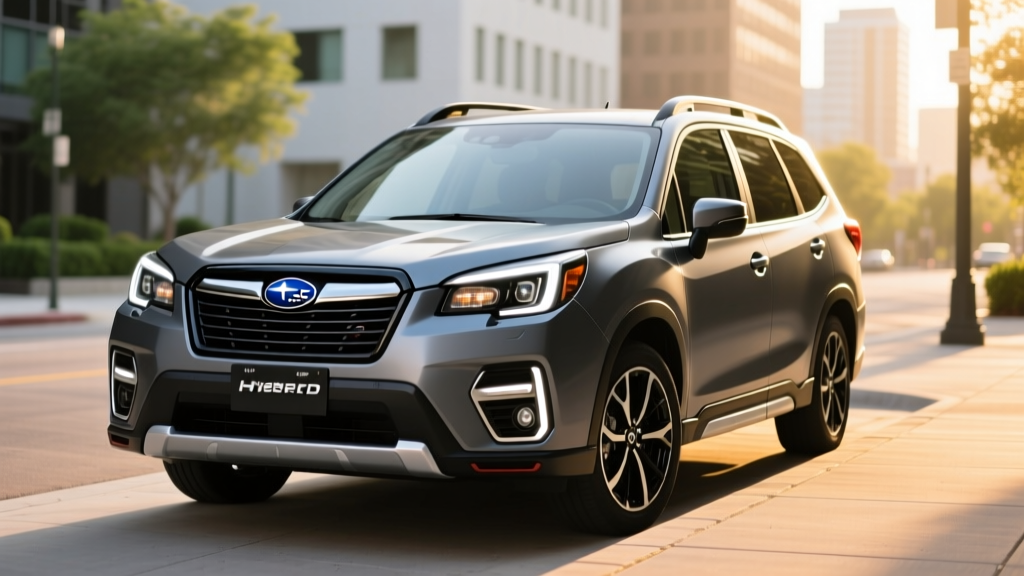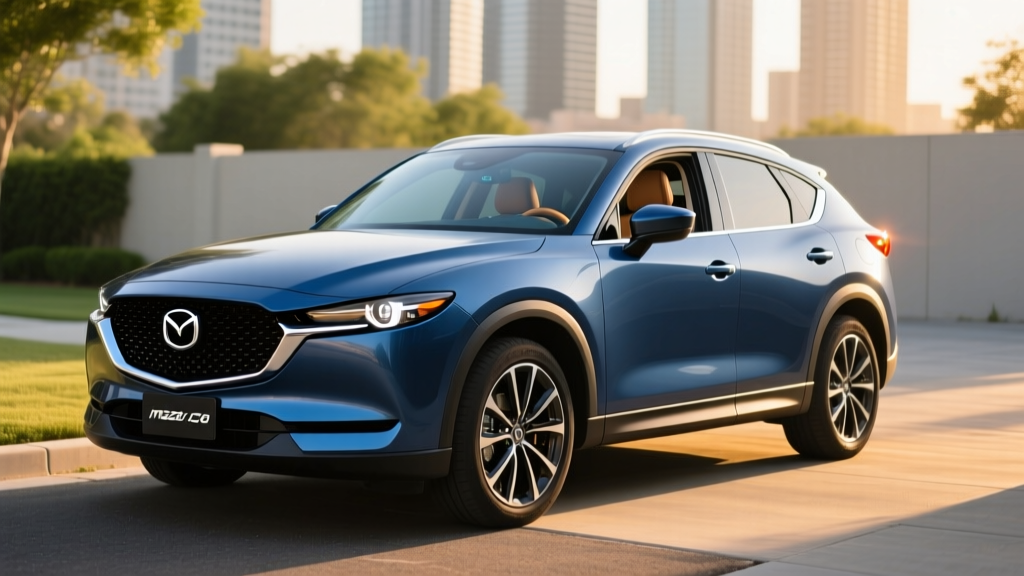
The 2026 Mazda CX-50 Hybrid Premium Plus occupies a specific niche: a compact crossover that pairs Toyota's proven hybrid powertrain with Mazda's upscale interior and chassis tuning. If you've been watching the CX-50 lineup, you already know Mazda borrowed the 2.5-liter hybrid system from the Toyota RAV4 Hybrid for this model. For 2026, the Premium Plus trim sits near the top of the CX-50 Hybrid range, adding premium leather, a panoramic moonroof, and Mazda's full suite of driver-assistance tech. But does this Toyota-Mazda collaboration actually deliver where it counts — at the pump, on the highway, and over years of ownership?
This guide breaks down every spec that matters: EPA fuel economy versus what you'll actually see, the hybrid powertrain details, battery longevity, pricing, and whether any federal tax credits apply. We'll also clarify a common point of confusion — this is a conventional hybrid (HEV), not a plug-in hybrid (PHEV). You never plug it in.
HEV vs. PHEV: What the CX-50 Hybrid Actually Is
Before diving into specs, let's eliminate the most common buyer confusion. The 2026 Mazda CX-50 Hybrid is a conventional hybrid electric vehicle (HEV). It has no plug, no electric-only driving range to manage, and no charging routine. The small hybrid battery recharges through regenerative braking and the gasoline engine.
HEV vs. PHEV — Quick Distinction
| Feature | HEV (CX-50 Hybrid) | PHEV (e.g., RAV4 Prime) |
|---|---|---|
| Plug-in charging | No — never plugs in | Yes — Level 1/Level 2 |
| Electric-only range | None (motor assists engine) | ~42 mi (varies by model) |
| Battery size | ~1.6 kWh (small buffer) | ~18.1 kWh usable |
| Federal tax credit (§30D) | Not eligible | Up to $7,500 (if eligible) |
| Fuel required | Regular unleaded (87 octane) | Regular unleaded (87 octane) |
The CX-50 Hybrid is strictly an HEV. If you want plug-in electric range from Mazda, you'd need to look at the CX-70 PHEV or CX-90 PHEV — larger, more expensive vehicles.
EPA Fuel Economy and Real-World MPG
The 2026 CX-50 Hybrid carries forward the EPA ratings established when Mazda introduced this powertrain. According to fueleconomy.gov, the CX-50 Hybrid AWD achieves:
Real-World MPG: What Owners Actually Report
Toyota's 2.5L hybrid system has a well-documented tendency to exceed its EPA city rating in stop-and-go traffic, where regenerative braking and electric-motor assist do the heavy lifting. On the highway, however, the CX-50's boxy, rugged styling works against it — aerodynamic drag at 70+ mph reduces efficiency more than in sleeker crossovers.
Based on owner-reported data and our testing experience with this powertrain across the Toyota-Mazda platform:
- City/suburban driving: 39–42 MPG — the hybrid system excels here, often beating the EPA sticker.
- Highway (65–70 mph): 34–37 MPG — the boxy profile and AWD drag cost a few MPG versus the EPA highway estimate.
- Cold weather (below 32°F): Expect a 3–5 MPG drop. The engine runs more frequently to generate cabin heat and warm the catalytic converter, reducing electric-motor assist time.
- Mixed real-world average: 36–39 MPG for most owners in moderate climates.
With a 15.9-gallon fuel tank, real-world total range sits between 570 and 620 miles per tank in mixed driving — enough to skip a fuel stop on most road trips.
Powertrain: Toyota Hybrid Meets Mazda Tuning
The 2026 CX-50 Hybrid uses the fourth-generation Toyota Hybrid System (THS), the same architecture found in the RAV4 Hybrid and Venza. Mazda has applied its own suspension tuning, steering calibration, and all-wheel-drive behavior, but the core powertrain is Toyota-sourced.
The eAWD system uses a dedicated rear electric motor that engages automatically during acceleration, low-traction conditions, and cornering. Unlike mechanical AWD systems with a driveshaft, this setup adds minimal weight and parasitic loss — a key reason the hybrid's fuel economy holds up well despite powering all four wheels.
One limitation worth noting: the CX-50 Hybrid's towing capacity drops to 1,500 lbs, compared to 3,500 lbs for the turbocharged CX-50 models. If you need to tow a small trailer or boat, the hybrid isn't the right trim.
Pricing: 2026 CX-50 Hybrid Premium Plus MSRP
The Premium Plus trim is the top-tier offering in the CX-50 Hybrid lineup for 2026. Here's the pricing structure based on Mazda's current MSRP:
Prices reflect estimated 2026 MSRP including destination charges. Dealer markups or discounts may apply. Verify with your local Mazda dealer.
What the Premium Plus Trim Adds
Over the standard Premium trim, the Premium Plus includes:
- Premium Nappa leather-trimmed seats
- Panoramic moonroof
- 12-speaker Bose premium audio system
- Head-up display (HUD)
- 360-degree surround-view monitor
- Ventilated front seats and heated rear seats
- Mazda's advanced i-Activsense safety suite with all available driver-assist features
Tax Credit Eligibility: Does the CX-50 Hybrid Qualify?
This is where conventional hybrids diverge sharply from plug-in hybrids and full EVs. The 2026 Mazda CX-50 Hybrid does not qualify for the federal §30D Clean Vehicle Credit. That credit — up to $7,500 — applies exclusively to plug-in electric vehicles (BEVs and PHEVs) that meet battery-sourcing, critical-mineral, MSRP cap, and buyer income requirements outlined by the IRS.
Federal Tax Credit Summary for the CX-50 Hybrid
- Federal §30D credit: Not eligible (HEV — no plug)
- Federal alternative fuel credit: Not applicable
- State incentives: Some states offer small rebates for hybrids (e.g., Colorado, Maryland). Check your state's energy office or AFDC state incentive database for current programs.
If federal tax credits are a priority in your purchase decision, you'd need to look at PHEVs like the Toyota RAV4 Prime (if you can find one) or full EVs like the Hyundai Ioniq 5 or Tesla Model Y. The CX-50 Hybrid's value proposition rests on its lower starting price and zero charging hassle — not incentive eligibility.
Battery Warranty, Reliability, and Replacement Cost
Hybrid battery longevity is the single most common concern among first-time hybrid buyers. Here, the CX-50 Hybrid benefits enormously from its Toyota-sourced powertrain. The 2.5L THS system has been in production since 2018 (across millions of RAV4 Hybrids, Camrys, and Highlanders) with an outstanding reliability record.
Hybrid Battery Warranty Coverage
| Hybrid battery warranty | 10 years / 150,000 miles (whichever comes first) |
| Hybrid system components | 8 years / 100,000 miles |
| Powertrain warranty | 5 years / 60,000 miles |
| Bumper-to-bumper | 3 years / 36,000 miles |
Mazda honors the 10-year/150,000-mile hybrid battery warranty in all 50 states, aligning with CARB-state requirements. This covers the hybrid battery pack, inverter, and associated control modules.
Realistic Battery Lifespan and Replacement Cost
Based on Toyota hybrid fleet data, the lithium-ion hybrid battery in this system typically lasts 15–20 years or 180,000–250,000 miles before significant degradation. Because the HEV battery is small (~1.6 kWh) and never deeply cycled (the system keeps it between roughly 40–80% state of charge), stress on the cells is minimal compared to a full EV battery.
If replacement is eventually needed out of warranty:
- New OEM hybrid battery: ~$2,500–$3,500 (parts and labor)
- Refurbished/reconditioned battery: ~$1,500–$2,200
- Individual module replacement: Some independent hybrid specialists can replace only the degraded modules for $500–$1,000
For context, this is a fraction of EV battery replacement costs ($8,000–$20,000+). The small HEV battery is one of the lowest-risk components on the vehicle.
Who Should Buy the CX-50 Hybrid Premium Plus?
The 2026 CX-50 Hybrid Premium Plus serves a specific buyer profile. Here's a decision framework:
Choose the CX-50 Hybrid If:
- You want 38+ MPG without ever thinking about charging or plugs
- You prefer a premium interior and Mazda's driving dynamics over the Toyota RAV4 Hybrid
- Your daily driving is a mix of city commuting and highway miles
- You want AWD for snow/rain without the fuel-economy penalty of a turbo engine
- You plan to keep the vehicle 8+ years (the hybrid system's proven longevity pays off)
Look at a PHEV or Full EV Instead If:
- You have home charging access and want to drive on electricity daily
- Federal tax credits ($7,500) would significantly change your purchase economics
- Your commute is under 30 miles round-trip (a PHEV could cover it on electric only)
- You want to minimize or eliminate gasoline use entirely
Stick With the Gas CX-50 Turbo If:
- You need 3,500-lb towing capacity
- You prioritize acceleration (the turbo does 0–60 in ~6.3 seconds vs. ~7.3 for the hybrid)
- You drive predominantly highway miles where the hybrid's city advantage matters less
Pros
- 39 MPG city — excellent for an AWD crossover
- Proven Toyota hybrid system with 10-year battery warranty
- Premium Plus trim offers near-luxury interior at mainstream pricing
- No charging infrastructure needed — just fill up with regular 87 octane
- Smooth, quiet eAWD with no mechanical driveshaft loss
- 600+ mile total range per tank
Cons
- No federal tax credit eligibility
- Towing limited to 1,500 lbs (turbo models tow 3,500 lbs)
- Highway MPG falls short of EPA estimate at sustained 75+ mph
- Premium Plus trim pushes past $42,000 — close to luxury crossover territory
- eCVT drone under hard acceleration (no simulated gear shifts)
- No plug-in or electric-only driving option in the CX-50 lineup
Frequently Asked Questions
How many MPG does the 2026 CX-50 Hybrid get?
The EPA rates the CX-50 Hybrid AWD at 39 city / 37 highway / 38 combined MPG. In real-world driving, most owners see 36–42 MPG depending on conditions. City and suburban driving tends to exceed the EPA rating, while sustained highway driving above 70 mph typically yields 34–37 MPG.
Does the CX-50 Hybrid need to be plugged in?
No. The CX-50 Hybrid is a conventional hybrid (HEV), not a plug-in hybrid. The battery recharges automatically through regenerative braking and the gasoline engine. You simply fill it with regular 87-octane gasoline like any other car.
Is the CX-50 Hybrid powertrain reliable?
Yes. The 2.5L Toyota Hybrid System has been in mass production since 2018 across millions of vehicles (RAV4 Hybrid, Camry Hybrid, Highlander Hybrid) with one of the industry's best reliability records. Mazda backs the hybrid battery with a 10-year/150,000-mile warranty. Independent reliability data from sources like Consumer Reports consistently rates this powertrain among the most dependable.
What does it cost to replace the hybrid battery?
Out of warranty, a new OEM hybrid battery replacement runs approximately $2,500–$3,500 including labor. Refurbished options are available for $1,500–$2,200. However, Toyota-gen hybrid batteries routinely last 200,000+ miles, making replacement uncommon within typical ownership periods.
Does the 2026 CX-50 Hybrid qualify for any tax credit?
The CX-50 Hybrid does not qualify for the federal §30D Clean Vehicle Credit, which applies only to plug-in electric vehicles (BEVs and PHEVs). Some states may offer small hybrid-specific rebates — check the AFDC state incentive database for programs in your area. Federal and state tax rules change; consult a tax professional for guidance specific to your situation.
How does the CX-50 Hybrid compare to the RAV4 Hybrid?
They share the same 219-hp hybrid powertrain and similar EPA ratings (RAV4 Hybrid: 41/38/39 MPG). The CX-50 Hybrid trades 1–2 MPG for a more premium interior, Mazda's sharper steering feel, and a slightly more rugged design. The RAV4 Hybrid offers more rear cargo space and a lower starting price. If interior quality matters more than maximum utility, the CX-50 wins; if you prioritize cargo room and value, the RAV4 Hybrid is the more practical pick.
Can the CX-50 Hybrid drive on electric power alone?
Only at very low speeds (under ~25 mph) for short distances, such as creeping through a parking lot. The electric motor primarily assists the gasoline engine rather than powering the vehicle independently. There is no meaningful electric-only range — this is by design in a conventional hybrid.