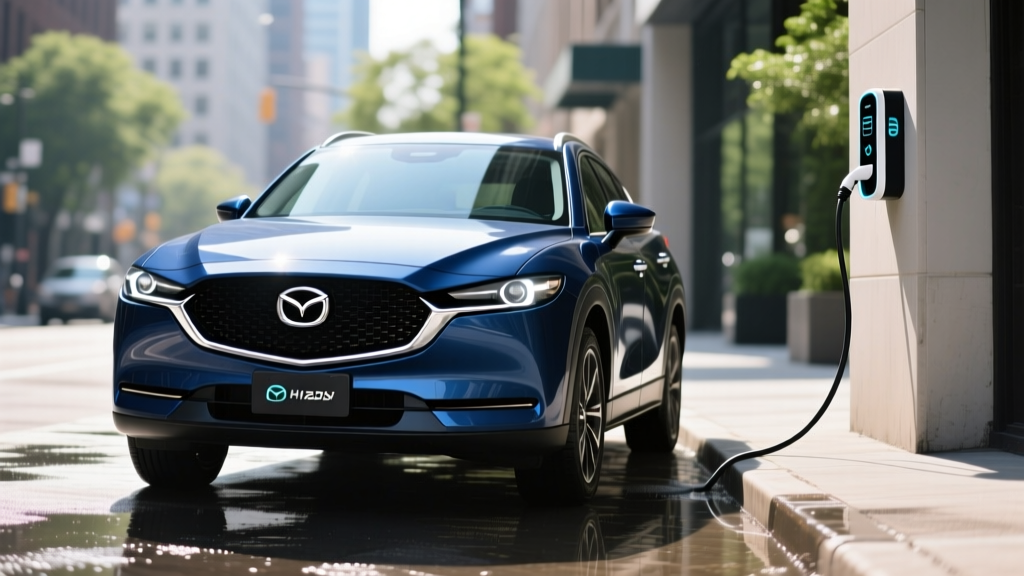
The 2026 Mazda CX-50 Hybrid occupies a specific niche in the compact crossover segment: it pairs Mazda's premium interior and rugged styling with Toyota's proven hybrid powertrain technology. For buyers who want better fuel economy without the plug-in commitment or the range considerations of a full EV, this conventional hybrid (HEV) presents a compelling case. Here's everything you need to know about its efficiency, powertrain, pricing, and whether it's the right electrified choice for your driveway.
2026 CX-50 Hybrid Powertrain: Toyota Meets Mazda
The CX-50 Hybrid uses a 2.5-liter four-cylinder engine paired with two electric motor-generators and an electronically controlled continuously variable transmission (e-CVT). This is the same hybrid architecture found in the Toyota RAV4 Hybrid — a deliberate partnership between the two automakers. The combined system output is 219 horsepower, with power routed through Mazda's i-Activ all-wheel-drive system that uses a rear-mounted electric motor to drive the back wheels.
| Specification | Value |
|---|---|
| Powertrain | 2.5L 4-cyl + 2 electric motor-generators (e-CVT) |
| Combined Horsepower | 219 hp |
| Drivetrain | AWD (electronic rear motor) |
| EPA MPG (City / Hwy / Combined) | 39 / 37 / 38 |
| Fuel Tank Capacity | 14.5 gallons |
| Estimated Total Range | ~550 miles |
| 0-60 mph | ~7.2 seconds (est.) |
| Towing Capacity | 3,500 lbs |
| Hybrid Battery Warranty | 8 years / 100,000 miles |
| Base MSRP (Preferred) | ~$35,400 |
Unlike a plug-in hybrid (PHEV), the CX-50 Hybrid has no external charging port and no meaningful electric-only range. The small nickel-metal hydride (NiMH) battery pack — roughly 1.6 kWh — captures energy from regenerative braking and the engine to assist during acceleration and enable brief low-speed electric motoring. You never plug it in; you simply fuel it and drive.
Fuel Economy: EPA Ratings vs. Real-World MPG
The EPA rates the 2026 CX-50 Hybrid at 39 mpg city, 37 mpg highway, and 38 mpg combined, according to fueleconomy.gov. These figures are nearly identical to the Toyota RAV4 Hybrid, which shares the same powertrain.
| Vehicle | City MPG | Highway MPG | Combined MPG |
|---|---|---|---|
| 2026 Mazda CX-50 Hybrid AWD | 39 | 37 | 38 |
| 2026 Toyota RAV4 Hybrid AWD | 41 | 38 | 39 |
| 2026 Honda CR-V Hybrid AWD | 40 | 34 | 37 |
| 2026 Mazda CX-50 (Gas Turbo, AWD) | 23 | 29 | 25 |
Real-world expectations: Toyota's hybrid system tends to deliver city MPG that meets or even slightly exceeds EPA estimates, thanks to aggressive regenerative braking and frequent engine-off coasting in stop-and-go traffic. Expect 37–41 mpg in urban driving. Highway cruising at 75+ mph is where hybrids lose their advantage — plan on 33–36 mpg on sustained interstate trips. In cold weather (below 30°F), expect a 5–10% reduction as the engine runs more frequently to maintain cabin heat and battery temperature.
Compared to the gas-only CX-50 Turbo (25 mpg combined), the hybrid saves roughly 5.2 gallons per 100 miles driven. At $3.30/gallon, that's approximately $860 in annual fuel savings for a driver covering 12,000 miles per year.
HEV vs. PHEV vs. Full EV: Which Electrified CX-50 Fits You?
Mazda currently offers the CX-50 exclusively as a conventional hybrid (HEV). There is no PHEV variant of the CX-50 for 2026, and Mazda has not announced one. Here's how the three electrification levels compare for buyers cross-shopping this segment:
| Factor | HEV (CX-50 Hybrid) | PHEV (e.g., RAV4 Prime) | Full EV (e.g., Tesla Model Y) |
|---|---|---|---|
| Plug in to charge? | No | Yes (Level 1/2) | Yes (Level 2/DC fast) |
| Electric-only range | None (assist only) | ~35–42 miles | 280–330+ miles total |
| Total range | ~550 miles | ~500+ miles (gas+electric) | 280–330 miles |
| Home charging needed? | No | Recommended | Essential |
| Federal tax credit (§30D) | No | Up to $7,500* | Up to $7,500* |
| Maintenance | Standard + hybrid system | Standard + hybrid + EV | Minimal (no oil, plugs) |
| Best for | No home charger, long trips | Short commutes + road trips | Home charging + daily driving |
Choose the CX-50 Hybrid (HEV) if: You don't have reliable access to home or workplace charging, you take frequent road trips beyond 300 miles, you want a simple ownership experience with no plug-in routine, and you prioritize fuel savings without behavioral change.
Consider a PHEV instead if: You can install a Level 2 charger at home, your daily commute is under 40 miles round-trip, and you want to drive on electricity most days while keeping a gas engine for weekend trips. The Toyota RAV4 Prime (42 miles electric-only, 94 MPGe) remains the segment benchmark here.
Consider a full EV instead if: You have home charging, your daily driving is under 250 miles, you want to eliminate gas entirely, and you want access to the full $7,500 federal tax credit (subject to eligibility rules detailed below).
Pricing, Trims, and Tax Credit Eligibility
The 2026 Mazda CX-50 Hybrid is offered across several trims, with pricing starting at approximately $35,400 MSRP for the Preferred trim and climbing to roughly $42,000 for the Premium Plus. These prices include destination but exclude dealer add-ons and regional incentives.
| Trim | MSRP (est.) |
|---|---|
| Preferred | $35,400 |
| Premium | $38,200 |
| Premium Plus | $41,800 |
Does the CX-50 Hybrid Qualify for the Federal Tax Credit?
No. Under IRS §30D rules, conventional hybrids (HEVs) do not qualify for the federal Clean Vehicle Credit. The §30D credit — up to $7,500 — applies only to plug-in electric vehicles (PHEVs and BEVs) that meet battery capacity, critical-mineral sourcing, and battery-component requirements. The CX-50 Hybrid's small NiMH battery and lack of a plug-in port make it ineligible.
However, some states offer their own incentives for hybrid vehicles. Check your state's energy office or department of environmental quality for current programs. These vary widely and change frequently — always verify with official state sources before making a purchase decision.
Hybrid Battery Warranty: What Mazda Covers
Mazda provides an 8-year / 100,000-mile hybrid battery warranty (whichever comes first) on the CX-50 Hybrid, consistent with the industry standard for hybrid components. In states that follow California Air Resources Board (CARB) emissions rules — including California, New York, Massachusetts, and others — hybrid battery coverage may extend to 10 years / 150,000 miles.
The Toyota-sourced hybrid system in the CX-50 has an exceptional reliability track record. The RAV4 Hybrid's powertrain, which is functionally identical, has demonstrated hybrid battery longevity well beyond 150,000 miles in real-world use. If a hybrid battery replacement is ever needed outside warranty, expect a cost in the range of $3,000–$5,000 depending on parts sourcing (new OEM vs. refurbished).
Reliability, Ownership Costs, and Long-Term Outlook
The CX-50 Hybrid benefits from one of the most proven hybrid systems on the road. Toyota's fourth-generation hybrid synergy drive has been refined over two decades and millions of vehicles. The e-CVT has no traditional gears or belts to wear — it's a planetary gearset that's virtually bulletproof in long-term use.
Maintenance differences from the gas CX-50: The hybrid's regenerative braking reduces brake pad wear significantly — many owners report original brake pads lasting 80,000+ miles. The engine runs less frequently and under lower load, which can extend oil life, though Mazda still recommends regular oil change intervals. There is no additional scheduled maintenance unique to the hybrid system.
Insurance costs: Hybrids typically carry insurance premiums 5–10% higher than their gas counterparts due to higher repair costs for hybrid-specific components. Get a quote before purchasing to budget accurately.
Resale value: Toyota and Mazda hybrids have held strong resale values as demand for fuel-efficient vehicles has grown. The CX-50 Hybrid's shared Toyota powertrain should support solid depreciation performance, though Mazda's brand cachet in the segment is still building.
Driving Impressions and Practical Considerations
The 219-hp combined output gives the CX-50 Hybrid confident acceleration for merging and passing, with the electric motor providing immediate torque fill at low RPMs where the 2.5L engine alone would feel sluggish. The e-CVT operates smoothly without the rubber-band effect that older CVTs exhibited — Toyota's system locks engine RPM more naturally under hard acceleration.
The AWD system uses the rear electric motor to provide torque to the rear wheels as needed. It's not a hardcore off-road system, but it handles rain, snow, and light trail use competently. The 3,500-lb towing capacity is a standout for the hybrid compact-crossover segment and exceeds what most competitors offer.
Inside, the CX-50 retains Mazda's upscale cabin materials — soft-touch surfaces, available leather, and a clean infotainment layout. The hybrid battery is packaged under the rear seats, preserving cargo volume at approximately 31.4 cubic feet behind the second row (comparable to the gas model).
Pros
- Proven Toyota hybrid system with outstanding reliability record
- 38 MPG combined — ~50% improvement over gas CX-50 Turbo
- No plug-in required; zero behavioral change from a gas car
- 3,500-lb towing capacity
- Strong AWD performance with rear electric motor
- Premium interior for the segment
Cons
- No PHEV option for electric-only commuting
- No federal tax credit eligibility
- Highway MPG drops noticeably above 75 mph
- e-CVT lacks the engaging feel of a geared transmission
- Hybrid trims start ~$4,000+ above base gas models
- Rear visibility slightly compromised by roofline design
Who Should Buy the 2026 CX-50 Hybrid?
The CX-50 Hybrid is ideal for buyers who:
- Drive 12,000–18,000 miles per year and want to cut fuel costs without changing their fueling routine
- Live in apartments, condos, or street-parking situations where home EV charging isn't feasible
- Take regular road trips of 300+ miles and don't want to plan around charging stops
- Want AWD and light towing capability with better fuel economy
- Value a premium interior but don't want to pay luxury-brand prices
It's not the right pick if you want to drive on electricity daily (look at a PHEV), eliminate gasoline entirely (look at a BEV), or qualify for the federal tax credit (PHEVs and BEVs only under current §30D rules).
Frequently Asked Questions
How many MPG does the 2026 CX-50 Hybrid get?
The EPA rates it at 39 mpg city, 37 mpg highway, and 38 mpg combined. In real-world driving, expect 37–41 mpg in city traffic and 33–36 mpg on sustained highway trips at higher speeds.
Does the CX-50 Hybrid need to be plugged in?
No. The CX-50 Hybrid is a conventional hybrid (HEV), not a plug-in hybrid (PHEV). It charges its small battery through regenerative braking and the gasoline engine. You fuel it like any other car.
Is there a PHEV version of the CX-50?
Not for 2026. Mazda has not announced a plug-in hybrid CX-50. If you want a PHEV in this segment, the Toyota RAV4 Prime (42 miles electric-only) is the closest alternative.
Does the CX-50 Hybrid qualify for any tax credit?
It does not qualify for the federal §30D Clean Vehicle Credit, which is reserved for plug-in vehicles (PHEVs and BEVs). Some states may offer hybrid-specific incentives — check your state's official energy or environmental agency for current programs.
How long will the hybrid battery last and what does replacement cost?
The hybrid battery is warranted for 8 years/100,000 miles (10 years/150,000 miles in CARB states). Toyota's hybrid systems routinely exceed 150,000 miles on the original battery. Out-of-warranty replacement costs approximately $3,000–$5,000 depending on OEM vs. refurbished parts.
How does the CX-50 Hybrid compare to the RAV4 Hybrid?
They share the same 2.5L hybrid powertrain and produce identical horsepower (219 hp). The RAV4 Hybrid is rated at 39 mpg combined vs. the CX-50 Hybrid's 38 mpg. The Mazda offers a more premium interior and a higher towing capacity (3,500 lbs vs. 1,750 lbs for the RAV4), while the Toyota typically costs slightly less at equivalent trims.
Can I tow with the CX-50 Hybrid?
Yes. The CX-50 Hybrid is rated for up to 3,500 lbs of towing capacity when properly equipped, which is competitive for the compact hybrid crossover segment.