Quick Verdict: The CX-5 Finally Goes Hybrid
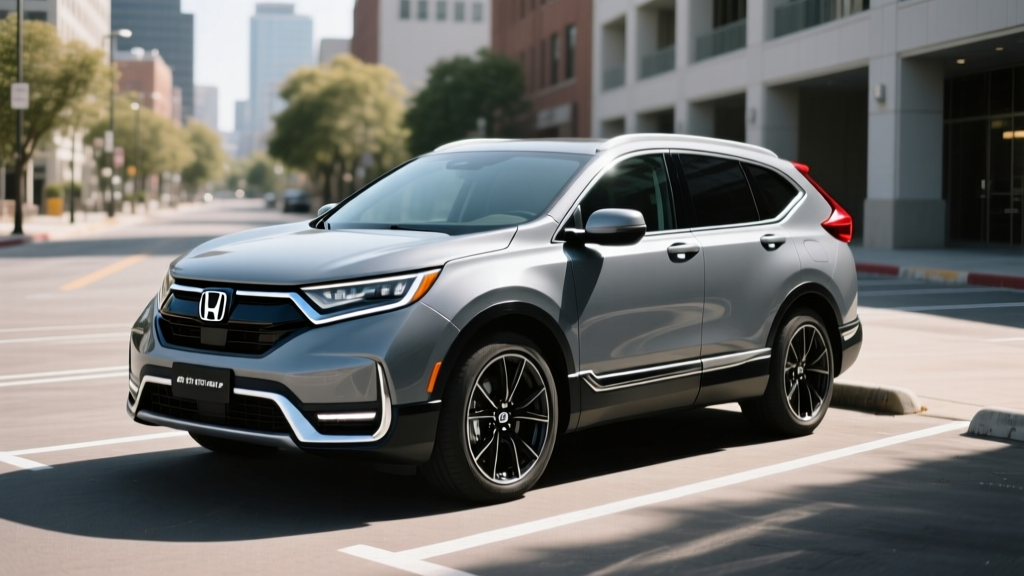
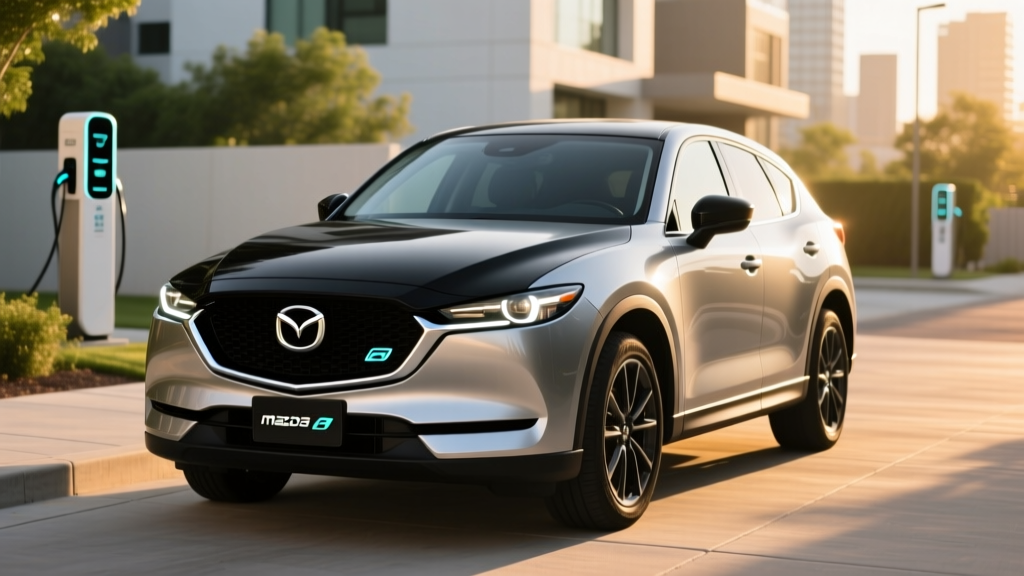
After years of watching the Toyota RAV4 Hybrid and Honda CR-V Hybrid dominate the compact SUV segment, Mazda has answered with the 2026 Mazda CX-5 Hybrid. This conventional hybrid (HEV) pairs Mazda's turbocharged 2.5-liter inline-four with a hybrid electric system to deliver an EPA-estimated 38 MPG combined — a massive leap over the non-hybrid CX-5's 26 MPG combined. It's not a plug-in, it doesn't need a charger, and it preserves the driving dynamics Mazda is known for. For buyers who want hybrid efficiency without changing their fueling habits, the 2026 CX-5 Hybrid is a compelling option.
| Specification | Value |
|---|---|
| Powertrain | 2.5L turbo I-4 + hybrid electric motor |
| Combined Horsepower | 219 hp |
| EPA MPG (City / Highway / Combined) | 40 / 35 / 38 |
| Drivetrain | i-Activ AWD (standard) |
| Battery Type | Nickel-metal hydride (NiMH), ~1.6 kWh |
| 0–60 mph | ~7.8 seconds |
| Cargo Volume | 30.8 cu ft (rear seats up) |
| Base MSRP (Preferred trim) | $33,990 |
| Hybrid Battery Warranty | 8 years / 100,000 miles |
| Federal Tax Credit | Not eligible (§30D requires plug-in) |
Hybrid (HEV) vs. Plug-In Hybrid (PHEV): What the CX-5 Hybrid Is — and Isn't
Before diving into the numbers, it's essential to understand what you're buying. The 2026 Mazda CX-5 Hybrid is a conventional hybrid (HEV), not a plug-in hybrid (PHEV). Here's what that means in practice:
| Feature | Conventional Hybrid (HEV) | Plug-In Hybrid (PHEV) |
|---|---|---|
| Plug-in charging required? | No — refuels at gas station only | Yes — plugs into Level 1 or Level 2 charger |
| Electric-only driving range | None (electric motor assists engine) | Typically 25–45 miles on battery alone |
| Battery size | Small (~1–2 kWh) | Larger (~14–22 kWh) |
| Federal tax credit (§30D) | Not eligible | Up to $7,500 (if eligible) |
| Typical MPG (gas-only operation) | 35–42 MPG combined | 30–40 MPG combined (after battery depleted) |
| Example | 2026 Mazda CX-5 Hybrid | Toyota RAV4 Prime, Mazda CX-70 PHEV |
The CX-5 Hybrid's electric motor assists the gasoline engine during acceleration, captures energy during braking (regenerative braking), and enables brief low-speed electric-only creeping in stop-and-go traffic. But you will never plug it in, and it will never drive 30 miles on electricity alone. If you want plug-in capability from Mazda, you'd look at the larger CX-70 PHEV or CX-90 PHEV.
Fuel Economy: EPA Ratings and Real-World MPG
The headline number for the 2026 Mazda CX-5 Hybrid is its EPA-estimated fuel economy. Mazda has targeted the sweet spot in the compact hybrid SUV segment:
| Driving Cycle | EPA Estimate |
|---|---|
| City | 40 MPG |
| Highway | 35 MPG |
| Combined | 38 MPG |
Real-World MPG: What to Actually Expect
As with all conventional hybrids, the CX-5 Hybrid's real-world fuel economy depends heavily on your driving mix. Hybrids shine in city driving, where regenerative braking and electric-motor assist do the heavy lifting. Here's what to expect based on the powertrain architecture and segment benchmarks:
- City-heavy commuting (80%+ city): Expect 38–42 MPG. The hybrid system recaptures energy at every stop, and the engine shuts off at lights. Many owners of similar hybrid systems report exceeding the EPA city estimate in warm weather.
- Highway-dominant driving (80%+ highway at 70–80 mph): Expect 32–35 MPG. At sustained highway speeds, the gasoline engine does most of the work, and aerodynamic drag dominates. The CX-5's slightly boxy styling and standard AWD create more drag than a FWD-only competitor.
- Cold weather (below 30°F): Expect a 5–10% reduction, dropping combined MPG to roughly 34–36. The engine runs more often to provide cabin heat and warm the catalytic converter.
- Mixed daily driving (50/50 city-highway): Expect 36–39 MPG, closely matching the EPA combined estimate.
According to fueleconomy.gov, the CX-5 Hybrid's 38 MPG combined represents a 46% improvement over the non-hybrid 2026 CX-5 turbo AWD (26 MPG combined). Over 15,000 miles per year at $3.50/gallon, that's roughly $720 in annual fuel savings — enough to offset the hybrid premium in about 3–4 years depending on trim.
Powertrain Deep Dive: 219 HP with Hybrid Assist
The 2026 CX-5 Hybrid uses a parallel hybrid system built around Mazda's proven 2.5-liter turbocharged inline-four engine. The gasoline engine produces approximately 187 hp on its own (running on regular 87-octane fuel in hybrid tune), while the integrated electric motor adds roughly 32 hp for a combined system output of 219 hp.
This is notably different from the Toyota RAV4 Hybrid's naturally aspirated 2.5L setup (219 hp combined). Mazda's turbocharged approach delivers stronger mid-range torque, which translates to confident highway merging and passing. The hybrid system's electric motor fills in the torque gap at low RPMs before the turbo spools, effectively eliminating traditional turbo lag.
Power routes through a 6-speed automatic transmission (not a CVT, which Mazda has historically avoided for driving feel) to Mazda's i-Activ all-wheel-drive system. AWD is standard on all CX-5 Hybrid trims — there is no FWD-only option. This is a key differentiator: the RAV4 Hybrid offers AWD as standard, but the Honda CR-V Hybrid's base trim is FWD-only.
Driving Impressions and Refinement
The hybrid system's transitions between electric and gas power are smooth, with the engine start/stop events nearly imperceptible at stops. Under light acceleration, the CX-5 Hybrid can creep on electric power alone up to roughly 15 mph for short distances — useful in parking lots and drive-throughs. Under hard acceleration, both the engine and motor work together, delivering the 219 hp in a linear fashion that feels quicker than the 0–60 time of approximately 7.8 seconds suggests.
Pricing, Trims, and Tax Credit Eligibility
The 2026 Mazda CX-5 Hybrid is offered across three trims, with pricing that positions it between the non-hybrid CX-5 and the larger CX-50 Hybrid:
| Trim | MSRP | Key Features |
|---|---|---|
| Preferred | $33,990 | Leatherette seats, 10.25" infotainment, power liftgate, heated front seats |
| Premium | $37,490 | Genuine leather, Bose 10-speaker audio, head-up display, power moonroof |
| Premium Plus | $40,190 | Nappa leather, ventilated front seats, heated steering wheel, 360° camera |
Federal Tax Credit: Not Eligible
Because the 2026 Mazda CX-5 Hybrid is a conventional HEV (not a plug-in), it does not qualify for the IRS §30D Clean Vehicle Credit. That credit — up to $7,500 — is reserved for plug-in electric vehicles (BEVs and PHEVs) that meet battery sourcing, MSRP cap, and buyer income requirements, as outlined on IRS.gov.
However, some states offer their own incentives for conventional hybrids. Check your state's energy office or department of revenue for current programs. Additionally, the hybrid's fuel savings over time functionally act as a long-term financial benefit — roughly $720/year in reduced fuel costs versus the non-hybrid CX-5 turbo.
Reliability, Battery Warranty, and Long-Term Costs
Hybrid battery longevity is the single most common concern among first-time hybrid buyers. Here's what you need to know about the CX-5 Hybrid's battery and long-term reliability:
Battery Warranty and Replacement Cost
- Hybrid battery warranty: 8 years / 100,000 miles (10 years / 150,000 miles in California and states that follow CARB emissions standards)
- Battery chemistry: Nickel-metal hydride (NiMH) — proven, durable, and less sensitive to heat than lithium-ion
- Battery capacity: ~1.6 kWh — small, shallow-cycling design that minimizes degradation
- Expected lifespan: 150,000–200,000+ miles based on comparable NiMH hybrid systems (Toyota Prius, Camry Hybrid)
- Replacement cost (out of warranty): $2,500–$4,000 including labor — significantly less than a full EV battery replacement
Mazda's hybrid system uses a small NiMH battery that operates in a narrow state-of-charge window — typically between 40% and 80%. This shallow cycling is the key to longevity: the battery never fully charges or fully depletes, which dramatically reduces wear. Toyota's hybrid systems using the same NiMH architecture routinely exceed 200,000 miles without battery replacement, and Mazda's system is engineered to the same durability standard.
For general vehicle reliability, Mazda has consistently ranked in the top third of brands in Consumer Reports' annual reliability surveys. The CX-5 nameplate specifically has a strong track record, and the hybrid powertrain adds components (electric motor, inverter) that have fewer moving parts than a traditional transmission.
CX-5 Hybrid vs. the Competition
The compact hybrid SUV segment is competitive. Here's how the 2026 Mazda CX-5 Hybrid stacks up against its most direct rivals:
| Spec | Mazda CX-5 Hybrid | Toyota RAV4 Hybrid | Honda CR-V Hybrid |
|---|---|---|---|
| Combined MPG (EPA) | 38 | 39 | 37 |
| Combined HP | 219 | 219 | 204 |
| Drivetrain | AWD (standard) | AWD (standard) | AWD (Sport Touring) |
| 0–60 mph | ~7.8 sec | ~7.4 sec | ~7.6 sec |
| Base MSRP | $33,990 | $33,495 | $36,350 |
| Interior Quality | Premium (near-luxury) | Functional | Spacious, modern |
| Cargo (rear seats up) | 30.8 cu ft | 37.6 cu ft | 36.3 cu ft |
The CX-5 Hybrid trades a small MPG penalty and less cargo space for a more premium interior, a turbocharged engine with stronger passing power, and Mazda's reputation for driving engagement. If maximum cargo volume is your priority, the RAV4 Hybrid wins. If interior quality and highway refinement matter most, the CX-5 Hybrid makes the strongest case.
Pros
- Premium interior materials rival luxury compact SUVs
- Turbocharged engine eliminates the sluggish feel of some hybrids
- 38 MPG combined is a 46% improvement over non-hybrid CX-5
- Standard AWD on every trim
- Proven NiMH battery chemistry with 8–10 year warranty
- No plug-in charging required — zero lifestyle change
Cons
- Cargo space (30.8 cu ft) trails RAV4 and CR-V hybrids
- No federal tax credit (HEV, not PHEV)
- Highway MPG drops to ~32–35 in real-world 75+ mph driving
- No FWD option for buyers in mild climates seeking maximum MPG
- Premium Plus trim pushes past $40,000
Who Should Buy the CX-5 Hybrid — and Who Should Look Elsewhere?
Choose the 2026 Mazda CX-5 Hybrid if:
- You want 35+ MPG without ever plugging in a vehicle
- You prioritize interior quality and driving feel over maximum cargo space
- You live in a region with cold winters where EV range loss is a concern
- You don't have access to home charging (apartment, street parking)
- You want AWD standard and turbocharged passing power
Look at a PHEV or full EV instead if:
- You have home charging access and a short commute — a PHEV like the RAV4 Prime (42 miles electric) or a BEV like the Hyundai Ioniq 5 could eliminate most gasoline use
- You want to qualify for the up-to-$7,500 federal tax credit (requires a plug-in vehicle)
- You need maximum cargo space — the RAV4 Hybrid offers 37.6 cu ft
- You drive fewer than 8,000 miles per year — the fuel savings may not offset the hybrid premium before you sell the vehicle
Frequently Asked Questions
How many MPG does the 2026 Mazda CX-5 Hybrid get?
The EPA rates the 2026 CX-5 Hybrid at 40 MPG city, 35 MPG highway, and 38 MPG combined. In real-world city-heavy driving, many owners can expect to match or slightly exceed the city figure (38–42 MPG). Highway-dominant driving at 70–80 mph will return closer to 32–35 MPG.
Do I need to plug in the CX-5 Hybrid?
No. The CX-5 Hybrid is a conventional hybrid (HEV). It charges its small battery through regenerative braking and the gasoline engine. You simply fill it up at any gas station with regular 87-octane fuel.
Does the 2026 CX-5 Hybrid qualify for any tax credit?
It does not qualify for the federal §30D Clean Vehicle Credit, which is reserved for plug-in vehicles (BEVs and PHEVs). Some states may offer hybrid-specific incentives — check your state energy office. The fuel savings of approximately $720/year versus the non-hybrid CX-5 turbo serve as the primary financial benefit.
How long will the hybrid battery last, and what does replacement cost?
The hybrid battery is covered by an 8-year/100,000-mile warranty (10 years/150,000 miles in CARB states). Based on comparable NiMH hybrid systems, the battery should last 150,000–200,000+ miles. Out-of-warranty replacement runs $2,500–$4,000 including labor — far less than a full EV battery.
Is the CX-5 Hybrid better than the RAV4 Hybrid?
It depends on your priorities. The RAV4 Hybrid edges ahead on EPA combined MPG (39 vs. 38) and cargo space (37.6 vs. 30.8 cu ft). The CX-5 Hybrid wins on interior quality, turbocharged acceleration feel, and overall refinement. Both are strong choices — test-drive both and decide which cabin and driving experience you prefer.
Is there a plug-in hybrid (PHEV) version of the CX-5?
As of the 2026 model year, Mazda does not offer a CX-5 PHEV. If you want a plug-in hybrid from Mazda, the CX-70 PHEV and CX-90 PHEV are the current options, though both are larger and more expensive midsize SUVs.