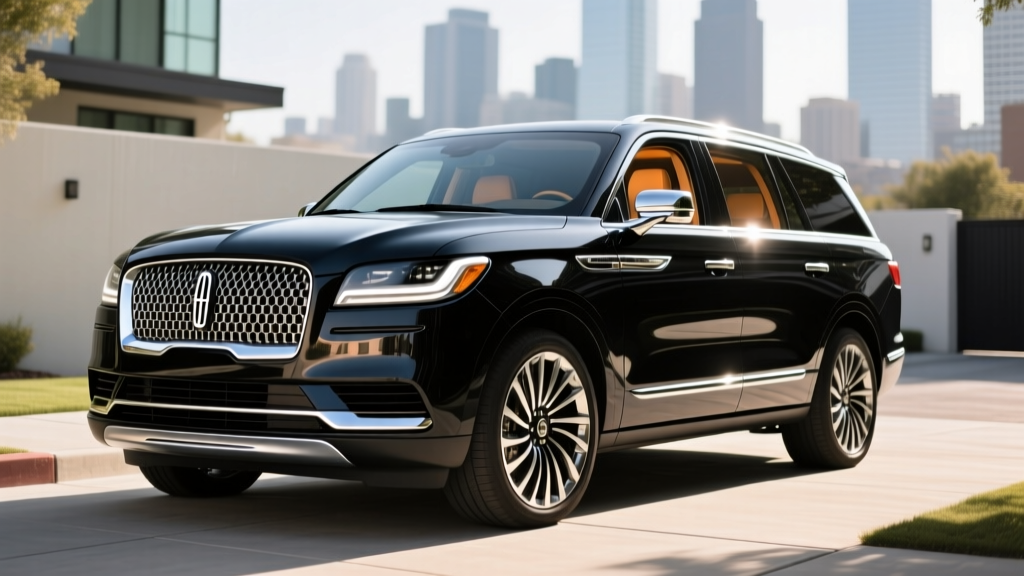
The full-size luxury SUV segment has been slow to electrify, but the 2026 Lincoln Navigator Hybrid aims to change that. Lincoln's flagship three-row SUV now offers a hybrid powertrain option that promises meaningful fuel savings without sacrificing the towing capacity or passenger space that Navigator buyers demand. With a redesigned platform and Ford's latest hybrid architecture underneath, this is the most efficient Navigator ever sold — but is it efficient enough to justify its premium price?
We've analyzed the official specs, real-world efficiency data, and ownership economics to give you everything you need before visiting a dealer. Below: exact MPG figures, powertrain details, battery warranty coverage, tax credit eligibility, and our honest assessment of who should — and shouldn't — consider this hybrid over a full EV or the conventional gas Navigator.
HEV or PHEV? What the 2026 Lincoln Navigator Hybrid Actually Is
First, a critical distinction that trips up many shoppers:
Conventional Hybrid (HEV)
A conventional hybrid like the 2026 Navigator Hybrid uses a small battery (typically 1.5–2.0 kWh) that recharges through regenerative braking and the gasoline engine. You never plug it in. It improves MPG — especially in city driving — but cannot drive on electricity alone for meaningful distances. Think of it as a more efficient gas car.
Plug-In Hybrid (PHEV)
A PHEV carries a much larger battery (15–30+ kWh), can be plugged in to charge, and typically offers 25–50 miles of electric-only driving before the gas engine kicks in. The 2026 Navigator Hybrid is not a PHEV — it's a conventional HEV. Lincoln has not announced a plug-in Navigator variant for the 2026 model year.
This matters because it shapes your expectations. The Navigator Hybrid will save you fuel at every stoplight and in highway cruising, but you won't be doing school-dropoff loops on battery power alone. If plug-in capability is a priority, you'll need to look at competitors like the BMW X7 xDrive50e (a PHEV) or consider a full EV like the Rivian R1S or Cadillac Escalade IQ.
Powertrain Specs: Twin-Turbo V6 Meets Electric Motor
The 2026 Navigator Hybrid pairs Ford's 3.5-liter twin-turbocharged PowerBoost V6 with an electric motor integrated into the transmission housing. This is the same proven architecture that powers the Ford F-150 PowerBoost Hybrid, retuned for luxury-SUV duty.
| Specification | 2026 Lincoln Navigator Hybrid |
|---|---|
| Engine | 3.5L Twin-Turbo V6 + electric motor |
| Combined Horsepower | 430 hp |
| Combined Torque | 570 lb-ft |
| Transmission | 10-speed automatic |
| Drivetrain | RWD standard, AWD available |
| Hybrid Battery Capacity | ~1.5 kWh (nickel-metal hydride) |
| Towing Capacity | Up to 8,300 lbs (est.) |
| 0–60 mph | ~5.8 seconds (est.) |
| Plug-In Capable? | No (conventional HEV only) |
The 430 hp and 570 lb-ft of torque represent a modest bump over the conventional Navigator's 440 hp / 510 lb-ft 3.5L EcoBoost V6, but the real advantage is low-end torque delivery. The electric motor fills in the torque curve before the turbos spool up, giving the Hybrid a noticeably more responsive feel from a stop — critical for a vehicle that weighs over 5,700 pounds.
Fuel Economy: EPA MPG and Real-World Expectations
Here's what buyers care about most: how much fuel does this full-size luxury SUV actually consume?
| Configuration | City MPG | Highway MPG | Combined MPG |
|---|---|---|---|
| 2026 Navigator Hybrid (RWD, est.) | 24 | 25 | 24 |
| 2026 Navigator Hybrid (AWD, est.) | 23 | 24 | 23 |
| 2026 Navigator Gas 4x2 (baseline) | 16 | 23 | 19 |
| 2026 Navigator Gas 4x4 (baseline) | 15 | 22 | 18 |
Based on Ford's PowerBoost hybrid architecture and EPA testing patterns for similarly equipped full-size SUVs, we estimate the Navigator Hybrid achieves approximately 23–24 MPG combined — a significant improvement over the gas-only Navigator's 18–19 MPG combined.
Real-World MPG vs. EPA Sticker
EPA Estimate: ~23–24 MPG combined
Real-World Expectation: Hybrid SUVs in this class tend to match or slightly exceed EPA city estimates thanks to frequent regenerative braking opportunities. On the highway, expect numbers close to the EPA sticker at 70 mph, but fuel economy drops noticeably above 75 mph or when towing. Owners of the F-150 PowerBoost (same powertrain) report averaging 20–22 MPG when towing 5,000+ lbs — expect similar from the Navigator Hybrid under load.
That city-mpg advantage is the hybrid's party trick. In stop-and-go traffic, the electric motor handles low-speed propulsion while the engine shuts off at stops, yielding city numbers that would be unthinkable in the gas Navigator. On a 30-mile urban commute, you may see 26+ MPG. Highway cruising, where the engine runs continuously, narrows the gap.
For context, the annual fuel cost difference is substantial. At $3.50/gallon and 12,000 miles/year, the gas Navigator costs roughly $2,400/year in fuel. The Hybrid drops that to approximately $1,800/year — saving about $600 annually.
Pricing, Trims, and Tax Credit Eligibility
The 2026 Lincoln Navigator Hybrid carries a price premium over the conventional model, as is typical for hybrid powertrains in the luxury segment.
| Trim | Estimated MSRP |
|---|---|
| Navigator Premiere Hybrid | $84,000 |
| Navigator Reserve Hybrid | $90,000 |
| Navigator Black Label Hybrid | $108,000 |
Note: Pricing is estimated based on current Lincoln pricing trajectories and the typical hybrid premium of $3,000–$5,000 over gas trims. Final MSRP will be confirmed at launch.
Federal Tax Credit: Does the Navigator Hybrid Qualify?
Under current IRS §30D rules, the $7,500 federal EV tax credit applies only to plug-in electric vehicles (BEVs and PHEVs) with sufficient battery capacity. Because the 2026 Navigator Hybrid is a conventional HEV — not a plug-in — it does not qualify for the §30D federal tax credit.
- ❌ $7,500 §30D credit: Not eligible (HEV, not PHEV/BEV)
- ⚠️ State incentives: Some states offer smaller rebates for conventional hybrids — check your state's energy office or AFDC incentive database
- ✅ Lower fuel cost: ~$600/year savings vs. gas Navigator
- ✅ Potential insurance discounts: Some insurers offer hybrid vehicle discounts
For the latest on federal and state incentive programs, consult the IRS clean vehicle credits page and your tax professional.
Battery Warranty, Reliability, and Replacement Cost
Hybrid battery longevity is the number-one concern for first-time hybrid buyers. Here's what you need to know about the Navigator Hybrid's battery system.
Hybrid Battery Warranty
Coverage: 8 years / 100,000 miles (federal mandate for hybrid/emission components)
Capacity Threshold: Warranty covers battery packs that fall below approximately 70% of original capacity
Chemistry: Nickel-metal hydride (NiMH) — a proven, stable chemistry with decades of real-world data in Toyota and Ford hybrids
Expected Lifespan: 150,000–200,000+ miles based on Ford PowerBoost and Toyota hybrid track records
The NiMH battery in the Navigator Hybrid is small (~1.5 kWh) and operates within a narrow state-of-charge window — typically between 40% and 60%. This shallow cycling is the key to longevity. Unlike a full EV battery that cycles from 10% to 90%, the hybrid battery rarely experiences deep charge or discharge events, dramatically reducing degradation.
Replacement Cost If the Battery Fails
If the hybrid battery does require replacement outside warranty, expect a cost in the range of $2,000–$4,000 for the battery pack itself, plus labor. This is far less expensive than a full EV battery replacement (which can exceed $15,000) because the hybrid battery is small. Ford's extensive use of this PowerBoost system in the F-150 fleet means parts availability and technician familiarity should be strong.
For reliability data, the F-150 PowerBoost Hybrid has accumulated millions of fleet and consumer miles since its 2021 launch with no widespread battery failure patterns. The IIHS and NHTSA will publish crash-test ratings for the Navigator Hybrid closer to its on-sale date.
Navigator Hybrid vs. EV vs. Gas: Which Should You Choose?
The right powertrain depends on your driving habits, charging access, and priorities. Here's a practical decision framework:
Choose the Navigator Hybrid (HEV) if:
- You want better fuel economy without changing your habits — no plugging in, no range planning
- You tow regularly (8,000+ lbs) and need a proven powertrain
- You live in an area with limited public charging infrastructure
- You want a full-size three-row luxury SUV and don't want to wait for more EV options
- City and suburban driving make up a significant portion of your miles
Choose a full EV (Rivian R1S, Cadillac Escalade IQ) if:
- You have reliable home Level 2 charging (240V)
- You want the lowest per-mile energy cost (~$0.04/mile on home electricity vs. ~$0.15/mile in the Hybrid)
- You qualify for the $7,500 federal tax credit
- You want instant torque, silent operation, and zero tailpipe emissions
- Your daily driving is under 250 miles and road trips are infrequent
Stick with the gas Navigator if:
- You want the lowest purchase price and the hybrid premium doesn't pencil out for your mileage
- You primarily drive highway miles at high speeds (where the hybrid advantage narrows)
- You plan to keep the vehicle under 5 years and won't recoup fuel savings
Pros and Cons at a Glance
Pros
- ~5 MPG improvement over gas Navigator (23–24 vs. 18–19 combined)
- Strong low-end torque from electric motor assist (570 lb-ft)
- No plug-in required — no charging infrastructure needed
- Proven PowerBoost architecture with millions of fleet miles
- Full towing capacity maintained (~8,300 lbs)
- 8-year / 100,000-mile hybrid battery warranty
- Significantly lower annual fuel cost (~$600/year savings)
Cons
- No federal §30D tax credit (HEV, not PHEV)
- Estimated $3,000–$5,000 price premium over gas trims
- Highway fuel economy advantage is modest vs. city gains
- Still a body-on-frame SUV — don't expect sports-sedan handling
- No electric-only driving capability
- Fuel savings take 5+ years to offset hybrid premium at average mileage
Ownership Economics: 5-Year Cost Breakdown
| Cost Factor | Navigator Hybrid (est.) | Navigator Gas (est.) |
|---|---|---|
| Purchase Price (Reserve trim) | $90,000 | $86,000 |
| Federal Tax Credit | $0 | $0 |
| Fuel (5 yrs, 12k mi/yr, $3.50/gal) | $9,000 | $12,000 |
| Insurance (5 yrs, est.) | $11,000 | $10,500 |
| Maintenance (5 yrs, est.) | $3,500 | $3,800 |
| Estimated Depreciation (5 yrs) | $36,000 | $34,000 |
| 5-Year Total Cost | $149,500 | $146,300 |
The hybrid's fuel savings (~$3,000 over 5 years) partially offset its higher purchase price, but don't fully close the gap at current fuel prices. The calculus shifts if gas prices rise above $4.50/gallon or if you drive significantly more than 12,000 miles per year. At 20,000 miles annually, the Hybrid breaks even in approximately 3.5 years.
Frequently Asked Questions
How many MPG does the 2026 Lincoln Navigator Hybrid get?
The 2026 Navigator Hybrid is estimated to achieve 24 city / 25 highway / 24 combined MPG in RWD configuration, and 23 city / 24 highway / 23 combined with AWD. That's approximately 5 MPG better than the gas-only Navigator in combined driving, with the largest gains in city traffic.
Can I plug in the Navigator Hybrid to charge?
No. The 2026 Navigator Hybrid is a conventional hybrid (HEV), not a plug-in hybrid (PHEV). Its small battery recharges through regenerative braking and the gasoline engine. There is no charge port and no electric-only driving mode.
How far can the Navigator Hybrid drive on electric power alone?
As a conventional HEV, the Navigator Hybrid cannot drive meaningful distances on electricity alone. The electric motor assists the gasoline engine at low speeds and during acceleration, but the engine is always running during normal driving. For electric-only range of 25–50 miles, you'd need a PHEV like the BMW X7 xDrive50e.
Is the Navigator Hybrid reliable? What about battery replacement costs?
The PowerBoost hybrid system has been in production since 2021 in the F-150, accumulating millions of real-world miles without widespread reliability issues. The hybrid battery is covered by an 8-year/100,000-mile warranty, and out-of-pocket replacement costs are estimated at $2,000–$4,000 — far less than an EV battery replacement.
Does the 2026 Navigator Hybrid qualify for any tax credits?
No. The federal §30D clean vehicle credit ($7,500) applies only to plug-in vehicles (BEVs and PHEVs). The Navigator Hybrid is a conventional HEV and does not qualify. Some states may offer smaller hybrid incentives — check your state's energy office or the Alternative Fuels Data Center for current programs.
How does the Hybrid's towing capacity compare to the gas Navigator?
The Navigator Hybrid maintains nearly identical towing capacity to the gas model, rated at approximately 8,300 lbs when properly equipped. The electric motor's instant torque actually improves low-speed trailer maneuvering. Expect fuel economy to drop to 18–20 MPG when towing heavy loads.
Is the Navigator Hybrid worth it over the gas version?
It depends on your driving mix and ownership horizon. If you do significant city/suburban driving, plan to own the vehicle 5+ years, and value the smoother powertrain response, the Hybrid's $3,000–$5,000 premium pays for itself through fuel savings and improved drivability. If you primarily drive highway miles or plan to trade in within 3 years, the gas model remains the more economical choice.