Quick Verdict: The Luxury Hybrid That Doesn't Ask You to Change
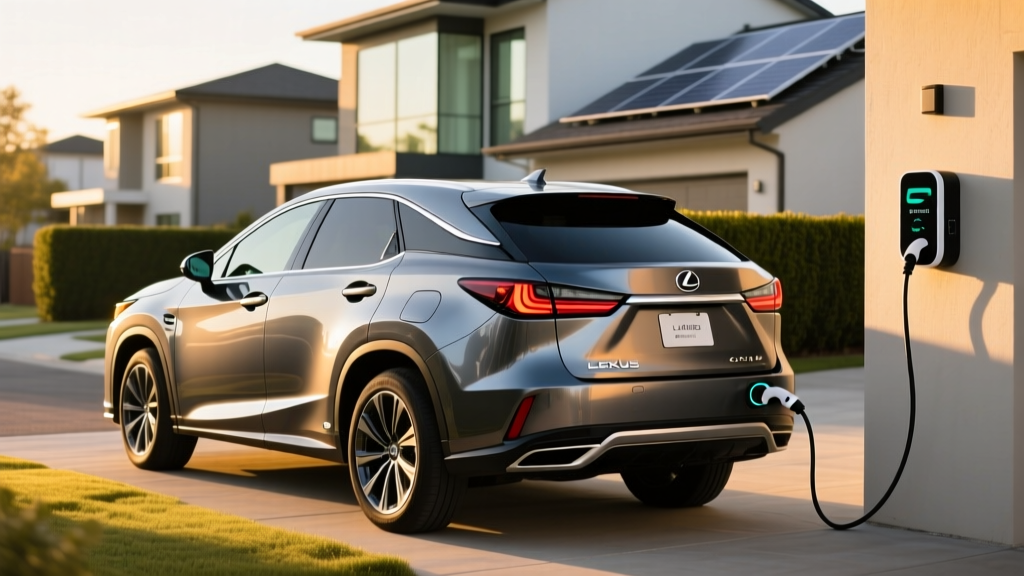
The 2026 Lexus RX 350h occupies a specific and increasingly popular niche: a luxury midsize SUV that delivers meaningful fuel savings without requiring a plug, a lifestyle change, or range planning. With an EPA-estimated 36 MPG combined, standard all-wheel drive, and a combined 246 horsepower from its 2.5-liter four-cylinder hybrid powertrain, the RX 350h is engineered for buyers who want electrified efficiency on their own terms.
It's critical to distinguish the RX 350h from its plug-in sibling, the RX 450h+. The 350h is a conventional hybrid (HEV) — it charges its own small battery through regenerative braking and the gasoline engine. You never plug it in. The 450h+ is a plug-in hybrid (PHEV) with a larger battery, roughly 37 miles of electric-only range, and the ability to accept Level 2 charging. This review focuses on the 350h, the volume seller in the RX hybrid lineup.
| Spec | Value |
|---|---|
| Powertrain | 2.5L 4-cyl + 2 electric motors (AWD) |
| Combined Horsepower | 246 hp |
| EPA MPG (City / Hwy / Combined) | 37 / 34 / 36 |
| Drivetrain | Electronic AWD (eAWD) standard |
| Battery Type | Nickel-Metal Hydride (NiMH), ~1.6 kWh |
| 0-60 mph | 7.4 seconds |
| Towing Capacity | 3,500 lbs |
| Cargo Volume (behind 2nd row) | 29.6 cu ft |
| Base MSRP (Premium trim) | $51,400 |
| Hybrid Battery Warranty | 10 years / 150,000 miles |
HEV vs PHEV: Which RX Hybrid Are You Actually Looking At?
Lexus offers two electrified RX variants for 2026, and confusing them is the most common mistake shoppers make. Here's how they differ in practice:
| Attribute | RX 350h (HEV) | RX 450h+ (PHEV) |
|---|---|---|
| Plug-in Required? | No — self-charging | Yes — plug in for EV range |
| Electric-Only Range | ~1 mile at low speed | ~37 miles (EPA est.) |
| Combined Horsepower | 246 hp | 302 hp |
| Battery Capacity | ~1.6 kWh (NiMH) | 18.1 kWh (lithium-ion) |
| EPA Combined MPG / MPGe | 36 MPG | 83 MPGe (electric) / 35 MPG (gas) |
| Level 2 Charging | N/A | Yes, ~2.5 hours at 6.6 kW |
| DC Fast Charging | N/A | No |
| Federal Tax Credit (§30D) | Not eligible | Up to $3,750 (battery sourcing dependent) |
| Base MSRP | $51,400 | $62,900 |
The 350h is the right choice if you lack home charging access, want lower upfront cost, and primarily need fuel-efficient daily driving without plug-in logistics. The 450h+ makes sense if you have a garage with a 240V outlet, a short commute under 37 miles, and want to drive mostly on electricity during the week while keeping gas-engine flexibility for road trips.
Fuel Economy: EPA Numbers and Real-World MPG
| Driving Cycle | EPA Estimate | Real-World Expectation |
|---|---|---|
| City | 37 MPG | 35–39 MPG (hybrids often beat EPA in stop-and-go) |
| Highway | 34 MPG | 30–33 MPG (sustained 70+ mph reduces regen benefit) |
| Combined | 36 MPG | 33–37 MPG depending on driving mix |
Toyota's hybrid system — which underpins the Lexus RX 350h — has a well-documented tendency to match or slightly exceed EPA city estimates in real-world stop-and-go driving. This is because regenerative braking recaptures energy that conventional vehicles waste as heat at every stoplight. On a mixed suburban commute with frequent stops, owners consistently report 36-38 MPG.
Highway driving is where the hybrid advantage narrows. At sustained speeds above 70 mph, the electric motors contribute less and the 2.5-liter engine carries most of the load. Expect 30-33 MPG on long interstate trips. This is still a meaningful improvement over the non-hybrid RX 350, which returns 24 MPG combined (22 city / 29 highway per fueleconomy.gov), but the gap shrinks at highway speeds.
Cold weather reduces MPG by roughly 5-10% in any hybrid, as the engine runs more frequently to maintain cabin heat and the battery's charge-acceptance rate drops. In sub-freezing conditions, plan for 32-34 MPG combined rather than 36.
Powertrain and Performance
The RX 350h pairs a 2.5-liter Atkinson-cycle four-cylinder engine with two electric motor-generators — one driving the front axle and a second powering the rear axle for electronic all-wheel drive. Combined system output is 246 horsepower. A continuously variable transmission (eCVT) manages power delivery.
The 0-60 mph time of 7.4 seconds is adequate for merging and passing but not sporty. This is a comfort-tuned luxury cruiser, not a performance SUV. The electric motors provide immediate low-end torque, which makes the RX 350h feel responsive from a stoplight even if the top-end acceleration tapers. The eAWD system can send up to 80% of torque to the rear wheels when traction demands it, though under normal dry conditions it operates primarily in front-wheel drive for efficiency.
Towing capacity is rated at 3,500 pounds — sufficient for a small boat trailer or a pair of jet skis, but not for larger campers. If you need serious towing, the non-hybrid RX 350 with its turbocharged 2.4-liter engine (3,500 lbs rated as well) doesn't offer an advantage here, but competitors like the BMW X5 xDrive50e do.
Pricing, Trims, and Tax Credit Eligibility
The 2026 Lexus RX 350h starts at $51,400 for the Premium trim (including destination charge). Key trim levels and pricing:
- Premium: $51,400 — leatherette upholstery, 9.8-inch touchscreen, wireless Apple CarPlay/Android Auto, heated front seats
- Premium+: $53,900 — adds panoramic moonroof, power-folding mirrors, wood trim
- Luxury: $57,300 — semi-aniline leather, 14-inch touchscreen, ventilated front seats, heated steering wheel
- F SPORT Handling: $55,900 — sport-tuned suspension, F SPORT seats, 21-inch wheels
Federal Tax Credit Status
The RX 350h, as a conventional hybrid (HEV), does not qualify for the federal §30D clean vehicle tax credit. That credit applies only to plug-in electric vehicles (BEVs and PHEVs) meeting battery-sourcing, MSRP, and buyer income requirements per IRS guidelines.
However, some states offer their own incentives for hybrid purchases. Check your state's energy office or department of revenue for current programs — these vary widely and change frequently.
Compared to the non-hybrid RX 350 (starting around $49,900), the 350h carries roughly a $1,500 premium. At current fuel prices and the 350h's 12 MPG combined advantage over the gas model, most drivers will recoup that premium within 2-3 years of average driving (12,000-15,000 miles per year).
Battery Longevity, Warranty, and Replacement Cost
2026 Lexus RX 350h Hybrid Battery Warranty
Coverage: 10 years or 150,000 miles (whichever comes first), transferrable to subsequent owners.
What's covered: Any hybrid battery defect or capacity loss below a manufacturer-defined threshold that impairs vehicle operation.
Expected lifespan: Toyota/Lexus hybrid batteries routinely last 150,000-200,000+ miles based on two decades of Prius and RX hybrid data. The NiMH chemistry in the 350h is less energy-dense than lithium-ion but extremely durable and proven.
Hybrid battery anxiety is the single most common concern we hear from prospective buyers. The data is reassuring. Lexus has been building RX hybrids since the 2006 RX 400h, and the hybrid system is one of the most proven powertrains in the automotive industry. The nickel-metal hydride battery in the 350h is small (~1.6 kWh), operates within a conservative state-of-charge window (roughly 40-80%), and is never deeply cycled the way a full EV battery is. This shallow-cycling approach dramatically extends cell life.
If replacement is needed out of warranty, a new OEM hybrid battery for the RX 350h typically costs between $3,000 and $5,000 including installation. Third-party refurbishment shops offer reconditioned units for $1,500-$2,500. However, the vast majority of RX hybrids never need a battery replacement within typical ownership periods.
Lexus's overall vehicle reliability ratings remain among the highest in the industry. The RX consistently earns top marks from IIHS for crashworthiness, and the hybrid powertrain adds minimal mechanical complexity beyond what Toyota has refined over 25+ years of hybrid production.
Who Should Choose the RX 350h Over an EV or Gas SUV?
Choose the RX 350h If:
- You want 36 MPG without changing your fueling habits
- You lack access to home or workplace Level 2 charging
- You take frequent road trips and don't want to plan around charging stops
- You want AWD standard in a luxury SUV under $55,000
- You plan to own the vehicle 8-10+ years and value proven reliability
Look Elsewhere If:
- You have a short commute and home charging — the RX 450h+ PHEV or a full BEV like the BMW iX will save more on fuel
- You want sporty acceleration (7.4s 0-60 is leisurely for the class)
- You need more than 29.6 cu ft of cargo space (the Genesis GV70 offers more)
- You want the latest autonomous driving features — Lexus Safety System+ 3.0 is competent but conservative compared to GM Super Cruise or Ford BlueCruise
HEV vs PHEV vs EV Decision Framework
- Choose the RX 350h (HEV) if you cannot charge at home, drive 30+ miles daily, and want zero lifestyle change.
- Choose the RX 450h+ (PHEV) if you have a garage with 240V, commute under 37 miles, and want electric weekday driving with gas-engine road trip flexibility.
- Choose a full BEV (like the Cadillac Lyriq or BMW iX) if you have reliable home charging, drive under 250 miles daily, want the lowest per-mile fuel cost, and qualify for the §30D tax credit.
Frequently Asked Questions
How many MPG does the 2026 Lexus RX 350h hybrid get?
The EPA rates the RX 350h at 37 MPG city, 34 MPG highway, and 36 MPG combined. In real-world mixed suburban driving, expect 35-38 MPG. Highway-only driving at 70+ mph drops to 30-33 MPG. Cold weather (below freezing) reduces combined figures by roughly 5-10%.
Does the RX 350h need to be plugged in?
No. The RX 350h is a conventional hybrid (HEV). It charges its own battery through regenerative braking and the gasoline engine. You fuel it exclusively at gas stations, just like a conventional car. If you want plug-in capability, look at the RX 450h+ PHEV.
Is the Lexus RX hybrid reliable, and what does a battery replacement cost?
Lexus hybrid reliability is among the best in the industry, backed by 20+ years of Toyota hybrid engineering. The hybrid battery is warranted for 10 years / 150,000 miles and routinely lasts 150,000-200,000+ miles. Out-of-warranty replacement costs $3,000-$5,000 for a new OEM unit or $1,500-$2,500 for a reconditioned battery.
Does the 2026 RX 350h qualify for a federal tax credit?
No. The federal §30D clean vehicle credit applies only to plug-in vehicles (BEVs and PHEVs). The RX 350h, as a conventional hybrid, is not eligible. The plug-in RX 450h+ may qualify for up to $3,750 depending on battery-sourcing requirements and your income. Always verify current rules at irs.gov before purchasing.
How does the RX 350h compare to the non-hybrid RX 350?
The gas-only RX 350 (turbocharged 2.4L, 275 hp) gets 24 MPG combined and starts around $49,900. The 350h costs about $1,500 more but delivers 36 MPG combined — a 50% improvement in fuel economy. The gas model is quicker (0-60 in roughly 6.5 seconds) and has slightly more power, but the hybrid's fuel savings typically pay back the price premium within 2-3 years of average driving.
What's the difference between the RX 350h and the RX 450h+?
The 350h is a self-charging hybrid (HEV) — no plug, 36 MPG, $51,400 starting. The 450h+ is a plug-in hybrid (PHEV) with an 18.1 kWh battery, approximately 37 miles of electric-only range, 302 combined horsepower, and a $62,900 starting price. The 450h+ requires Level 2 home charging to realize its electric-driving benefits.