Quick Verdict: Two Hybrid Paths, One Luxury Compact SUV
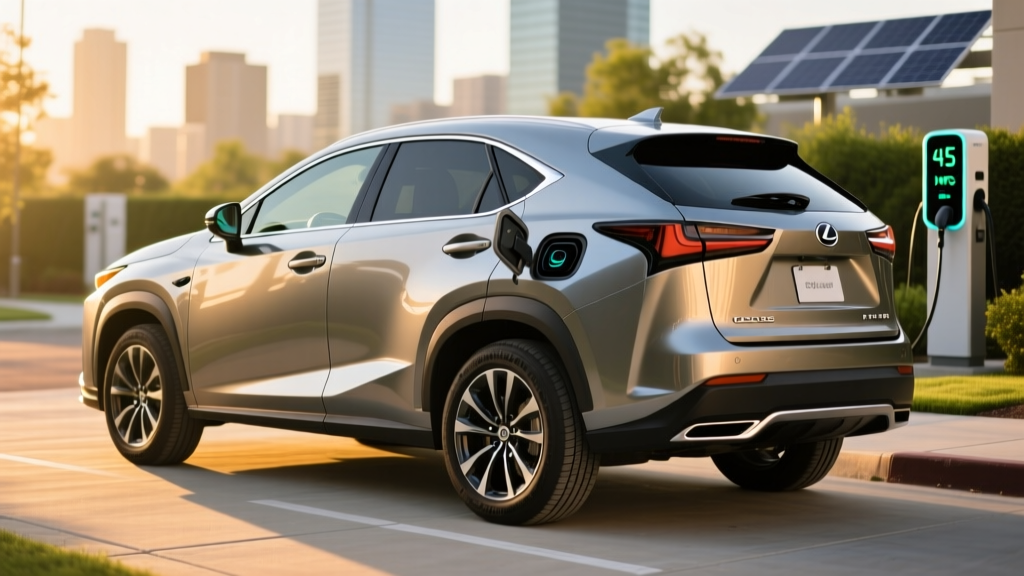
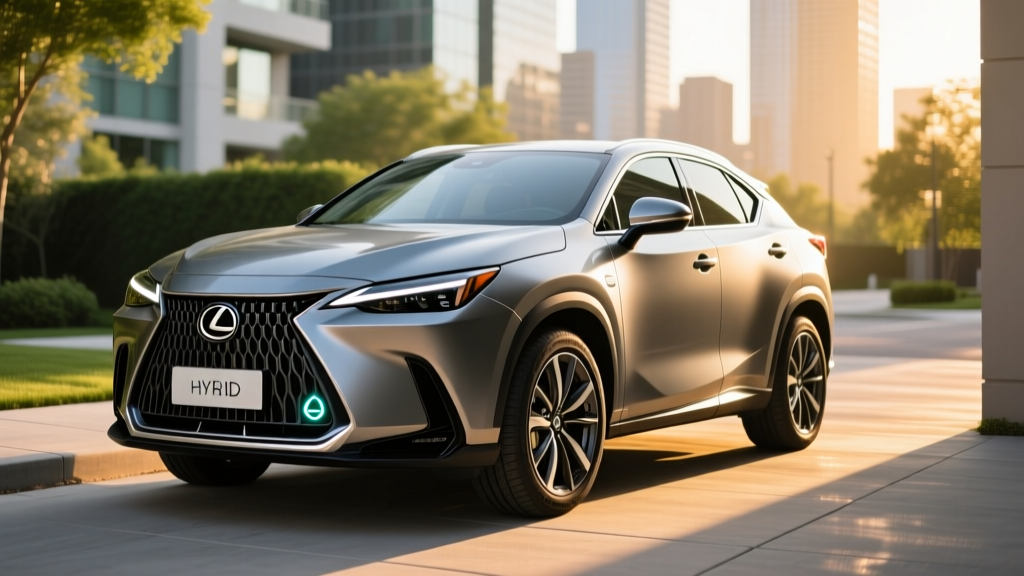
The 2026 Lexus NX Hybrid lineup gives buyers a genuine choice: a conventional hybrid (HEV) that never needs plugging in, or a plug-in hybrid (PHEV) that covers most daily commutes on electricity alone. The NX 350h delivers an EPA-estimated 39 MPG combined with zero lifestyle change from a gas car, while the NX 450h+ adds 37 miles of electric-only range for drivers with home charging access. Both use Lexus's proven fourth-generation hybrid system, but they serve very different ownership patterns.
HEV vs PHEV — What's the Difference?
NX 350h (HEV): Self-charging hybrid. The gas engine and regenerative braking charge a small battery. You never plug it in. It simply gets better MPG than a gas-only car.
NX 450h+ (PHEV): Plug-in hybrid with a larger battery you charge at home or at public stations. Drive 37 miles on electricity before the gas engine kicks in, then it operates as a conventional hybrid.
Fuel Economy: Real-World MPG vs EPA Stickers
The EPA rates the NX 350h at 41 MPG city, 37 MPG highway, and 39 MPG combined. The NX 450h+ earns a 84 MPGe combined rating when operating on electricity, and 36 MPG combined once the battery is depleted and the gas engine takes over.
| Model | City | Highway | Combined | MPGe (EV Mode) |
|---|---|---|---|---|
| NX 350h (HEV) | 41 MPG | 37 MPG | 39 MPG | N/A |
| NX 450h+ (PHEV) | 37 MPG* | 34 MPG* | 36 MPG* | 84 MPGe |
*NX 450h+ MPG figures apply after the battery is depleted (charge-sustaining mode).
Real-world results often diverge from these stickers. The NX 350h, like most Toyota/Lexus hybrids, tends to exceed its EPA city rating in stop-and-go traffic because regenerative braking recovers energy that gas cars waste as heat. Owners consistently report 42-44 MPG in urban driving. Highway driving is the opposite story: at sustained 70-80 MPH speeds, expect 34-36 MPG as aerodynamic drag overwhelms the hybrid system's low-speed advantages. In cold weather (below 30°F), the engine runs more frequently to provide cabin heat, dropping observed city MPG into the mid-30s until the powertrain warms up.
The NX 450h+ story depends entirely on your charging habits. If you charge nightly and commute under 37 miles round-trip, you may use almost no gasoline for months. Let the battery deplete and you're driving a slightly heavier hybrid that gets 36 MPG — still respectable for a 4,400-lb luxury SUV.
Powertrain Specs: Horsepower, Engines, and Motors
| Specification | NX 350h (HEV) | NX 450h+ (PHEV) |
|---|---|---|
| Engine | 2.5L inline-4 | 2.5L inline-4 |
| Combined System HP | 244 hp | 304 hp |
| Electric Motors | Front + rear (eAWD) | Front + rear (eAWD) |
| 0-60 MPH | 7.2 seconds | 6.0 seconds |
| Drivetrain | AWD (eAWD) | AWD (eAWD) |
| Transmission | eCVT | eCVT |
| Towing Capacity | 2,000 lbs | 2,000 lbs |
Both models use Lexus's eAWD system — a dedicated rear electric motor powers the back axle when slip is detected or under hard acceleration, eliminating the weight and friction losses of a mechanical driveshaft. The NX 450h+ extracts an additional 60 hp from its more powerful front motor and higher-output battery, giving it genuinely quick acceleration that the 350h can't match.
NX 450h+ Electric Range, Battery, and Charging
The NX 450h+ carries an 18.1 kWh lithium-ion battery pack (usable capacity approximately 14.5 kWh), delivering an EPA-rated 37 miles of electric-only range. Total combined range — electric plus a full 14.5-gallon fuel tank — exceeds 550 miles.
Charging the battery from empty using a standard 120V household outlet (Level 1) takes roughly 12 hours, which is impractical for daily use. A 240V Level 2 home charger or public station replenishes the pack in approximately 2.5 to 4 hours depending on the charger's kW output (a 32-amp / 7.7 kW Level 2 unit hits full charge in about 2.5 hours). The NX 450h+ does not support DC fast charging — this is common among PHEVs, which prioritize Level 2 convenience over highway-speed charging.
Battery Warranty & Replacement Cost
Lexus covers the hybrid battery in both the NX 350h and NX 450h+ for 10 years or 150,000 miles (whichever comes first) in all 50 states. This applies to the traction battery specifically; the standard new-vehicle warranty runs 4 years/50,000 miles and the powertrain warranty covers 6 years/70,000 miles.
Out-of-warranty hybrid battery replacement for the NX 350h typically runs $3,000-$4,500 (parts and labor). The NX 450h+ PHEV battery is larger and more expensive — expect $5,000-$7,500 if replacement is needed post-warranty. However, Lexus/Toyota hybrid batteries have demonstrated strong longevity in real-world use. Data from fleet operators and long-term owners suggests most hybrid batteries retain 85-90% capacity at the 10-year mark, with outright failures being uncommon before 150,000 miles. Source: Lexus NX Hybrid.
Pricing, Trims, and Tax Credit Eligibility
The 2026 NX 350h starts at approximately $41,565 (including destination) for the Premium trim, with Luxury and F SPORT Handling trims climbing to $48,000-$52,000. The NX 450h+ Plug-In Hybrid begins around $58,905 for the Premium trim and tops out near $63,000 for the Luxury grade.
| Model / Trim | MSRP |
|---|---|
| NX 350h Premium | $41,565 |
| NX 350h Luxury | $47,215 |
| NX 350h F SPORT Handling | $51,465 |
| NX 450h+ Premium (PHEV) | $58,905 |
| NX 450h+ Luxury (PHEV) | $63,105 |
Federal Tax Credit: Does the NX Hybrid Qualify?
Under current IRS §30D rules, the NX 450h+ PHEV may qualify for a partial or full federal tax credit of up to $7,500, but eligibility hinges on several factors that change periodically:
- MSRP cap: SUVs must have an MSRP at or below $80,000 — all NX 450h+ trims clear this.
- Buyer income cap: Modified AGI must not exceed $150,000 (single), $225,000 (head of household), or $300,000 (joint filers).
- Battery component sourcing: A percentage of battery components and critical minerals must be manufactured or assembled in North America or a free-trade-agreement country. This requirement tightens annually and may reduce or eliminate the credit for some model years.
- Point-of-sale transfer: Buyers can transfer the credit to the dealer at purchase for an immediate price reduction, rather than waiting to claim it on their tax return.
The NX 350h conventional hybrid does not qualify for the §30D federal EV credit — it lacks the minimum battery capacity and plug-in capability the law requires. Some states offer separate hybrid incentives; check your state's energy office for current programs. Always verify current eligibility at IRS.gov Clean Vehicle Tax Credits and consult a tax professional before purchasing.
Reliability, Ownership Costs, and Long-Term Value
Lexus consistently ranks at or near the top of J.D. Power and Consumer Reports reliability surveys, and the NX Hybrid benefits from a powertrain architecture (the A25A-FXS 2.5L engine paired with Toyota's hybrid transaxle) that has been in production across millions of vehicles since 2018. There are no novel or unproven components here.
Maintenance costs favor hybrids over conventional gas cars in specific areas: regenerative braking significantly extends brake pad life (many owners report 80,000+ miles on original pads), and the eCVT transmission has no traditional gears, belts, or clutch packs to wear out. Oil changes remain on the standard schedule (every 10,000 miles with synthetic oil).
Insurance premiums for the NX 450h+ run 8-15% higher than the 350h due to the higher MSRP and more complex battery system. Get quotes before purchasing — the PHEV's fuel savings may or may not offset the insurance premium depending on your driving profile.
Who Should Choose the NX 350h, NX 450h+, or a Full EV?
NX 350h (HEV) — Choose This If:
- You have no access to home or workplace charging
- You want maximum MPG with zero behavioral change
- Your budget is under $50,000
- You drive mostly in the city (where hybrids shine)
- You plan to own the vehicle 10+ years and value proven reliability
NX 450h+ (PHEV) — Choose This If:
- You can install a Level 2 charger at home
- Your round-trip commute is under 37 miles
- You want electric daily driving but gas flexibility for road trips
- You qualify for the federal tax credit (effectively lowering the price gap)
- You value the 304-hp performance advantage
A full battery-electric vehicle (like the Tesla Model Y, Hyundai Ioniq 5, or Lexus RZ 450e) makes sense if you have reliable home charging, drive under 250 miles daily, and want to eliminate gasoline entirely. The trade-off: longer road trips require DC fast-charging stops, and cold-weather range loss (15-30%) is more impactful in a BEV than in a hybrid that has a gas engine as backup.
Decision Framework: NX Hybrid vs the Alternatives
Choose the NX 350h over a gas-only SUV if: you want 39 MPG without plugging in, and the $3,000-$5,000 price premium over the turbo-gas NX 250 pays back in 3-5 years of fuel savings (at ~15,000 miles/year and $3.50/gallon, annual fuel savings run roughly $700-$900).
Choose the NX 450h+ over the NX 350h if: you can charge at home, your commute is under 37 miles, and you value the 60-hp performance bump plus potential $3,750-$7,500 tax credit — which can narrow the ~$17,000 price gap substantially.
Choose a full BEV instead if: you have home charging, rarely exceed 250 miles in a day, want to eliminate oil changes and gas station visits entirely, and are comfortable planning road-trip charging stops.
Frequently Asked Questions
How many MPG does the 2026 NX Hybrid get?
The NX 350h achieves an EPA-estimated 41 city / 37 highway / 39 combined MPG. Real-world city driving often yields 42-44 MPG thanks to aggressive regenerative braking. Highway cruising at 75+ MPH typically returns 34-36 MPG. The NX 450h+ PHEV gets 84 MPGe on electricity and 36 MPG combined after the battery depletes.
How far can the NX 450h+ go on electric only?
The EPA rates the NX 450h+ at 37 miles of electric-only range. Real-world results vary: gentle city driving in mild weather can stretch this to 40+ miles, while highway driving or cold temperatures (below 40°F) may reduce it to 28-32 miles. The gasoline engine seamlessly engages once the battery is depleted — there is no range-anxiety scenario.
Does the NX 350h need to be plugged in?
No. The NX 350h is a conventional self-charging hybrid. Its small battery is recharged by the gasoline engine and by regenerative braking during deceleration. You fuel it like any other car — just with better MPG.
Is the NX Hybrid reliable and what does battery replacement cost?
Lexus hybrid powertrains have an excellent reliability track record, with the underlying 2.5L hybrid system used across millions of Toyota/Lexus vehicles since 2018. The hybrid battery is warrantied for 10 years/150,000 miles. Out-of-warranty replacement costs $3,000-$4,500 for the NX 350h and $5,000-$7,500 for the NX 450h+. Most hybrid batteries retain 85-90% capacity at the 10-year mark based on fleet data.
Does the 2026 NX Hybrid qualify for a federal tax credit?
The NX 450h+ PHEV may qualify for up to $7,500 under IRS §30D, subject to buyer income limits ($150K single / $300K joint), battery-sourcing requirements that tighten annually, and the $80,000 SUV MSRP cap (which the NX clears). The NX 350h conventional hybrid does not qualify for the federal EV credit. Verify current eligibility at fueleconomy.gov and consult a tax professional.
How long does it take to charge the NX 450h+?
On a 240V Level 2 charger (32-amp / 7.7 kW), the NX 450h+ battery charges from empty to full in approximately 2.5 hours. A standard 120V outlet takes about 12 hours. The NX 450h+ does not support DC fast charging, which is typical for PHEVs in this class.
NX 350h vs NX 450h+: which should I buy?
If you cannot charge at home or your budget is under $50K, the NX 350h delivers exceptional fuel economy with zero compromise. If you have Level 2 home charging, a sub-37-mile commute, and can utilize the tax credit, the NX 450h+ offers electric daily driving, 304 hp, and road-trip flexibility — but the $17,000 price premium means you need to drive it 7-10 years to break even on fuel savings alone unless the tax credit applies.